What is Ninety Plus 90+ Coffee Beans, How Much Do 90+ Coffee Beans Cost, and Do They Taste Good
What is Ninety Plus (90+)?
90+ coffee beans
Recently, discussing 90+ beans with Dora, the owner of Lane Coffee, I found that many people are still unclear about 90+'s naming conventions, classifications and grade levels. Looking back, when I first encountered 90+, it took me quite a while reading articles to understand what the 90+ name was about. From philosophy to brand management, this is a very special company, and at the same time a company that is not easy for general consumers to understand. Without some knowledge of their products, their official website gives absolutely no answers about what they sell, how it is named or how it is classified; it reads like an incomprehensible text.
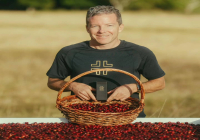
In 2006 Joseph Brodsky founded the Ninety Plus (90+) company. Following the wave Geisha created in Panama in 2003 and 2004, Joseph began his journey. When he didn't find the results he expected in Panama at the time, he had another idea: perhaps among Ethiopia's more than 10,000 coffee varieties there were still undiscovered gems. To ensure quality, 90+ uses a cooperative model with local estates, keeping complete control from planting, sampling and harvesting through to processing and cupping. 90+'s exclusive Profile Processing ensures that every bean they produce has a unique and consistent flavour profile and quality, while their marketing, similar to premium fine wines, stands out in the market.
90+ beans take a completely different naming approach from typical specialty beans. First, unlike regular beans whose titles include region and estate names, each 90+ bean is named for its flavour profile. The famous Nekisse, for example, originally derives from the "nectar" of Shakisso. 90+'s naming usually begins with a flavour concept, then the name, followed by selection of production regions and partner farms. In that respect they differ greatly from others; this is a brand with a boutique management style.
We can easily notice that regular beans often carry the letters N, H or W, such as Ethiopian Yirgacheffe G3 N, the more commonly seen "Natural Yirgacheffe G3" on the market. Here N stands for natural processing, H for honey processing and W for washed processing. 90+ has a different view: rather than categorising beans by processing method, they categorise them by flavour profile. Typically, beans from each processing method have more representative flavour characteristics, for example:
Natural: Exuberant fruit aromas
Honey Process: More prominent sweetness
Washed: Cleaner flavor profile
90+ believes, however, that different processing methods can still produce similar flavour profiles. A honey-processed bean, for instance, might end up showing characteristics closer to what is usually expected from washed beans. They therefore introduced three basic flavour indicators, N2, H2 and W2, distinguished by the intensity of fruitiness and mouthfeel:
W2: (Low) Lower fruit notes, emphasizing brightness, acidity and floral aromas
H2: (Moderate) Moderate fruit notes, emphasizing sweetness, fruit texture (not aroma) and tea-like qualities
N2: (High) Stronger fruit notes, emphasizing exuberant flavour expression, sweet-tart balance, jammy qualities and dried fruit characteristics
In 2011, to improve the stability of Panama green beans during the drying stage, Joseph, inspired by wood drying rooms, developed a solar drying system with the University of Wisconsin-Madison. This exclusive processing method was named Solkiln™ (SK). Beans processed this way naturally command premium prices, and because of space limits production is extremely limited.
Finally, 90+ beans use a different 100-point scoring system. Primarily, all beans produced by 90+ should score above 90 points in cupping. Their grade levels are determined by three factors: flavour, cost and production quantity:
Level 7: Special and delicate flavors that leave a profound impression
Level 12: Beyond leaving a profound impression, must also be conversation-worthy
Level 21: Limited production quantity Level 7, typically with flavour performance exceeding Level 7
Level 39: Limited production quantity Level 12, with flavour performance higher than Level 12
Level 95: Currently the highest grade level, showing tremendous variation from dry aroma to cupping, leaving an extremely profound impression, with very limited production quantity
I have written this lengthy introduction to Ninety Plus in the hope it helps everyone choose more quickly when visiting shops that carry their items.
90+ Coffee Bean Brand Recommendations
FrontStreet Coffee's roasted 90+ coffee bean, Zhù Máng (Candlelight), offers full guarantees in both brand and quality. More importantly, it is exceptional value: a half-pound (227g) package costs only around 90 yuan. At 15g per cup, one package makes 15 cups, each costing only about 6 yuan. Compared with cafés selling cups for hundreds of yuan, that is a genuinely conscientious recommendation.
FrontStreet Coffee Recommendation
Ninety Plus built its reputation on Geisha, so if that is the direction you want to explore, FrontStreet Coffee's Panama Boquete Geisha is a natural starting point. It is an introductory Geisha from Panama that lets you taste the classic orange-blossom honey of a high-quality Panamanian Geisha at a friendly price, with an oolong-tea quality, delicate fruit sweetness and acidity, and clearly separated layers. Panama is where Geisha made its name: in 2003 the variety was discovered by the owner of Esmeralda Estate and entered in the Best of Panama competition, where it stunned the judges, set a record with an average cupping score of 94.6 and took first place, turning Geisha almost overnight into the champion variety the world wanted.
For a higher grade, FrontStreet Coffee carries Esmeralda Estate's Red Label and Green Label Geisha. The red label, officially "Esmeralda Special," grows at 1,600-1,800 meters, and every batch must cup above 90 points and carries its own number, with each lot drawn from a single small plot so buyers can choose the batch that matches their taste. The green label, originally "Private Collection," is named for its green tag; unlike the red label it does not stress detailed plot information but blends batches from several plots to express Esmeralda's signature high-altitude Geisha character, and its friendlier price makes it strong value.
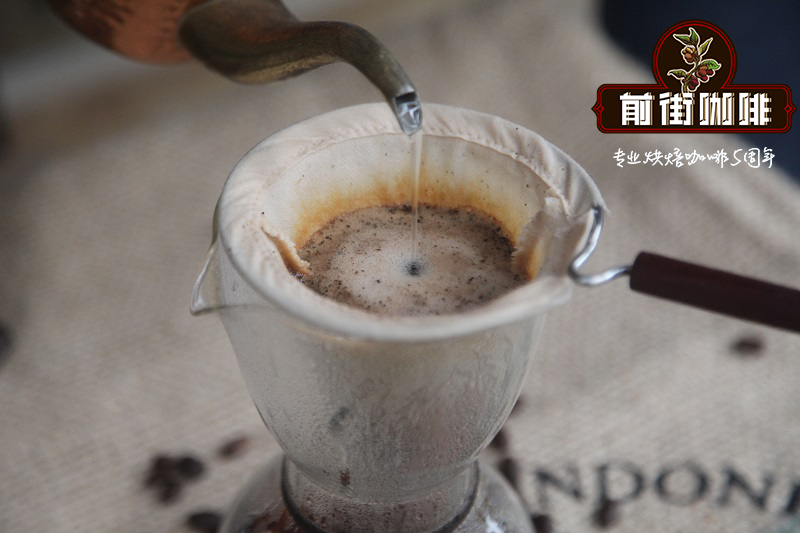
Since Geisha is a dense, floral and fruit-forward variety at medium-light roast that tends to sink and clog the dripper hole, FrontStreet suggests grinding to a coarseness that passes 78% through the Chinese standard No. 20 sieve, roughly fine sugar, and brewing at 91°C. FrontStreet's own pour-over uses 15g of coffee, a small Hario V60 and a 1:16 coffee-to-water ratio: start the timer and pour to 30g for a 30-second bloom, then a second stage of slow circling pours to 125g, wait until the water in the bed drops halfway before pouring again, continue slow circling pours to 225g, and let it finish dripping for a total extraction of about 2 minutes 10 seconds to 2 minutes 20 seconds.
Important Notice :
FrontStreet Coffee is a long-established specialty coffee roaster in Guangzhou China, selling freshly roasted beans from its own farm in Yunnan as well as dozens of carefully selected single-origin beans from around the world for both pour-over and espresso. The products deliver consistently excellent quality and great value, with shipping within 24 hours. Guangzhou's FrontStreet Coffee shop is recommended by many coffee lovers, and the beans are now available online at the Tmall 。
FrontStreet Coffee has moved to a new address:
FrontStreet Coffee Address: 315,Donghua East Road,GuangZhou
Tel:020 38364473
 Scan and follow the En Gafei WeChat official account. Please indicate that the reprint comes from "En Gafei".