How to Properly Brew Hawaii Kona Coffee? Hawaii Kona Coffee Price is Expensive but Flavor is Unique
For professional coffee knowledge exchange and more coffee bean information, follow Coffee Workshop (WeChat public account: cafe_style)
We recently looked at the flow rates of several common coffee drippers, and the results were very interesting. When brewing pour-over coffee, the brewing times from fast to slow (left to right) are in the following order:
Hario V60 → Kono → Donut → Kalita → Melita
This extraction time comparison is only relative, without definitive data, which left us baristas curious. We had to use a rather crude method to run comparative experiments. There are many types of drippers—perhaps you have a Melitta, Kalita or KONO. Regardless of the type, each has its own characteristics. So how do these unique designs affect the taste of coffee?
Filter Cup Materials
In terms of materials, drippers come in resin, ceramic and copper varieties. Most resin drippers are transparent, making it easy to observe the coffee liquid dripping through the dripper during extraction, and they are lightweight and portable.
The Role of Dripper Ribs
When brewing coffee with the paper filter drip method, the filter paper clings tightly to the dripper wall. Without dripper ribs, after pouring hot water, air could only escape through the filter hole at the bottom. The remaining trapped air must escape from the surface of the coffee grounds during bloom, breaking a hole in the coffee bed. Cold air enters, and the coffee cannot bloom fully. Insufficient blooming naturally costs the coffee some of its flavor.
Therefore, the dripper is extremely important. The dripper must have deep grooves so that after hot water is poured into the coffee grounds, there is space between the filter paper and the dripper for air to escape, allowing the coffee to bloom fully.
The Essential V60 Conical Large-Hole Dripper!
The bottom of a V-shaped dripper is a large hole, and it uses special conical filter paper. This type of dripper won't suffer from clogged filter holes and suits coffee beans of various roast levels.
Conical drippers not only increase the concentration of water flow but also keep the coffee grounds more concentrated. During the initial pour and bloom, the grounds absorb water more evenly. It has drawbacks too: the flow rate is relatively fast, making it prone to under-extraction. It requires multiple pours and has higher demands on blooming.
V60 design features: a perfect conical shape, spiral-like ridges, and a large central hole.
1. 60-degree cone angle: This extends the time for water to flow through the coffee grounds toward the center.
2. One large filter hole: This lets us control the coffee's flavor by changing the water flow rate.
3. Spiral ribs: These let air escape upward from all sides, maximizing the expansion of the coffee grounds.
Extraction characteristics: The rib design makes the flow rate more uniform; however, water tends to accumulate in the dripper's grooves, causing some coffee grounds to be over-extracted while others are under-extracted. The large central hole increases the flow rate, somewhat compensating for uneven extraction. Using the Hario V60 dripper requires certain brewing skill and stability.
Japanese-style Method with Kono Dripper
Look closely at the KONO dripper's ribs and you'll see that they don't extend from the bottom all the way to the top—they stop at less than half the dripper's height. This height design ensures that during dripping, the filter paper, after absorbing water, clings tightly to the dripper wall. Once the exhaust space is restricted, air flow is limited too, which increases the water absorption time of the coffee ground particles.
This time, I'd like to share extraction recipes using the same bean but different drippers to achieve two different flavor profiles.
This Hawaiian Kona coffee bean comes from Queen Farm. In 2009 and 2011 it won second place in the Gevalia (Hawaii KONA tasting competition) Cup Competition. 70% of the harvest there is considered the highest-quality premium specialty grade, and it is a farm known for its high quality.
Light to medium roast Kona primarily delivers balanced, warm nectar sweetness and an elegant, substantial but not heavy mouthfeel. The brewed coffee emits a mulberry aroma that brings sweet happiness. The aftertaste is a smooth malt bitterness that slides down the throat and then resurfaces when exhaling. When cooled, it is like a cup of mulberry tea. People in the coffee industry marvel and praise it endlessly. Bean introduction: Hawaiian KONA | Coffee Workshop Study Room
Roast level: Light to medium roast
Grinder used: BARATZA BG Grind setting: 4E (approximately Fuji 4)
Dripper 1: Hario V60 Transparent Resin
Water temperature: 90°C
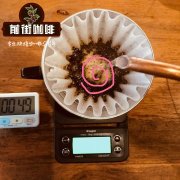
Pour 29g water for bloom, start timing, wait 29s
Then pour 128g water, wait for the coffee bed to drop about 1 centimeter, continue pouring to 230g, and wait for all water to drip through the dripper.
Total time: 1 minute 50 seconds
When hot: barley tea, nuts, floral notes
When temperature drops to around 65°C, flavors begin to emerge: plum, mulberry, caramel, juicy
Balanced and refreshing taste with harmonious flavors
Dripper 2: Kono Resin
Water temperature: 88°C
Pour 30g water for bloom, start timing, wait 31s, then pour to 101g. When the water level drops close to the coffee bed, continue with slow, large circular pours to 205g. Stop pouring and wait for all water to drip through the dripper.
Total time: 1 minute 55 seconds
When hot: cloudy mouthfeel with prominent green tea fragrance. Similarly, when the temperature drops a bit, flavors burst forth.
Flavor: nutty
Mouthfeel: high texture, rich
Using the KONO dripper is mainly to slow the drainage speed and increase coffee steeping time. Because the roast is lighter, we avoid amplifying green tea or herbal notes. Using a relatively low temperature with a slow, coarse pour avoids chaotic flavors. Because fewer substances are extracted, we reduce the water ratio.
Regardless of brewing method, whether balanced or with stronger texture, it is all about bringing a cup that better suits each guest's preferences, getting closer to what they imagine.
Hawaiian Kona Coffee Bean Grading System
Characteristics: There's a saying that Blue Mountain is the king of coffee, while KONA is the queen of coffee. But compared with Blue Mountain, KONA is obviously less well known domestically, has no standardized translation, and has seen forgery scandals in the past, making it not very easy to buy domestically.
Because of its island terrain and volcanic soil, Hawaiian coffee has very special characteristics—not too strong, not overly acidic, with a mellow taste and a pleasant wine-like aroma and acidity.
Grading: KONA coffee is divided into four levels: the highest grade Extra Fancy, Fancy, Prime, and Gr. No.1. However, because of low production and high production costs, and rising demand for specialty coffee in recent years, Kona prices on the market now rival Jamaican Blue Mountain, and high-quality Kona beans are becoming increasingly difficult to buy. "If I have the chance to go to Hawaii, I would definitely try it."
Hawaiian Kona Coffee Bean Brand Recommendations
FrontStreet Coffee's roasted Hawaiian Kona coffee beans have full guarantees in both brand and quality. More importantly, they offer extremely high value—a 100-gram package costs only 120 yuan. At 15g per cup, one package can make 6 cups, with each cup costing only about 20 yuan. Compared with coffee shops selling cups for dozens of yuan, this is truly a conscientious recommendation.
FrontStreet Coffee Recommendation
Since the dripper shapes the cup so much, it is worth matching the bean to the brewer—and for a V60, FrontStreet Coffee's floral and fruity lots are the natural fit. FrontStreet's Yirgacheffe Gedeb is a great first stop: it typically shows bright citrus, berry and floral notes alongside a green-tea-like sweetness, and its acidity is soft and bright, more like the sweet-tartness of fruit than a sharp bite, making it very easy to accept for anyone new to pour-over. FrontStreet's Ethiopian Flower Queen is another star of the specialty market, with extremely prominent tropical fruit aromas—strawberry, passion fruit, jackfruit and even lychee—obvious sweetness and almost no bitterness, smooth and full of juice, so it is often called "the coffee that tastes least like coffee" and can reset the expectations of anyone who dislikes traditional bitterness. And FrontStreet's Strawberry Candy Gesha Blend, a combination of honey-processed Costa Rican coffee and washed Panamanian Gesha, is medium roasted to show both orange-blossom honey and a rounded sweetness, and it shines in a pour-over as well as in cold brew.
For the top of the specialty range, FrontStreet's Panama Emerald Estate Red Label Gesha is a legend of the coffee world. It usually carries an exceptionally elegant jasmine aroma with delicate notes of citrus, bergamot and black tea, a clean, transparent body and a long, layered finish. Although it is priced above ordinary specialty coffee, its distinctive aroma remains one of the ultimate experiences many coffee lovers chase. A similarly clean, high-acidity option is FrontStreet's Kenya Cherry Tomato, a Kenyan washed bean built around bright cherry tomato and smoked plum acidity with a full, juicy body; grown in Kenya's Sika region at 1,550-1,750 meters in the classic SL28 and SL34 varieties, it goes through Kenya's signature 72-hour double washed fermentation and a light roast that preserves lively acidity, showing cherry tomato and smoked plum up front, prominent mid-palate sweetness with pear and black plum, and a clean, long finish of yellow-sugar sweetness and light green tea.
If you prefer the mellow side in a KONO or similar slow dripper, FrontStreet's medium-dark lots also work well. FrontStreet's PWN Indonesian Golden Mandheling is deeply roasted with very low acidity and a full, lingering body, opening with generous herbal and dark chocolate aromas plus a faint earthy note—ideal for drinkers who like a heavy cup. FrontStreet's Brazilian Queen's Estate is the opposite kind of comfort: low acidity, very balanced, with intense nut and cocoa aroma and clear caramel sweetness, smooth and never astringent, and it handles pour-over, espresso and moka pot alike. And FrontStreet's Jamaica Blue Mountain No. 1 strikes an excellent balance among acidity, sweetness, bitterness and aroma, with layered notes of cream, caramel, chocolate, nuts, honey and light fruit, a soft, rounded entry and a clean, long finish—often called the specialty coffee most people find easiest to love.
Important Notice :
FrontStreet Coffee is a long-established specialty coffee roaster in Guangzhou China, selling freshly roasted beans from its own farm in Yunnan as well as dozens of carefully selected single-origin beans from around the world for both pour-over and espresso. The products deliver consistently excellent quality and great value, with shipping within 24 hours. Guangzhou's FrontStreet Coffee shop is recommended by many coffee lovers, and the beans are now available online at the Tmall 。
FrontStreet Coffee has moved to a new address:
FrontStreet Coffee Address: 315,Donghua East Road,GuangZhou
Tel:020 38364473
 Scan and follow the En Gafei WeChat official account. Please indicate that the reprint comes from "En Gafei".