Flavor Profile and Taste Description of Brazil Santos Coffee - Introduction to Brazil Bourbon Variety Coffee Beans
Professional Coffee Knowledge Exchange
FrontStreet Coffee · Introduction to Brazil Santos Coffee Flavor, Taste Characteristics and Coffee Varieties
What Are the Flavor and Taste Characteristics of FrontStreet Coffee's Brazil Santos? Is FrontStreet Coffee's Brazil Santos a Bourbon Variety? What Are the Flavors and Characteristics of Bourbon?
Santos - 17/18 screen
Brazil Santos SS Fine Cup SC 17 / 18
When it comes to Brazil Santos, besides the football team, many people will likely think of coffee. Santos is a port in southeastern Brazil. In the past, coffee produced from different provinces (generic coffee) was exported with the port name printed on it, and unaware importers promoted Santos as though it were a coffee variety. Similar confusion also arose with the Yemeni port of Mocha.
Brazil is the largest country in Latin America and has been the world's largest coffee producer for the past 150 years. One-third of the world's coffee comes from Brazil, followed by Vietnam, Colombia and Indonesia. The annual production of the southeastern Minas Gerais province alone (20 million bags) already exceeds the entire national output of neighboring Colombia (about 10 million bags). São Paulo, Espírito Santo, Bahia and others are also specialty coffee-producing regions. Among them, Sul de Minas (southern Minas Gerais) has accounted for 90% of the national top 20 award-winning coffees in the Cup of Excellence (COE) over the past two years.
Behind these glorious records, however, lie overdevelopment and deforestation. A tropical rainforest nurtured by the Amazon River was sparsely populated for thousands of years. But from the economic incentives of coffee exports in the 18th century onward, Brazil's original ecology gradually transformed into mechanized agricultural plantations. This history is said to have begun when a colonel seduced the French governor's wife in 1723 to obtain seeds. After experiencing black slavery and later European immigrant sharecropping, Brazil's coffee production once reached half of world demand. But with the collapse of commodity markets and the excessive production promotion that caused "soil fatigue" (as Brazilian farmers call it), along with the recent rise of the specialty coffee movement, farmers have shifted their focus from quantity to quality.
Intense Cocoa Flavor Makes It a Favorite for Espresso Blends
In terms of growing conditions, since Brazil rarely has highlands above 3,000 feet and lacks volcanic soil, it is actually not ideal for coffee cultivation. Early expansion relied on uncultivated red-purple soil (Terra Roxa) and the immediate nutrients provided by burned original forest. Brazilian coffee therefore doesn't have strong fruit acidity, but its intense cocoa and nutty flavors, combined with a rich mouthfeel, make Brazilian coffee a favorite for espresso blends. In chain stores and specialty shops alike, Brazil is a common basic component (base coffee).
Coffee Variety Research Since the 1930s
Limited by natural conditions, the Brazilian government has invested significant resources since the 1930s to improve varieties and disease resistance. The results of its coffee variety research continue to influence planting habits throughout Latin America. It cultivated the natural variety Yellow Bourbon from Bourbon in the 1930s from a one-in-a-million chance, discovered Caturra (a Bourbon variety) in the 1940s, and later developed Mundo Novo (an artificial cross of Typica and Bourbon), Catuai (an artificial cross of Mundo Novo and Caturra), Icatu produced in the 1990s (with Robusta lineage) and the rarer Acai (a Mundo Novo cross). Most Central American countries select suitable varieties from this list to cultivate. When the author's friends encounter difficulties, they mostly seek advice from Brazilian counterparts. The Brazilian Ministry of Agriculture and its academic research institutes established the Consórcio Pesquisa Café in 1997 to further specialize coffee cultivation, disease-resistance research and harvest processing. The Genoma Café, established in 2002, is a pioneer in coffee gene mapping.
The Cup of Excellence (COE) competition, representing the specialty coffee movement, had its predecessor in Best of Brazil. Since 1999, 12 countries have taken part in hosting it. Previously, COE accepted only non-natural processed coffee, but given that Brazilian coffee is predominantly natural processed and that farmers have improved their mastery of the technique, the competition launched the "Late Harvest" event specifically for natural processed coffee in 2012. In that year's competition, among the top 10 winners in the non-natural group (Early Harvest), Yellow Bourbon accounted for 6 places, while Yellow Catuai took 3. In the natural group, Catuai dominated with 8 places, and the remaining positions were claimed by Acai. This shows that different varieties can realize their potential when properly processed.
FrontStreet Coffee · Brazil Santos Natural Bourbon Coffee
Variety: Bourbon
Grade: Grade 2, NY 2
Region: Named after the export port of Santos
Altitude: 800 - 1,350m
Bean Size: 17/18 screen
Processing Method: Natural processing
Flavor Notes: Cocoa, nuts, peanuts
Santos (Portuguese: Santos) is a port city in São Paulo state, Brazil, on the Atlantic coast, covering an area of 280.3 square kilometers, with a population of 418,375 as of 2006.
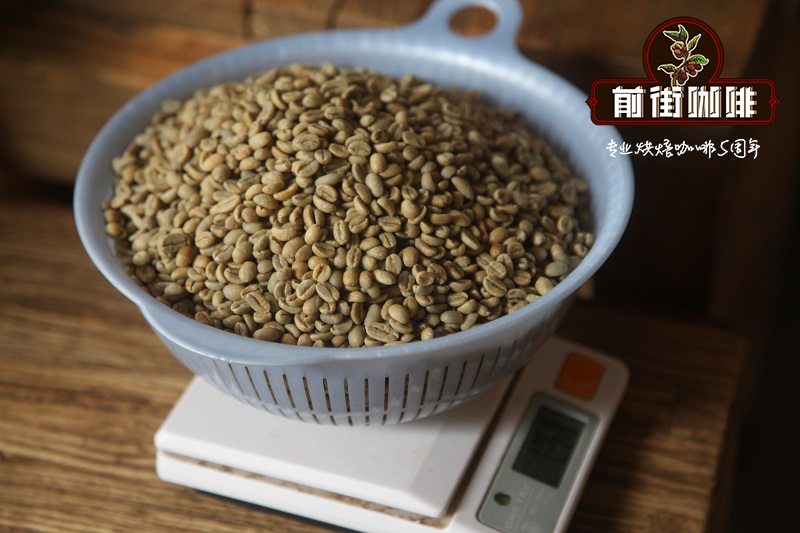
Among coffee-producing countries, Brazil accounts for about one-third of all world production, and is particularly famous for Brazil Santos exported from the port of Santos in São Paulo state. The green beans are large, appearing light green or pale yellow.
FrontStreet Coffee Recommendation
Santos shows the balanced, low-acid, cocoa-driven side of Brazil, and FrontStreet Coffee roasts several Brazilian coffees that express it in different ways. The FrontStreet Brazil Cerrado Red Bourbon is a classic single origin from the well-known Cerrado region, medium roasted to bring out creamy peanut, toasted bread, caramel and hazelnut aromas; the cup is round and mellow, with no sharp acidity and only a faint bitterness, and it brews well as pour-over, in a moka pot, as an espresso SOE, in a siphon or in a French press.
For the yellow-fruited side of the Bourbon family, the FrontStreet Brazil Queen Estate Yellow Bourbon comes from Mogiana near Sul de Minas, where fertile red volcanic soil feeds this rare natural mutation of Red Bourbon. Whether you brew it by pour-over, moka pot or home espresso machine, it delivers a cane-sugar sweetness with fruit and chocolate notes - the sweet, clean character that makes Brazilian coffee such a reliable base, and such a pleasant cup on its own.
Important Notice :
FrontStreet Coffee is a long-established specialty coffee roaster in Guangzhou China, selling freshly roasted beans from its own farm in Yunnan as well as dozens of carefully selected single-origin beans from around the world for both pour-over and espresso. The products deliver consistently excellent quality and great value, with shipping within 24 hours. Guangzhou's FrontStreet Coffee shop is recommended by many coffee lovers, and the beans are now available online at the Tmall 。
FrontStreet Coffee has moved to a new address:
FrontStreet Coffee Address: 315,Donghua East Road,GuangZhou
Tel:020 38364473
 Scan and follow the En Gafei WeChat official account. Please indicate that the reprint comes from "En Gafei".