Burundi Coffee Beans Pour-Over Extraction: Time, Ratio, Grind Size & Water Temperature Recommendations
Brewing Guide
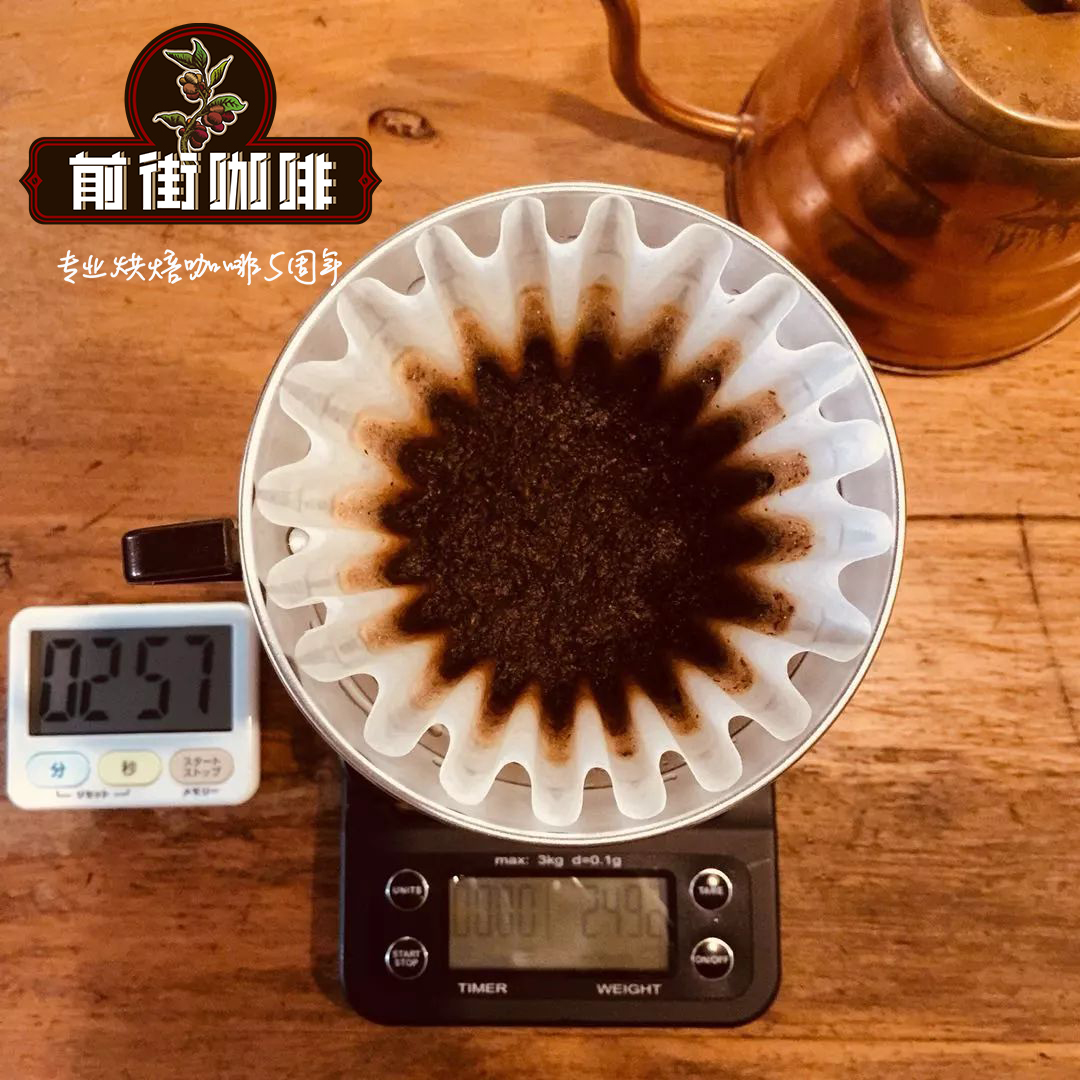
Using a V60 filter to brew Burundi coffee beans: 15g of coffee with 30g of water for a 35-second bloom, extraction at 89-90°C water temperature, 1:15 ratio, medium-fine grind (Fuji 4). During the second pour, stop at 140ml, wait for the water to drop, then slowly pour again. Maintain an even speed and avoid too high a water level. The final pour stops at 225ml, with a total extraction time of 2:15.
Burundi: The Heart of Africa
Burundi is a beautiful landlocked country situated on the steep terrain of the East African Rift Valley. Its complex geography features the magnificent ridge that rises suddenly above the eastern shore of Lake Tanganyika, serving as the watershed between Africa's two great river systems, the Nile and Congo basins. It is affectionately known as the "Heart of Africa."
With coffee introduced by Belgians, Burundi began coffee cultivation in 1930. The varieties, similar to neighboring Rwanda, are mostly Bourbon series. Coffee grows at high altitudes between 1,750 and 2,000 meters above sea level.
The first Arabica coffee trees in Burundi were introduced in the 1930s by Belgians. Today, more than 800,000 Burundian families depend on coffee cultivation for their livelihood. Most are small-scale coffee farms with intercropped cultivation and manual planting without mechanized equipment. The varieties are mostly Bourbon and related Bourbon strains such as Jackson and Mibirigy. Processing methods include both washed and semi-washed techniques. In the past, exports went primarily to Belgium, Germany, the Netherlands, Japan, Australia and the United States.
Coffee export has become an important economic source for Burundi. Burundian coffee mainly comes from the following five major regions, with the most famous producing areas being the Kayanza, Ngozi, Mumirwa, Buyenzi and Kirimiro districts. Burundi's coffee production model is closer to Ethiopia's, with mostly smallholder farming. Farmers from the Nyarunasi Cooperative deliver their harvested ripe cherries to processing stations for unified treatment.
Although there are other small coffee-growing regions, the coffee produced in these areas is the most renowned.
Coffee Growing Regions
Buyenzi
The largest coffee-producing region in the country, bordering Rwanda. Two specific areas within it, Kayanza and Ngozi, are particularly famous.
The Kayanza region has an extremely mild climate with an average temperature of 18°C. Most smallholder farms are situated between 1,700-2,000 meters above sea level, with dry seasons in summer. In the 2015 Cup of Excellence competition, coffee from Kayanza achieved a high score of 91.09.
Ngozi is located in northeastern Burundi, with altitudes similar to Kayanza. Although its production is less than Kayanza's, it has shown impressive quality potential in recent years. In the 2015 Cup of Excellence competition, its best batch achieved a high score of 88.92, with other batches from the region also scoring above 85.
Kirundo, Bugesera
Located in northeastern Burundi, this region has lower production but good development potential. The altitude ranges from 1,400-1,700 meters, and the best COE score from the region is 86.62 points.
Muyinga, Bweru
Another coffee-producing region in northeastern Burundi, bordering Tanzania. The average altitude is 1,800 meters, and it features typical Burundian characteristics: mild climate, volcanic soil and high rainfall.
Gitega, Kirimiro
Located in the central mountainous region of Burundi, with average temperatures between 12-18°C. Annual rainfall is approximately 1,100mm, lower than in other regions.
In addition to COE award-winning coffees, this region also has a professional coffee laboratory focused on quality control for exported coffee.
Bubanza, Mumirwa
Located in northern Burundi, bordering Rwanda and the Democratic Republic of Congo. Altitude ranges from 1,100-2,000 meters, with average temperatures between 12-18°C and annual rainfall of approximately 1,100mm.
Flavor Profile
The dry aroma is very intense, comparable to Kenyan coffee, with notes of citrus, cream and caramel.
On entry, one can feel rich flavors reminiscent of vanilla with some straw-like notes, giving a slightly wild feeling. The acidity is lower than Kenyan coffee, while the texture is slightly thicker. The aftertaste is lighter than Kenya's but retains the inherent characteristics of East African beans while being quite distinctive.
Flavor Characteristics
Berry, kumquat, lemon, dried fruit, caramel, with light acidity, a smooth mouthfeel, a saturated aroma and a rich, persistent aftertaste.
Brewing Analysis
Pour-Over Reference
Using a V60 filter: 15g of coffee with 30g of water for a 35-second bloom, extraction at 89-90°C water temperature, 1:15 ratio, medium-fine grind (Fuji 4). During the second pour, stop at 140ml, wait for the water to drop, then slowly pour again. Maintain an even speed and avoid too high a water level. The final pour stops at 225ml, with a total extraction time of 2:15.
During brewing, the enticing citrus aroma is released quickly, and after tasting, one experiences citrus black tea notes.
FrontStreet Coffee Recommendation
Burundi's bright, clean, citrus-and-black-tea profile is close to the East African elegance that many pour-over drinkers love, and FrontStreet Coffee roasts several beans in that vein. The FrontStreet Ethiopia Yirgacheffe Gudina is washed and brewed the same way Burundi often is - a V60, 15g of coffee and a 1:15 ratio - and shows citrus and black tea on entry, with cream, caramel and almond emerging as the cup cools. The FrontStreet Kenya Cherry Tomato brings an even more vivid acidity: a light-roasted Kenyan washed bean from the Thika region, grown at 1,550-1,750 meters from SL28 and SL34 and fermented for 72 hours, with cherry-tomato and dark-plum flavors, pear and black plum, and a clean brown-sugar and green-tea finish.
If you would like a natural-process counterpoint, the FrontStreet Natural Red Cherry from Yirgacheffe keeps the East African clarity while adding tropical fruit, honeyed sweetness and a creamy smoothness, and pours beautifully on a V60 at 90-91°C with a 1:15 ratio.
Important Notice :
FrontStreet Coffee is a long-established specialty coffee roaster in Guangzhou China, selling freshly roasted beans from its own farm in Yunnan as well as dozens of carefully selected single-origin beans from around the world for both pour-over and espresso. The products deliver consistently excellent quality and great value, with shipping within 24 hours. Guangzhou's FrontStreet Coffee shop is recommended by many coffee lovers, and the beans are now available online at the Tmall 。
FrontStreet Coffee has moved to a new address:
FrontStreet Coffee Address: 315,Donghua East Road,GuangZhou
Tel:020 38364473
 Scan and follow the En Gafei WeChat official account. Please indicate that the reprint comes from "En Gafei".