What is the world's most expensive coffee bean? How much does a cup of the most expensive coffee cost?
Geisha is the holy grail for many coffee lovers. Its elegant, refined character captivates even seasoned drinkers who are used to the rich flavors of Mandheling. As the saying goes, "you get what you pay for," so how much does a cup of this prized Geisha coffee actually cost?
At FrontStreet Coffee, a cup of freshly ground pour-over Emerald Red Label Geisha costs 75 yuan, letting you taste the complex fruit sweetness and acidity that come from fine grading and natural processing. Another FrontStreet Coffee offering, the Emerald Green Label Geisha pour-over, costs 60 yuan per cup. The washed Geisha shows more white floral notes together with Geisha's signature orange fragrance and honey sweetness. To help everyone better understand this "precious" variety, FrontStreet Coffee will keep sharing knowledge about Geisha.

Geisha Coffee Variety
As we all know, coffee flavor is closely tied to the growing environment. Geisha beans are quite picky about their conditions, producing rich floral aromas and refined fruit acids only in regions with higher altitudes, cloud cover or plenty of shade trees, and fertile soil. Geisha/Gesha, whose pronunciation resembles the Japanese word for "geisha," is sometimes called "geisha" in certain regions. Around 2006, Mr. Yuan of Camerun Coffee first imported Panamanian Geisha into China and named it "Guixia" (Geisha), a name that has stuck ever since.

Panamanian Geisha Coffee Beans
Panama lies in Central America, linking North and South America and bordering Costa Rica and Colombia. Panama's coffee journey can be described as being born with a silver spoon.
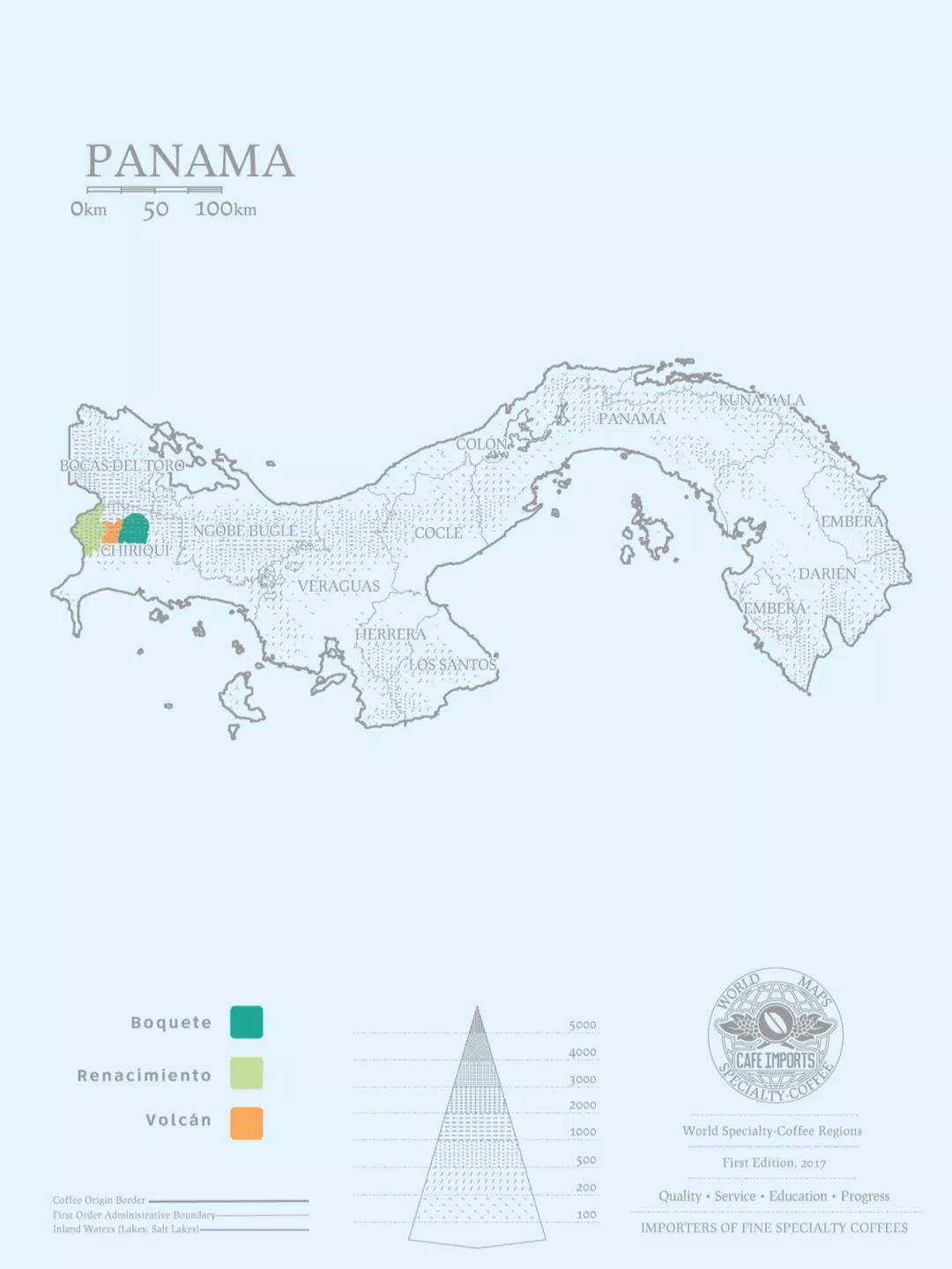
Panamanian Geisha beans are world-renowned, and the country's entire coffee cultivation centers on the Chiriquí volcanic region. The most beautiful part is the Boquete region, where unique volcanic fertile soil, abundant water, regular rainfall, dense vegetation, and cloud cover nurture the coffee trees, producing flavorful, high-quality beans. Many distinct microclimates also help produce beans with varied flavor characteristics, and La Esmeralda Estate is located in this region. The neighboring Volcán region has recently become another origin for cultivating high-quality Geisha.

FrontStreet Coffee previously featured Geisha from Deborah Estate, which grows in the Volcán region. According to FrontStreet Coffee's research, Panama's Deborah Estate sits high in the Chiriquí volcanoes, making it one of Panama's highest and most remote coffee farms. At these altitudes, nighttime temperatures can drop to 10°C. The extreme altitude and lower temperatures slow the trees' metabolism. Those low temperatures around 10°C let the trees push more sugars into the cherries during production. Deborah Estate also enjoys ideal rainfall, averaging 2200 millimeters a year.

Deborah Estate is shrouded in tropical rainforest clouds for most of the year, with abundant rare flora and fauna undisturbed beneath the canopy. The estate's cultivation uses no gas-powered machinery, no irritating chemical pesticides, and no herbicides. It actively maintains the natural growing environment, using natural organic fertilizers combined with organic weeds to keep an ecological balance between coffee trees and unwanted shrubs.
Because of the higher altitude, insect problems are also minimized. These benefits carry over into management, translating into lower costs and smaller production fluctuations. Such an excellent geographical setting has created Deborah Estate's exceptional coffee quality and rich flavors.
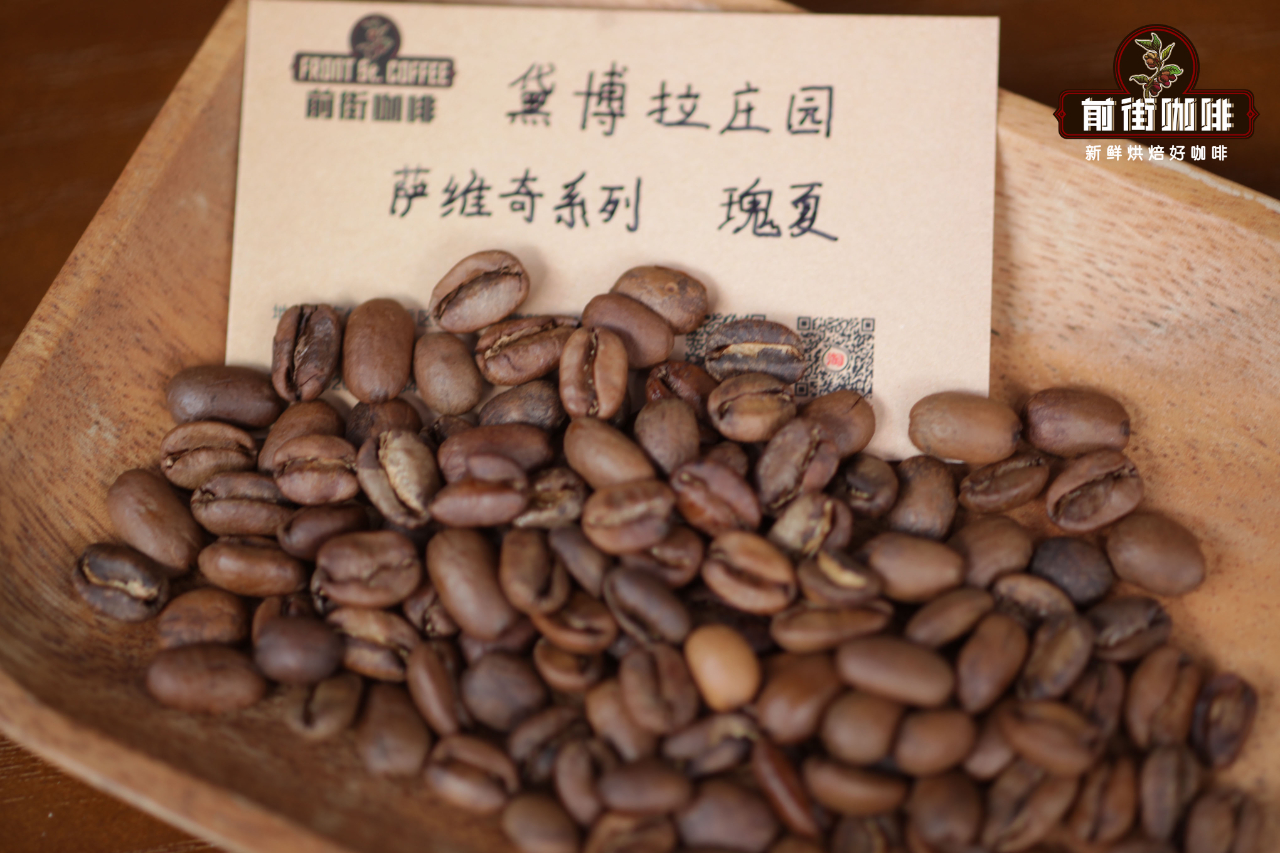
FrontStreet Coffee: Deborah Estate Savage Series Geisha Coffee Beans
Origin: Panama Volcán Region
Estate: Deborah Estate
Owner: Jamison Savage
Altitude: 2000m-2350m
Variety: Geisha
Grade: SHB
Processing: Anaerobic Natural Processing
Flavor Description: Distinct white floral notes, pineapple and lactic drink-like sweetness and acidity, full-bodied, overall clean and balanced.
La Esmeralda Estate
In 1964, American banker Rudolph Peterson retired, moved to Panama, and bought La Esmeralda Estate in Boquete, initially focusing on dairy. Later his son Price resigned from his medical practice to help manage the farm, introducing Caturra and Catuai coffee varieties in 1987. In 1994 they built a washing plant, gaining their own coffee processing facility. In 1996 they acquired the nearby Jaramillo estate, which had superior geographical conditions and good-flavored original coffee varieties, incorporating it into La Esmeralda Estate.

Jaramillo caught the attention of the Peterson father and son precisely because its originally cultivated beans carried a pleasant orange and floral-fruit aroma, different from Panama's original coffee flavors. After cupping beans from different areas of the estate, they discovered unknown coffee trees growing at the highest point of the estate. Because of low yields, the previous owner had used them as windbreaks. The Petersons decided to cultivate these trees separately.
After winning the 2004 Panama Best of Panama (BOP) competition, the coffee made waves. Expert identification later revealed that this variety was Ethiopian Geisha. The Peterson family then focused most of its energy on developing infrastructure to support excellent batch separation and fine processing.

Today La Esmeralda Estate has three main estates cultivating Geisha: El Velo, Canas Verdes, and Jaramillo. In 1996, they acquired the nearby Jaramillo estate with superior geographical conditions and good-flavored original coffee varieties. El Velo was acquired by La Esmeralda Estate in 2012. FrontStreet Coffee believes that acquiring high-altitude estates with good production, as La Esmeralda Estate did, was a unique decision at the time, enabling La Esmeralda Estate to occupy a significant position in the coffee industry.
Although La Esmeralda Estate first discovered beans with good flavor expression, it cupped beans from different areas of the estate for precision, determining planting parcels based on altitude. This led to today's Red Label, Green Label, and Blue Label Geisha grades, all classified by altitude. FrontStreet Coffee explains each in detail below.

Red Label Geisha beans are grown at altitudes of 1600-1800 meters, with cupping scores above 90 points, mainly from the Jaramillo and Canas Verdes regions. Standard batches use either washed or natural processing, while Red Label batches can only be obtained through global auctions. Panama La Esmeralda Estate Geisha holds independent auctions, and Geisha batches grown in designated parcels and used for auctions are the auction Red Labels.
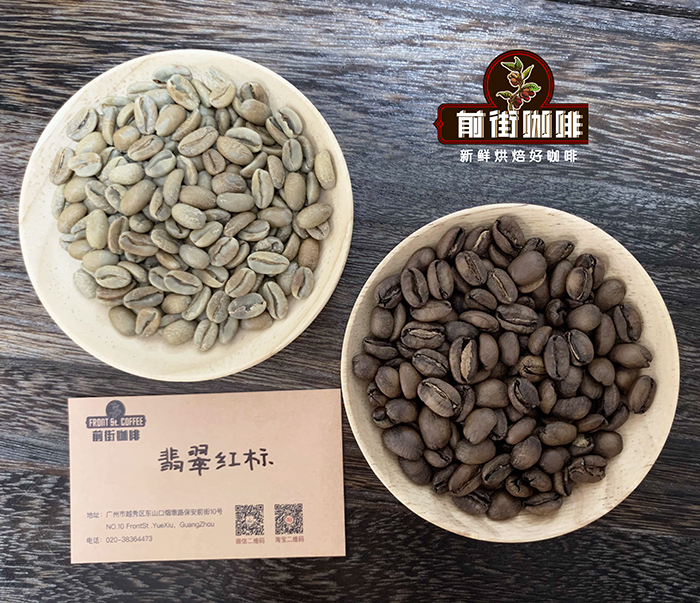
FrontStreet Coffee: La Esmeralda Estate Red Label Geisha Coffee Beans
Region: Boquete
Estate: La Esmeralda Estate El Velo
Altitude: 1600-1800m
Variety: Geisha
Processing: Natural
Customers often ask, "Is auction Red Label better than regular Red Label?" In fact, non-auction Red Labels come from the same parcels as auction Red Labels; the only difference is whether they participate in auctions. FrontStreet Coffee believes you don't necessarily need to drink auction-level coffee. First, because the price is indeed quite high; second, if you're just curious to try, FrontStreet Coffee's non-auction batch Panama La Esmeralda Estate Red Label Geisha beans are also an excellent choice. This grade of Geisha uses natural or washed processing, with a special, bright floral and citrus aroma.

Although Green Label batches don't enter auctions, the bean quality remains excellent. Green Label Geisha beans are grown at altitudes of 1600-1800 meters, mainly blended from different parcels in Jaramillo, Canas Verdes, and other areas.
Because of this mixed-parcel model, Green Label and Red Label can sometimes taste very similar. Although Green Label Geisha beans don't reach the high grade of Red Label, they have high cleanliness, an overall jasmine tea tendency, and high acidity, while natural-processed Green Label Geisha has good sweetness and a pleasant sweet-sour balance, evoking passionfruit and floral tea. Green Label Geisha batches also come in both washed and natural versions.
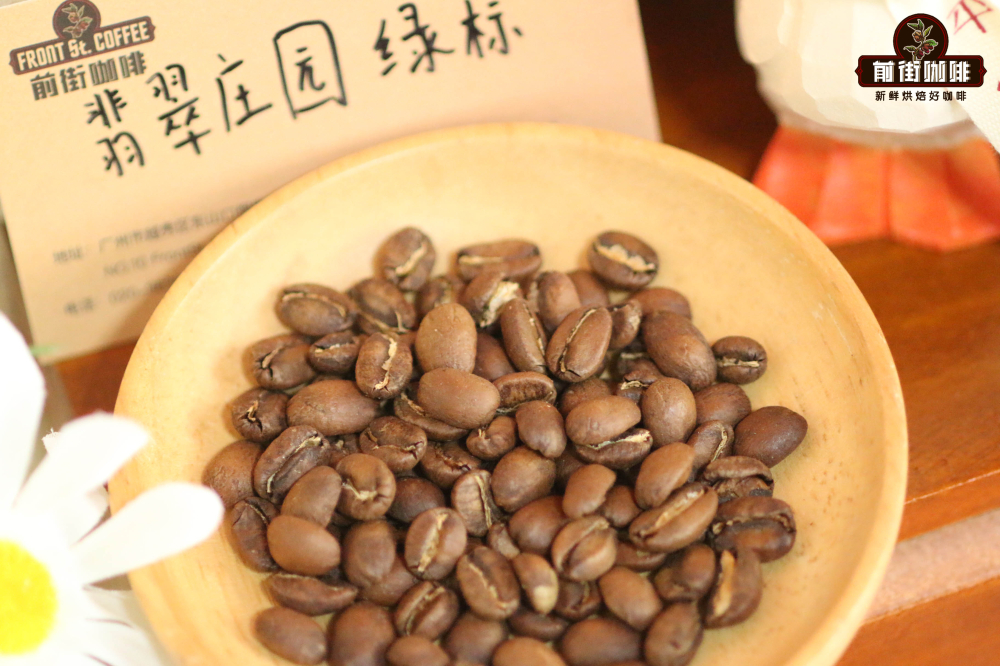
FrontStreet Coffee: La Esmeralda Estate Geisha Green Label Coffee Beans
Country: Panama
Region: Boquete
Estate: La Esmeralda Estate
Altitude: 1600-1800m
Processing: Washed
Variety: Geisha
Customers often ask, "What's the difference between Red Label and Green Label?" FrontStreet Coffee offers an easy-to-understand reference: Red Label Geisha beans can be traced back to the specific small plots where the coffee grew, while Green Label Geisha is a blend and therefore cannot be traced. La Esmeralda Estate's Green Label Geisha uses a blending model, so detailed plot specifications are not provided. Because of this, FrontStreet Coffee sometimes finds that Green Label and Red Label can taste extremely similar.

Geisha 1500 is what we commonly know as Blue Label Geisha. Grown at altitudes of 1400-1500 meters, it's a blend from three different parcels: Jaramillo, Canas Verdes, and El Velo. The flavor has subtle floral notes and fruit acidity, with a body relatively less full than the other two Geisha grades. Still, it wins on reasonable pricing and delivers the traditional Panamanian Geisha flavors.
For a long time, Blue Label Geisha actually had no natural processing. It wasn't until 2020 that La Esmeralda Estate officially launched natural-processed Geisha. FrontStreet Coffee was the first to purchase that batch of Blue Label Geisha. Compared with washed Blue Label, natural Blue Label shows more passionfruit aroma, a subtle tea flower fragrance, and clear, bright citrus flavors. Notably, from 2021, La Esmeralda Estate adjusted its Geisha grading. Starting with the 2021 harvest season, it cancelled the Blue Label batch (Geisha 1500), and the 2021 "Geisha 1500" was sold under the new trademark "Las Rocas" (Volcanic Rock Geisha). So friends who miss the Blue Label need not worry—the Blue Label simply changed its name. FrontStreet Coffee confirmed through cupping that Volcanic Rock Geisha tastes the same as Blue Label.

What Price is Considered Normal for Geisha?
At FrontStreet Coffee, Emerald Red Label Geisha coffee is 350 yuan/100g, Green Label Geisha is 168 yuan/100g, and Volcanic Rock Geisha (the new Blue Label) is 108 yuan/100g. This price is below the market average, which leads many customers to worry whether the beans are fake. On this point, FrontStreet Coffee has been deeply cultivating the field for 9 years, has stable green bean partners, and operates its own roasting factory, so costs are naturally controlled. Friends familiar with green bean channels should understand this better. Moreover, La Esmeralda Estate's Geisha is extremely distinctive in both appearance and flavor, not easily imitated by other coffees.

Panamanian Geisha Coffee Bean Brewing Suggestions
FrontStreet Coffee considers that this Geisha bean is lightly roasted, and light-roasted beans have lower coffee substance dissolution rates than dark-roasted ones. Therefore, to ensure full extraction of Geisha flavors, we use higher water temperature for brewing and also choose a finer grind size. Fans may have noticed that FrontStreet Coffee has always recommended a 1:15 coffee-to-water ratio, while for La Esmeralda Estate's Geisha it's 1:16. This is because slightly increasing the coffee-to-water ratio helps better experience Geisha's layered complexity and flavors.

Dripper: V60#01
Water Temperature: 91°C
Coffee Amount: 15g
Coffee-to-Water Ratio: 1:15
Grind Size: Medium-fine (78% passing through China standard #20 sieve)
Panamanian Geisha Coffee Bean Brewing Technique
FrontStreet Coffee uses segmented extraction, also called three-stage brewing. Use 30g of water for a 30-second bloom, then continue pouring in small circles to 125g for the first segment. When the water level drops and is about to expose the coffee bed, continue pouring to 240g and stop. When the water level drops and is about to expose the coffee bed again, remove the dripper. (Counting from bloom start) extraction time is 2'00".

Panama La Esmeralda Estate Red Label Geisha Coffee Bean Flavor Description: Bright rose and citrus aromas, brown rice, berries, apricot, complex fruits, honey, with a thick juice sensation, rich flavor layers, and noticeable sweetness.
Panama La Esmeralda Estate Green Label Geisha Coffee Bean Flavor Description: Rich jasmine floral aroma, high sweetness, citrus, berries, juice sensation, cream, green tea, orange peel, cantaloupe, overall rich flavor layers, with a floral and citrus-lasting aftertaste.
Panama La Esmeralda Estate Volcanic Rock Geisha Coffee Bean Flavor Description: Jasmine, lemon, citrus, honey, oolong tea, rich juice sensation, distinct honey notes.
FrontStreet Coffee Recommendation
If this article has you curious about Panama Geisha, the most direct way to taste it is FrontStreet Coffee's Panama Emerald Estate Red Label Geisha, grown in the famous Boquete region, where years of strict high-altitude management give the variety its consistently fragrant floral and fruit character. Cupped in the store, it shows complex fruit, citrus, honey, and rose tea notes, with the layered, juicy structure that makes Emerald Estate Geisha so sought after—ideal for any coffee lover who wants to explore the top tier of pour-over coffee.
Brew it as a pour-over to let those floral and fruit layers come through, and it makes a memorable gift for a discerning coffee drinker. If the person you have in mind prefers a balanced, mellow cup instead, FrontStreet Coffee's Jamaica Blue Mountain No. 1 is an equally classic gift choice, with its famously even balance of acidity, sweetness, bitterness, and aroma.
Important Notice :
FrontStreet Coffee is a long-established specialty coffee roaster in Guangzhou China, selling freshly roasted beans from its own farm in Yunnan as well as dozens of carefully selected single-origin beans from around the world for both pour-over and espresso. The products deliver consistently excellent quality and great value, with shipping within 24 hours. Guangzhou's FrontStreet Coffee shop is recommended by many coffee lovers, and the beans are now available online at the Tmall 。
FrontStreet Coffee has moved to a new address:
FrontStreet Coffee Address: 315,Donghua East Road,GuangZhou
Tel:020 38364473
 Scan and follow the En Gafei WeChat official account. Please indicate that the reprint comes from "En Gafei".