How to Train for Espresso? A Complete Guide to Making Espresso from Coffee Bean to Coffee Machine Selection
Espresso is a small drink with a large set of rules, and this guide walks through the questions beginners ask most often before moving on to bean selection and machine technique.
Understanding Espresso: A Complete Guide
Espresso is extracted using hot water and pressure. The fresher the coffee bean roast, the more crema it produces. However, if the beans are too fresh, gases produced during roasting dissolve in the water, which can result in a sharp bitter taste or astringency. If you drink it without stirring, the water-soluble and fat-soluble components will separate, making the taste less smooth.
1. Why is a Spoon Provided?
When you order an espresso in a professional coffee shop, it usually comes with a spoon, sugar and water.
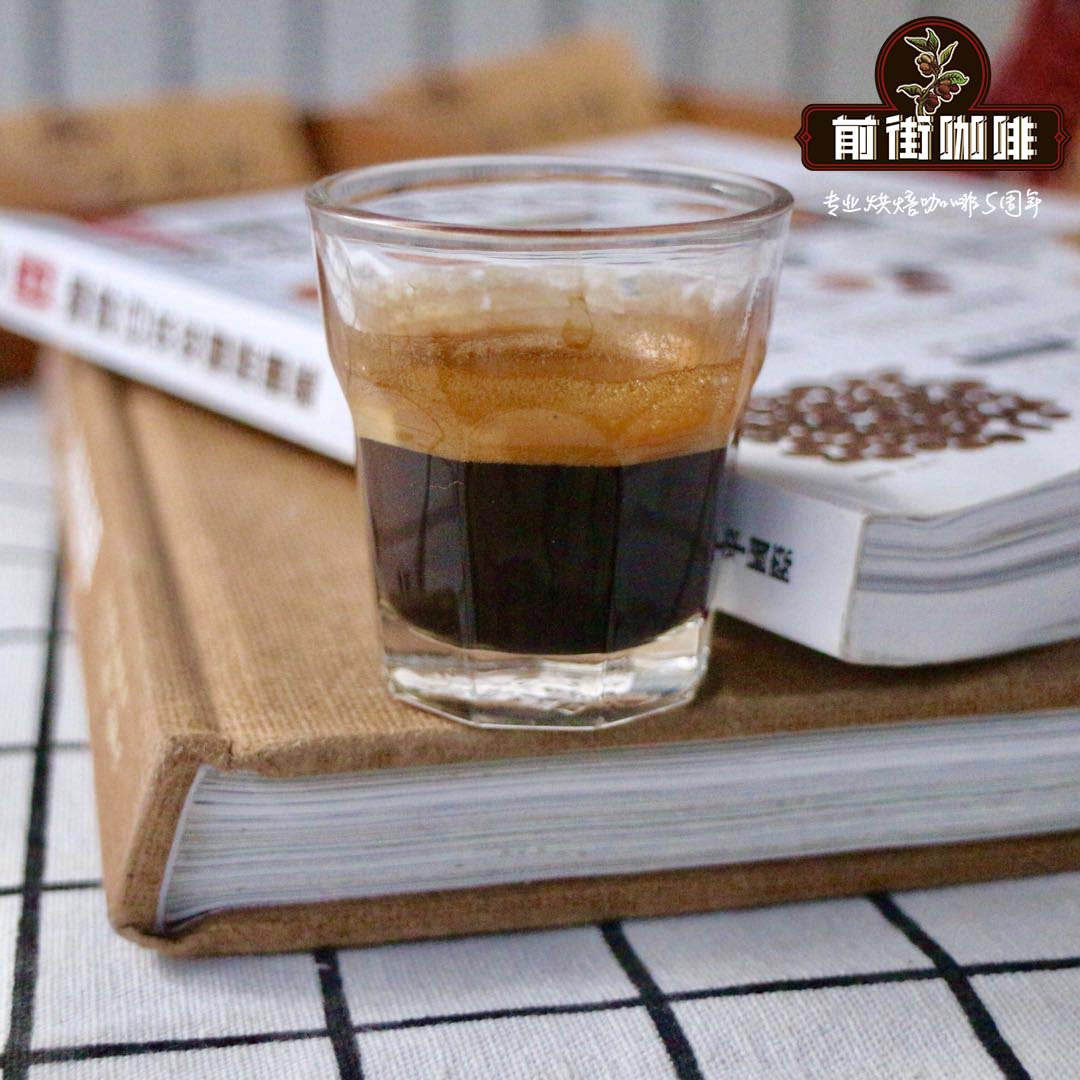
Espresso is extracted using hot water and pressure, so in addition to water-soluble components it also extracts some fat-soluble components. Water-soluble components are heavier, so they settle at the bottom as coffee liquid, while fat-soluble components float on top as foam. This foam-like component is crema, which contains many elements that influence aroma, consistency and texture. The water-soluble components at the bottom are primarily the substances that allow the tongue to perceive taste.
Simply put, crema is responsible for the aroma, while the extracted liquid is responsible for the flavor.
If you drink it without stirring, the water-soluble and fat-soluble components stay separated. By stirring or swirling to mix the espresso components before drinking, you can experience rich and harmonious flavors and aromas. That is why espresso is always served with a spoon.
2. Should Sugar Be Added to Espresso?
Whether to add sugar to espresso is a matter of personal preference. Adding sugar to rich crema and watching it slowly sink, while imagining the rich flavor of the coffee, is a blissful experience in itself.
Sugar can also be used to judge the richness of crema. Carefully place a spoonful of sugar on the crema without breaking it. If the sugar starts to get wet from the edges and slowly sinks after staying for 2-3 seconds, it indicates that the crema is rich and has strong support. Rich, supportive crema also makes for better latte art.
Since sugar can mask the bitterness of coffee, the sourness that was originally masked by bitterness becomes prominent as the bitterness decreases, making the coffee's impression more vivid. Sugar can also make the coffee's texture milder, and it can be considered an excellent companion to coffee.
Adding a spoonful of white sugar to hot espresso and drinking it while stirring is the most traditional Italian way of drinking espresso.
3. Is More Crema Better?
The thickness and duration of crema are closely related to the freshness of the coffee. The richer it is, the fresher the coffee might be; the more gas produced during roasting, the more crema will appear.
When you extract coffee that has been roasted recently, you'll find that it produces extremely rich crema, but unfortunately it also disappears relatively quickly. When tasting this coffee, the sensation on your tongue will be similar to drinking a carbonated beverage. Since the gases produced during roasting dissolve in the water, it can result in a sharp bitter taste or astringency.
From this we can see that even fresh coffee is not necessarily good coffee; you still need to take care to properly rest the beans.
Depending on the degree of roast, the resting time for coffee beans varies. Store coffee isolated from light and oxygen for at least 3-4 days, or even a week or more, allowing the gases produced during roasting to escape naturally from inside the beans. Using such coffee beans will make good coffee with beautiful crema.
In a stable state after extraction, when the crema is about 3-5mm thick, it is in the optimal condition.
4. Must Espresso Use Blended Beans?
Espresso is just one of the coffee extraction methods. No matter what kind of coffee beans you use, as long as it is made with an espresso machine, it can be called espresso. As long as it has good flavor, whether single-origin or blended, light roast or dark roast, it is all acceptable. There are no strict rules about what kind of coffee must be used.
Espresso machines have optimal extraction conditions, so regardless of what coffee you use, you can achieve the best extraction. However, so-called "good extraction" not only maximizes the extraction of good components from the coffee; bad flavors are also maximally extracted, so this must be noted.
Therefore, you must use good beans without defects. If the coffee beans themselves have defects, as mentioned earlier, those defects will also be extracted in large quantities and amplified to an unbearable degree.
However, all coffee has advantages accompanied by disadvantages. That is why, compared with using only single-origin coffee for espresso, various single-origin beans are often mixed to complement each other for richness and balance, creating blended beans for use.
Espresso originated in Italy, where it means "especially fast" in Italian. Through steam pressure, coffee liquid is extracted in an instant. This method can maintain coffee oils for a long time, creating a mellow, thick flavor with balanced acidity and bitterness, which is why it is called the art of coffee. Espresso also often serves as the base for other coffee types, such as lattes, cappuccinos, macchiatos and mochas.
Selecting Espresso Beans
Espresso is often made by blending multiple coffee beans, such as Kenya, Mandheling, Mocha, Brazil and Colombia, which are commonly used as base beans. Different varieties and origins of beans, combined with different roasting times, naturally create unique textures and aromas when mixed. When selecting coffee beans, the main criterion is whether the post-extraction taste meets your personal preferences.
Brewing Espresso at Home: From Coffee Beans to Machine Selection
1. Kenya
Kenyan coffee beans have obvious fruity acidity and a harder texture. Among them, coffee beans with blackcurrant flavor are considered top-grade. Small-farm coffee beans are far superior to large-farm beans in quality and production capacity, while large-farm quality can only be considered medium. Kenyan beans are classified into seven grades based on particle size and appearance, with the highest being AA or AA+, followed by AB, PB, C, E, TT and T, but good appearance doesn't necessarily correlate with good taste.
2. Colombia
Belonging to the Arabica variety, Colombian coffee has a neutral body with a sweet aroma after roasting. The taste has strong acidity with sweetness and slight bitterness. It is often used in blended coffee, with the highest-grade varieties having a sweet potato peel flavor.
3. Mandheling
Produced in Sumatra, Indonesia, it is considered a base bean. When roasted, it has a bitter taste with a thick, strong flavor, making it the most commonly used coffee bean in blended coffee.
4. Mocha
Mocha from Ethiopia, Africa, belongs to the Arabica variety and has a unique sweet and sour taste that is charming, with a special chocolate flavor. When roasted, it carries fruit aroma. When mixed into coffee, it can enhance aroma and mellow texture, adding to its uniqueness.
5. Brazil
Belonging to the Arabica variety, its taste is slightly acidic, slightly sweet and slightly bitter, with a light aroma. It is a neutral-tasting coffee bean without strong special flavors, making it very suitable both for single-origin drinking and for mixing with other coffees.
Standards for Good Coffee
A good espresso can be judged from the appearance and color of its crema. First, the crema should ideally have a mirror-like oily shine (another opinion favors tiger stripes, but if there is too little coffee powder causing over-extraction, white spots will appear), and its thickness should be around 3mm. The extraction amount for one cup depends on the cup capacity, with 25-35ml being the optimal range. It is best to finish it within two sips to maintain fresh flavor. Italians usually visit a coffee shop before work in the morning for an espresso, drinking it on the spot without even needing time to sit down.
Coffee Cups Are Also Important
Many people also overlook the importance of coffee cups, but when you've brewed a perfect espresso, the design of the cup you serve it in matters, affecting both mouthfeel and heat retention.
Italians naturally only use their index finger and thumb to elegantly hold the coffee cup handle, instantly creating a leisurely coffee-drinking atmosphere. The solid thickness of the coffee cup rim also differs greatly from ordinary coffee cups, perfectly allowing the lips to receive each sip of fragrant coffee without spillage. As for the size of the coffee cup opening, it is just right to cover the nose when drinking, fully satisfying the sense of smell with rich coffee aroma.
Fancy coffees like cappuccinos are all variations of espresso. Good espresso can be judged from the color of the crema on top, which should have a mirror-like oily shine without white spots.
The 4 M's of Brewing Good Espresso
To brew good espresso, Italians have summarized four important elements, also called the 4 M's of espresso by coffee enthusiasts:
Mano
The barista, meaning the craft of the maker. This is naturally the most important part. The maker must understand coffee and continuously research and study to make coffee brewing an art.
Macinazione
The grind size of the coffee beans. If the coffee powder is too fine, it will cause hot water to stay in the filter for too long, making the brewed coffee more bitter. Conversely, if the coffee powder is too coarse, the hot water will flow too quickly, resulting in a weaker coffee flavor.
Miscela
The coffee bean formula. Espresso uses coffee beans mixed in different proportions. Italians believe this is the only way to create uniquely flavored coffee. As for the formula and proportions, they depend on the maker's skill and preferences.
Macchina
The espresso machine, which can be divided into commercial and household types. The main differences are the mechanism for generating steam pressure and the design for controlling brewing time, with semi-automatic and fully automatic distinctions.
Whatever machine you use, the beans in the hopper set the ceiling on the result, and FrontStreet Coffee roasts both blends and single origins designed specifically for espresso.
FrontStreet Coffee Recommendation
For a home machine or a moka pot, FrontStreet Coffee's Classic Blend is the first choice: it was built for espresso and crema, so even a beginner on a modest home machine can pull a dense, creamy shot. It follows a traditional Mamba recipe blending Brazilian and Mandheling beans with a small proportion of robusta, giving a full, mellow cup with butter, nuts, spice, dark chocolate and toast notes, plus the rich golden crema that makes lattes, cappuccinos and dirty coffees easy to build.
If you want a lower-cost daily option, FrontStreet Coffee's Black Cocoa Blend is 100% arabica with full body and a friendly profile, and FrontStreet Coffee's Commercial Blend is the classic cafe workhorse. For a single-origin route, FrontStreet's Brazil Queen Estate SOE uses a rare yellow Bourbon, medium-dark roasted to show butter cookie, macadamia and toasted bread, while the Costa Rica Blackberry SOE, a honey-processed lot, brings cranberry cookie, raisin and nut notes when paired with milk. Start from a 1:2 ratio and a 25-30 second shot, then adjust the grind as each bean demands.
Important Notice :
FrontStreet Coffee is a long-established specialty coffee roaster in Guangzhou China, selling freshly roasted beans from its own farm in Yunnan as well as dozens of carefully selected single-origin beans from around the world for both pour-over and espresso. The products deliver consistently excellent quality and great value, with shipping within 24 hours. Guangzhou's FrontStreet Coffee shop is recommended by many coffee lovers, and the beans are now available online at the Tmall 。
FrontStreet Coffee has moved to a new address:
FrontStreet Coffee Address: 315,Donghua East Road,GuangZhou
Tel:020 38364473
 Scan and follow the En Gafei WeChat official account. Please indicate that the reprint comes from "En Gafei".