Identifying Natural Coffee Beans from Images How to Distinguish Natural vs Washed Coffee Beans by Appearance?
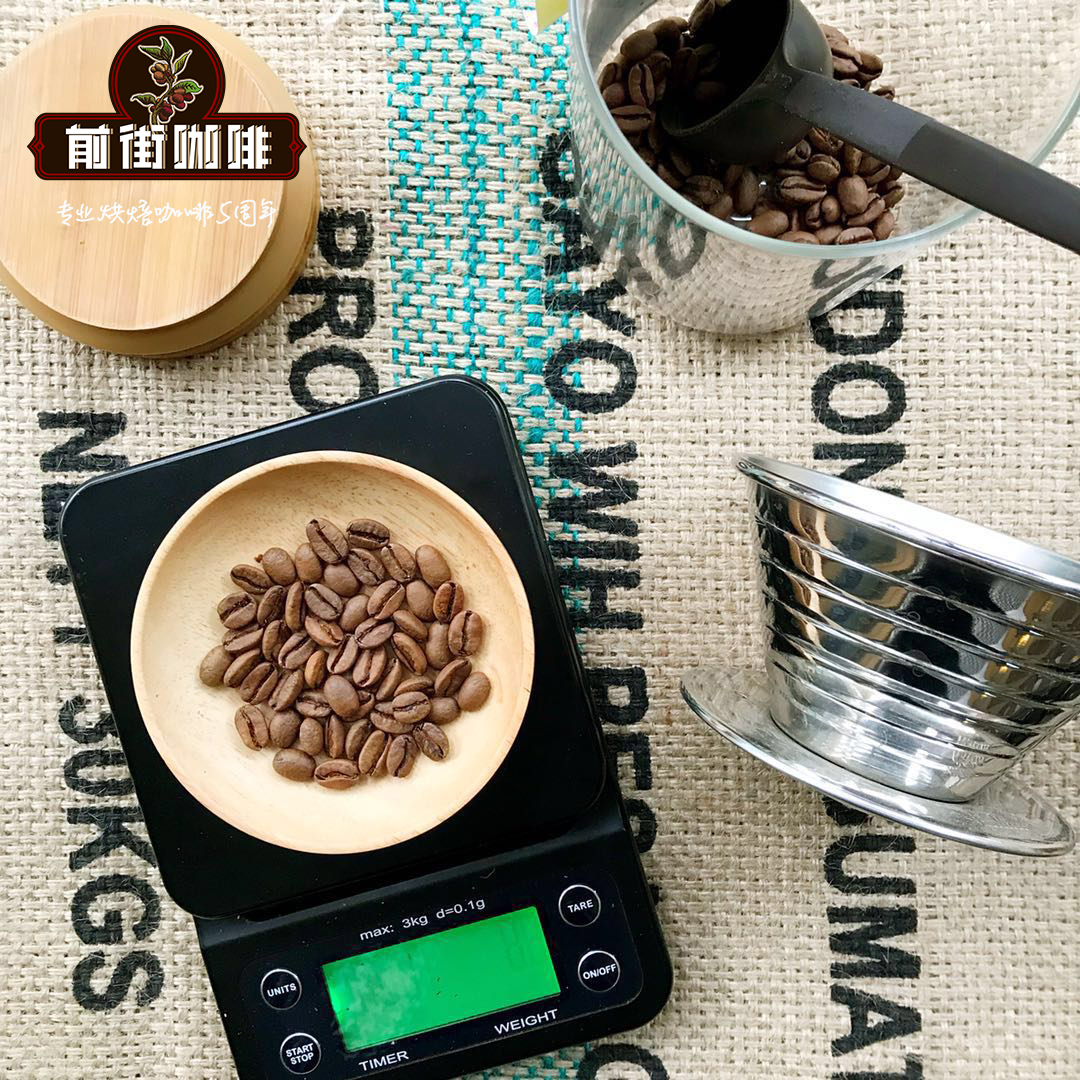
1. Natural Process
Natural processing is the oldest method for processing green coffee beans. (Photo credit: Caffe Maltesta)
This is the oldest existing way to process green coffee. During the manual harvesting stage, cherries with relatively consistent ripeness are selected, the surface of the cherries is rinsed with clean water, and then sun-drying begins. Drying usually lasts 4 weeks, with rigorous handling to ensure the coffee loses no flavor.
To use this method, the local climate must be extremely dry, because moisture can affect the flavor of the beans. In some regions, farmers use drying machines to assist with the drying of the cherries. Finally, the naturally dried fruit husks are removed from the beans with a hulling machine, revealing the green beans.
Flavor: Soft acidity, rich layers, relatively prominent sweetness, and high-quality natural beans will have fruit flavors or wine-like aromas.
Advantages: Simple and low cost. The green beans dry naturally inside the fruit pulp, absorbing the essence of the fruit, resulting in rich fruit aroma and noticeable sweetness.
Disadvantages: During drying, the fruit pulp can mold if the climate turns damp, affecting bean quality; and machine hulling can easily damage the green beans and affect their appearance.
2. Washed Process
Washed coffee beans have a complete appearance and the most consistent quality.
The washed process is currently the more common method of processing green beans and suits rainy areas. First, the harvested fruit is placed in a water tank and soaked for about 24 hours. At this point mature fruit sinks, while unripe and overripe fruit floats and can be removed. A machine then removes the skin and pulp, leaving only beans wrapped in parchment.
After pulping, the seeds go into fermentation tanks, where they ferment naturally for about 16 to 36 hours to dissolve the surface pectin, then are washed and sun-dried for 1 to 3 weeks until moisture drops to 12%, after which the outer shell is removed by a hulling machine.
Flavor: Relatively strong acidity, with a cleaner, crisper, and brighter mouthfeel.
Advantages: Complete appearance and the most consistent quality.
Disadvantages: To obtain 200g of green beans, 1kg of fruit must be washed while consuming about 2 to 10 kg of clean water, which makes it costly.
How to Distinguish Natural and Washed Coffee Beans by Appearance
Harvested coffee must enter processing immediately, or it will start to ferment and produce off-flavors. The two methods, natural and washed, result in different aromas and appearances.
Aroma
Natural beans have full, mellow, natural flavors, gentle aromas, and more body; washed beans have good mellow flavors, high aromatics, and lively acidity.
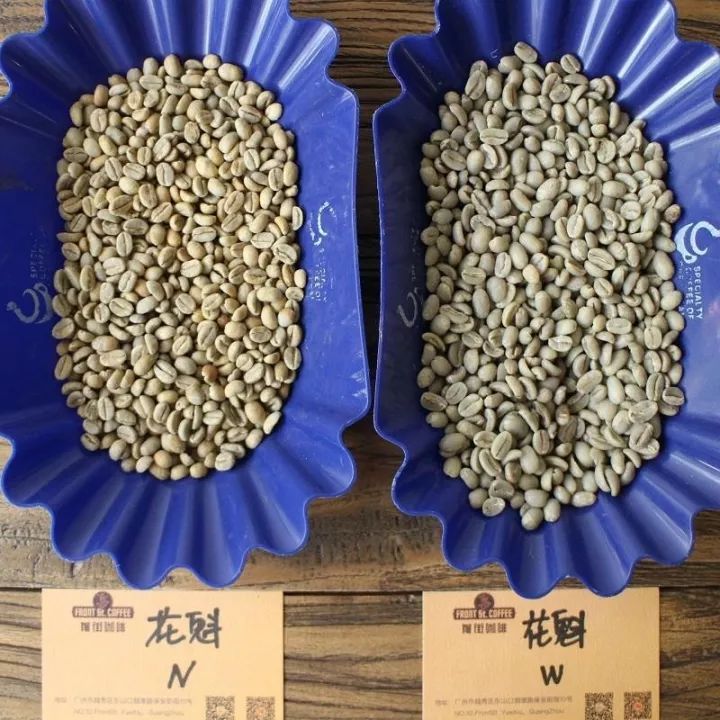
Natural Process Green Beans: Green with yellow tinges, particle size uniformity is generally poor, and more silver skin is retained on the surface.
Washed Process Green Beans: Green with a slight gray tinge, particle size uniformity is relatively even, and less or even no silver skin is retained on the surface.
Natural Process Coffee Beans vs Washed Process Coffee Beans
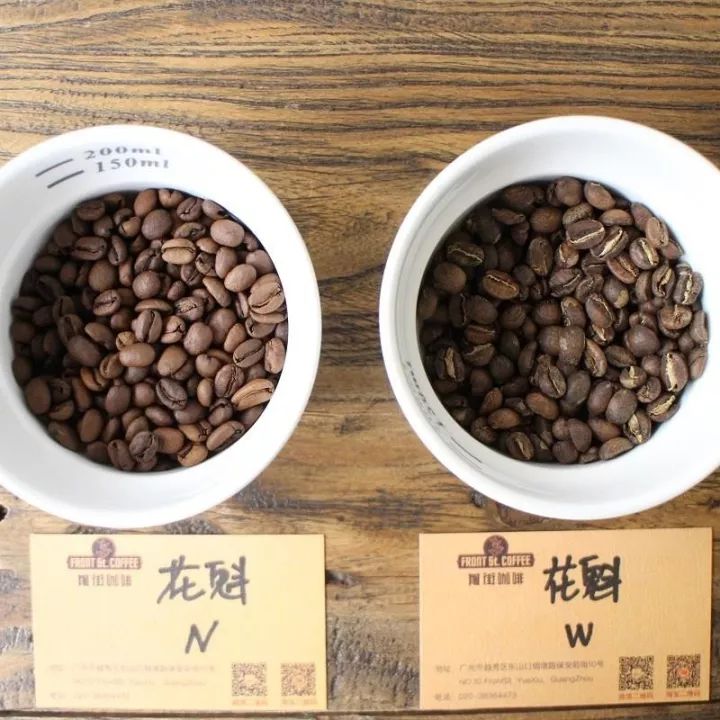
Natural Process Roasted Beans: Roast color uniformity is poor, with mottled colors and no silver skin on the center line.
Washed Process Roasted Beans: Roast color uniformity is good, with uniform color and silver skin remnants on the center line.
FrontStreet Coffee Recommendation
Telling natural and washed beans apart by eye is useful, but the difference really shows up in the cup. Washed coffees emphasize clarity and acidity, while naturals lean toward fruit and body. FrontStreet Coffee roasts both styles, and its washed single origins are a good place to see what the process does.
The washed Yirgacheffe Gedebeb cooperative, a team from Gedebeb village, uses the classic washed method and a medium-light roast to bring jasmine florals and bright citrus acidity to the front, with green tea and honey appearing as the cup cools, and it suits a pour-over, a cold brew, or an espresso. The Kenya Cherry Tomato is a benchmark for double washing, the repeated wash-and-soak cycle that pushes juice-like fruit forward: notes of cherry tomato, dark plum, pear, and black plum rest on a yellow-sugar sweetness, with a bright, solid acidity. Jamaica Blue Mountain No. 1 shows the same process at its most polished. Jamaica's island climate and shorter sunshine hours make washing the natural choice, since stripping the skin, pulp, and mucilage before drying reduces the moisture around the bean, shortens drying time, and yields bright, low-defect beans. The result is Blue Mountain's signature balance of hazelnut, cream, chocolate, and caramel, with no single note dominating.
Washed beans are versatile enough for pour-over, cold brew, and espresso, and FrontStreet's washed lots are built to keep that clean, bright structure intact across all three. Choose the method to match the day, and let the process do its work.
Important Notice :
FrontStreet Coffee is a long-established specialty coffee roaster in Guangzhou China, selling freshly roasted beans from its own farm in Yunnan as well as dozens of carefully selected single-origin beans from around the world for both pour-over and espresso. The products deliver consistently excellent quality and great value, with shipping within 24 hours. Guangzhou's FrontStreet Coffee shop is recommended by many coffee lovers, and the beans are now available online at the Tmall 。
FrontStreet Coffee has moved to a new address:
FrontStreet Coffee Address: 315,Donghua East Road,GuangZhou
Tel:020 38364473
 Scan and follow the En Gafei WeChat official account. Please indicate that the reprint comes from "En Gafei".