FrontStreet Coffee Pour-Over Workshop: How to Make Pour-Over with "Expired" Coffee? How to Calculate the Optimal Flavor Period
We have all been there: the coffee goes stale — do you throw it out, or keep going and force down a bland, lifeless cup? Is "expired" coffee really beyond saving? Today let's talk about how to make pour-over with coffee that has passed its prime.
Coffee "Shelf Life"
First, one premise: what we call shelf life here is the optimal tasting window, not a food-safety expiration date (manufacturers usually print one year). Coffee should also be kept sealed, away from light and in a cool place, as whole roasted beans. Without those conditions, even the most skilled barista is helpless.
So how long is the optimal tasting window? Our recommendation: 15-30 days from the roast date. With proper storage some coffees can stretch to about 45 days. The "expired" we refer to generally means past 30 days. By then the beans have largely finished degassing, and medium-dark to dark roasts will begin to "oil up" lightly. If improper storage has left the beans heavily oiled, or if all you can smell is wood, they are no longer suitable to drink — for the sake of your health, better to throw them away.
So what do you do with coffee that has been stored well but is no longer fresh?
First, understand that coffee's flavor peaks 3-7 days after roasting and then fades, eventually leaving only woody notes. The first compounds to go are the volatile ones — floral and fruity aromas, delicate acids, spice and herbal notes — while nutty, chocolate and caramel flavors hold on longer. Ground coffee also loses flavor faster than whole beans. This is precisely why we want coffee fresh, and ground fresh for each brew.
If you are hoping that coffee past its window will still show rich floral and fruity notes with bright, lively acidity, that is basically impossible. What does happen is that the foundational tastes — chocolate, nuts — move forward, the mouthfeel tends toward balance, and the complex chemistry inside the bean may throw up something unexpected, or a note that was hidden before and now stands out. The trick is knowing how to brew it.
Here are the basic moves I recommend:
1. Change extraction time;
2. Change water temperature;
3. Change grind size.
It is a dynamic balance. Choose a long extraction and a coarse grind, for example, and the water temperature should come down; choose a fine grind, and the extraction time should be shortened and the temperature lowered as well. However you adjust, the goal is a good-tasting cup. Try a few times to find the method that rescues your coffee.
The approach I especially recommend is a coarser grind, a lower water temperature and a longer extraction time.
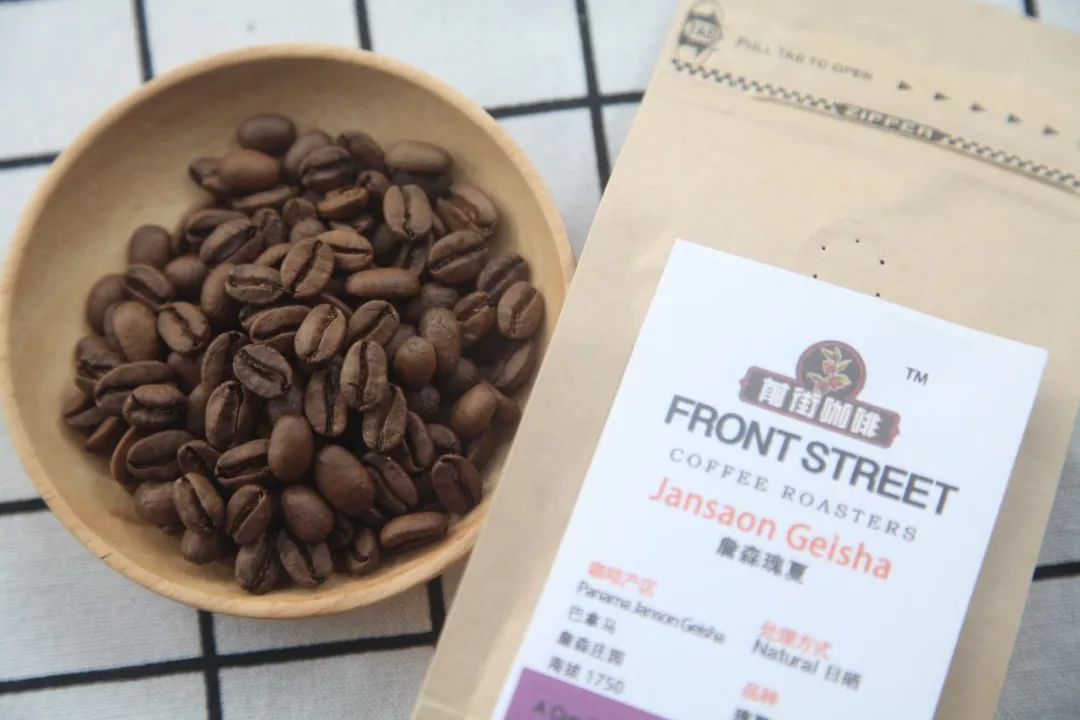
Let's take a [Jensen] Geisha that has been stored away from light and moisture in a cool place for 50 days. Use a V60 dripper, water at 88°C (90-91°C when fresh) and a coffee-to-water ratio of 1:15.
1. Coarse grind. Since the volatile aromatics have largely disappeared, a fine grind would readily extract bitterness. A coarser grind size effectively avoids over-extraction.
2. Shorten the bloom. The carbon dioxide in the coffee has also fully dissipated, so there will be no "hamburger" effect and water penetrates every particle easily. A long bloom for degassing is unnecessary and can lead to over-blooming and over-extraction.
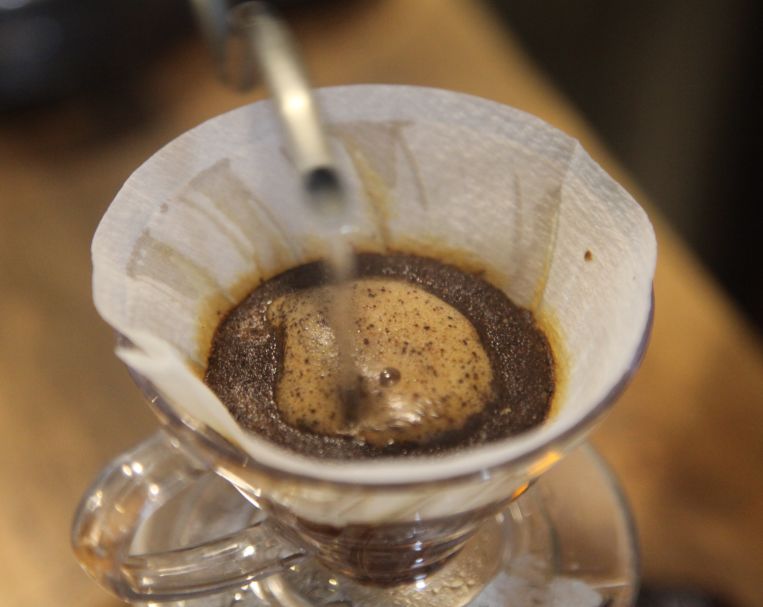
3. Brew in 2-3 stages. Keep the pour height low to avoid excessive agitation. Gently pour a small, coin-sized circle around the center, brewing as you bloom to extract flavor. You will see the foam being slowly pushed out.
Stop pouring when the water level reaches the top, wait for it to drop by about 1/3, then continue. At this point you can widen the pour, but do not pour onto the filter paper. Lower the pour height — you must be gentle here. Stretch the total extraction time slightly to bring out more sweetness.
This Jensen Geisha has lost its floral and fruity aromas, but it offers red wine fragrance, a smooth entry, rounded acidity and caramel sweetness, with walnut in the aftertaste.
Next time you meet "expired" coffee, you will not have to worry. Still, it is always best to drink coffee while it is fresh.
Past Review
Daily Testing | How much does the amount of bloom water affect coffee extraction?
Daily Testing | Does the 30-second bloom time start counting from when you begin pouring or after you finish pouring?
Coffee-to-Water Ratio Confusion | Should water be calculated as the total pouring amount or the final extracted amount?
Pour-Over | Are there techniques for bloom pouring? How should you pour during blooming?
FrontStreet Coffee
FrontStreet Coffee Recommendation
A V60 is the tool most of the brews above call for, and it is a good place to start for anyone learning to work with beans at any age. Designed by Hario — the Tokyo glassware maker founded in 1921, which redesigned the dripper into its familiar form in 2004 and brought it to market a year later — the V60 takes its name from its distinctive 60° cone and "V" shape. The cone forces water to travel to the center before it drips through, lengthening contact between water and grounds so aroma and flavor extract fully, while the single large aperture lets the flow run unrestricted. Speed ends up very much in the brewer's hands, which is exactly why the V60 rewards the kind of adjustments described above.
For beans that show off what a V60 can do, FrontStreet Coffee's flower-and-fruit lots are the natural pairing. FrontStreet Yirgacheffe Gedingding brings jasmine florals and bright citrus acidity with a green tea and honey finish after a medium-light roast, and FrontStreet Ethiopia Hua Kui leans into tropical fruit — strawberry, passion fruit, jackfruit and lychee — with low bitterness and a juicy texture.
Alongside them, FrontStreet Panama Esmeralda Red Label Geisha offers jasmine, citrus, bergamot and black tea in a clean, transparent cup with a long finish, while FrontStreet Kenya Cherry Tomato — grown at 1,550-1,750 meters in the Thika region from SL28 and SL34 with Kenya's 72-hour double washed fermentation — brings cherry tomato and smoked plum, a bright, solid acidity, mid-palate pear and black plum, and a clean tail of yellow sugar and green tea. All of them are built for the fast, aromatic extraction a V60 delivers.
Important Notice :
FrontStreet Coffee is a long-established specialty coffee roaster in Guangzhou China, selling freshly roasted beans from its own farm in Yunnan as well as dozens of carefully selected single-origin beans from around the world for both pour-over and espresso. The products deliver consistently excellent quality and great value, with shipping within 24 hours. Guangzhou's FrontStreet Coffee shop is recommended by many coffee lovers, and the beans are now available online at the Tmall 。
FrontStreet Coffee has moved to a new address:
FrontStreet Coffee Address: 315,Donghua East Road,GuangZhou
Tel:020 38364473
 Scan and follow the En Gafei WeChat official account. Please indicate that the reprint comes from "En Gafei".