Pour-Over Coffee Basics: Introduction to Fundamental Knowledge and Essential Tools

With the development of the third wave of specialty coffee, more and more people are paying attention to coffee, including how to make a cup of it. FrontStreet Coffee believes that if you want to make coffee at home, the simplest method is pour-over coffee: the equipment is not as large and expensive as an espresso machine, and it is relatively easy to learn. As long as you practice the technique diligently, your results will become increasingly consistent. Although many people say pour-over coffee has many points to note and that, professionally speaking, the barrier is not low, FrontStreet Coffee believes that once you master the basic requirements and control them well, you can absolutely brew a professional, authentic single-origin coffee. Below, drawing on FrontStreet Coffee's pour-over experience, is a simple explanation of pour-over steps and precautions.

Equipment Required for Pour-over Coffee
Pour-over kettle, filter cup, server, grinder, filter paper, digital scale, thermometer, and powder sieve.
Pour-over Kettle
There are many varieties of pour-over kettle, and the style should naturally match your personal aesthetic. FrontStreet Coffee does not recommend the popular Hario VKB, as it is not suitable for beginners. Below are several pour-over kettles that FrontStreet Coffee believes can be bought first.
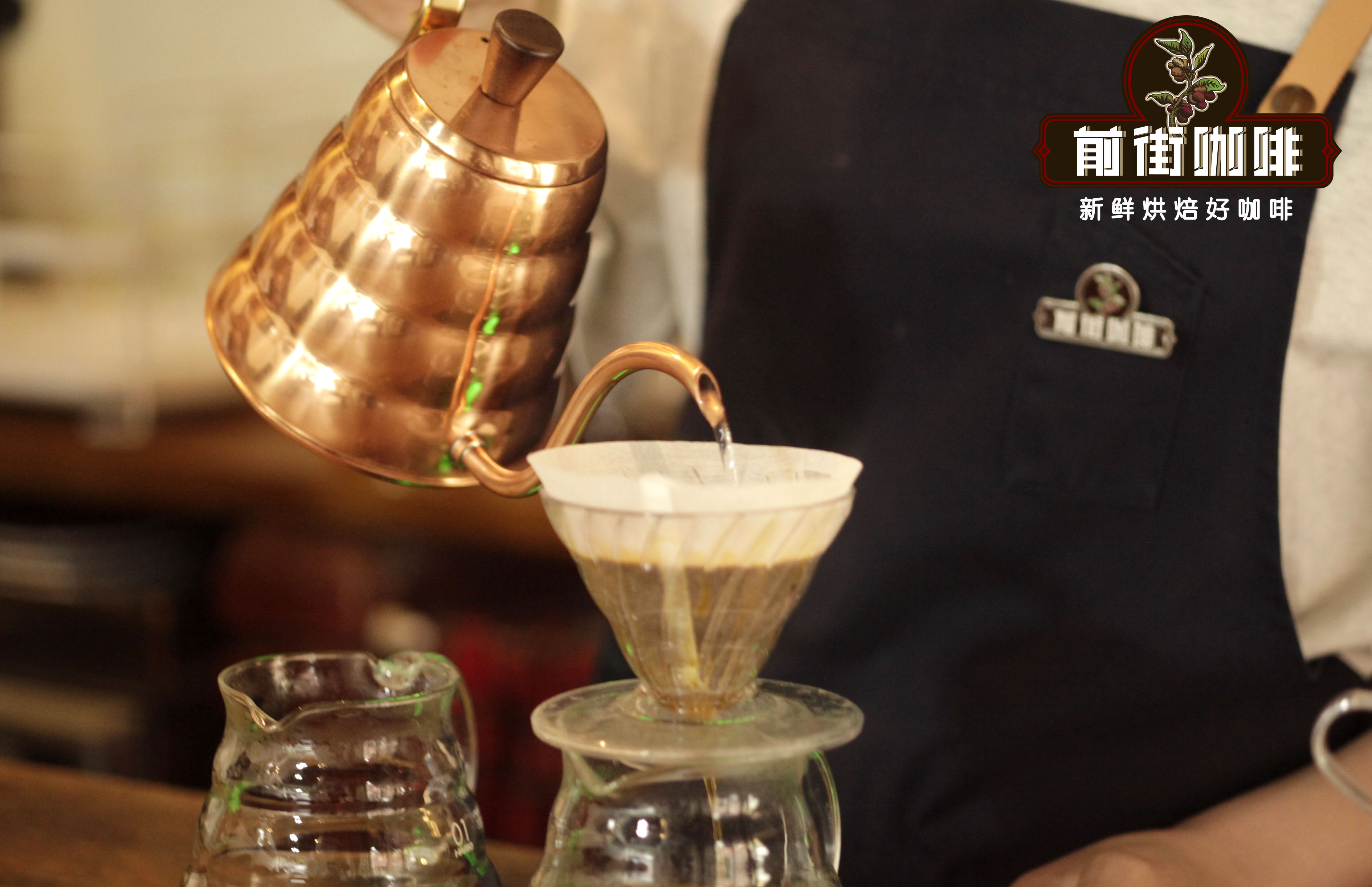
Takahiro Shizuku, commonly known as the "cheating kettle," is named for its excellent water flow control and impeccable craftsmanship. If you can only buy one single-purpose kettle, Shizuku is the undisputed choice. The price of over 500 yuan may seem expensive, but it is well worth it. The 0.9L specification handles most situations. It is made of 18-8 stainless steel. It has two main disadvantages: first, the stainless steel top lid will burn anyone who habitually steadies the lid with their other hand; second, it cannot be fitted with a flow restrictor.
Spout kettle (inner diameter 6mm or above), representative example: the Bonavita temperature-controlled pour-over kettle, which is used in FrontStreet Coffee's shop. It features an imported British Strix temperature control system for precise water temperature with ±1°C accuracy, and a professional gooseneck narrow spout design for more effective control of water flow speed, rate, and direction. The base has temperature adjustment, keep-warm, and memory functions. The high-quality kettle body has a plastic lid, can be fitted with a throttle valve, and its water flow control is better than the VKB's. With this kettle in hand you need nothing else - an excellent choice for small cafes.

Kalita Crane Spout Kettle. Kalita is an established equipment manufacturer that embodies consistent Japanese characteristics: fine craftsmanship and artist-level workmanship. Although this crane spout kettle still has gaps compared with some top-tier products, if you have no experience with artist-grade pieces, using it is undoubtedly a pleasure. The handle is extremely comfortable, with upper and lower grips that keep the kettle body very stable. The crane spout is also an advanced style that offers more variation and interest, and the combination of wood and stainless steel is perfect; it pairs beautifully with their own stainless steel filter cups. As for looks, it depends on personal preference - FrontStreet Coffee's shop also has this kettle, bought purely for its aesthetics. For beginners starting out in pour-over, a narrow-spout kettle with an inner diameter below 5mm, such as the Kalita copper kettle 900, also works.
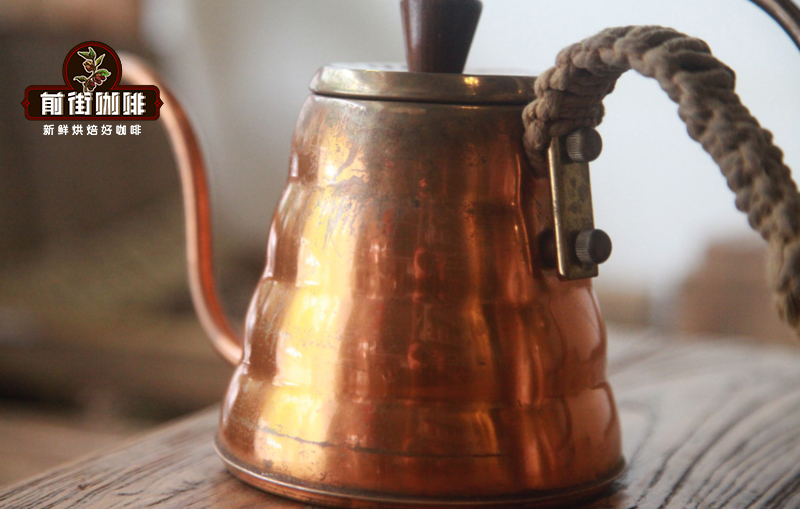
HARIO Thunder Kettle, made of pure stainless steel with secondary matte polishing to avoid minor scratches from light collisions or cleaning. The kettle body and lid are stainless steel, while the lid cap and handle are phenol-formaldehyde resin. Hario's pour-over kettles are popular worldwide not only for their craftsmanship and design but because they are versatile kettles with controllable water flow: unlike various "god-tier" kettles that only handle small flows through 5mm openings, this Hario kettle also suits the immersion brewing styles popular in Europe and America, and can still achieve the small flows needed for drip methods through control.

Filter Cups
Hario V60 is the most popular, available in four materials: resin, glass, ceramic, and metal. The V60 accommodates many variables in coffee making, mainly due to three design points:
- 60-degree angle cone: this extends the time water takes to flow through the coffee grounds toward the center.
- A large filter hole: this lets us control coffee flavor by changing the water flow rate.
- Spiral ribs: these let air escape upward from all sides, maximizing coffee ground expansion.

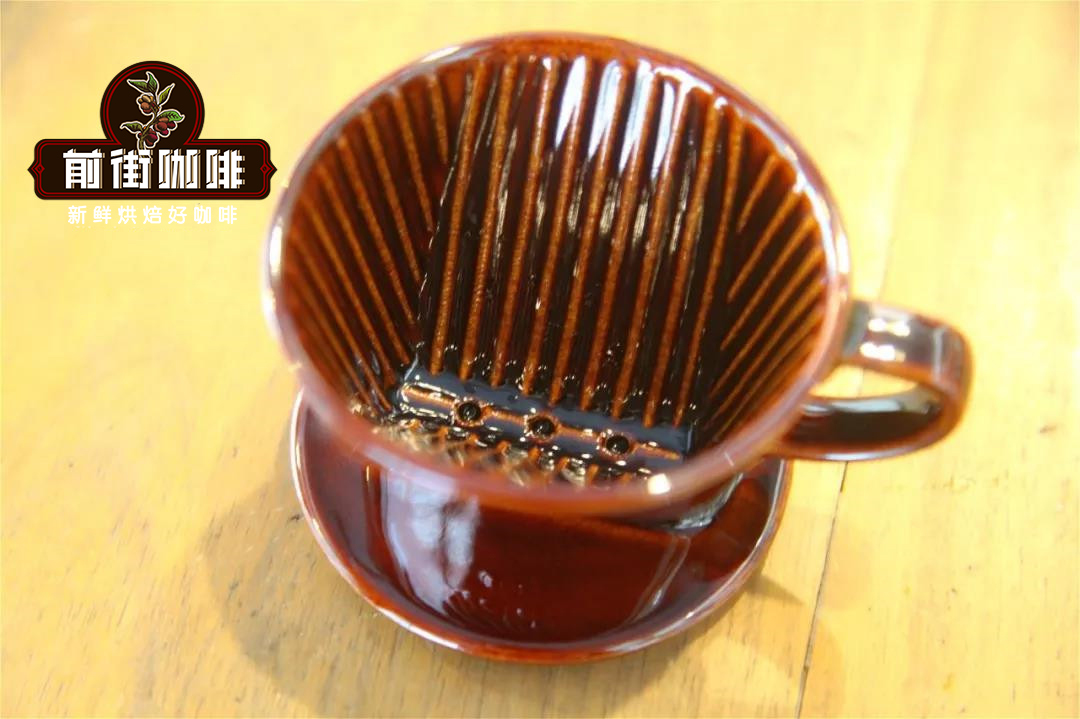
Kalita filter cup, made entirely of ceramic. Ceramic filter cups have better heat retention, uniform glaze, and true colors, in a retro-style three-hole trapezoidal shape with a single-sided cup ring and distinct internal filtering ribs. Coffee brewed through this cup is rich and aromatic, suitable for beans with weak acidity and high body.
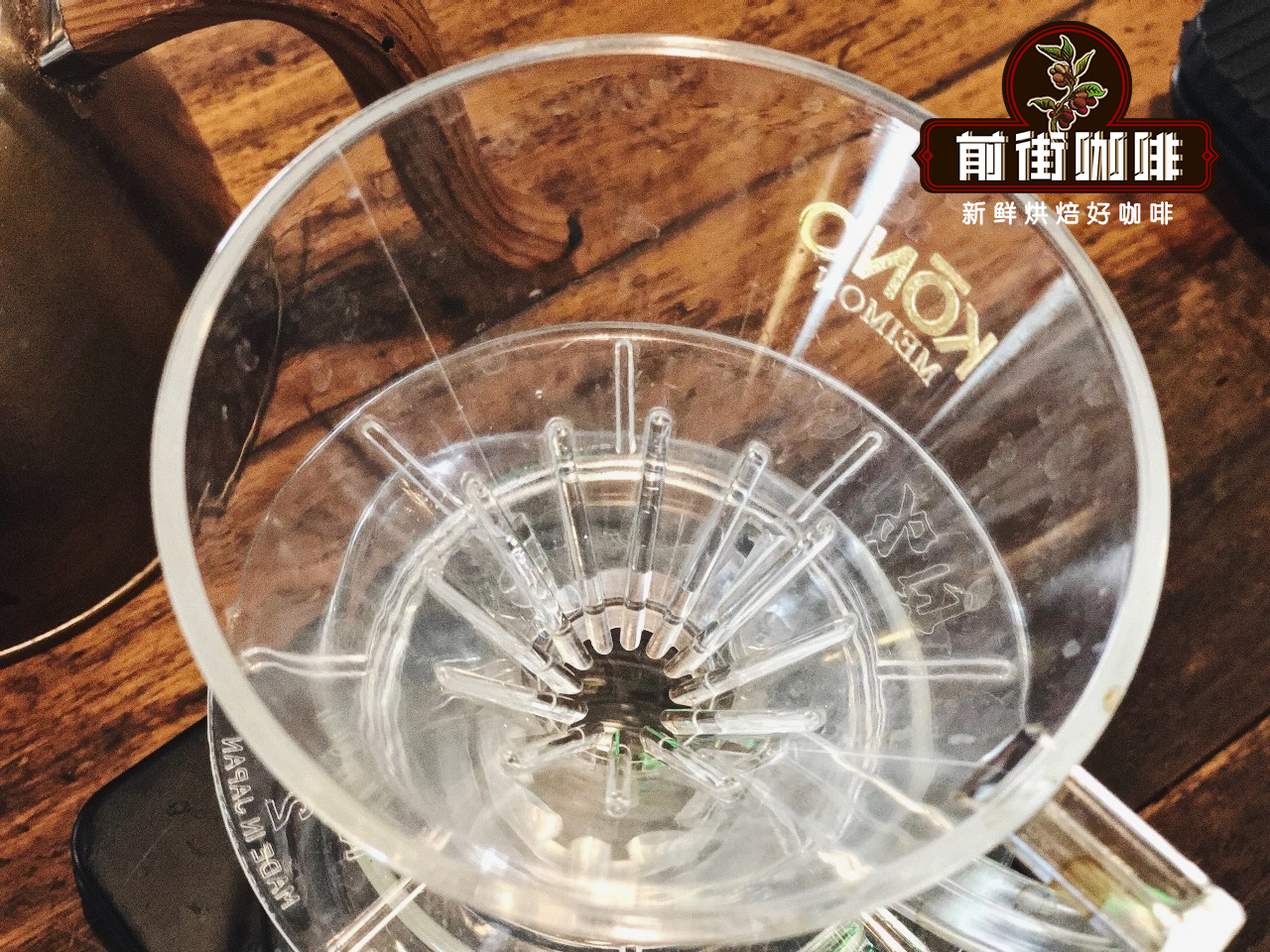
KONO filter cup's ribs do not run from the bottom all the way to the top, but stop at less than half the cup's height. This design ensures that during dripping the filter paper adheres closely to the cup wall after absorbing water. Once the exhaust space is restricted, air flow is limited too, which increases the water absorption time of the coffee particles.
Cake filter cup, also called the wave filter cup. Its bottom is flat, and the flat-bottom design lets water flow evenly, increasing extraction rate. With only three small holes at the bottom, the flow rate is relatively slow, so the grounds are fully soaked and extraction is more balanced. The folded filter paper does not adhere directly to the cup, creating the maximum extraction area: on one hand this helps concentrate extraction, letting hot water filter down evenly and smoothly; on the other hand it also slows temperature loss.

Grinder
Good pour-over coffee requires a good grinder. There are three types of grinder on the market:
- Ghost tooth grinder
- Flat burr grinder
- Conical burr grinder

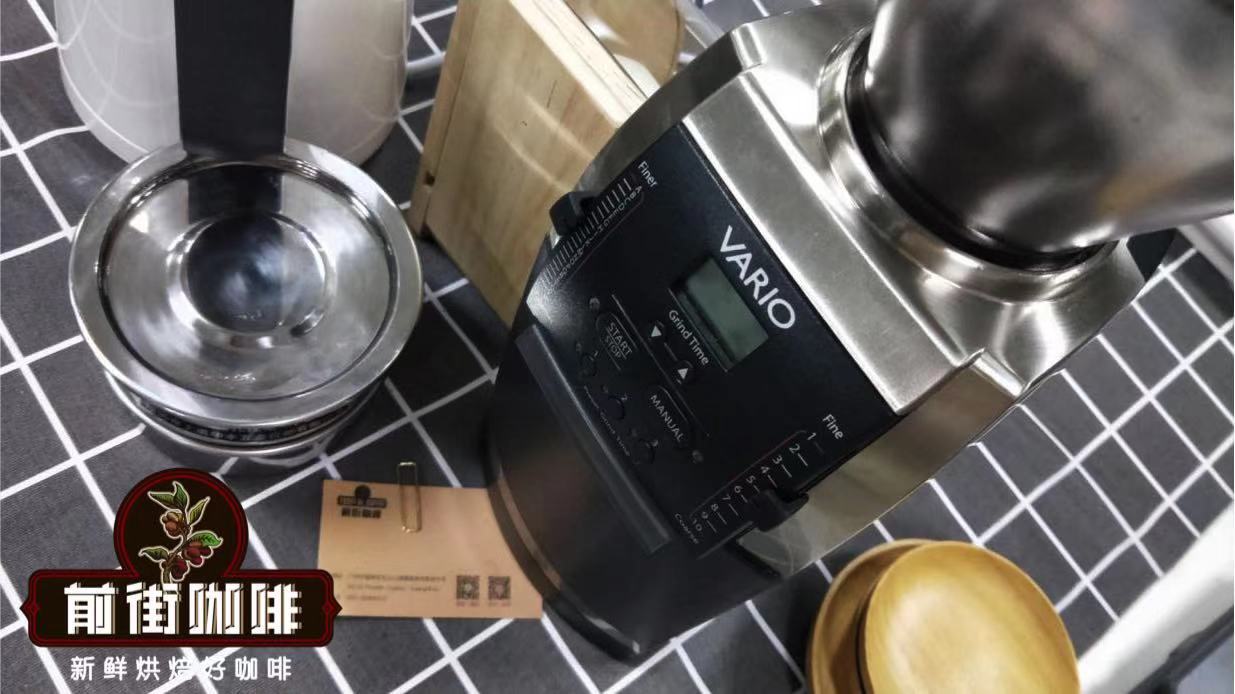
Ghost tooth grinders cut coffee beans into particles, producing mostly round-shaped grounds with good balance and body in single-origin flavor. Flat burr grinders produce mainly flake-shaped particles that raise concentration and extraction rate quickly, so coffee aroma is extracted fast - but a short extraction time is needed, since long extractions easily cause off-flavors and astringency. Conical burr grinders crush coffee into particles, producing more block-shaped grounds with rounded, complex flavors.
Common grinders on the market include Small Flying Eagle, Small Fuji, Baratza Encore, and Huijia grinders. FrontStreet Coffee uses the Baratza Encore.
Thermometer
Thermometers are used to measure the brewing water temperature. Models on the market include Tiamo, Hero, and Cafede Kona thermometers.

Digital Scale
Digital scales let us better control the coffee-to-water ratio during brewing, reducing unstable factors and increasing error tolerance. They range from several hundred yuan down to tens of yuan. Available brands include Yami digital scales, Hero smart scales, and Timemo digital scales.

Filter Paper
Filter paper comes in bleached and unbleached varieties: bleached paper appears whiter, unbleached light brown. Filter paper's job is to use extremely dense fibers to retain the grounds while filtering the extracted coffee into the cup. When buying, choose the paper that matches your filter cup. Options include Japanese Sanyo V60 filter paper, Hario filter paper, Kalita filter paper, and Kono filter paper.

Powder Sieve
Mainly used to determine grind size. Each coffee bean has a suitable grind for pour-over. Through repeated experimentation, FrontStreet Coffee has determined that 80% passing through a Chinese standard #20 sieve is the appropriate grind for pour-over.

Server
The server is actually optional. If you are drinking alone, you can skip it and filter directly into a mug; for brewing multiple cups you will want one. Its graduated markings and transparent material make it easier to understand and control the extraction process, making the server more than just a serving vessel. FrontStreet Coffee recommends the HARIO V60 Cloud Server and Kalita Server.

Pour-over Coffee Steps and Techniques
To brew a good pot of coffee, start with six aspects: water temperature, grind size, coffee-to-water ratio, water quality, coffee beans, and brewing technique.

Water Temperature
The higher the water temperature, the stronger the extraction ability, producing more bitter coffee with intense flavor; lower temperature has weaker extraction, making coffee more acidic with a milder, lighter flavor. Adjust temperature according to roast level: light to medium roasted beans are recommended at 90-91°C, while medium to dark roasts are recommended at 85-87°C. FrontStreet Coffee basically stays within this range. A customer once questioned these temperatures, so FrontStreet Coffee brewed dark-roast Golden Mandheling beans with 90°C water - the result was a taste that could almost "rival" espresso.

Grind Size
Grind size refers to the size of the coffee particles and affects the contact time between coffee and water. Finer grounds extract more substances in the same time, but easily lead to over-extraction; coarser grounds extract less in the same time, but easily lead to under-extraction. FrontStreet Coffee recommends 80% pass-through on a Chinese standard #20 sieve as the pour-over grind, determined through multiple taste tests. Note that different beans require different grinds, so when the flavor seems off, check whether the grind is the problem.
Fine-ground coffee has higher concentration, higher extraction rate, and higher body (easily over-extracted).

FrontStreet Coffee fine grind demonstration
Coarse-ground coffee has lower concentration, lower extraction rate, and lower body (easily under-extracted).

FrontStreet Coffee coarse grind demonstration
FrontStreet Coffee recommends a medium-fine grind for pour-over coffee (about granulated sugar size).

FrontStreet Coffee medium-fine grind demonstration
Coffee-to-Water Ratio
The coffee-to-water ratio is the proportion of grounds to brewing water and affects the coffee's concentration. It can be 1:10, 1:13, 1:15, or 1:16. FrontStreet Coffee recommends 1:15, which is moderate in both concentration and taste. Of course, everyone pursues different flavors, so adjust the ratio to your desired strength.
Water Quality
A good cup of coffee cannot do without good water. Do not use tap water directly; use filtered or purified water. Mineral water is fine too, but the same parameters with different waters produce slightly different flavors. FrontStreet Coffee ran an experiment to demonstrate this - not to prove which water is best, but to show how different waters affect extraction and flavor.

Water Quality Test Results
FrontStreet Coffee used FrontStreet Coffee Sidamo Guji coffee beans for the experiment. Water quality directly affects coffee's taste, aroma, body, and other qualities; the key factor is the mineral composition of the water. Mineral ions such as calcium, magnesium, sodium, and potassium affect coffee's thermodynamic extraction ability, thereby changing the flavor.

Fresh Coffee Beans
FrontStreet Coffee believes pour-over can use both single-origin and espresso-style beans, but to experience the true charm of pour-over, choose single-origin beans with detailed information (origin, variety, processing method) so you can taste the character of one region. That is why FrontStreet Coffee introduced the daily-bean series: affordable beans that still express their origin, such as Yirgacheffe's citrus acidity, Mandheling's herbal notes, and Brazil's nutty-chocolate flavors. Also note that flavor fades over time: freshly roasted beans need a resting period of 4-7 days, after which flavor peaks. FrontStreet Coffee's beans are generally roasted within a week or 3-4 days of shipping, so you can brew immediately on receipt. After a month the flavor grows noticeably blander, so finish a bag within a month.

FrontStreet Coffee coffee beans from various producing regions
Brewing Technique
There are various techniques: three-stage, single-pour, drip method, and more. FrontStreet Coffee recommends beginners use the three-stage pouring method, which suits light, medium-light, and medium roast beans. Its segmented extraction clearly expresses the front, middle, and back flavor segments of the coffee.
First Pour: Bloom (helps degassing)
Coffee beans undergo a series of chemical reactions and physical changes during roasting. After reaching a certain roast level, beans accumulate large amounts of gas (mostly carbon dioxide).

Generally, the fresher the bean and the closer to roast date, the more bubbles appear during blooming. Dark roasts also release more gas than light roasts. FrontStreet Coffee's beans are freshly roasted, so we generally recommend resting them three days first, letting the beans release carbon dioxide beforehand to avoid instability and under-extraction during brewing.
After blooming releases the gas, the particles can absorb water evenly, allowing more uniform extraction later. A good bloom lets the grounds release gas quickly, fully, and evenly while making full, fast contact with water, helping even extraction.

Pay attention to these four points during blooming:
- Before pouring, level the coffee bed first.
- Pour gently during blooming.
- The liquid dripping during bloom should be as little as possible; when too much appears in the server, reduce the pour or check the grind. (If there is too much bloom water and a large amount of coffee liquid drips down, the water does not linger but simply washes substances off the outside of the grounds - the off-flavors and astringency of the outer layer begin to dissolve, producing coffee that is weak yet has over-extracted off-flavors. If bloom water is insufficient with no drops falling, the grounds have not absorbed enough water and some coffee has not fully degassed, causing under-extraction.) Based on this, FrontStreet Coffee ran multiple bloom experiments and found pouring twice the coffee weight in water is most appropriate.

- Bloom time should be about 30 to 40 seconds. When the surface expansion ends and the coffee bed starts to shrink, bloom is complete and you can begin pouring. (Too long, and coffee easily turns bitter and astringent; too short, and soaking is insufficient, risking under-extraction.) Bloom end time varies by bean, but FrontStreet Coffee found this is not beginner-friendly, and beginners need standardization and ease. So while the beans are freshly roasted, FrontStreet Coffee recommends a 30-second bloom; experienced brewers may adjust.
Second Pour
The second pour starts from the center, injecting a small water column down to the bottom of the bed. To concentrate the column's penetrating power, keep the circular movement small - about the size of a one-yuan coin - then spiral outward. From the second pour onward, watch the water amount: try not to exceed the height of the bed, stopping the pour when the water column approaches the filter paper.

On pouring, FrontStreet Coffee always tells customers: pour gently, do not break the stream while circling, and keep the flow steady without fluctuating. There are two main reasons: flow size affects agitation of the bed and controls extraction time.
1. Water flow size affects agitation of the coffee bed
A larger flow stirs the grounds more vigorously, shortening extraction time; a smaller flow stirs them less, extending extraction time.
With a large flow, the bed is agitated strongly and the water level rises rapidly as if about to overflow the filter paper; drainage accelerates, easily shortening extraction and causing under-extraction where the coffee's flavor cannot show.

With a small flow it is the opposite: although the water level is not high, an overly gentle column cannot penetrate the bed and only stirs the surface of the grounds, significantly extending extraction time, easily making coffee bitter with off-flavors that greatly hurt the taste.
2. Control extraction time through water flow
Longer extraction time = stronger flavor, higher concentration, more pronounced sweet, sour, and bitter sensations.
Shorter extraction time = milder flavor, lower concentration, less pronounced sweet, sour, and bitter sensations.

Third Pour
As the thicker bed near the filter paper grows heavier from absorbed water, slides down, and thins as the water level drops, start the third pour when the level falls to halfway.
From the third pour onward, watch the rate at which the level falls. Again pour in circles from the center, keeping the water below the bed's height. You will also notice foam filling the surface. The third pour needs to increase the tumbling of the particles, rolling all the settled particles up to dissolve their soluble substances.
The rolling particles begin to settle once you stop adding water. Rely on the flow caused by the falling water level to create friction between particles; once pouring stops, the grounds sink and cause blockage, so pay special attention to pouring rhythm. If the stream is broken too many times, it is like letting the particles soak continuously, which will make the tail of the extraction astringent and off-flavored.

Example with FrontStreet Coffee Ethiopia Yirgacheffe
Region: Yirgacheffe, Altitude: 1700-2200m, Grade: G1, Variety: Heirloom, Processing: Washed
Brewing Parameters
FrontStreet Coffee recommends the Hario V60, 90°C water, 15g of coffee, a 1:15 coffee-to-water ratio, and grind BG#5F (80% pass-through on Chinese standard #20 sieve).
Brewing Technique
FrontStreet Coffee uses segmented extraction: 30g of water for a 30-second bloom, then small circular pours to 125g for the second segment, continuing to 225g; stop pouring and remove the filter cup when the water level is about to expose the bed (timing starts from the bloom). Extraction time is 2 minutes.

Flavor Description
Obvious floral notes, bright lemon-citrus acidity, and a tea-like sensation in the finish.
FrontStreet Coffee Recommendation
For the V60, FrontStreet Coffee favors floral-and-fruity light roasts: the 60-degree cone and single large opening deliver fast extraction that renders aromas three-dimensional and acidity lively, making jasmine florals, citrus acidity, and tea-like finishes shine - exactly the style of a washed Yirgacheffe like the one brewed above.
For beans, the FrontStreet Coffee daily-bean series is a great entry point: Yirgacheffe for citrus and florals, Mandheling for herbal and chocolate depth, and Brazil for nutty sweetness, all at accessible prices while still expressing their origins. With a V60, resin versions are a practical first choice: they hold heat well and, thanks to industrial molding, have the smallest dimensional error.
Brew with the parameters above - 15g of coffee, 90°C, 1:15, medium-fine grind, three-stage pour with a 30-second bloom - and rest freshly roasted beans 4-7 days before brewing for the most stable, expressive cup.
Important Notice :
FrontStreet Coffee is a long-established specialty coffee roaster in Guangzhou China, selling freshly roasted beans from its own farm in Yunnan as well as dozens of carefully selected single-origin beans from around the world for both pour-over and espresso. The products deliver consistently excellent quality and great value, with shipping within 24 hours. Guangzhou's FrontStreet Coffee shop is recommended by many coffee lovers, and the beans are now available online at the Tmall 。
FrontStreet Coffee has moved to a new address:
FrontStreet Coffee Address: 315,Donghua East Road,GuangZhou
Tel:020 38364473
 Scan and follow the En Gafei WeChat official account. Please indicate that the reprint comes from "En Gafei".