Which Espresso Coffee Beans Offer the Best Value? Where to Buy High-Quality Espresso Beans?
The Origin and Artistry of Espresso
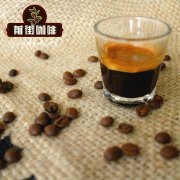
Espresso was born in Italy — the name means "especially fast" in Italian. It extracts coffee instantly under steam pressure, a method that preserves the coffee's oils for a long time and produces rich, mellow flavors with balanced acidity and bitterness, earning espresso the title "the artwork of coffee." It is also the foundation for most other café drinks: latte, cappuccino, macchiato, and mocha are all built on an espresso base.
Choosing Espresso Beans
Italian coffee is typically made from blends of beans from different origins — Kenyan, Mandheling, Mocha, Brazilian, and Colombian are all common base beans. Different varieties from different regions, combined with different roast profiles, create distinctive textures and aromas when blended. The main criterion for choosing beans is simple: whether the extracted flavor matches your own preferences.
Brewing Espresso at Home: From Beans to Machine
1. Kenyan Coffee Beans
Kenyan beans show pronounced fruit acidity and a hard, dense texture; lots with blackcurrant character are considered premium. Small farms typically deliver superior quality and capacity compared to large farms, whose output is merely average. Kenyan beans are classified into seven grades by size and appearance — AA or AA+ is the highest, followed by AB, PB, C, E, TT, and T — but good appearance doesn't necessarily mean good flavor.
2. Colombian Coffee Beans
An Arabica variety with moderate body, Colombian coffee carries sweet aromas after roasting, with pronounced acidity and a sweet, slightly bitter taste. It's a frequent component of blends, and lots showing sweet potato skin flavors are considered the highest grade.
3. Mandheling Coffee Beans
Produced in Sumatra, Indonesia, Mandheling serves as a base bean. Roasted, it develops a rich, intense bitterness and full body, making it one of the most commonly used components in espresso blends.
4. Mocha Coffee Beans
Mocha beans come from Ethiopia in Africa and belong to the Arabica family, featuring an enchanting combination of sweetness and acidity with a distinctive chocolate note. Roasting draws out fruit aromas, and in a blend they lift the overall fragrance and add a unique mellowness.
5. Brazilian Coffee Beans
Brazilian coffee, also Arabica, has a neutral profile — mild acidity, sweetness, bitterness, and a light aroma. Precisely because it lacks strong, distinctive flavors, it works both as a single origin and as a blender with nearly anything.
The Complexity of Developing a Blend
Developing a blend is actually more complex and time-consuming than working with single origins. For a single origin, a roast that expresses the region's character is enough — most beans, roasted light to medium without major mistakes and brewed as pour-over, will show their flavor clearly.
Blend development demands thorough knowledge of beans from the major regions. You can't blend two beans from the same region and same process — pairing Kochere with Banko Gotiti from Yirgacheffe would be pointless, since the result would still be floral and citrus with likely not enough body. Wouldn't washed Yirgacheffe blended with a Central American Guatemala or Costa Rica make far more sense? So first you need to know each region's flavor profile, then determine what the beans can achieve together — whether they compensate for each other's weaknesses or create something new.
Testing also takes longer. Blends need a resting period, typically 7–10 days. A common practice is to start testing on the fifth day after roasting and keep testing to find the optimal rest.
Then there's the ratio. With two beans, is it 3:7, 4:6, or 5:5? With three beans, the allocation gets even more complicated. These decisions rely on your knowledge of the green coffee combined with roasting experience.
When developing a new blend, use a sample roaster first to save on bean cost. Once the ratios and roast degree are fixed, replicate the roast curve on a production roaster. Development typically takes about a month, and it helps to use roasters of the same brand so the curve replicates cleanly with fewer errors.
By this reasoning, a good blend is one with good balance and high sweetness.
Beware of judging by crema: an Americano with spectacular crema doesn't necessarily taste good. A blend with over 50% Robusta will produce thick crema but a bland, monotonous cup.
The practical guidance: choose Arabica-dominant beans with Robusta at no more than 20%, and avoid black, oily beans — roasting that dark exists to mask poor quality and defect flavors, and oily beans retain nothing but burnt bitterness. Buy freshly roasted beans, because blends have a shelf life: flavor begins to decline one month after roasting.
Recommendations for Cost-Effective Espresso Beans
There are still small domestic roasting studios that produce good beans, though they may not hold quality consistently. Among the better performers are Shushupai, Wei Bei, FrontStreet Coffee, and M2M. If you prefer stable, authentic blends from established names, the major Italian brands — Illy, Issimo, and Lavazza — are reliable choices.
FrontStreet Coffee Recommendation
For an espresso with depth, FrontStreet's Mandheling — from Indonesia's Sumatra, usually deep or medium-dark roasted to mute acidity and amplify its rich, aromatic body — is a natural base. As a straight shot it's intense and full, with prominent caramel aroma; as a blend component it adds body and wild herbal character.
FrontStreet's highest-regarded option is the PWN Golden Mandheling from the Gayo mountains near Lake Tawar in Aceh. PWN selects beans of 18 mesh and above, demands fewer than 3 defects per 300-gram green sample to meet the strictest G1 grade, then hand-sorts three times for exceptional cleanliness and sweetness. Roasted medium-dark, it shows a clean cup, full body, and rich roasted aroma — ideal for anyone who dislikes acidic coffee. Its sibling, the FrontStreet Lin Dong Mandheling from around Lake Toba, brings clove, wood, spice, and mint notes with a strong, persistent, thick sweetness at low acidity.
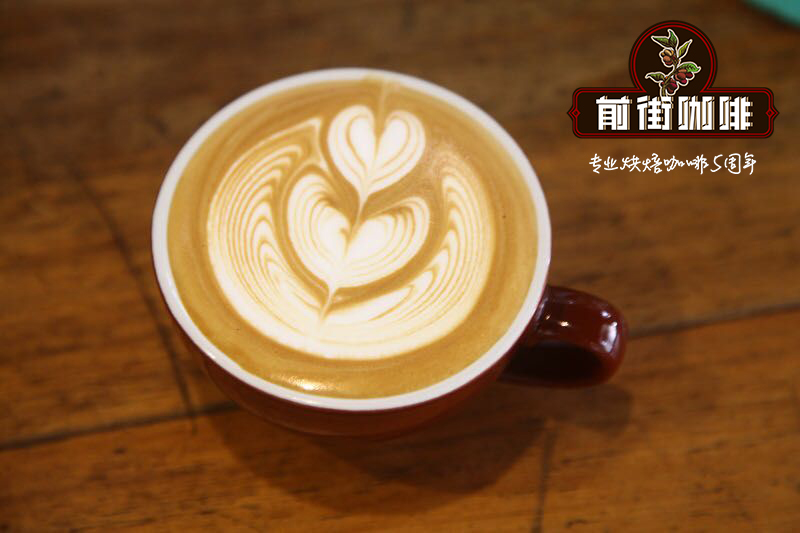
For espresso machines specifically, FrontStreet's best-selling Classic Blend pairs Brazilian cream-and-nut character with medium-dark Mandheling — butter, roasted chestnut, and caramel come to the fore, with sandalwood, herbal, and spice accents, plus a touch of Robusta to enrich the crema. It pours beautiful latte art and layers a Dirty with ease.
Important Notice :
FrontStreet Coffee is a long-established specialty coffee roaster in Guangzhou China, selling freshly roasted beans from its own farm in Yunnan as well as dozens of carefully selected single-origin beans from around the world for both pour-over and espresso. The products deliver consistently excellent quality and great value, with shipping within 24 hours. Guangzhou's FrontStreet Coffee shop is recommended by many coffee lovers, and the beans are now available online at the Tmall 。
FrontStreet Coffee has moved to a new address:
FrontStreet Coffee Address: 315,Donghua East Road,GuangZhou
Tel:020 38364473
 Scan and follow the En Gafei WeChat official account. Please indicate that the reprint comes from "En Gafei".