The World's Best Single-Origin Coffee Beans Are in Africa! African Coffee Bean Varieties, Characteristics, and Growing Regions
Coffee beans originated in Ethiopia, Africa. Today, however, countries such as Brazil, Colombia, and Guatemala are also important coffee-producing regions.
To date there are thousands of coffee bean varieties worldwide. Many are identified by origin to indicate unique flavours such as acidity, aroma, richness, and smoothness. Beans from the three major continents each have their own characteristics. Put simply, [American beans] have a balanced flavour and mouthfeel with soft fruity acidity and nutty, cocoa-like notes; [African beans] have rich tropical fruit flavours; and [Asian beans] lean toward quality herbal, spice, and caramel notes with a relatively thick texture.

Many people dislike acidity in coffee and prefer very rich, even strong coffee. But if you want to become a coffee connoisseur, the key to entry is understanding acidity in coffee. It must be said that more acidity is not automatically better. The sweet and acidic substances in coffee are components that contribute to flavour complexity. Some coffees have high acidity that is puckering and score very low in professional cupping. Others, while containing acidity, have a comfortable, rounded acidity that is sweet with acid, and thus score higher.

Coffee Acidity
Green coffee beans contain components related to sour taste, such as citric acid, malic acid, quinic acid, and phosphoric acid. These, however, are not the source of the acidity perceived when drinking coffee. The acidity created by roasting is the main source of sour taste.
Once green beans are roasted, various components undergo chemical reactions that create new acids. The most representative reactions are the decomposition of chlorogenic acids to produce quinic acid, and the decomposition of oligosaccharides to produce volatile formic acid and acetic acid.
What Makes Coffee's Acidity Charming?
First, acidity in coffee relates both to the green beans themselves and to the degree of roasting. Some African coffees in particular have soft, bright acidity, like sweetness and silky smoothness. Adding some bright acidity makes them appear full-bodied with a rich mouthfeel. Other coffees have very stimulating acidity that feels piercing, extremely sour.
If a cup of coffee has only bitterness or acidity without other flavours, it is a very poor cup. There is an essential difference between acidity and astringency. Acidity is perceived as a saliva-producing sensation on both sides of the back-middle of the tongue after drinking coffee, while astringency is a numbing, rough sensation on the tongue surface, throat, and palate, like drinking coffee through gauze.
Astringency is an undesirable taste in coffee, representing defects from green beans through roasting and even brewing. A good coffee should be neither bitter nor astringent.
For example, we might say African beans have "bright acidity" or "fruity acidity." Wonderful acidity gives coffee richer connotation.
Inferior Quality: rotten acidity, sharp acidity, very high acidity, puckering, vinegar-like acidity
Premium Quality: fruity acidity, fresh acidity, rounded acidity, soft acidity
African Growing Regions
Flavor Characteristics: Charming fruit acidity
African Bean Flavors: Among them, Ethiopian coffee has a strong citrus aroma and Kenyan coffee has a rich berry aroma, along with the sour fragrance of plum juice and grapefruit and a cane-sugar sweetness. The citrus aroma of Ethiopian coffee and the berry fragrance of Kenyan coffee are the greatest characteristics of African beans, and also what fascinates enthusiasts most.
The general characteristics of African coffee are rich aroma and charming fruit acidity. Its bright acidity is lively and refreshing, but African coffee's richness is often somewhat thin, and sweetness is not very prominent. Because of drought and water scarcity in Africa, natural processing is mostly used for green beans. Bean shapes are often uneven and not aesthetically pleasing, with higher defect rates.
Ethiopia
Ethiopia is an agricultural country with a history and tradition that make it the origin of coffee. Yirgacheffe and Sidamo can represent Ethiopia's overall flavour. Ethiopia is Africa's main exporter of Arabica beans. It has a soft mouthfeel, a wild wine-like aroma, and slight acidity, leaving an unforgettable impression after tasting.
Four cultivation systems are distributed across Ethiopia's nine major growing regions: Jimma, Sidamo, Yirgacheffe, Harar, Limu, Illubabor, Keffa (Lekempti), Tepi, and Bebeka.
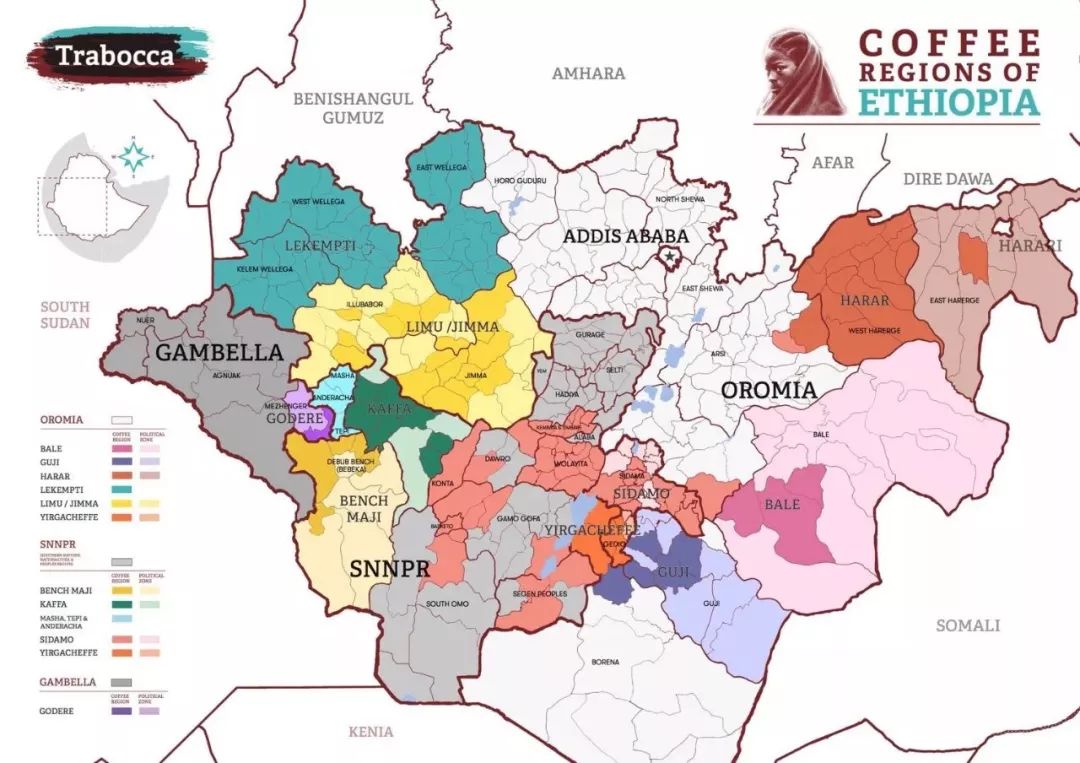
Yirgacheffe (Premium Growing Region): Altitude 1,800-2,000 meters | Garden Coffee System
Yirgacheffe is subordinate to the Sidamo growing region but was separated out because of its unique flavour.
Besides the town of Yirgacheffe, it also includes three surrounding sub-regions: Wenago, Kochere, Gelena, and Abaya.
Under Yirgacheffe there are various villages, micro-regions, cooperatives, and processing stations. In most of Ethiopia, coffee farmers still live very difficult lives. They lack the capacity to build family-style processing workshops, so many processing stations buy cherries from surrounding smallholders, process them, and sell to green-bean merchants. Even a lot as simply named as [FrontStreet Coffee · Ethiopia Yirgacheffe Natural Red Cherry Project] sometimes arrives with very detailed bean information, letting you trace it to a village, for example [FrontStreet Coffee · Yirgacheffe Berry Orchard], traced back to Yirgacheffe Kochere Town Bolje Village Lot1 Natural G1, or Ethiopia Yirgacheffe Kochere Bolje Lot1 Natural G1.
The dry aroma of Ethiopian Yirgacheffe beans emits a rich fruit fragrance, with heavy berry, strawberry, and grass-jam aromas.
The wet aroma is like sweet syrup, like thick apricot pulp, dried plums, and lemon peel. Entry is not intense, with a medium body and a lively, bright acidity, like fruit tea.
Sidamo (Premium Growing Region): Altitude 1,400-2,200 meters | Garden Coffee System
Flavour similar to Yirgacheffe. Finely washed or natural processed Sidamo likewise has floral and citrus aromas.
The Sidamo growing region lies in southern Ethiopia. Agriculture dominates the local industry, with coffee-growing areas around the Great Rift Valley.
The region's greatest advantage is soil fertility maintained through organic-matter circulation, using fallen leaves from surrounding trees or plant roots as fertilizer. This gives town-produced coffee a distinctive character, or a medium-roast flavour of wild ginger and bergamot, with blackcurrant notes, grapefruit sweetness, and a comfortable Earl Grey tea quality.
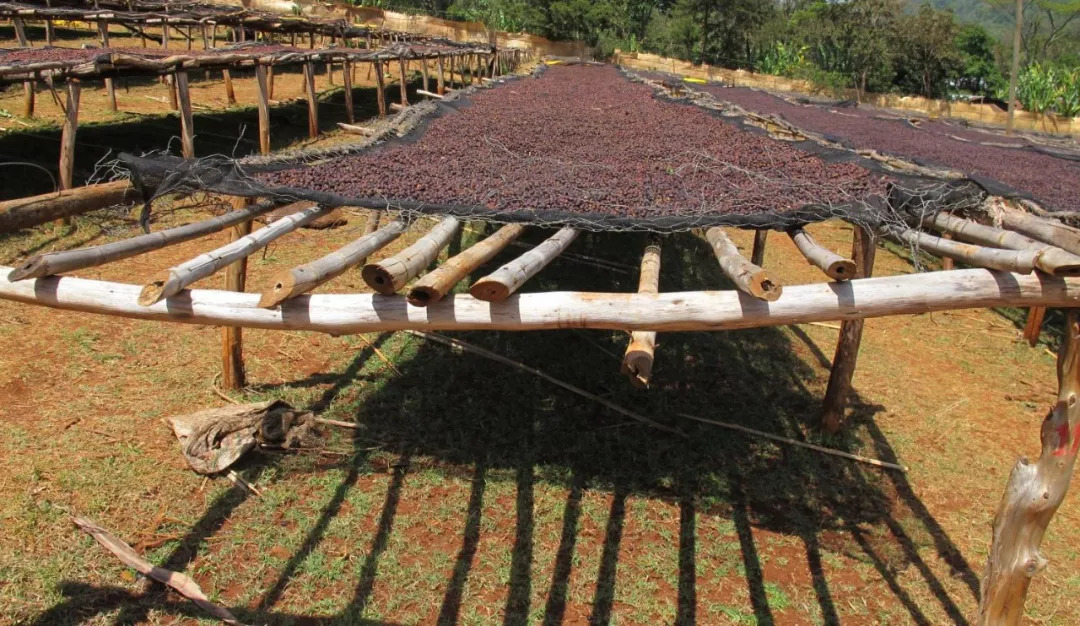
What is G1—Coffee Bean Grading
Ethiopian coffee beans use a defect-proportion grading method. Indonesian beans are mainly divided into 6 grades, G1 to G6, and Ethiopia uses this method too. The highest grades for washed beans are G1 and G2; the highest grades for natural beans are G1 and G3.
Washed: Grade-1; Grade-2 (G1>G2)
Washed-process coffee is less likely to have wild flavours, possessing pure, refreshing characteristics. Some exceptionally high-quality Ethiopian washed beans reveal obvious rising lemon, citrus essential oils, jasmine fragrance, honey flavours, and more. Acidity is more obvious, while the body is thin.
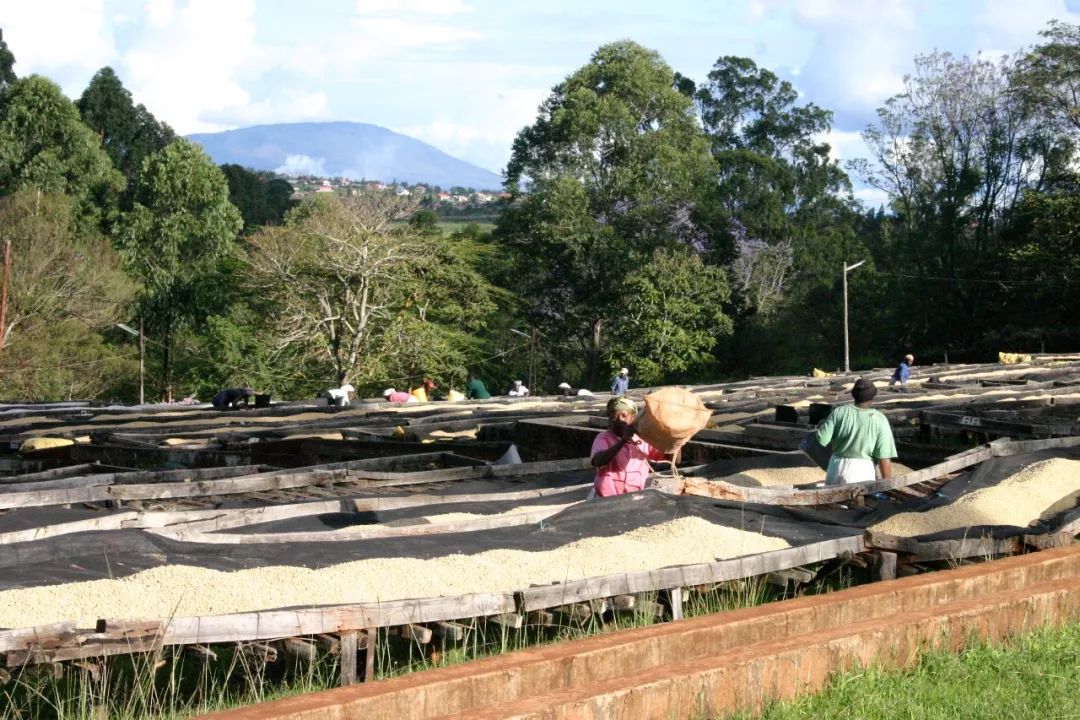
Ethiopia's coffee varieties are almost all local native varieties. Nearly 2000 varieties have been recorded, including 1927 native varieties that are relatively round and very small. Most Ethiopian beans belong to native varieties. Unlike the similar-looking internet-famous faces, they have not been selected by botanists, come in various shapes, and are often considered defective beans: uneven colour, uneven roasting, uneven size. For all of this there are gains and losses. The variety mix and uneven particle size are precisely why Ethiopia has such rich flavours and colourful aromas.
Kenya
Kenya grows high-quality Arabica coffee beans. The beans absorb almost the essence of the entire coffee cherry, with slight acidity and rich aroma, making them very popular among Europeans, especially in the UK, where Kenyan coffee has surpassed Costa Rican coffee to become one of the most popular coffees.
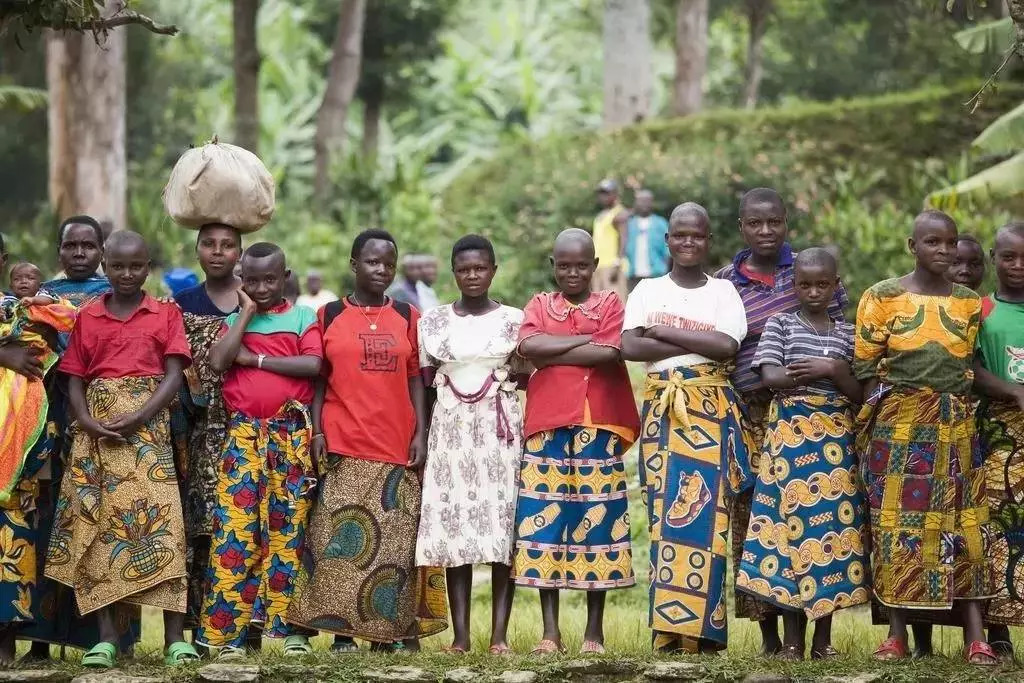
Kenya AA grade coffee is the finest among African coffees, with a thick and full quality, slightly acidic, a smooth taste, and a slight wine aroma. AA grade represents Kenya's highest grade of coffee beans. Kenyan coffee cultivation consists mainly of two types: large farms and cooperatives. The former generally has larger planting areas and independent processing facilities, while most production is completed by numerous smallholders.
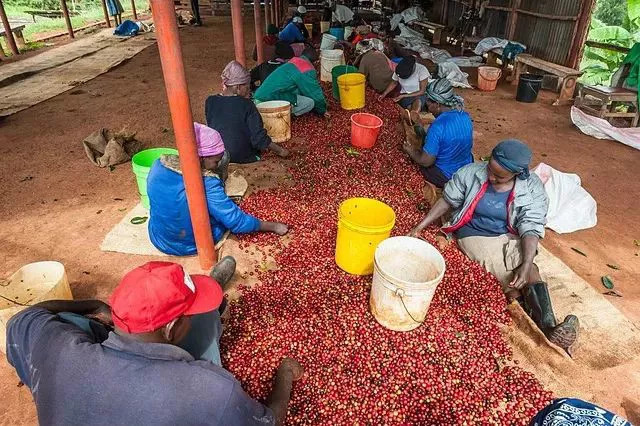
Smallholders form coffee cooperatives. Coffee from different growing regions has subtle flavour differences due to microclimate variation, with an overall rich and intense aroma, a bright and lively acidity, a full and elegant body, and berry flavours.

Varieties
Kenya's [SL28] and [SL34] (direct Bourbon line) were created in 1930 by Scott Laboratories, abbreviated SL. Agronomists wanted to find a Bourbon variety resistant to pests and diseases with high yield. Through experiments they obtained SL28. Kenya's high-phosphorus soil nurtures Kenyan beans' special sour aroma, giving the charming plum-berry taste when tasting the acidity.
Ruiru11 is the first variety successfully recognized by the Kenya Coffee Committee, although specialty coffee buyers have a cold attitude toward it. In recent years the Coffee Committee introduced another variety called Batian. Quality seems to have improved, and people are optimistic about its future cupping performance.
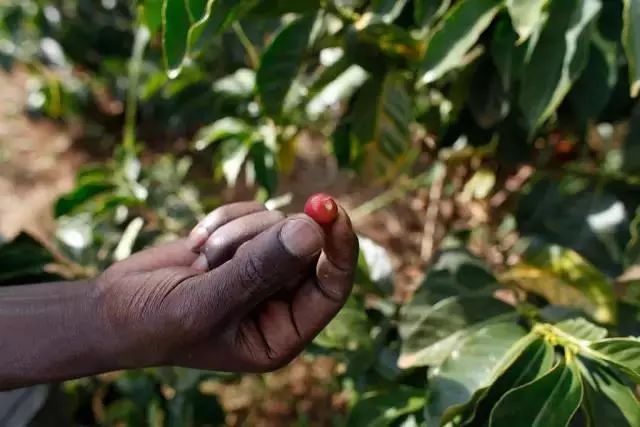
Kenya 72-Hour Fermentation Washed Processing Method
This originated in Kenya as a repeated method of fermenting and then washing. Processing begins on the harvest day, selecting the highest-quality cherries for pulping and fermentation. Fermentation time is 24 hours. After 24 hours they are washed with clean river water, then undergo another 24-hour fermentation in clean river water, followed by washing. Repeating this cycle three times to reach 72 hours is called the Kenyan 72-hour fermentation washed process, abbreviated [K72].
Kenyan coffee is graded into seven levels by bean size and, from top to bottom, into six levels by taste. Kenya's best grade is Peaberry (PB), followed by AA++, AA+, AA, AB, and so on. Premium coffee is bright and shiny, delicious with a slight wine aroma.

E: "Elephant beans," extra-large size, relatively small production
AA: A relatively common grade with larger beans, particle size above 18 mesh or 7.22mm. These beans usually fetch the highest prices.
AB: This grade combines A (16 mesh or 6.80mm) with B (15 mesh or 6.20mm) and accounts for about 30% of Kenya's annual coffee production.
PB (PeaBerry) Round Beans: Grading for small round beans, referring to coffee fruits that grow only one kernel instead of the usual two.
FrontStreet Coffee's Kenyan coffee enters fresh and clean, with black plum and nectarine acidity and good transparency. As the temperature drops, the acidity carries a corn sweetness, and the overall cup is very refreshing.
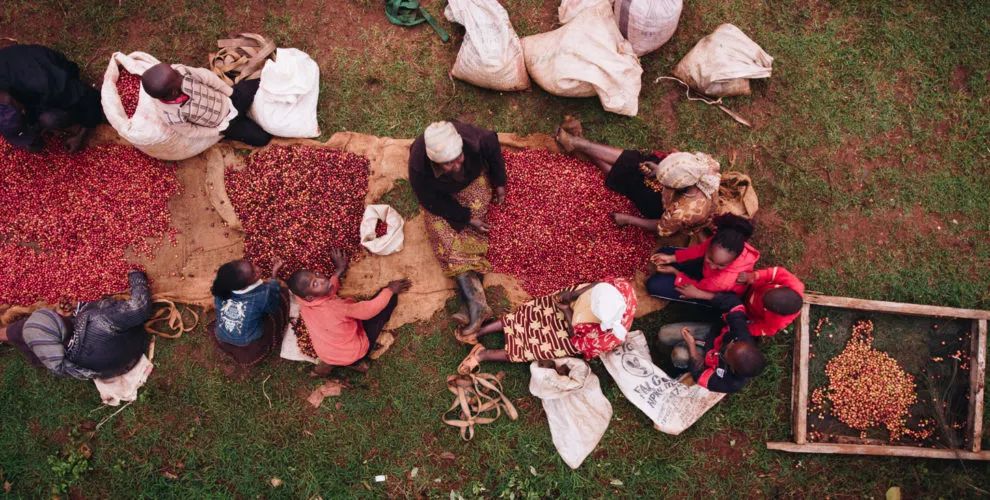
Burundi "Heart of Africa"
Burundi's coffee has citrus, berry, and floral notes, with diverse flavours that attract attention. The main variety is Bourbon, processed washed. Burundi's geography suits coffee cultivation, with mountainous terrain and a suitable altitude and climate that support numerous smallholder farmers. Production is mostly by smallholders who send their harvested ripe berries to processing stations for unified processing.
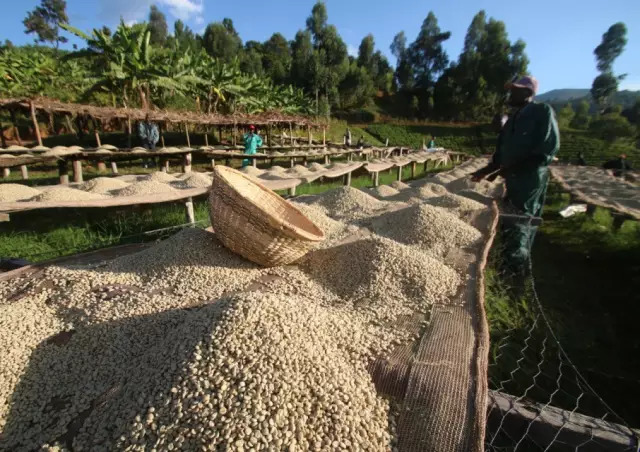
Burundi's Main Growing Regions
Kayanza: Located in northern Burundi, adjacent to Rwanda, producing high-quality coffee.
Ngozi: Has blackberry and stone-fruit flavours.
Mpemba: Sometimes has cream-candy and floral-tea flavours.
Kirimiro: Close to Burundi's central Kigiga province. Its coffee-processing company has the country's highest-altitude washing station.
The taste is wild, with strong residual flavour and aroma. The rich fragrance differs from most high-quality, mild coffees on the market, earning high praise in Europe. The dry aroma is very strong, not inferior to Kenyan; the feeling on entry is intense, like vanilla, somewhat wild. The coffee is rich, with acidity lower than Kenya's, a texture slightly thicker than Kenya's, and a lighter aftertaste than Kenya's, holding inherent East African bean characteristics yet remaining quite unique.
Rwanda
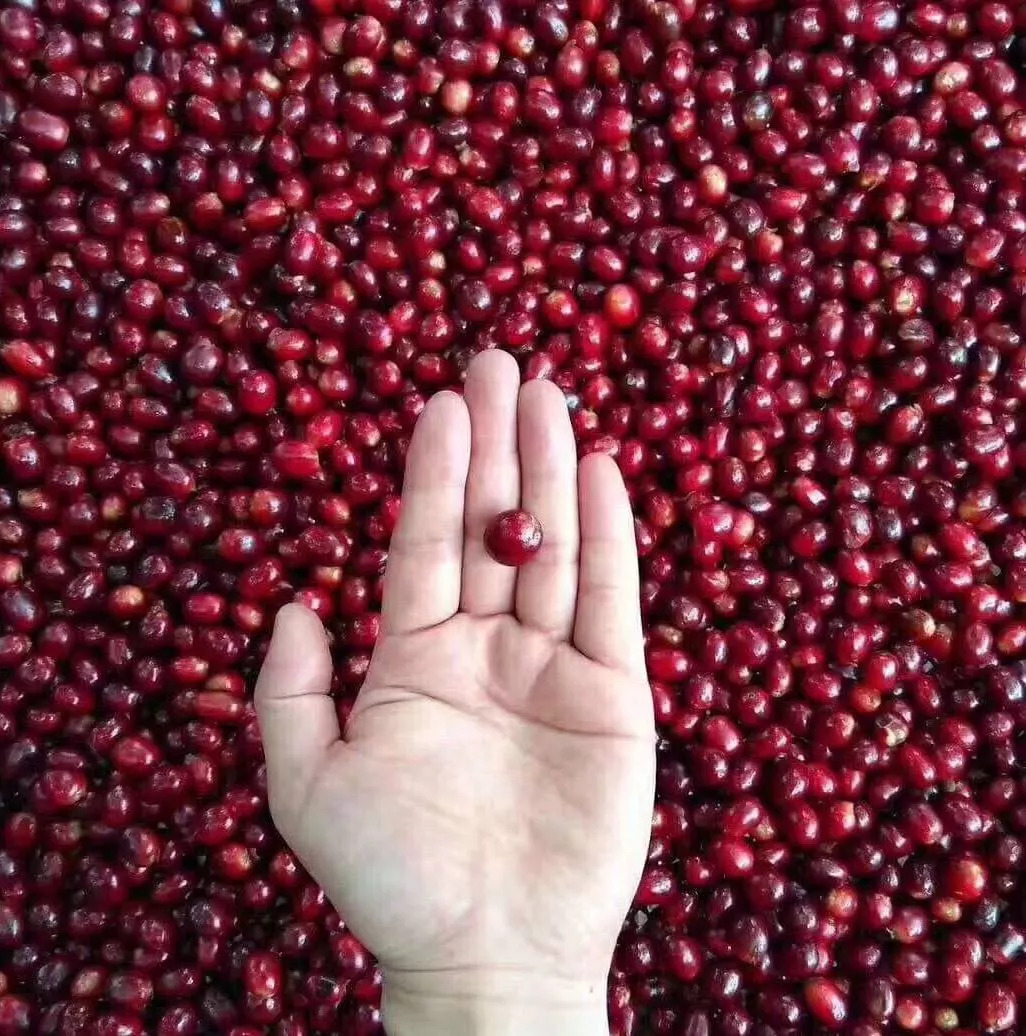
Among these four coffee-producing countries, Rwanda has higher domestic recognition. The country is mountainous, also known as the "Land of a Thousand Hills." Its fertile volcanic soil, stable year-round rainfall, high altitude, and other superior natural conditions guarantee coffee cultivation.
Under such conditions, Rwandan beans have high quality, with a special fruit sweetness and rich grass and floral aromas, attracting many enthusiasts who love Rwandan coffee.
Rwanda's Main Growing Regions
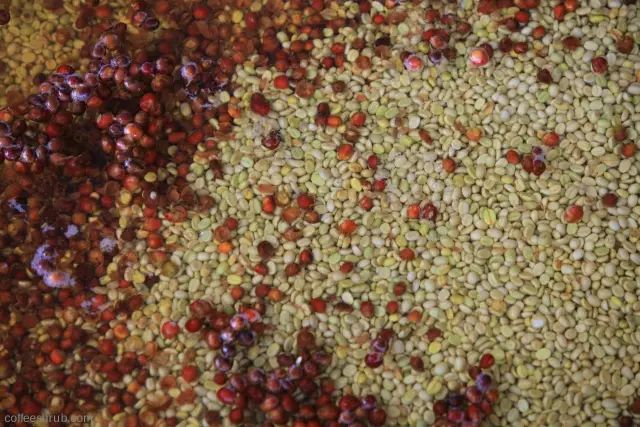
Western Province: Near Lake Kivu there are famous Rwandan washing stations, steadily producing rich, aromatic, juicy premium coffee. For example, Nyanyumba in Rubavu produces COE-level beans with citrus, raspberry, toffee, and chocolate flavours.
Northern Province: Has citrus, stone-fruit, and caramel flavours, relatively balanced.
Southern Province: High-altitude beans have floral and citrus flavours. For example, beans from Nyakibanda green coffee farm have tropical fruit, citrus, and honey flavours.
Eastern Province: Fewer coffee gardens and washing stations; coffee has chocolate and fruit flavours.
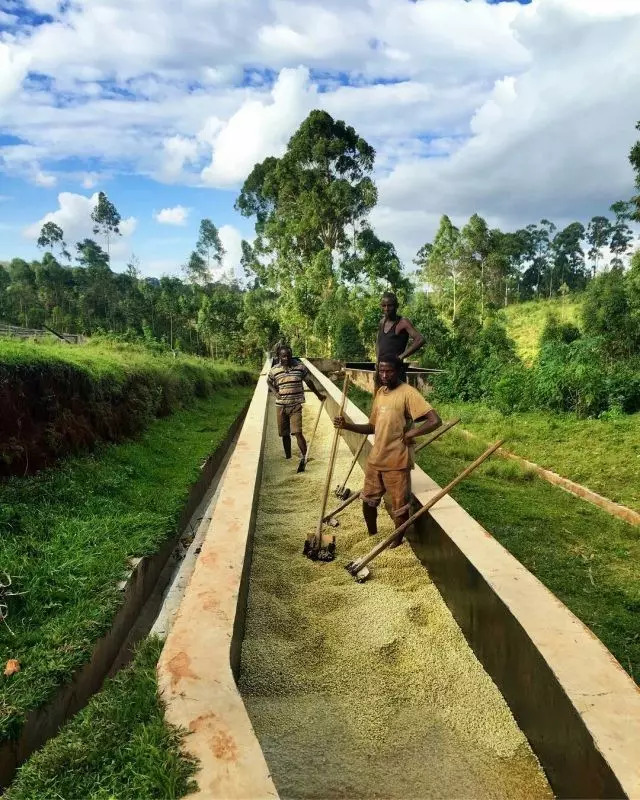
Lime acidity is quite obvious, with grape-juice acidity, rich floral aroma, high acidity, pleasant sweetness, a medium body, and a nutty aftertaste in the back end, overall pure, mild, and smooth, balanced and lively with varied layers.
Uganda
Every year, the major African coffee-producing countries hold national green-bean competitions called "Taste of Harvest" (TOH), similar to Central and South America's Cup of Excellence. TOH has become an arena for discovering the best coffees from Kenya, Ethiopia, Uganda, and Congo.
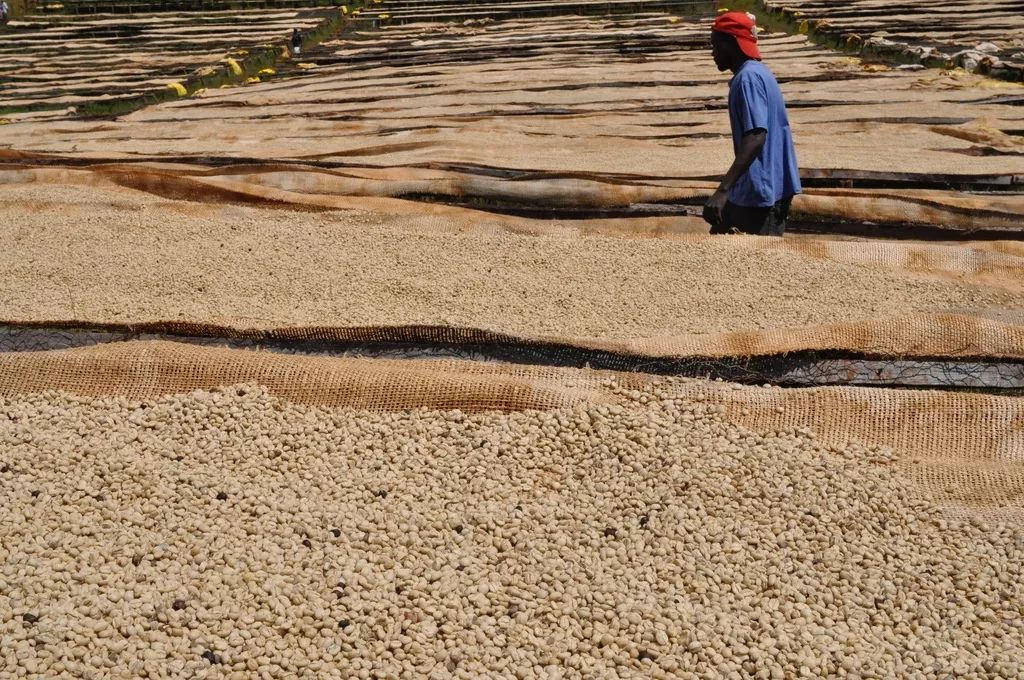
Although Uganda is a major Robusta producer, it still has quality Arabica beans such as Typica, SL14, and SL28. The SL varieties come from Scott Lab's research and selection. Kenyan coffee became world-famous through SL28 and SL34, so the Ugandan government promoted this heavily, distributing SL seeds to farmers. Among them, SL14 not only has good flavour but also resists drought and can be harvested just two years after planting, quite meeting farmers' needs.
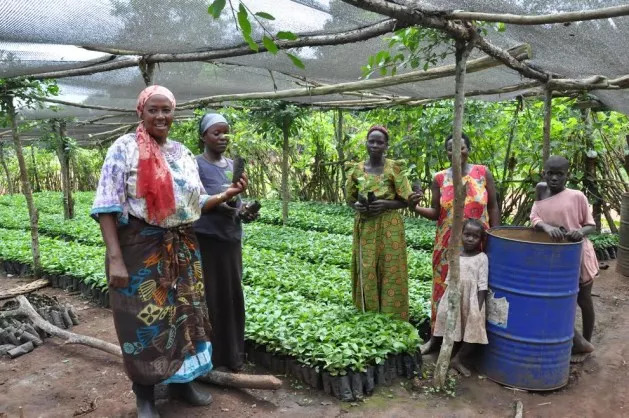
Coffee grading is called Q and R grading by experts. Coffee scoring above 80 is considered specialty coffee and automatically attracts good markets and even better prices. Competition therefore shows that good practices can benefit farmers. As part of its mission, UCDA regularly trains farmers nationwide to produce quality coffee through good processing. Regions like Kanungu, Sipi, Iganga, and Luwero all have areas producing high-quality coffee.
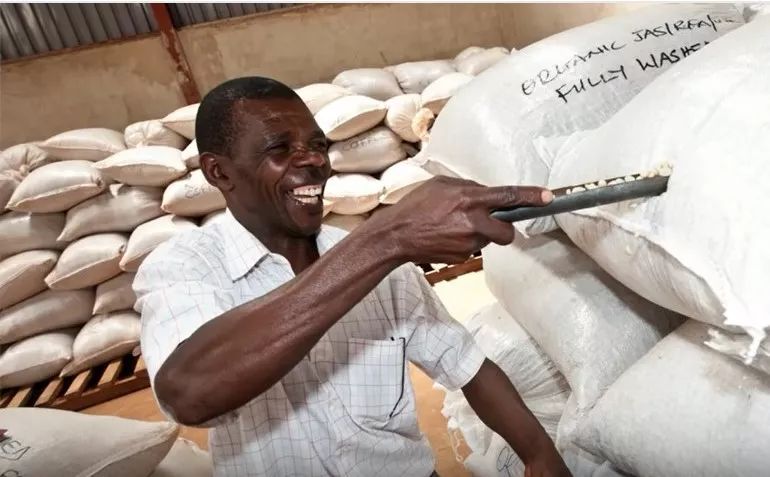
Uganda's Main Growing Regions
Western Region: Mount Rwenzori. The snow-capped Mount Rwenzori lies in the west, growing Ugandan natural-processed Arabica beans called "Drugar," with wine-like, fruit flavours and good acidity.
Bugisu: Small farms in Bugisu and Mount Elgon sit at altitudes of 1600-1900m, producing Arabica with a rich mouthfeel, sweetness, and chocolate flavours.
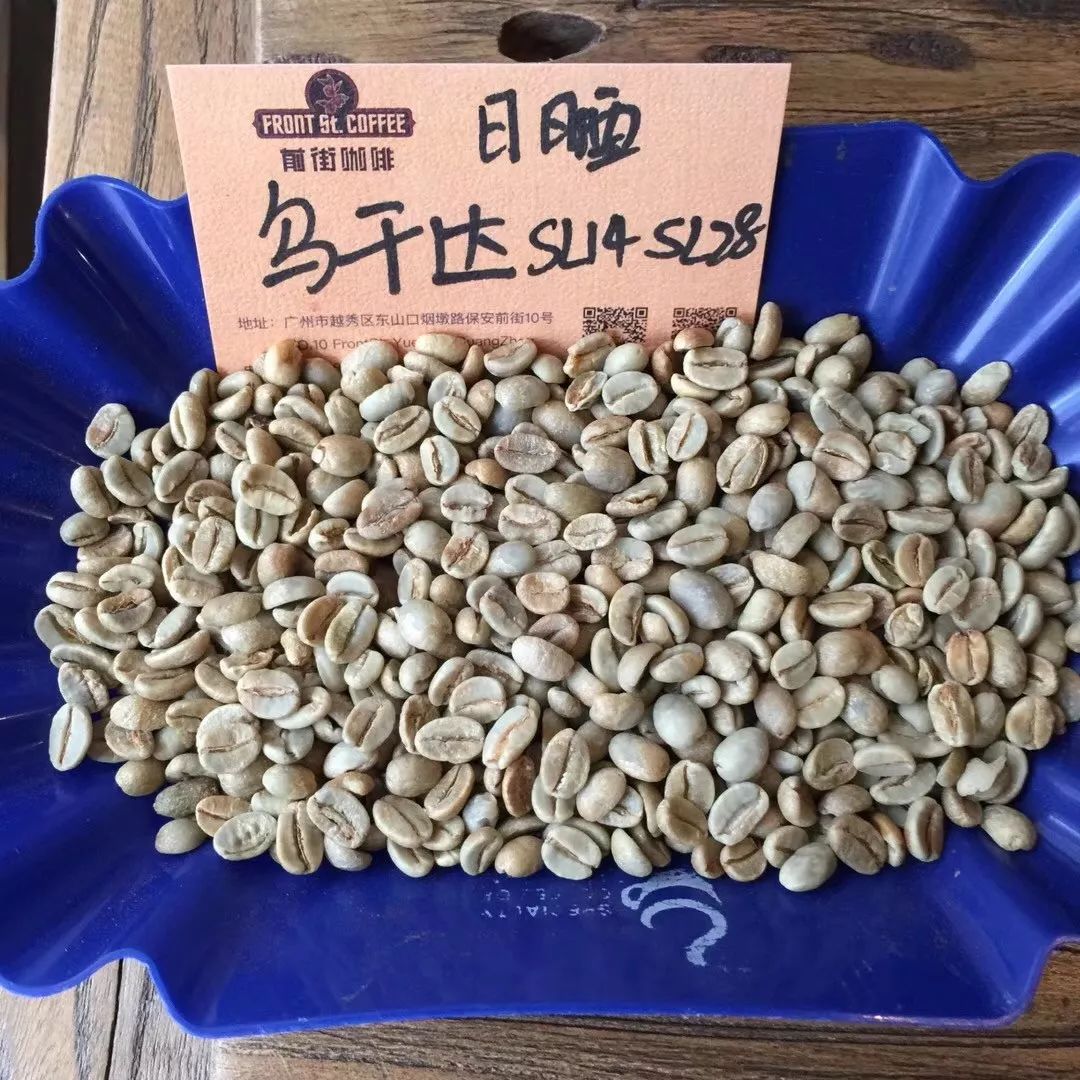
FrontStreet Coffee Uganda Natural SL14 & SL28: Sweet orange-juice feel, citrus and berry fruit flavours, clear and bright acidity, a smooth texture, and spices, woody notes, and a complex mouthfeel.
Coffee Tasting
When coffee enters your mouth, you can feel its flavour. Many enthusiasts, especially those just starting to explore tasting, always think coffee doesn't taste as good as it smells. Sensory discrimination of coffee liquid in the mouth does require practice, but over time the flavours within can be perceived.
Advanced coffee tasting is how to distinguish coffee's sweetness, saltiness, acidity, and bitterness.
A cup of coffee's taste cannot be summed up simply by country of origin. For specialty beans it is best to divide origin by growing region and estate, since cultivation methods and post-processing both lead to flavour differences.
"This bean's dry aroma leans toward elegant jasmine."
"This aftertaste is great! First a bit of passion-fruit acidity, with sufficient aftertaste, and finally some nutty notes in the finish."
"I still prefer Geisha when it cools down, more sweetness, peach flavour, sweet-potato sweetness."
Gradually, you can taste the bitterness in coffee, the citrus flavours in coffee, and the skill to distinguish taste from aroma. So learn while drinking, step by step, and enjoy the fun of specialty coffee.
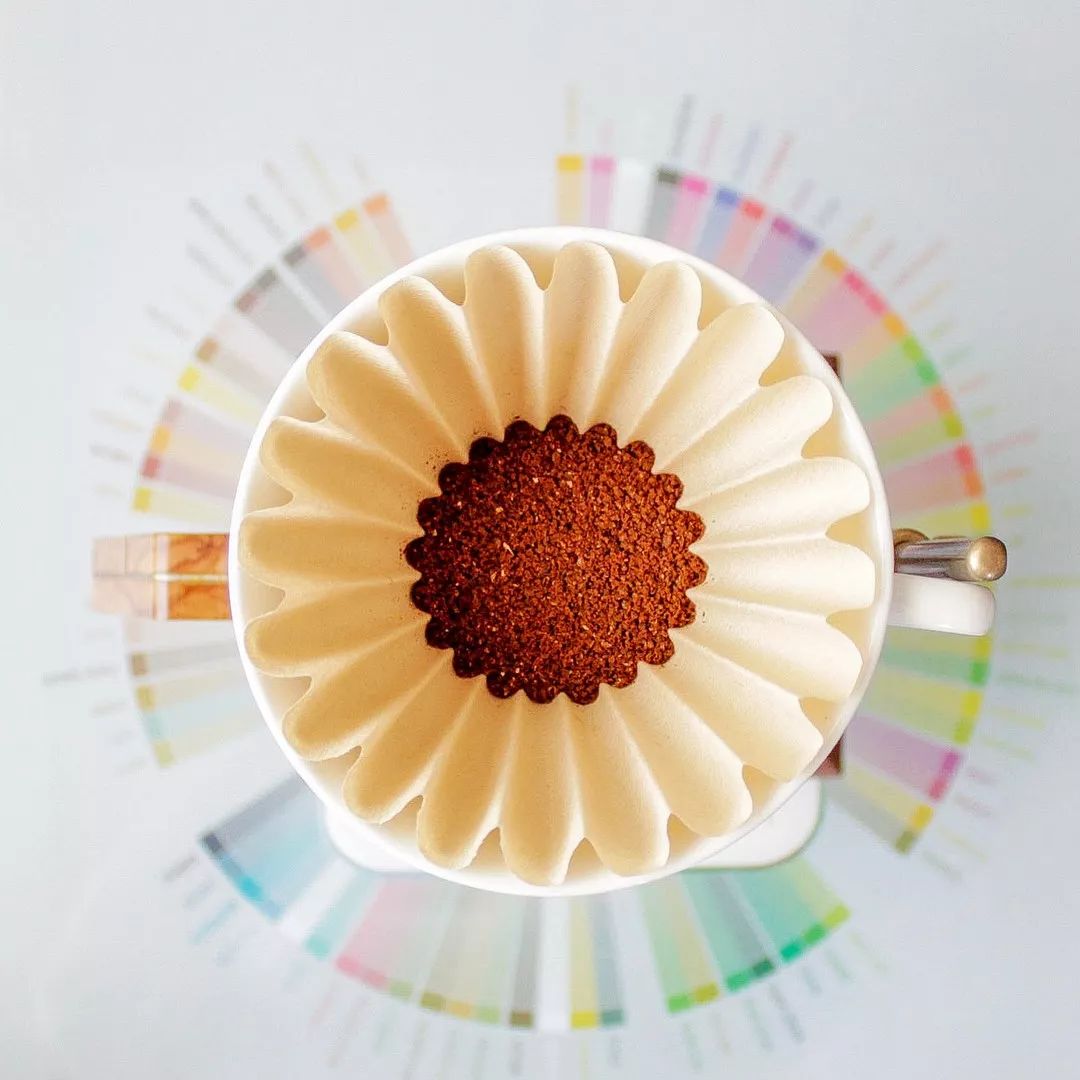
FrontStreet Coffee African Coffee Bean Brand Recommendations
FrontStreet Coffee's roasted African coffee beans, such as FrontStreet Coffee Ethiopia Yirgacheffe, FrontStreet Coffee Kenya AA, and FrontStreet Coffee Burundi, are fully assured in both brand and quality. More importantly, the price-performance ratio is extremely high: a half-pound (227 grams) package costs only about 80-90 yuan. At 15 g per pour-over, one package makes 15 cups, with each single-origin cup costing only about 6 yuan. Compared to cafés selling dozens of yuan per cup, this is extremely cost-effective.
Simple ways to identify fresh coffee beans: 2-7 days after roasting, no rancid smell, noticeable aroma, uniform shape, relatively hard, and packed in one-way valve packaging.
The sour and bitter tastes of coffee beans are mainly influenced by roasting time. Light roast beans are lighter in colour, have less oil, and smell of natural fruit aroma; dark roast beans are often darker, oily, and carry chocolate and other aromas.
Friends who like sourness can choose brownish light roast beans; those who love bitterness can choose darker dark roast beans.
When selecting packaging, try to choose designs with a "one-way valve" that lets beans release carbon dioxide while blocking external oxygen. When purchasing, pay attention to clearly marked specific dates on the packaging to ensure quality.
Additionally, from the roast date onward, freshness declines over time. It is recommended to use the coffee within three weeks after opening to ensure the best drinking condition.
Coffee Bean Variety Regional Analysis
The world's coffee-producing regions are distributed in the areas north and south of the equator, also called the "coffee belt." Within the belt there are more than 10 coffee bean varieties, but currently the most common are only Arabica and Robusta.
In the early days when coffee was not yet popular, limited channels for obtaining excellent beans meant the Robusta commonly grown in Asian regions was more prevalent. This type is generally grown at lower altitudes. Due to climate, the beans' fat and sugar content are lower, and the taste is more bitter and intense, without much flavour variation or character.
Another type, Arabica, grown at high altitudes, is the variety behind the vast majority of specialty beans on the market. Because it grows higher, growth is slower, allowing well-flavoured beans to develop. Overall, Arabica tastes sweeter, softer, and fruitier, loved by enthusiasts.
Although common coffee beans can be divided into the above two categories with their characteristics summarized, in reality bean flavours are affected not only by altitude but also by soil, monsoons, climate change, and more, creating taste variation. Each producing country and estate therefore has different flavours. You can start with a world map to find favourite bean flavours, then research different estates' beans in that country, making it more efficient to find coffee that suits you.
Try more to find the coffee beans that suit your taste best.
Coffee Flavor Distribution and Characteristics
► Central America (Colombia, Panama, Costa Rica)
The taste is relatively light, with good balance. The mouthfeel is not too intense, tasting sweet with low acidity, and the aftertaste reveals fruit aroma, a fresh fragrance with fruit acidity.
► Pacific Region (Hawaii)
Overall sweet fragrance, a relatively mild taste, and a fragrant, smooth, gentle character.
► South America (Brazil)
Currently the highest-production area, with an overall relatively intense taste. A chocolate aftertaste remains in the mouth on entry.
► Asia (Mandheling)
Because of relatively low altitude, an overall earthy aroma or smoky flavour, with a bitter cocoa aftertaste and a thick body.
► Africa (Ethiopia, Kenya, etc.)
This region is the origin of coffee, so it has more varieties. Generally the aroma is wilder. The best African beans have a strawberry or blueberry aftertaste.
► Taiwan
Generally similar to Asian-produced beans, with a cocoa aftertaste. But beans produced in Pingtung's Dawu Mountain, coffee expert Lin Huan believes, carry a cucumber aroma, one of his favourite Taiwanese beans.
Berry Orchard: Berries, floral, grape acidity
Flower Queen: Wild ginger, bergamot, blackcurrant, various tropical fruit acidity
FrontStreet Coffee Recommendation
Brazil may not be African, but its low-acid, balanced cup makes it a useful reference point alongside the bright African beans discussed above. FrontStreet's Brazil Cerrado Red Bourbon is a classic single-origin from the well-known Cerrado region: a Red Bourbon roasted medium, it shows cream peanut, toast, caramel, and hazelnut with a rounded, low-acid body and a faint bitterness, and it suits pour-over, moka pot, espresso SOE, siphon, and French press.
For a sweeter expression, FrontStreet's Brazil Queen's Estate comes from Mogiana, near South Minas, where fertile red volcanic soil feeds the fruit. Its rare Yellow Bourbon, a natural mutation of Red Bourbon, gives a cleaner fruit quality and, across pour-over, moka pot, and home espresso machine, a sugarcane-like clarity unique to the region alongside fruit and chocolate notes.
Because Brazil's low-acid balance and friendly price make it the first choice for many espresso recipes, FrontStreet's espresso range leans on it as well: the Classic Blend for a rich crema, the Specialty Blend for deep nuttiness, FrontStreet Coffee's Black Cocoa Blend for balance, and FrontStreet Coffee's Commercial Blend for cafés. Each adds chocolate and cream aromatics and a gentle sweet-tart-bitter balance, while the beans also contribute to extraction stability.
Important Notice :
FrontStreet Coffee is a long-established specialty coffee roaster in Guangzhou China, selling freshly roasted beans from its own farm in Yunnan as well as dozens of carefully selected single-origin beans from around the world for both pour-over and espresso. The products deliver consistently excellent quality and great value, with shipping within 24 hours. Guangzhou's FrontStreet Coffee shop is recommended by many coffee lovers, and the beans are now available online at the Tmall 。
FrontStreet Coffee has moved to a new address:
FrontStreet Coffee Address: 315,Donghua East Road,GuangZhou
Tel:020 38364473
 Scan and follow the En Gafei WeChat official account. Please indicate that the reprint comes from "En Gafei".