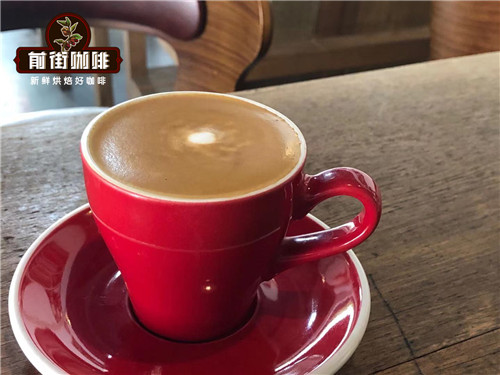
Starbucks Flat White vs Latte: Key Differences and Step-by-Step Brewing Guide

As the specialty coffee market continues to mature, the Flat White has become one of the essential milk-and-espresso drinks on specialty coffee shop menus. Many people have asked FrontStreet Coffee: aren't they all just milk plus coffee? What's the difference between a Flat White and a Latte? So what exactly is a Flat White? FrontStreet Coffee explains in detail what it is and how to make it.
What is Flat White?
Simply put, compared with a Latte, a Flat White is an espresso drink with less milk and more coffee. In FrontStreet Coffee's own words, a Flat White is much stronger and more intense than a Latte. In earlier years many coffee shops didn't offer a Flat White, perhaps because its concept, standards, and characteristics weren't well promoted, and also because in shops already serving Latte and Cappuccino, adding another milk coffee seemed somewhat redundant.
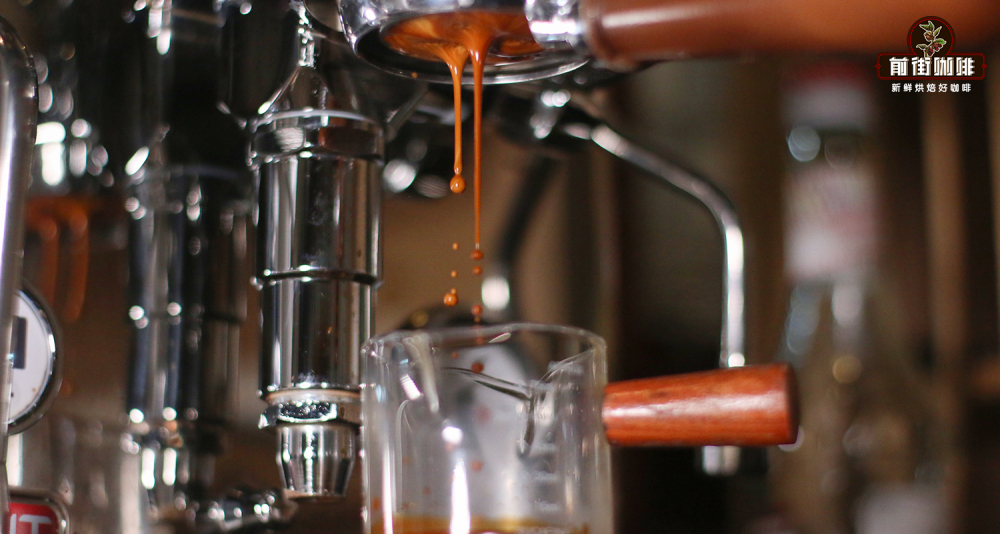
As specialty beans have become more abundant, many coffee shops' blends have improved significantly, eliminating the burnt bitterness that used to be typical of espresso. More shops are willing to showcase their espresso's unique character through a higher coffee-to-milk ratio. Some have begun using single-origin beans to create SOE (Single Origin Espresso) for the Flat White, demonstrating how regional flavor characteristics fuse with milk lactose to create wonderful taste experiences.
For example, when FrontStreet Coffee makes milk-based espresso, it typically blends Ethiopian natural-process red cherries and Honduras Sherry beans in a 3:7 ratio for extraction. After high-pressure extraction, this blend produces a rich wine aroma, gentle fruit acidity, and a nutty cocoa aftertaste. Heating the milk to activate its lactose and mixing it with the espresso lets the lactose and berry-like acidity create a milkshake-like sweetness, without overpowering the wine aroma—making people "addicted" after just one taste.

In Australia, milk coffees are typically served in wide-mouth cups, so a Flat White's foam thickness is only about 5mm. Also, because it fuses better with the coffee, a good Flat White should have a silky, rich mouthfeel. If Cappuccino and Latte pursue a light, airy "fluffiness," then Flat White seeks a silk-like "smoothness."
The Origin of Flat White
As for the origin of the Flat White, some say it appeared in Sydney in the 1980s, while others claim it emerged in Melbourne in the 1970s. Life in Australian cities like Melbourne and Sydney is actually not easy due to extremely high prices, with housing costs remaining high, but drinking coffee remains a common daily habit and is usually not expensive. Australian coffee also maintains a very high standard, with at least one quality coffee shop in every neighborhood, nourishing the spirit and taste buds of local residents.

In fact, Australia has always been a cultural melting pot of immigrant communities. Thanks to numerous European immigrants, coffee culture gradually took root in Australia after World War II. Today, on the world coffee map, major cities like Sydney and Melbourne have long established their presence. Milk-based coffee drinks have even made inroads into North America, prompting Starbucks to remove "Cappuccino" from its menu after selling it for over 30 years and replace it with the Flat White (Starbucks calls it "Fu Rui Bai"). Coffee shops in the UK, Germany, and elsewhere later introduced the Flat White, Piccolo Latte, and Long Black—strong Italian-style drinks with Australian-specific names.
How to Make Flat White?
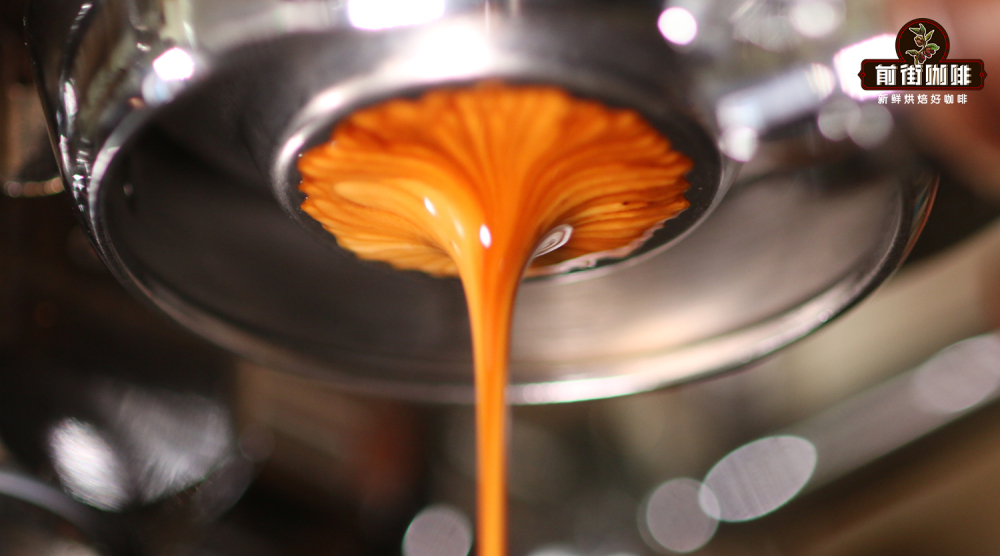
FrontStreet Coffee uses the Faema E98 espresso machine with the following extraction parameters:
Pressure: 9 bar
Temperature: 94°C
Time: 20-30 seconds
Coffee-to-water ratio: 1:1.7-1:2
Dose: 12g (single espresso) 20g (double espresso)
Extraction yield: 20ml (single) 40ml (double)
Recommended Milk and Coffee Ratio for Flat White
Milk: Whole fresh milk (FrontStreet Coffee uses Kowloon Dairy fresh milk)
Milk frothing temperature: 50-60°C (too low a temperature cannot activate milk lactose, while too high a temperature destroys milk proteins and produces a grainy texture)
Foam thickness: 5mm (1cm foam for Latte, 1.5cm foam for Cappuccino)
Espresso content: 40ml
Milk content: 140ml

When serving a Flat White, FrontStreet Coffee maintains the characteristics of a small cup size, thin foam, and a double ristretto base. FrontStreet Coffee uses a smaller ceramic cup of about 200ml capacity for the Flat White than for a hot Latte, pouring in a freshly extracted double Ristretto. FrontStreet Coffee believes the milk shouldn't be too much, or it would overpower the coffee's rich aroma, so the coffee-to-milk ratio here is 1:5, meaning about 150ml of fresh milk.
FrontStreet Coffee hopes customers experience a creamy, smooth mouthfeel that isn't too "watery," maintaining a 0.3cm foam layer, so milk frothing requires less air incorporation than a Latte to achieve such thin foam. FrontStreet Coffee believes the best milk temperature should be controlled between 55-60°C, which both highlights sweetness and isn't too hot. Finally, the frothed milk is evenly integrated into the espresso liquid for tasting.

FrontStreet Coffee's Flat White presents aromas of vanilla, cream, chocolate milk, whiskey-filled chocolate, and berry sweetness and acidity. The entrance is smooth, fragrant, and rich, with a very long-lasting aftertaste.
FrontStreet Coffee Recommendation
A milk drink like the Flat White lives or dies on its espresso base, and FrontStreet Coffee's house blend pairs Ethiopian natural red cherries with Honduras Sherry to give the milk that wine aroma and berry-like sweetness. If you want to build a similar flavor at home, FrontStreet Coffee's Ethiopia Yirgacheffe Natural Red Cherry is a great single-origin starting point. Treated as a whole red-cherry natural process—picking only fully ripe, sound fruit and drying it on raised beds—it keeps the classic Yirgacheffe character while adding a tropical fruit note, showing citrus-like acidity, a juicy berry quality, honey-like sweetness, and a creamy smoothness.
Used for a milk-based drink, its fruit and honey sweetness rounds out the steamed lactose without overwhelming the coffee, so it works nicely alongside a Flat White or a Latte. Pull it as an espresso or use it in a small-batch blend with a nutty bean, then steam whole milk to about 55-60°C for thin, silky foam. For a cleaner, more floral cup, FrontStreet Coffee's washed Ethiopia Yirgacheffe is the other classic option, with its jasmine aroma and bright citrus and lemon acidity.
Important Notice :
FrontStreet Coffee is a long-established specialty coffee roaster in Guangzhou China, selling freshly roasted beans from its own farm in Yunnan as well as dozens of carefully selected single-origin beans from around the world for both pour-over and espresso. The products deliver consistently excellent quality and great value, with shipping within 24 hours. Guangzhou's FrontStreet Coffee shop is recommended by many coffee lovers, and the beans are now available online at the Tmall 。
FrontStreet Coffee has moved to a new address:
FrontStreet Coffee Address: 315,Donghua East Road,GuangZhou
Tel:020 38364473
 Scan and follow the En Gafei WeChat official account. Please indicate that the reprint comes from "En Gafei".