How FrontStreet Coffee Roasts Delicious Coffee Beans: Roasting Standards and Are FrontStreet Coffee Beans Good?
The Art of Roasting: A Journey of Transformation
Coffee roasting stays mysterious for many drinkers. How do green, unroasted beans turn into the aromatic coffee we brew? And even when two shops roast the same variety in-house, why do the results taste completely different?
FrontStreet Coffee, in Yuexiu District, Guangzhou, is one of the best-known coffee shops in the Guangdong region. The current resident roaster is Mr. Liang Bin. Here is the thinking behind FrontStreet Coffee's freshly roasted beans.
FrontStreet Coffee's Roasting Philosophy
Roasting is actually quite flexible, and many directions are possible. Could Ethiopian Red Cherry be roasted medium-dark? Could Indonesian Golden Mandheling be roasted light? Plenty of people experiment with these approaches, but FrontStreet Coffee will not.
FrontStreet Coffee's Yirgacheffe has to taste like Yirgacheffe first, and everything else comes after. That is the standard for both roasting and shelving. Roasting also has a certain uniqueness—every bean has a suitable roast degree. "Suitable" means the result that lets a drinker recognize this bean as tasting like this bean. Since drinkers already carry that recognition, in most cases you cannot simply roast however you like.
The Roasting Process
1. Bean Selection
To roast a great batch, bean quality has to be handled meticulously. Before roasting, defective beans that would drag down the result must come out: insect-damaged dead beans, black beans, broken beans, discolored beans, and beans that are far too small or too large. The sorting can take a while. Spotting the bad beans demands close attention, patience, and sharp eyes.
2. The Preparation Area
Because FrontStreet Coffee takes in substantial bean orders, the roasters often run all day. Multiple pre-ordered lots wait their turn, and orders from online customers and walk-in purchases keep coming. So in the preparation area beside the roaster, the selected beans rest quietly, waiting to become bags of aromatic goodness.
3. Charging the Beans
Roasting begins. The roaster is preheated before the charge, then the prepared beans go into the drum.
4. Heat Absorption
During this stage the beans begin to take on heat. How long heat absorption lasts varies slightly from shop to shop and is part of each roaster's personal technique.
5. Ramping the Heat
Once heat absorption is complete, the burner comes on to begin heating. The heat has to rise to a certain level, and this is tied directly to adjusting the air damper. How hard and how long to heat also differs between roasters, and both shape the flavor. Because coffee comes from many growing regions, each with different bean characteristics, making good-tasting coffee depends entirely on the roaster's understanding of the varieties and how they behave.
6. Waiting for First Crack
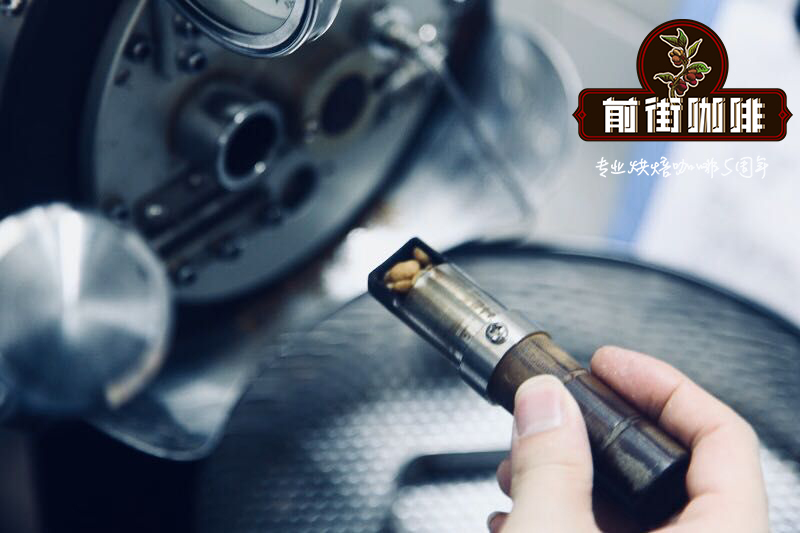
Here the roaster watches bean color through the sampling tryer at the front of the machine, reading the roast degree by color. First crack occurs at roughly 200°C inside the drum—you will know it by the sound. After hearing it, subtle heat adjustments are made based on each batch's bean characteristics and moisture content.
7. Adjusting the Air Damper (Removing Smoke and Silver Skin)
Coffee cherries are small, red, cherry-like fruits when ripe. After harvest the pulp is fermented and removed, revealing two facing green beans. These beans carry inner and outer seed coats. The outer one is parchment, which falls away naturally during roasting; the inner one is silver skin, which also detaches and disperses around first crack. Adjusting the air damper at this stage is meant to expel parchment and loose silver skin. Left in place, parchment can overheat in the drum and produce a smoky, undesirable flavor that taints the cup.
8. Dropping the Beans
The drop point is tied to the bean's flavor characteristics and moisture content. FrontStreet Coffee's roasting standards follow the eight major standards of the SCAA (Specialty Coffee Association of America), the leading authority in the international coffee community. From light to dark, they are: Very Light; Light (used only for cupping, not general coffee); Moderately Light (obvious acidity, rarely used); Light Medium (M—mostly for aromatic beans such as Yirgacheffe, Guatemala's Huehuetenango, Costa Rica, and Panama Geisha); Medium (M—Yunnan small-bean coffee, Brazil, Colombia, Hawaii Kona); Moderately Dark (M+—Mandheling, Honduras, Blue Mountain); Dark (D-—blended coffee beans); and Very Dark (D—espresso).
Under Master Liang's hands, fragrant coffee beans come out of the roaster. When they land on the cooling tray, the crisp, pleasant sound of beans striking metal is like the beans celebrating a complete transformation.
9. Cooling
After the drop and before bagging, the hot beans must cool on the cooling tray. Coffee usually retains internal heat after roasting, which can darken the effective roast degree and change the flavor. Fast, even cooling is essential.
10. Final Bean Selection
Beans were sorted before roasting, yet broken beans can still appear during the roast and must be hand-picked again here. Unafraid of the time it takes, FrontStreet Coffee insists on selecting carefully to present good coffee—that is FrontStreet Coffee's commitment.
Variables That Affect a Roast
Every shop differs: habits around heat intensity, airflow, drop point, batch size, green bean freshness, and other variables all shape the final result.
FrontStreet Coffee Recommendation
All of that philosophy comes down to one bean: FrontStreet's washed Yirgacheffe. It is the fresh, clean expression of everything described above—white jasmine, bright citrus and lemon acidity, and a tea-like smoothness—and it is affordable enough to be a genuine daily drinker. For a first taste of the classic Yirgacheffe profile, it is hard to beat; the coffee is grown high in southern Ethiopia's Sidamo region, where the trees sit above 1,800 meters.
If you want to see what a different processing method does to the same region, try FrontStreet's natural Red Cherry Yirgacheffe. Only fully ripe red cherries are picked, then dried whole on raised beds for three to five weeks, turned every 2-3 hours at first to avoid uneven fermentation. The result keeps the classic Yirgacheffe citrus while adding tropical fruit, berry-juice sweetness, honey, and a creamy smoothness—a lovely side-by-side with the washed lot. FrontStreet recommends 15 g at a 1:15 ratio, 90-91°C, ground to fine-sugar size, with a 30 g bloom for 30 seconds and a total brew time of about two minutes.
Important Notice :
FrontStreet Coffee is a long-established specialty coffee roaster in Guangzhou China, selling freshly roasted beans from its own farm in Yunnan as well as dozens of carefully selected single-origin beans from around the world for both pour-over and espresso. The products deliver consistently excellent quality and great value, with shipping within 24 hours. Guangzhou's FrontStreet Coffee shop is recommended by many coffee lovers, and the beans are now available online at the Tmall 。
FrontStreet Coffee has moved to a new address:
FrontStreet Coffee Address: 315,Donghua East Road,GuangZhou
Tel:020 38364473
 Scan and follow the En Gafei WeChat official account. Please indicate that the reprint comes from "En Gafei".