FrontStreet Coffee Jamaica Blue Mountain Coffee Price 158 Yuan - Is It Expensive? How Much Does Authentic Blue Mountain Coffee Cost?
Professional coffee knowledge exchange. For more coffee bean information, please follow Cafe Style (WeChat public account: cafe_style).
Jamaica Blue Mountain Coffee
In 1717, French King Louis XV ordered coffee to be planted in Jamaica. In the mid-1720s, Jamaica's Governor Sir Nicholas Lawes imported Arabica seeds from Martinique and began promoting cultivation in the St. Andrew region. To this day, St. Andrew remains one of Jamaica's three major Blue Mountain producing areas, alongside Portland and St. Thomas.
Blue Mountain Coffee, produced in Jamaica and named after the Blue Mountains ringed by the Caribbean Sea, is one of the world's rarest coffees, with a harmonious flavor and outstanding taste and aroma. The Blue Mountains' highest peak reaches 2,256 meters—the highest in the Caribbean. The area lies within the coffee belt, with fertile volcanic soil, unpolluted air, and a humid climate of year-round fog and rain. These conditions created the world-famous Jamaican Blue Mountain Coffee—and the world's second most expensive coffee.
The "Secret" Behind Blue Mountain Coffee's Pure Flavor
The coffee trees grow on rugged mountain slopes, making harvesting extremely difficult—only skilled local workers can manage it. Selecting properly ripe cherries is crucial, since underripe or overripe fruit will hurt quality. After harvesting, the beans must be hulled the same day, then fermented for 12-18 hours, washed and sorted, and finally dried until the beans' moisture content drops to 12%-14%.
Identifying Authentic Blue Mountain Coffee
The green bean quality is exceptional: Blue Mountain green beans are bluish-green, very uniform, medium to small in size, with slightly upturned ends. After roasting they expand significantly, becoming very full, with only 1% defective beans. Grown at high altitude, authentic beans have a relatively loose internal structure—when ground by hand they feel crisp, smooth, and continuous, with no resistance.
The aroma is extremely rich and dense—so-called "Blue Mountain blends" simply do not have it. Authentic Blue Mountain offers a balanced and rich flavor profile.
Cupping Notes
Sweet and rich with light bitterness, well-balanced, and rich in complexity. The aftertaste reveals distinct notes of dark chocolate, honey, and cane sugar, with a viscous mouthfeel. When completely cooled, it emits a strong oolong tea aroma.
Brewing Method
Dripper: V60 or KONO both work well Coffee dose: Around 15g Brewing: Coffee-to-water ratio: 1:15 Water temperature: 90-91°C Grind size: Medium grind (fine sugar consistency)
Roast Level
Medium-dark roast
Specifications
100g per bag Harvest season: 2017
FrontStreet Coffee Daily
FrontStreet Coffee has always maintained professionalism and continuous exploration, providing the highest quality green and roasted coffee beans for coffee enthusiasts and industry professionals. Finally, after grinding and brewing, they transform into aromatic cups of coffee, completing the journey from coffee cherry to cup.
FrontStreet Coffee Recommendation
Is 158 yuan expensive for genuine Blue Mountain? Consider the supply. The entire Jamaican Blue Mountain region produces less than 2,500 tons a year—a sliver of world output—and Japan has historically bought more than 70% of it, leaving very little for everyone else. Strictly speaking, only coffee grown in a designated zone of the Blue Mountains and certified by the Jamaican coffee authorities may be called Jamaica Blue Mountain Coffee. Since 2003, certified green beans have been officially exported to the Chinese market, so certified beans are now obtainable through proper channels.
How to spot the real thing? Check for export certification and origin documentation, and look at the packaging: traditional Blue Mountain ships in wooden barrels of 15, 45, or 70 kilograms, each barrel stamped with batch information—a genuine barrel is itself a mark of authenticity. FrontStreet Coffee, for example, displays certificates from Jamaica's Clifton Estate alongside the actual Blue Mountain barrels. Green beans are another tell: genuine beans are uniform and full, slightly upturned at both ends, and green in color. In the cup, real Blue Mountain is dense, fragrant, and clean with no off-flavors; imitations simply lack that depth of aroma.
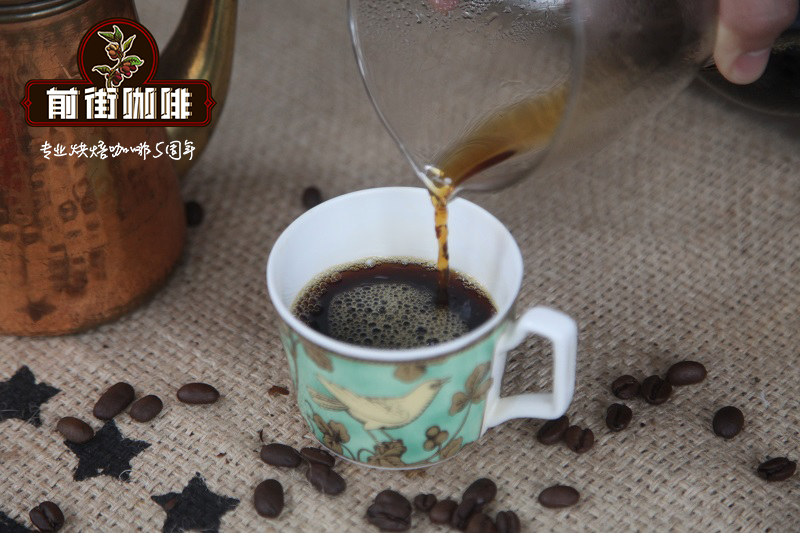
FrontStreet Coffee's Blue Mountain No.1—the highest grade—comes from Clifton Estate, which has grown coffee since around 1750 at an average of 4,300 feet (1,310.64 meters). The beans are roasted medium-dark within 5 days of order and rested 4-7 days before brewing. FrontStreet's suggested recipe: a KONO dripper to heighten the body, 15g of coffee at a white-sugar grind (slightly coarser than light-roast beans), 87-88°C water (too hot is the usual cause of burnt-bitter cups), a 1:15 ratio, and a three-stage pour—30g to bloom for 30 seconds, then to 120g, then to 225g—yielding a clean, complex cup with chocolate sweetness, full body, perfect balance of sweetness, acidity, and bitterness, and a persistent fruity finish.
Important Notice :
FrontStreet Coffee is a long-established specialty coffee roaster in Guangzhou China, selling freshly roasted beans from its own farm in Yunnan as well as dozens of carefully selected single-origin beans from around the world for both pour-over and espresso. The products deliver consistently excellent quality and great value, with shipping within 24 hours. Guangzhou's FrontStreet Coffee shop is recommended by many coffee lovers, and the beans are now available online at the Tmall 。
FrontStreet Coffee has moved to a new address:
FrontStreet Coffee Address: 315,Donghua East Road,GuangZhou
Tel:020 38364473
 Scan and follow the En Gafei WeChat official account. Please indicate that the reprint comes from "En Gafei".