Five Major Pour-Over Coffee Techniques vs Four Major Pour-Over Coffee Beans: Analysis of Differences and Flavor Comparison

Introduction to Pour-Over Coffee Methods
There are countless pour-over methods. In this article we collected and experimented with five of the most common ones found online, offering brief analyses of their flavor profiles and differences. We hope it serves as a reference for those just learning to brew pour-over coffee, and sparks new ideas for experienced enthusiasts. As always, method accounts for only about 10% of what makes good coffee - the key factors are the freshness of the beans themselves and the roasting technique.
We will experiment with and analyze the differences among the following pour-over methods: Japanese Orthodox Style, Japanese Kanazawa Style, Stirring Method, Interrupted Pour Method, and Continuous Pour Method.
Method 1 | Japanese Orthodox Style
The Orthodox style uses a drip technique, pouring water drop by drop in the center to avoid excessive agitation. After the coffee grounds are completely saturated and coffee liquid begins dripping from the bottom, switch to a fine stream to flush down the released aromatic compounds. Finally, before removing the filter, increase the flow with a large pour to bring foam and fine particles to the surface, avoiding bitterness in the coffee.
First Stage: Drip water in the center for about 5 millimeters until a thin layer of coffee liquid appears in the bottom pot.
Second Stage: Use a small water stream, pouring in circles about the size of a 50-yen coin in the center.
Third Stage: When the water reaches 160-180cc, use a large water stream to bring fine bubbles and particles to the surface. Remove and finish when the desired extraction amount is reached.
Coffee Beans: FrontStreet Coffee - African Beans
Grinder: Kalita Nice Cut (Grind size 3.5)
Filter: KONO
Coffee Amount: 15.5g (after sifting)
Extraction Amount: 195g
Water Temperature: 90°C
Bloom Time: 150 seconds/120g
Total Extraction Time: 240 seconds
TDS: 1.24%
Practical Analysis
The wet aroma is enhanced, with a round and smooth body and a deeper, longer-lasting finish. The purpose of the drip-style bloom is to let hot water rise slowly from the bottom, ensuring the grounds in the filter are evenly soaked and thus bloomed effectively and completely. This method requires more time and the right pour-over equipment and skill. The large water flow in the later stages takes practice to avoid off-flavors, making it a more difficult method suited to experienced brewers seeking more flavor.
Method 2 | Japanese Kanazawa Style
Masayuki Kanazawa is the originator of the Kanazawa style. This method begins with blooming, followed by a dragonfly-dipping style of drip pouring. The slow pouring aims to enhance the extraction of early-stage flavors while reducing off-flavors and bitterness that tend to appear later.
Process:
1. Bloom with a fine water stream.
2. Perform dragonfly-dipping style drip pouring in the center for about 1 minute.
3. Use a fine water stream to pour in circles, from inside to outside, then outside to inside, until the desired extraction amount is reached.
Coffee Beans: FrontStreet Coffee - African Beans
Grinder: Kalita Nice Cut (Grind size 3.5)
Filter: KONO
Coffee Amount: 15g (after sifting)
Extraction Amount: 190g
Water Temperature: 90°C
Bloom Time: 30 seconds/40g
Total Extraction Time: 180 seconds
TDS: 1.19%
Practical Analysis
Adding the bloom pour reduces the overall extraction time. The wet aroma is strong, with bright acidity and better extension of the sweet aftertaste. Although this method takes less time than the Orthodox style, overall - aside from a slightly inferior aroma compared with the drip-style Orthodox method - its other performance reaches a certain standard. The dragonfly-dipping style in the later stages requires appropriate pour-over equipment to achieve the effect.
Method 3 | Matt Perger Stirring Method
This method was used by Matt Perger of Australia in the 2012 World Pour-Over Championship. "Stirring instead of blooming" is a key feature of the method, aimed at increasing extraction efficiency.
Process:
1. Bloom with 50g of water, stir for about 8 seconds, then wait 20 seconds.
2. Pour 50g from the center outward, touching the filter edge.
3. At about 1 minute, pour 100g of water, wait 15 seconds, then tap gently. Complete when the water flow stops.
Coffee Beans: FrontStreet Coffee - African Beans
Grinder: Kalita Nice Cut (Grind size 1.5)
Filter: V60-02
Coffee Amount: 12g (after sifting)
Extraction Amount: 200g
Water Temperature: 97°C
Bloom Time: 30 seconds/50g
Total Extraction Time: 140 seconds
TDS: 1.15%
Practical Analysis
The flavor is pure and thick, with a substantial aftertaste. This method is like drinking coffee through a magnifying glass - it amplifies both the advantages and the disadvantages of a coffee. Using such an aggressive extraction demands excellent beans. We believe the grinder should be a better model to perfect the method, such as an EK43. With the Japanese models used here, the brightness of the acidity is slightly inferior and there are more off-flavors, which affects the flavor-analysis scores. Water-quality improvement can also lift this method. Curious brewers can try practicing it when making pour-over coffee at FrontStreet Coffee, and will come away with different experiences and insights about extraction.
Method 4 | Interrupted Pour Method
Process:
1. Bloom with 30g of water for about 20 seconds.
2. Slowly pour water in the center to help the bloom reach its peak, then use a large water stream to pour in circles with agitation for about 100g.
3. After interrupting the water flow, wait until the surface drops about 1cm before pouring again. Repeat about 2-3 times until the desired extraction amount is reached.
Coffee Beans: FrontStreet Coffee - African Beans
Grinder: Kalita Nice Cut (Grind size 3.5)
Filter: V60-02
Coffee Amount: 15g (after sifting)
Extraction Amount: 190g
Water Temperature: 88°C
Bloom Time: 20 seconds/30g
Total Extraction Time: 100 seconds
TDS: 1.25%
Practical Analysis
This technique is simple to learn, but in practice it has more variables. Pay attention to the highest water level during pouring, since even small changes can result in different flavors. Excessive agitation may also produce off-flavors and astringency. It is a common method for beginners, but a variable-heavy one.
Method 5 | Continuous Pour Method
Process:
1. Make a small hole in the center of the coffee grounds to facilitate complete water absorption during blooming.
2. Drip water in the center until completely bloomed, then use a fine water stream to slowly pour in circles from the center outward, gradually increasing the flow until the desired extraction amount is reached.
Coffee Beans: FrontStreet Coffee - African Beans
Grinder: Kalita Nice Cut (Grind size 3.5)
Filter: V60-02
Coffee Amount: 15g (after sifting)
Extraction Amount: 190g
Water Temperature: 87°C
Bloom Time: 20 seconds/30g
Total Extraction Time: 135 seconds
TDS: 1.20%
Practical Analysis
This method has lower equipment requirements. Through repeated testing, using good beans even without sifting still produces a stable flavor. It is also the common pour-over method used at FrontStreet Coffee. It keeps the coffee's flavor relatively stable across temperature changes, giving a consistent taste. The learning process is more difficult, but once familiar, it offers the advantage of consistency. It is also one of the essential techniques taught in pour-over courses, suitable for people new to coffee or brewers seeking stable flavors.
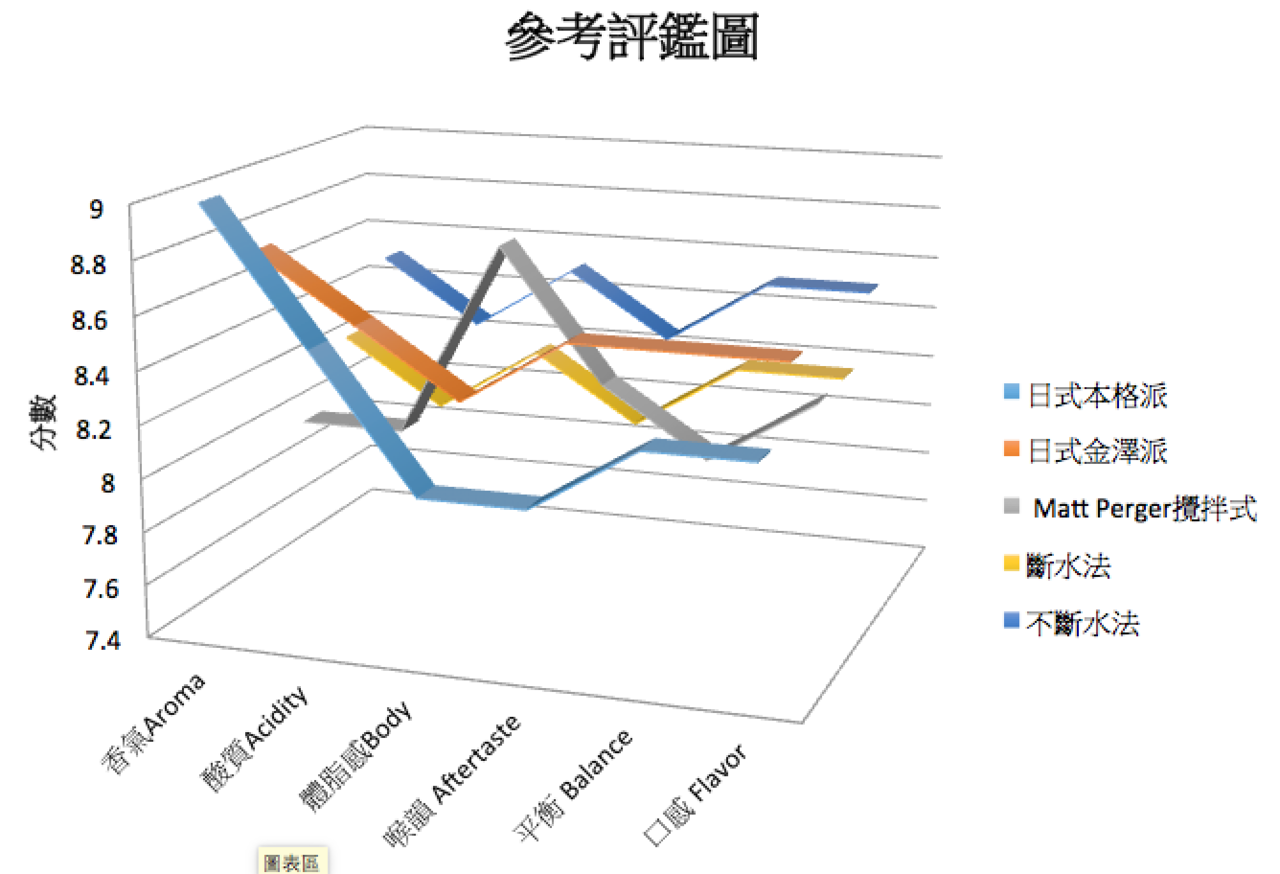
Cupping Evaluation Chart
The final image shows our cupping evaluation chart for reference.
FrontStreet Coffee Recommendation
All five methods were built around the same variable - a V60-type dripper - and FrontStreet Coffee's African beans are chosen to reward it. The Hario V60, redesigned into its familiar form in 2004 and launched in 2005, uses a 60° cone angle and a single large hole to push water toward the center and lengthen contact with the grounds, so the flow depends on the brewer's control and shows up directly in the cup. That makes it ideal for bright, aromatic coffees.
For experimenting across these methods, FrontStreet's fruit-and-floral lineup is a good set of reference beans. The classic Yirgacheffe character of Gotiti, with white floral and citrus, suits the faster, sweeter methods like the Kanazawa and continuous pours; the tropical fruit of Flower Queen - strawberry, passion fruit, jackfruit, and lychee - responds well to the more extraction-focused stirring method and keeps its sweetness even at 97°C; and the Geisha-character Strawberry Candy and the raisin-honey Mozart reward a clean, controlled pour that preserves their delicate aromatics.
As a starting point, a 1:15 water-to-coffee ratio and 15 g of coffee are reliable, with water between 87°C and 97°C depending on the method. If you want to explore how a coffee changes from bright and tea-like to sweet and full, brewing the same FrontStreet bean through all five methods is one of the most instructive exercises in pour-over.
Important Notice :
FrontStreet Coffee is a long-established specialty coffee roaster in Guangzhou China, selling freshly roasted beans from its own farm in Yunnan as well as dozens of carefully selected single-origin beans from around the world for both pour-over and espresso. The products deliver consistently excellent quality and great value, with shipping within 24 hours. Guangzhou's FrontStreet Coffee shop is recommended by many coffee lovers, and the beans are now available online at the Tmall 。
FrontStreet Coffee has moved to a new address:
FrontStreet Coffee Address: 315,Donghua East Road,GuangZhou
Tel:020 38364473
 Scan and follow the En Gafei WeChat official account. Please indicate that the reprint comes from "En Gafei".