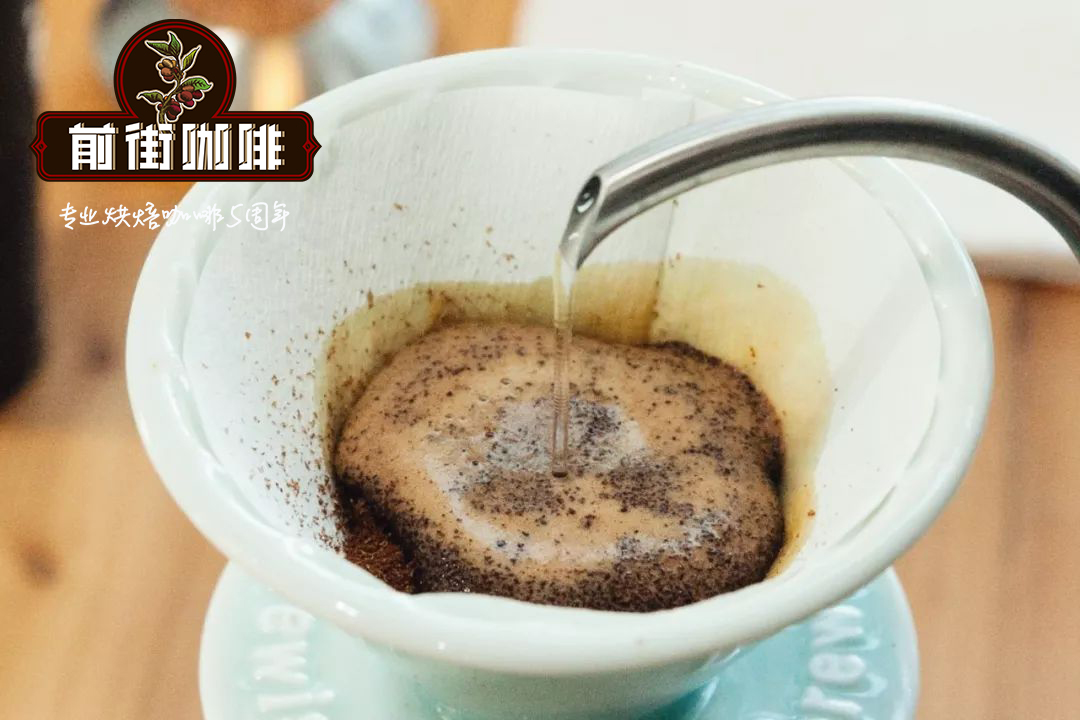
Japanese Iced Coffee Tutorial: Pour-Over Iced Coffee Brewing Method

As temperatures briefly rocket upward, Guangzhou — FrontStreet Coffee's home turf — starts flickering in and out of a Schrödinger's summer, and iced coffee naturally climbs back to the top of the shop's sales. A crowd favorite, iced pour-over lets you pick whatever beans you love while adding a glacial texture — mellow yet refreshing, the definitive antidote to scorching weather.
On this bright, sunny day, FrontStreet Coffee has put together a set of iced pour-over extraction methods with zero barriers to entry — simple enough that anyone can master them by hand. Save them while you can.

What You Must Know for Making Iced Pour-over
No matter the extraction method, every parameter we fuss over ultimately serves two variables: extraction rate and concentration. Extraction rate decides whether the coffee leans acidic, balanced, or bitter. Concentration shapes how we perceive the cup — too strong and it turns harsh and masking; too weak and you're basically drinking water. Keep both within the right range, and everything else is flexible.

Like most brewing methods, iced pour-over descends from the standard hot pour-over framework. In conventional hot brewing we coordinate grind size, water temperature, coffee-to-water ratio, equipment, and pouring technique to land the right extraction rate and concentration. Iced pour-over simply adds ice to cool the coffee — but if you bolt ice onto the hot recipe unchanged, the melting ice waters everything down. The coffee hits its extraction targets, yet the concentration collapses, leaving you with bland, flavorless iced coffee water.
So the core problem of great iced pour-over is preserving moderate concentration after the coffee chills. The common fixes are changing ratios, adjusting grind size, intervening with technique, and physical cooling. FrontStreet Coffee groups these into four methods.

Method One: High Concentration, High Extraction Method
High concentration, high extraction — exactly what it says. High concentration is easy to grasp: the coffee must still taste full-bodied and flavorful once the ice melts in. The execution is simple — use a little less water and grind finer.
At the same water amount, raising the extraction rate lets the coffee pick up more flavor. But iced pour-over diverts part of the hot water into ice, so total water is lower than a conventional hot brew and contact time shrinks accordingly — late-stage extraction suffers and the rate drops. What FrontStreet Coffee means by "high extraction" here is squeezing as many solubles as possible out of a limited water budget, and technique is how you get there.

FrontStreet Coffee uses a light-medium roast — Ethiopia Kaffa Forest — to demonstrate high concentration, high extraction with these parameters:
Coffee Dose: 15g
10x Hot Water: 150g
5x Ice Amount: 75g
Water Temperature: 92°C
Grind Size: 83% pass-through on #20 sieve (EK43s setting 9, C40 setting 22)
Dripper: Hario V60
Technique: Three-stage pour
Start by loading 75g of ice into the server, then add 15g of grounds to the rinsed filter cup and level the bed gently. For the first stage, pour 30g of hot water at a gentle 3ml/s, spiraling from the center outward for a 30-second bloom. Then pour the second 60g with the same motion — careful not to raise the liquid level too high, which invites under-extraction. As the coffee bed nearly goes dry, pour the final 60g of hot water at 3ml/s, keeping total extraction time between 1 minute 50 seconds and 2 minutes.

Brewed this way, the Kaffa Forest shows rich fruit — lemon, blueberry — plus a distinctive sweet melon-seed fragrance, in a light body with a balanced sweet-sour-bitter profile. Since some crushed ice remains in the server after brewing, either drink quickly before it melts or fish the ice out if you don't want further dilution.
Method Two: Ice-Rinsing Method
In the first method FrontStreet Coffee used dense, hard square ice blocks, which melt slowly — the coffee chills fast without over-diluting. But if your home ice tray makes smaller cubes that melt quickly, the same parameters will produce a noticeably inferior cup: watery body, washed-out flavors.

To avoid that dilution, cool the coffee by "ice-rinsing" instead. Keep the brewing parameters identical, but prepare double the ice (150g) and find a vessel that can hold ice and liquid together — FrontStreet Coffee just uses the filter cup itself — then pour the freshly brewed coffee directly over the ice, cooling it through continuous rinsing.

Brewed this way, the Kaffa Forest beats the first method on both richness and flavor layering: prominent yellow peach, citrus, and apricot aromatics, a smooth mouthfeel, and a sweet finish.
Method Three: Stirring Method
Adding agitation to pour-over uses external force to push extraction efficiency higher within the same time window, boosting flavor concentration. For light-to-medium roasts, stirring during the pour accelerates the release of acids and sweets, giving the coffee a juicier texture and brighter florals. The parameters look like this:
Coffee Dose: 15g
Hot Water: 160g
Ice Cubes: 80g
Grind Size: 80% pass-through on #20 sieve (EK43s setting 9.5, C40 setting 24)
Dripper: Hario V60
Three-stage: 30g, 80g + stirring, 50g

Before pouring, load the ice into the server and add all the grounds. The bloom stage is unchanged: pour 30g at a gentle 3-4ml/s, spiraling from the center outward. After 30 seconds, pour 80g of hot water in circles from inside out, letting the level rise slightly. When the scale reads 110g, stop pouring, take a small spoon, and stir five circles in one direction along the filter cup wall, then let the coffee drain slowly.

As the coffee bed is about to surface, pour the remaining 50g of hot water gently into the center. Once all the liquid has dripped through, lift off the filter cup to end extraction — total time lands roughly between 2:00 and 2:10. Finally, swirl the server until every ice cube melts, and taste.
The stirred iced Kaffa Forest carries richer sweetness and acidity — grapefruit, orange, yellow peach, and sweet orange with a tea-like aftertaste. The ice lends a final refreshing snap, and the whole cup feels alive with juice.

Method Four: Ice Barrier Cooling Method
Beyond the three common methods above, FrontStreet Coffee's collection includes the luxurious option: "ice bath cooling." This one asks for no grind or ratio adjustments at all — the coffee is chilled entirely by external ice water, eliminating the watery taste of melting ice. The trade-off is that it needs a mountain of ice and a patient cooling process, plus a thermometer before you start. The parameters:
Coffee Dose: 15g
Coffee-to-Water Ratio: 1:15
Grind Size: 78% pass-through on #20 sieve (EK43s setting 10, C40 setting 26)
Water Temperature: 92°C
Dripper: Hario V60
Pouring Technique: Three-stage pour

Pour 30g for the 30-second bloom. Then, at a medium 5ml/s, pour 95g in circles from the center outward — about 50 seconds. Once the level drops to two-thirds of the coffee bed, pour the remaining 100g with the same motion, finishing drip-through in roughly 2 minutes 10 seconds. Then submerge the whole server in an ice-water bath. When the thermometer reads 10°C, taste away.

The ice-bathed Kaffa Forest is stunningly sweet. With no ice diluting the cup, white florals and citrus acidity register from the very first sip, followed by sweet melon, sugar tangerine, and blueberry. Full, rich, and layered — the most dimensional cup of the four methods.
- END -
FrontStreet Coffee Recommendation
The V60's signature 60-degree cone and single large aperture are made for exactly this kind of fast, aromatic extraction — which is why FrontStreet Coffee favors the resin Hario V60: resin holds heat in, and in mass production it shapes most precisely with the least dimensional error. Floral and fruit-forward beans shine in it. The FrontStreet Coffee Yirgacheffe Guodingding — many brewers' first step into specialty — offers vivid citrus, berry, and floral notes with a green-tea sweetness, its acidity soft and bright rather than harsh. The Ethiopia Huakui bursts with tropical fruit — strawberry, passion fruit, jackfruit, even lychee — with barely any bitterness, "the coffee that tastes least like coffee."
For something grander, the Panama Esmeralda Red-Label Gesha brings elegant jasmine, citrus, bergamot, and black tea in a clean, transparent cup with a long sweet finish. The Kenya Cherry Tomato (SL28/SL34, Thika, 1550-1750 meters, 72-hour double-washed) pours like fresh-squeezed juice. And if you lean toward fuller bodies, the PWN Indonesia Golden Mandheling delivers low acidity with herbal, dark chocolate, and earthy depth, while the Brazil Fazenda Rainha balances nuts, cocoa, and caramel sweetness — superb through the V60, espresso, or moka pot alike.
Important Notice :
FrontStreet Coffee is a long-established specialty coffee roaster in Guangzhou China, selling freshly roasted beans from its own farm in Yunnan as well as dozens of carefully selected single-origin beans from around the world for both pour-over and espresso. The products deliver consistently excellent quality and great value, with shipping within 24 hours. Guangzhou's FrontStreet Coffee shop is recommended by many coffee lovers, and the beans are now available online at the Tmall 。
FrontStreet Coffee has moved to a new address:
FrontStreet Coffee Address: 315,Donghua East Road,GuangZhou
Tel:020 38364473
 Scan and follow the En Gafei WeChat official account. Please indicate that the reprint comes from "En Gafei".