What's the Secret to Layered Latte Coffee? The Science Behind Making Beautiful Layered Lattes
Whether it is the older generation of parents or students still working through practice problems, latte is often the first specialty coffee drink people encounter. After all, walk into a coffee shop, see the beautiful latte art on someone else's cup, and who would not want one of their own?
Most sources trace the latte to Italy. The word "latte" comes from the Italian "caffè e latte," in which "latte" simply means milk. The original Italian name already told you the recipe: coffee and milk.
The Evolution and Popularization of the Latte
People have been mixing coffee and milk since the 17th century. The English term "caffè e latte" first appeared in 1867, in William Dean Howells's "Italian Journeys." In Italy and across Europe, the drink became a breakfast staple. But while the latte was already part of European household breakfasts, its worldwide popularity owes itself largely to the Americans.
Even through eras of high population movement like World War II, you could not find "latte" on café menus in Italy or France—two countries famous for their devotion to espresso.
Starbucks was founded and opened its first store in Seattle in the 1970s. After the Faema E61 espresso machine appeared in 1961, espresso extraction and milk steaming took a qualitative leap: rich crema and fine microfoam let a good milk coffee look even better than it tasted.
As Starbucks expanded around the world, more people learned the brand—and more people learned the latte, a sweet, smooth, not-bitter coffee.
FrontStreet Coffee's Approach to Latte
FrontStreet Coffee's stores often meet first-time coffee drinkers—people who can neither accept the burnt bitterness of dark roasts nor the bright acidity of light ones. Their baristas usually recommend the latte, whose coffee flavor is gentler: because the espresso-to-milk ratio is small, the coffee's aromatics still show through while its bitterness is completely enveloped by the milk's sweetness.
For the espresso base, FrontStreet Coffee's stores use a blend called the Sunflower Warm Sunshine Blend. They designed it to create an espresso with the rich wine-like flavor rarely found on the market, composed of 70% Honduras Sherry and 30% Ethiopia Natural Red Cherry.
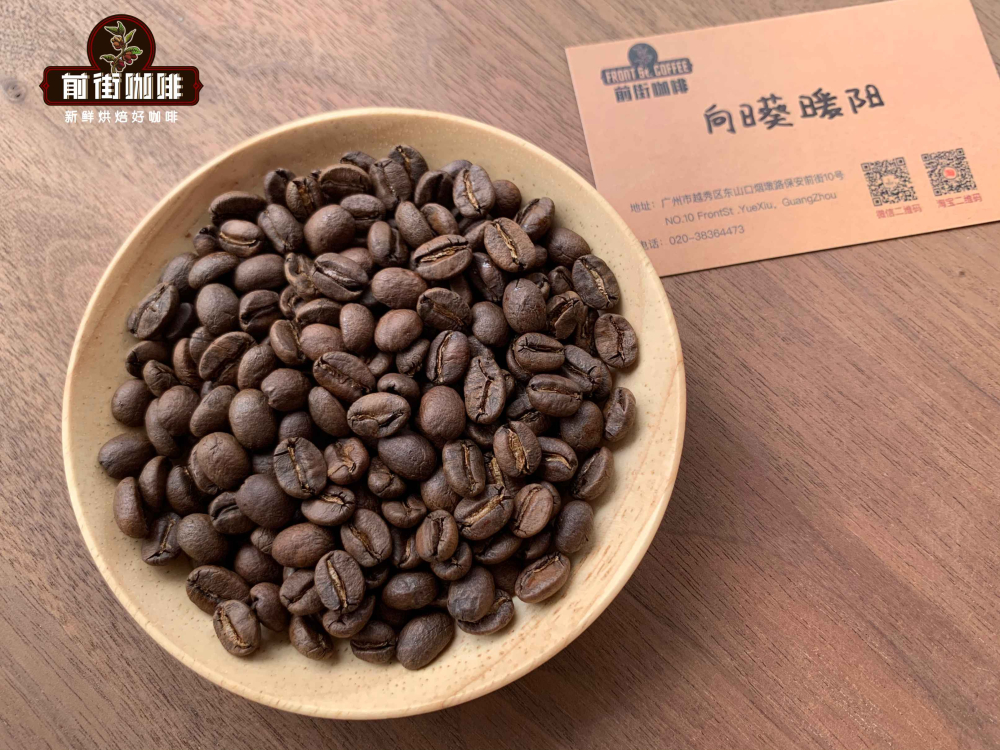
FrontStreet Coffee Sunflower Warm Sunshine Espresso Blend
Origin: Honduras & Ethiopia
Varieties: Caturra, Catuai, Pacas, local native varieties
Processing: Washed & natural
Honduras Sherry is shade-dried after 30-40 days of low-temperature fermentation in sherry whisky barrels. Anyone who has tasted enough whiskies knows that port-barrel whisky carries a slight savory edge, while sherry-barrel whisky is sweeter and more delicious. Shade-drying keeps the beans out of direct sunlight, which limits the loss of winey aromas to heat and helps prevent undesirable fermented notes and acidity. Sherry coffee beans thus carry traits similar to sherry-barrel whisky—sweetness that lends this blend rich wine aromas plus vanilla and cream.
Ethiopia Natural Red Cherry comes from the Yirgacheffe region, processed the most primitive, traditional way—the natural process. Skin and pulp are kept on, and whole cherries are spread evenly on raised beds to dry in the sun, letting more of the pulp and mucilage sugars work slowly into the green beans. That gives the blend its berry acidity.
FrontStreet Coffee's Latte Method
FrontStreet Coffee pulls its latte shots through a Mahlkönig Galileo Q18 grinder on a Faema E98 espresso machine. After dialing in, the recipe runs as follows:
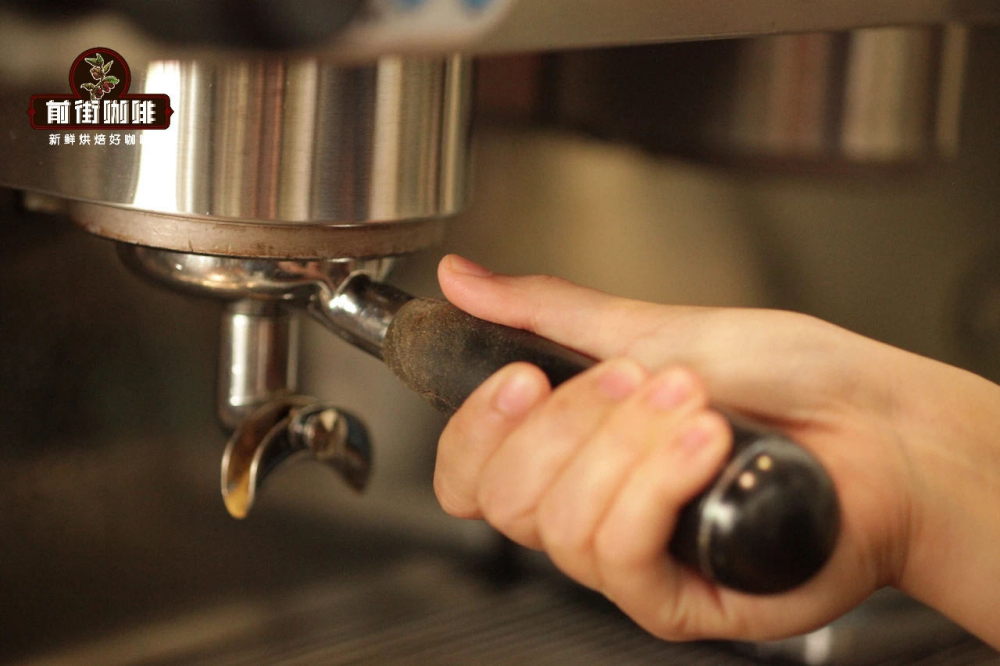
The Galileo Q18 is set to 1.9, dosing 20 grams of grounds, with an extraction time of 26-28 seconds yielding 35 grams of liquid.
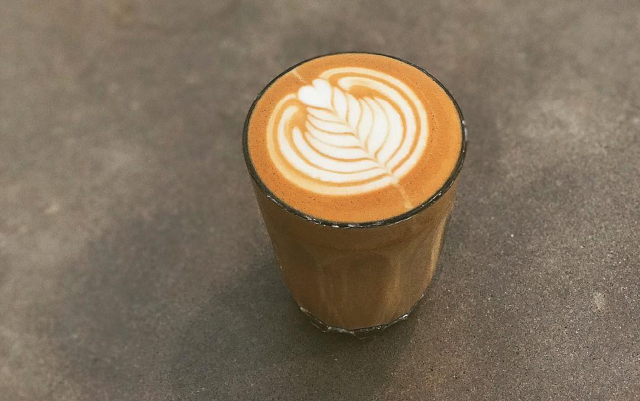
For service, FrontStreet Coffee uses a 300 ml wide-mouth cup, so a suitable amount of milk goes into the pitcher. The steam wand is positioned with the pitcher spout as the pivot, angled toward the 2-3 o'clock direction. Air is introduced into the milk, and the steam quickly spins a vortex that eliminates the larger bubbles, frothing the milk to a dense, glossy smoothness.
The frothed milk must be united with the espresso quickly for latte art; otherwise the milk and foam keep separating, the two stop blending cleanly, and pouring good art becomes a struggle.
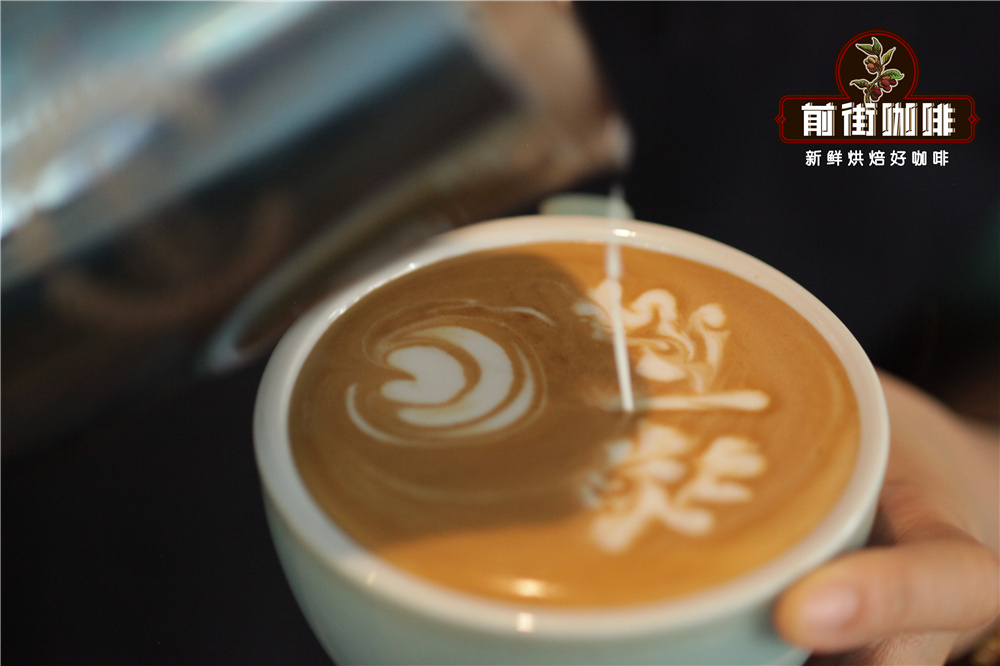
The latte FrontStreet Coffee makes from the Sunflower Warm Sunshine Blend shows intense whisky, vanilla, and cream flavors. And there is a little science on the milk side too: when milk is steamed to around 65°C, lactose breaks down into more sugars, making the milk taste even sweeter. Combined with the berry acidity of the Ethiopia Natural Red Cherry, this unsweetened latte ends up deliciously, naturally sweet.
The Rise of Dirty Coffee
As aesthetics evolved, another coffee-and-milk drink swept the country: the "Dirty," a milk coffee that captivates with its beautiful layering. To make one, FrontStreet Coffee first pours cold milk into an iced glass, then places the glass under the brew head and lets the espresso flow directly onto the milk.
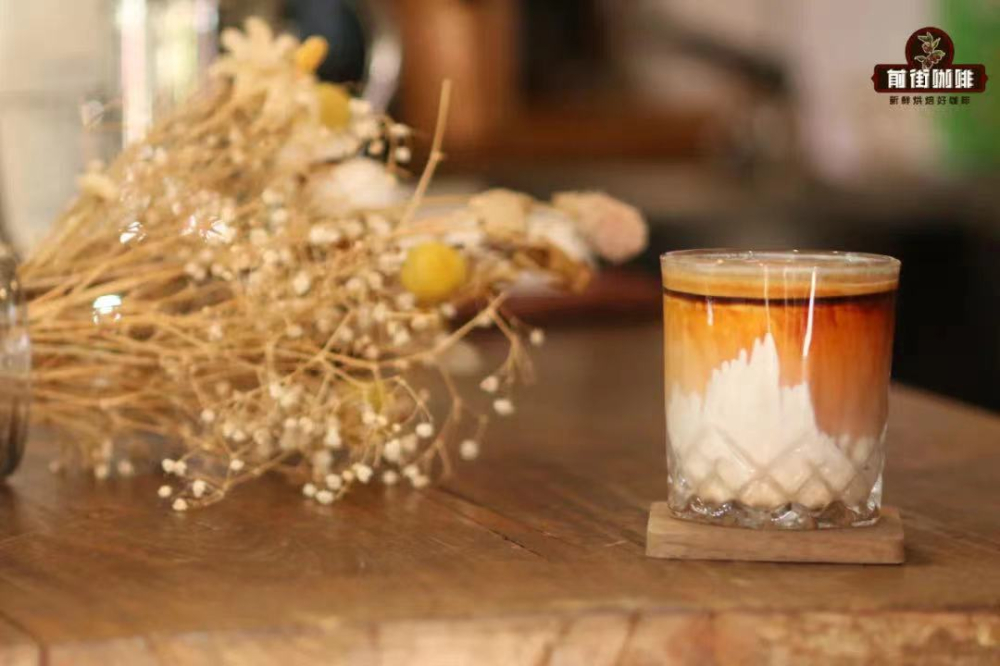
The layering is pure physics: because milk is slightly denser than espresso, the coffee floats on top. Over time, though, the coffee gradually merges with the milk beneath it until the drink becomes a true milk-coffee mixture.
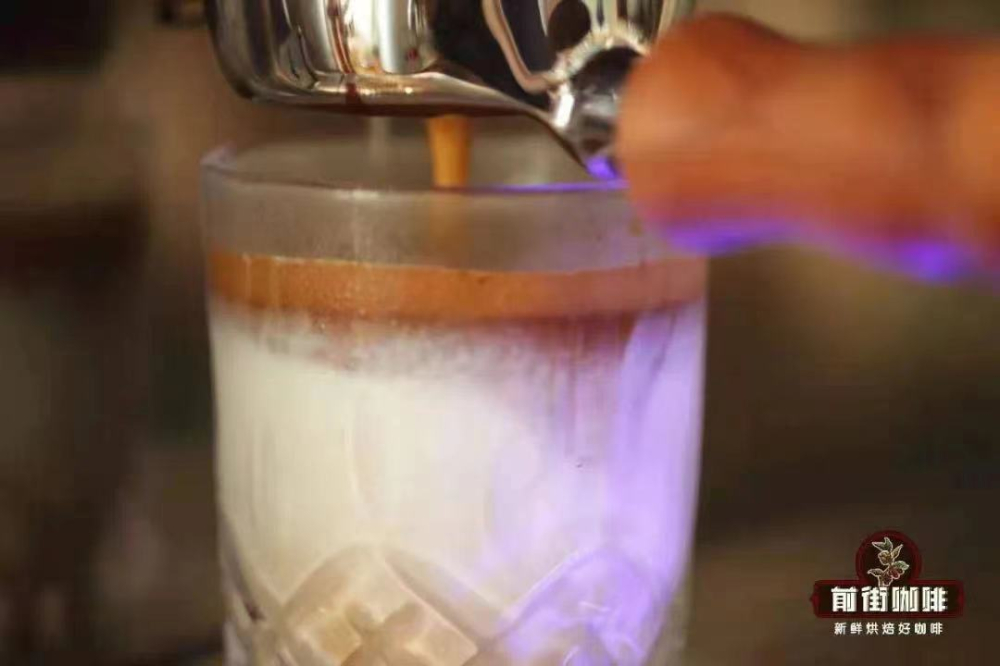
A reminder for anyone ordering a Dirty: it looks beautiful, but drink it fast. The pleasure is in the contrast of temperatures—first the warm espresso on top, then the middle where coffee and milk mingle, and finally just the cold milk at the bottom.
FrontStreet Coffee Recommendation
If all this makes you want to practice latte art at home, FrontStreet Coffee has blends built for exactly that. The FrontStreet Classic Blend is a medium-dark, three-origin recipe inspired by the old "Mamba" formula—Mandheling and Brazil—with a touch of Robusta added for aroma and crema. Extraction releases butter, toasted toast, and caramel-biscuit aromas in a strong, solid cup with fine crema and rock-steady extraction: the essential first bean for home beginners.
Prefer a fragrant, nutty profile? The FrontStreet Signature Blend pairs washed Colombian with pulped-natural Brazilian beans, showing nuts, dark chocolate, and caramel in espresso, and cream, almond, and cocoa in any milk coffee—Americano, latte, or flat white—with crema that matches café output and more than enough stability for practicing pours. And if you are gearing up to open a shop, the FrontStreet Commercial Blend adds a little Robusta to the Signature recipe for deeper-brown, finer crema and a heavier body, making nuts, cocoa, and caramel show through in Americanos, lattes, and mochas—and making latte art genuinely easy.
- FrontStreet Classic Blend: medium-dark, three origins + Robusta; butter, toast, caramel biscuit, fine stable crema—must-have for beginners learning to pour.
- FrontStreet Signature Blend: washed Colombia + pulped-natural Brazil; nuts, dark chocolate, caramel; cream, almond, cocoa in milk drinks.
- FrontStreet Commercial Blend: Signature base + Robusta; deep-brown crema, heavy body, nuts-cocoa-caramel—built for cafés.
- Steaming tip: froth milk to about 65°C—lactose breaks down into more sugars, so the latte tastes naturally sweeter.
Important Notice :
FrontStreet Coffee is a long-established specialty coffee roaster in Guangzhou China, selling freshly roasted beans from its own farm in Yunnan as well as dozens of carefully selected single-origin beans from around the world for both pour-over and espresso. The products deliver consistently excellent quality and great value, with shipping within 24 hours. Guangzhou's FrontStreet Coffee shop is recommended by many coffee lovers, and the beans are now available online at the Tmall 。
FrontStreet Coffee has moved to a new address:
FrontStreet Coffee Address: 315,Donghua East Road,GuangZhou
Tel:020 38364473
 Scan and follow the En Gafei WeChat official account. Please indicate that the reprint comes from "En Gafei".