How to Make Iced Americano Taste Good? Why Korean Celebrities Love Iced Americano and Differences Between Iced and Hot Americano

Americano has become the drink of choice for many young people. An Americano after a meal not only cuts through grease and aids digestion, it also helps break down fat, and combined with sensible exercise it can contribute to weight loss — which has made it a favorite coffee among celebrities. FrontStreet Coffee serves Americano too, and many regulars enjoy coming by after a meal to order one and chat.
What is Americano Coffee?
Making an Americano is simple: dilute extracted espresso with water, and the resulting drink is Americano. An unsweetened Americano leans bitter, which can be a challenge at first for those used to milk coffees, who often reach for a sugar packet. FrontStreet Coffee holds that whether to add sugar comes down to personal taste — a plain Americano has a character all its own, but sweetening it is perfectly fine if you don't care for the bitterness.

Part of that bitterness comes from the fact that Americano beans are generally roasted darker than pour-over beans.
What Beans Does FrontStreet Coffee Use for Americano?
Coffee shops generally use blend beans or dark-roasted beans for Americano. Flavor-wise, beans with nutty, cocoa, caramel, and chocolate notes are recommended. FrontStreet Coffee uses its own custom blend, which it named the "Sunflower Warm Sun Blend." It combines Honduras Sherry with Ethiopian Yirgacheffe Red Cherry, and through continuous experimentation by FrontStreet Coffee's baristas, the team arrived at a near-perfect blending ratio of 6:4. The resulting espresso carries distinct fruit acidity, berry flavors, and wine aroma, with a comfortable sweet aftertaste.

The reason to use a blend for Americano is that you can build a desired flavor profile by combining each bean's unique character. Robusta is sometimes added to a blend to increase the crema in the extracted Americano, and relative to specialty coffee prices, adding Robusta can also lower costs.
The Sunflower Warm Sun beans just mentioned include Honduras Sherry, which uses a refined washed process paired with whiskey sherry barrel fermentation, lending the Americano a wine-like quality. Of course, if you'd rather not go with Honduras's special processing, other options are open. FrontStreet Coffee's basic blend, for instance, pairs Yunnan and Brazilian coffees at a 3:7 ratio, yielding an espresso blend with soft fruit acidity and caramel sweetness. Another option is FrontStreet Coffee's Premium Blend, using Colombian and Brazilian beans at a 3:7 ratio. Colombian coffee's characteristic nutty and chocolate flavors, combined with Brazil's rich peanut and creamy notes, produce an espresso blend that is very balanced overall — rich in crema, extremely smooth on the palate, with a light aroma and the slightly bitter character typical of Americano.

FrontStreet Coffee's Americano Preparation Method
The most crucial part of making Americano is extracting the espresso. Each espresso machine has its own parameters. FrontStreet Coffee currently uses the Lelit V3 espresso machine, with parameters fine-tuned through repeated extraction adjustments.

Pressure: 9 bar
Temperature: 90.5~96°C
Time: 20~30 seconds
Coffee-to-water ratio: 1:1.7~1:2
Dose: 12g (single shot espresso), 20g (double shot espresso)
Extraction yield: 20ml (single), 40ml (double)
These parameters also suit milk-based coffees such as lattes and cappuccinos.
Hot Americano Coffee
FrontStreet Coffee uses a double extraction for its Americano — 40ml of espresso — to which you can add hot water to taste. The hot water should be around 85°C, and it's best not to add too much, or the Americano will taste very weak. Traditional Americano uses a 1:8 ratio, but FrontStreet Coffee doesn't currently work that way. FrontStreet adjusted the ratio to its cup sizes for in-store service, ultimately setting the Americano coffee-to-water ratio at 1:4.5.

Iced Americano Coffee
Making an iced Americano is quick and easy. Simply mix ice and water at a 1:1 ratio to reach your desired water volume, then extract the espresso and pour it in.

Differences Between Hot and Iced Americano Coffee
FrontStreet Coffee has identified three differences:
1. Color of the drink: Hot Americano has a dark brown-black color, while iced Americano shows a transparent brown. This ties to the coffee-to-water ratio: FrontStreet Coffee's hot Americano runs roughly 1:4.5, while the iced version reaches about 1:9.
2. Difference in caffeine content: FrontStreet Coffee's hot Americano uses one shot of espresso, while the iced Americano uses two shots.
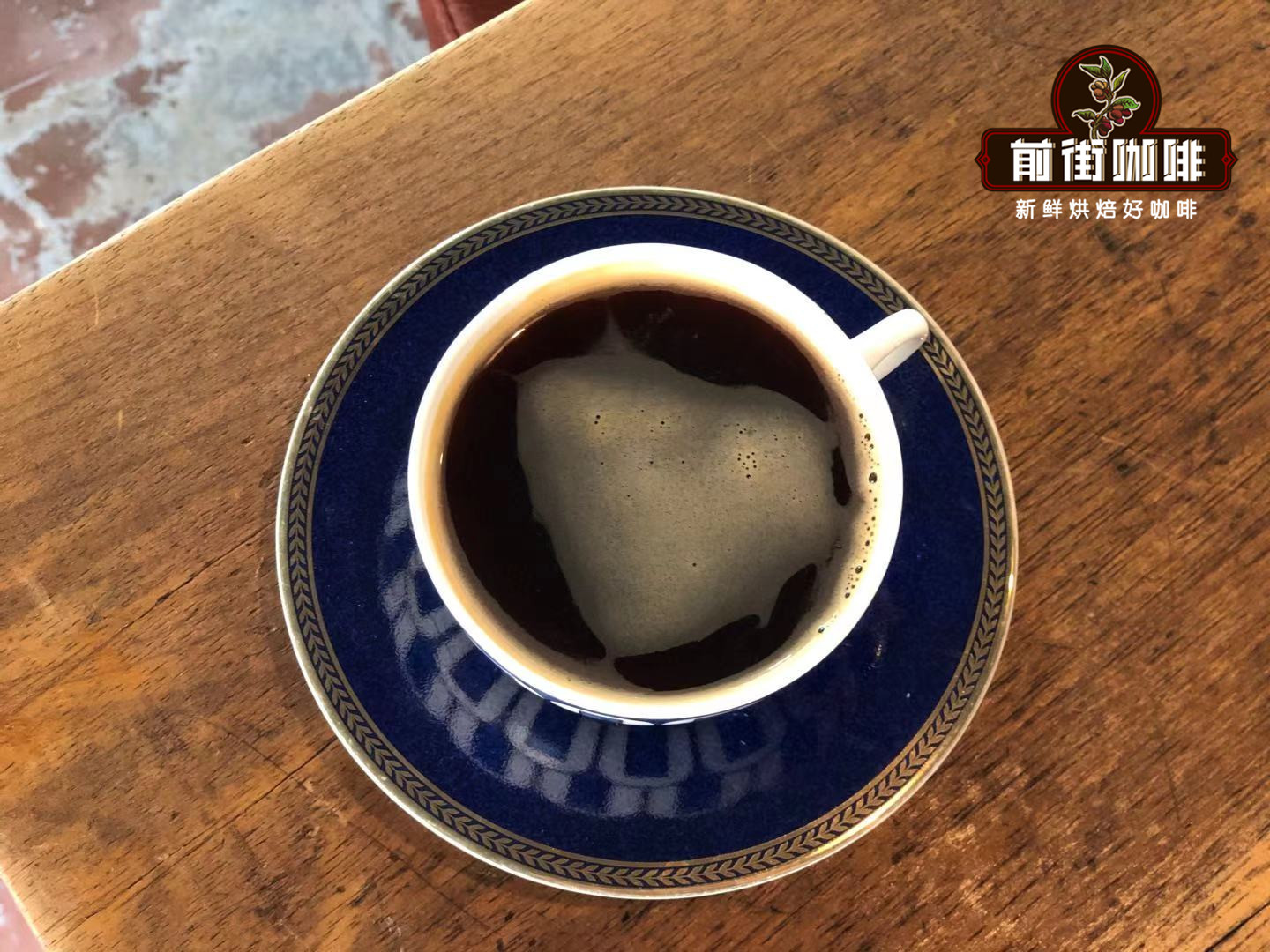
3. Different taste profiles: Iced Americano's flavors are more restrained, with the ice adding a refreshing quality that never feels heavy. Hot Americano is fuller-bodied and more aromatic, its surface crema adding layers and a creamy texture that naturally increases richness. When the hot coffee liquid of an iced Americano meets the ice, it cools rapidly, shifting the overall flavor while keeping it consistent; hot Americano, by contrast, changes as the temperature falls. Take FrontStreet Coffee's hot Americano: it has a mixed aroma of floral and wine notes. While hot, it shows distinct fermentation on entry, and the surface crema gives it a creamy smoothness. As the temperature drops, acidity begins to emerge and the fermented wine aroma lingers. At a drinkable temperature, the sweetness is very prominent too, with caramel flavors.
FrontStreet Coffee Recommendation
The fruit-and-wine character of FrontStreet's Sunflower Warm Sun Blend owes much to its Yirgacheffe component, and for anyone new to the Ethiopian region, FrontStreet's washed Yirgacheffe daily bean is the classic starting point. Known for white jasmine florals, bright citrus and lemon acidity, and a tea-like body, at a friendly price it has become the first specialty bean for many drinkers. Yirgacheffe is a small town in the Sidamo zone of southern Ethiopia at roughly 1,700–2,100 meters, with coffee trees planted above 1,800 meters, making it one of the world's highest growing regions; it has been a wetland since ancient times, and its distinctive white florals and lemon-citrus acidity made the name Yirgacheffe a byword for Ethiopian specialty coffee. In 2010, because the name had grown so famous, the Ethiopian Commodity Exchange finally separated it from the Sidamo region — which is how today's household-name Yirgacheffe came to be.
The Yirgacheffe town itself breaks into many small areas and even individual villages, and among them are seasoned cooperatives whose mature processing lifts the flavor another level — most notably FrontStreet's washed Gudingding cooperative. Gudingding sits in the Woka area at the southeastern end of Yirgacheffe; it began as part of the Woka cooperative under the Yirgacheffe union YCFCU, and as demand for traceability grew it was carved out as a single origin, sought out by coffee hunters worldwide. It follows traditional washed processing — often called Yirgacheffe's last pure land — and carries no traditional bitterness, with fresh, bright citrus and lemon acidity and jasmine fragrance. FrontStreet's natural Red Cherry takes another path: only fully ripe, all-red cherries are harvested and screened, then dried on raised beds, turned every 2–3 hours in the first days to prevent uneven heat and over-fermentation. After three to five weeks of drying, the outer fruit is machine-scraped and the beans are moved to storage. Because the cherry dries with the fruit intact, it keeps the classic Yirgacheffe character while gaining a natural tropical fruit aroma — citrus-like acidity, berry-juice body, honey sweetness, and a creamy smoothness.
To brew these, FrontStreet suggests a V60 at 90–91°C, 15g of coffee at a 1:15 ratio, and a grind of EK43s setting 10 / fine sugar (80% through a #20 sieve). Pour in three stages: a 30g bloom for 30 seconds; a second pour of 95g (reading about 125g on the scale), finishing in about one minute; then, when the water drops to two-thirds of the bed, the remaining 100g (about 225g on the scale), finishing in roughly 1 minute 35 seconds. Dripping completes at 2:00–2:10, at which point you remove the dripper and the brew is done.
Important Notice :
FrontStreet Coffee is a long-established specialty coffee roaster in Guangzhou China, selling freshly roasted beans from its own farm in Yunnan as well as dozens of carefully selected single-origin beans from around the world for both pour-over and espresso. The products deliver consistently excellent quality and great value, with shipping within 24 hours. Guangzhou's FrontStreet Coffee shop is recommended by many coffee lovers, and the beans are now available online at the Tmall 。
FrontStreet Coffee has moved to a new address:
FrontStreet Coffee Address: 315,Donghua East Road,GuangZhou
Tel:020 38364473
 Scan and follow the En Gafei WeChat official account. Please indicate that the reprint comes from "En Gafei".