Costa Rican Coffee Beans: Exploring the Distinctions Between Canet Estate Musician Series Bach and Mozart Varietals

This is an estate that amazed FrontStreet Coffee. Canet Estate in Costa Rica is a small farm owned by three brothers. They have been growing coffee for over 10 years and also run a small processing mill. The wildly popular Musician Series — trendy for years now — comes from this estate, with each coffee in the lineup processed differently to highlight a different flavor focus. Today, FrontStreet Coffee shares the Beethoven from the Costa Rica Canet Estate Musician Series "Quartet."
Beethoven himself was a coffee lover. The story goes that he liked to count coffee beans to entertain himself and would use exactly 60 beans to make a single cup — a charming detail. This FrontStreet Costa Rica Beethoven bean genuinely impressed us: pronounced floral and fruity aromas, honeyed sweetness and berry-like acidity, moderate body, and full, solid acidity.

Tarrazu Region
Among Costa Rica's many outstanding coffee regions, one stands above the rest in fame: Tarrazu, also spelled Tarrazú. Tarrazu is hugely renowned in the specialty coffee world and is one of Costa Rica's main producing areas. It sits in the fertile volcanic belt of Central America, with a humid climate and rich volcanic soil. Year-round rainfall, high altitude, and dense natural forest shade create an ideal growing environment. Nearly 95% of the coffee grown in Tarrazu's high mountains grades as Strictly Hard Bean (SHB), typically cultivated above 1,500 meters.
Canet Estate
Canet Estate sits at the highest elevations of Costa Rica's Tarrazu coffee region, in the country's most densely concentrated fruit-growing zone. The estate's owners grow passion fruit as their primary crop, which makes coffee production relatively scarce — the trees occupy only one dedicated area and receive special care.
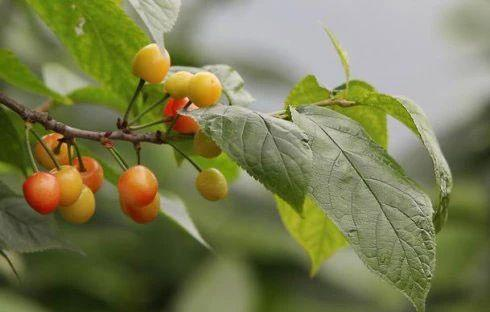
Variety
Most coffee drinkers have heard of Red Catuai, but Yellow Catuai is genuinely rare. Yellow Catuai (Catuai Amarillo) is a cross between Mundo Novo and Caturra, first developed by Brazil's Instituto Agronomico de Campinas. Like Red Catuai (Catuai Rojo), Yellow Catuai offers high disease resistance and suits high-altitude, windy sites. Both Catuai varieties show very refined, clean acidity, and by adjusting the pulping machinery they can yield both honey-processed and yellow honey-processed lots (depending on the degree of honey processing).
Processing Method
FrontStreet Beethoven is processed differently from the other coffees in the Costa Rica Musician Series: it uses the washed process. After harvesting, the cherries are sorted to remove under- and over-ripe fruit, then pulped. The mucilage is removed with a centrifugal washing machine to avoid fermentation, and the beans are rinsed in clean water. Finally, they dry on shaded raised beds for 12-14 days, turned constantly for even drying. Washed processing gives this coffee a cleaner, brighter flavor profile.

FrontStreet Coffee Roasting Recommendations
Roaster: Yangjia 800N, semi-direct flame

FrontStreet Coffee's roasters found that the Beethoven beans are high in density. They recommend a medium roast to preserve the bright acidity while showcasing the bean's fruit notes and adding richness and balance. Preheat the roaster to 170°C, then load the beans. Set heat to 120 and damper to 3. Turning point at 1'36"; hold heat steady. At 140°C, keep heat unchanged and open the damper to 4. Yellowing at 5'55" — the grassy aroma disappears and the beans enter the dehydration stage. At 151°C, reduce heat to 100 with the damper at 4. At 176°C, adjust heat to 85, damper unchanged. Dehydration completes at 8'15", with wrinkles and dark spots appearing on the bean surface and the toast aroma turning to coffee aroma — the prelude to first crack. Listen carefully for the sound of first crack. First crack begins at 9'01"; open the damper fully to 5, heat unchanged. Development time after first crack: 1'45", dropping at 193°C.
FrontStreet Coffee Cupping Report
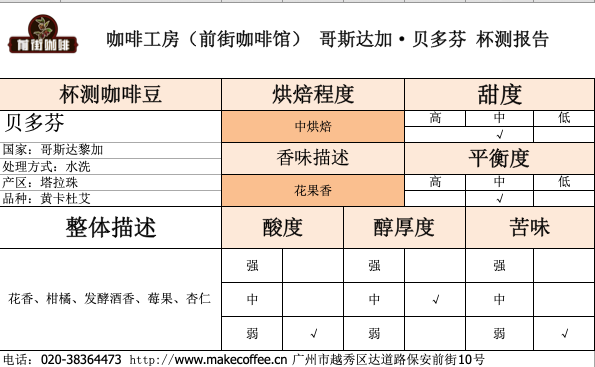
FrontStreet Costa Rica Beethoven cupping notes: abundant sweetness and a range of fruits — strawberry, apple, lemon, and grape flavors layered one after another — with unforgettable honey and toffee. The body is silky and cream-like, with the long aftertaste of a premium Indian Darjeeling tea.

FrontStreet Coffee · Costa Rica Canet Estate Musician Series Beethoven
Coffee Region: Tarrazu
Grade Standard: SHB
Coffee Variety: Yellow Catuai
Processing Method: Washed
Growing Altitude: 1980M

FrontStreet Coffee Brewing Recommendations
Filter: Hario V60
Water Temperature: 90°C
Coffee-to-Water Ratio: 1:15
Grind Size: Fine sugar texture (EK43s grinder setting 10)
FrontStreet Coffee Brewing Technique
Segmented extraction: bloom with 30g of water for 30 seconds. Pour in small circles to 125g to complete the first segment. Once the water level drops and the coffee bed is about to be exposed, continue pouring to 225g and stop. When the water level drops again and the bed is about to surface, remove the dripper. Total extraction time: 2 minutes.

Flavor Description
FrontStreet Beethoven tastes clean overall with a rich aroma. Strong berry and citrus acidity on entry — like drinking a glass of freshly pressed fruit juice in coffee form.
FrontStreet Coffee Recommendation
If the Beethoven's florals are what win you over, FrontStreet's Ethiopia Yirgacheffe Guodingding cooperative lot is the natural next step. Guodingding carries the classic washed Yirgacheffe profile — white-flower sweetness and bright citrus acidity that comes remarkably close to fresh jasmine, with a green tea finish. Brewed as a pour over, it delivers clear floral-fruit notes, lifted lemon acidity, and honeyed sweetness. It also makes a superb cold brew: slow, cold extraction draws out the coffee's lighter small molecules, producing an iced coffee as refreshing as fruit tea.
For a fruit-forward natural, try FrontStreet's Ethiopia Huakui (Natural). Its signature creamy strawberry flavor comes from the rich sweetness the ripe cherries develop during natural sun-drying. The silky texture on the palate evokes delicate orange blossom, while guava, mango, and other tropical fruits add juicy sweet-tart depth and layer upon layer of complexity.
And for something in the same spirit as the Musician Series itself, FrontStreet's Mozart — also from Costa Rica — is a must-try. It uses a unique raisin honey process: the pulped cherries are briefly fermented, then dried. The finished beans carry rich notes of dried fruit, ripe pineapple, and sweet orange, and release an intoxicating osmanthus fragrance as hot water hits them — aromatic yet delicately sweet. It shines as a cold brew or an iced pour over. If you'd rather explore blending, FrontStreet's Strawberry Sugar Gesha blend combines Costa Rican honey processing with washed Panama Gesha: raisin, orange, and ripe blueberry aromas, a rose-like closed fragrance, and a faint almond finish — equally good in a pour over, cold brew, home espresso machine, moka pot, or Clever dripper.
Important Notice :
FrontStreet Coffee is a long-established specialty coffee roaster in Guangzhou China, selling freshly roasted beans from its own farm in Yunnan as well as dozens of carefully selected single-origin beans from around the world for both pour-over and espresso. The products deliver consistently excellent quality and great value, with shipping within 24 hours. Guangzhou's FrontStreet Coffee shop is recommended by many coffee lovers, and the beans are now available online at the Tmall 。
FrontStreet Coffee has moved to a new address:
FrontStreet Coffee Address: 315,Donghua East Road,GuangZhou
Tel:020 38364473
 Scan and follow the En Gafei WeChat official account. Please indicate that the reprint comes from "En Gafei".