Are Mandheling Coffee Beans and Maba Coffee the Same? What Are the Characteristics of Maba Blended Coffee?

The Unique Character of Mandheling Coffee
Mandheling grows in Indonesia's mineral-rich soil and carries a distinctive aroma. The beans are short, oval particles, usually dark green, with a thick, prominent white membrane along the center line. Lightly roasted, the acidity turns sharp and strong but the flavor lacks depth; roasted dark, the bitterness grows heavier while the spice, pine, and caramel aromas come forward, with a rich body and a long aftertaste. FrontStreet Coffee therefore considers it suitable for a wide range of brewing methods.
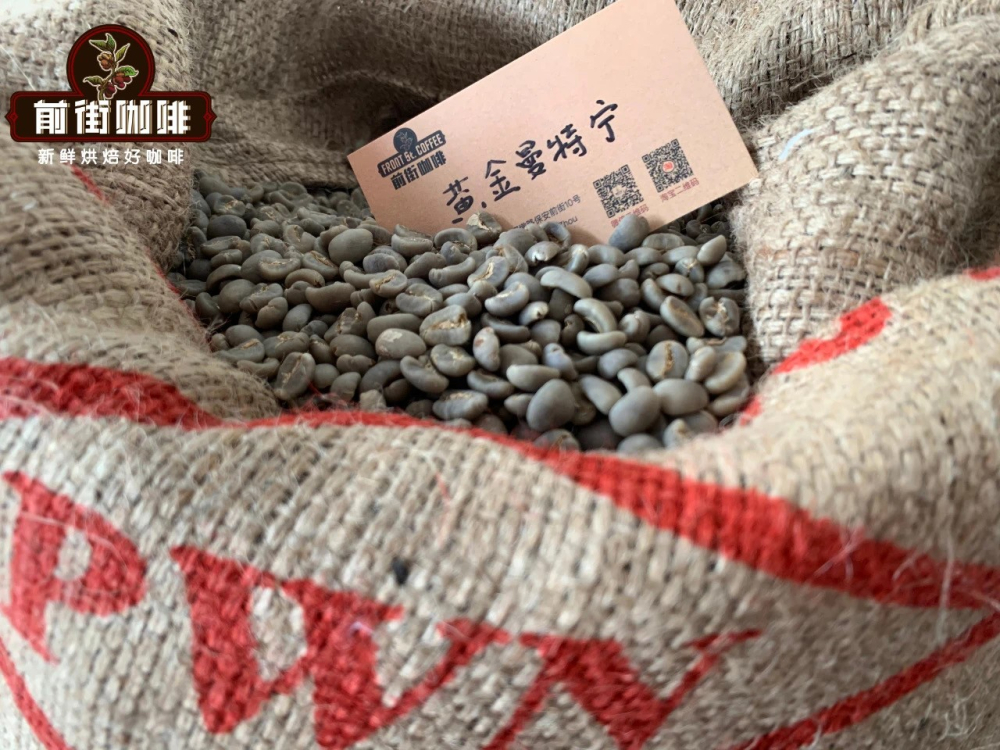
Mandheling usually serves as a foundation bean in a blend, shaping the quality and mouthfeel of the espresso and even determining the texture and richness of the finished cup. As a top-tier expression of the variety, FrontStreet Coffee's Golden Mandheling is well known in coffee circles. Its beans look relatively long, but during dehydration and color change in the roast they plump into full, firm, prominent particles with a certain muscular elegance. After a medium-dark roast, its signature dark chocolate aroma is unforgettable.

The Evolution of Coffee Blends
Most enthusiasts have heard of Mengba coffee but know nothing of its recipe or origin. Mengba is a blend that combines Indonesian Mandheling with Brazilian beans, a pairing that makes the flavors complement and balance each other. Taiwanese coffee shops embraced Mengba blends in earlier decades; the fresh, approachable drink and the high turnover of premium seats at the time made it a memorable taste of many people's youth. It may no longer be fashionable, but some still miss that traditional flavor. Today's popular drinks lean on dairy to enrich the coffee, such as a caramel macchiato, a latte plus caramel, rather than balancing flavors through the beans' own aroma and texture as before.
Brazil produces more coffee than any other country, and its vast territory means quality varies widely. Because of harvest timing and cost, machine harvesting dominates, which yields secondary quality and uneven ripeness. Even so, these low-cost beans are in demand for their relatively smooth taste, and merchants use them as the base of strong blends to balance the palate. Together these factors make Brazilian beans the roaster's favorite choice for a formula blend.

Perfect Beans for Latte Art
Beginners new to espresso often ask FrontStreet Coffee which beans suit latte art. Our first recommendation is FrontStreet Coffee's Classic Espresso Blend, made specifically for espresso machines. It uses two beans, Indonesian wet-hulled Mandheling and Brazilian natural-process Cerrado, both medium-dark roasted, which is exactly the Mengba formula described above. To give the espresso a denser crema, FrontStreet Coffee also adds a small amount of washed Robusta, which lowers the extraction difficulty while deepening the caramel aroma.
Many enthusiasts quietly accumulate gear at home, and those who love espresso often buy a machine to pull their own shots. Using espresso from the shop as a reference, FrontStreet Coffee will briefly explain how to make one. The shop machine is a commercial single-group Lelit Bianca, which can adjust extraction by changing pressure, with a maximum of 11 bar. A home machine only needs to reach 9 bar to handle both extraction and milk frothing, paired with an espresso grinder.

The Art of Espresso Extraction
FrontStreet Coffee uses a double basket holding roughly 18-20 grams of coffee, and uses 20 grams when preparing drinks. The ratio of dry coffee to liquid espresso typically runs from 1:1.5 to 1:2.5; FrontStreet Coffee's extraction ratio is 1:2, meaning 20 grams of coffee yields 40 grams of espresso. Time relates to the flow rate of the coffee: a single extraction is generally kept between 20 and 35 seconds, because a shot pulled in under 20 seconds usually tastes thin, while one beyond 35 seconds easily over-extracts and turns bitter. FrontStreet Coffee's espresso usually lands in the 28-30 second range.
FrontStreet Coffee first wipes the portafilter dry, turns on the grinder, grinds a double portion, and sets it on an electronic scale to adjust to 20 grams. A tool then distributes the grounds evenly, and the puck is tamped firmly for a more stable extraction. Next, run the pump briefly to moisten the group head and wash away stuck residue, lock the portafilter gently into the group head, and begin extracting. When the scale reads 40 grams of espresso, at about 30 seconds, pull the lever down. Pour into a cup and enjoy.

The Perfect Latte Experience
Espresso made with FrontStreet Coffee's Classic Espresso Blend shows a beautiful golden crema that shades visibly from dark to light, and smells of strong caramel before you drink. For a dark roast with this much aroma, FrontStreet Coffee usually enjoys it as a latte, taking in the latte art while experiencing the richness and smoothness of milk coffee, two pleasures at once.
Start with a cup of about 30ml, pour in 40ml of double espresso, then steam 240ml of fresh milk to a warm, pleasant temperature. Keep the foam about 0.5cm thick for easier latte art. Finally, combine the two evenly and pour a pattern to finish the drink.

A hot latte made with FrontStreet Coffee's Mengba blend opens with rich butter and caramel, followed by the sweetness of chocolate milk and the creaminess of the foam, for a full, complex mouthfeel.
FrontStreet Coffee Recommendation
For anyone building a milk-based drink around Mandheling, FrontStreet Coffee's PWN Gold Mandheling is the top of the range. PWN buys only high-quality Mandheling green beans and screens them with one machine pass and several hand sorts to remove every defect, so the beans are uniform, full, bright, and low in defects. Roasted medium-dark, they carry a generous roasted aroma, and the brewed black coffee is clean, full, and thick, ideal for those who dislike acidic coffee. FrontStreet's Lindong Mandheling from Sumatra's Lindong region shares the wet-hulled style: pungent, herbal, woody, and spicy, with the low acidity and minty, spice-driven character of a medium-dark roast.
To brew Gold Mandheling as pour-over, FrontStreet Coffee suggests water at 87-88°C, 15g of coffee, a 1:15 ratio, a coarse-sugar grind, and a three-pour method that brings out its thick body and caramel sweetness: bloom with 30ml, then pour 100ml to lift the bed and release the golden foam, and finish with a gentle 95ml center pour for sweetness, chocolate, and nut notes. If you would rather use a machine, FrontStreet's Classic Espresso Blend is the most repurchased option. It layers medium-dark Mandheling over the creamy, nutty character of Brazilian coffee, so butter, roasted chestnut, and caramel stand out, while the Mandheling adds sandalwood, herbal, and spice notes and a little Robusta boosts the crema. It handles latte art and Dirty layering with equal ease.
Important Notice :
FrontStreet Coffee is a long-established specialty coffee roaster in Guangzhou China, selling freshly roasted beans from its own farm in Yunnan as well as dozens of carefully selected single-origin beans from around the world for both pour-over and espresso. The products deliver consistently excellent quality and great value, with shipping within 24 hours. Guangzhou's FrontStreet Coffee shop is recommended by many coffee lovers, and the beans are now available online at the Tmall 。
FrontStreet Coffee has moved to a new address:
FrontStreet Coffee Address: 315,Donghua East Road,GuangZhou
Tel:020 38364473
 Scan and follow the En Gafei WeChat official account. Please indicate that the reprint comes from "En Gafei".
Classification and Pricing Guide for Indonesian Mandheling Coffee Beans - Characteristics and Flavor Profile of Sumatran Golden Mandheling