Colombia "Little Blue Mountain" vs Nicaragua "Little Blue Mountain" Coffee: Flavor and Taste Comparison

FrontStreet Coffee · Colombia Little Blue Mountain
Colombia FNC Butterfly
Selected SUPREMO grade premium small-farm batches
Most Colombian specialty coffee comes from the southern growing regions, and Huila is the most celebrated of them all. The department pairs fertile valleys with the snow-capped Andes, and millions of years of volcanic ash have built soils rich enough to nurture some of Colombia's finest coffees. Huila farms are also frequent winners in international cupping competitions. Many smallholders here focus on micro-batch specialty lots, each with its own personality. This particular lot is certified by the Colombian National Federation of Coffee Growers (FNC). Founded in 1927, the FNC guarantees the quality and origin of Colombian coffee; it is a non-profit organization dedicated to serving Colombian coffee farmers and the only official professional guild representing Colombian coffee.
Flavor Description
Drupe fruit, vanilla, nuts, dark chocolate, with a rich caramel aroma in the aftertaste and a full-bodied texture.
Coffee flavor notes: Caramel, blackcurrant, roasted walnuts, vanilla, honey

FrontStreet Coffee · Nicaragua Little Blue Mountain
Nicaragua
Grown in an exceptional natural environment
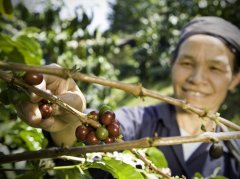
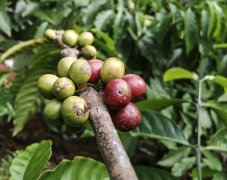
Cultivated at high altitude as SHB (Strictly High Bean) grade organic coffee, this lot draws on clear, pure irrigation water and fertile volcanic soil. Shade-growing maintains soil sustainability, and fully mature cherries are picked by hand - practices that give Nicaraguan coffee its distinctive style and charm, and that earned it the affectionate nickname "Little Blue Mountain."
Flavor Description
Smooth acidity that transitions into sweetness, with clean aromas and a soft, mellow body.
Coffee flavor notes: Ripe coffee fruit pulp, hazelnuts, roasted walnuts, citrus
Beyond these two coffees from Central and South America, FrontStreet Coffee's bean list includes a third single origin known as "Little Blue Mountain Coffee." It comes from Papua New Guinea in Asia-Pacific - a relatively small island nation whose terroir resembles the Blue Mountains', planted with Typica varieties introduced from Jamaica. The result balances smooth texture with nutty aromatics, and it has become a favorite among coffee enthusiasts. It is now available on FrontStreet Coffee's Tmall flagship store for online ordering.

Exploring Papua New Guinea's Unique Coffee Region
Next, let FrontStreet Coffee walk you through this origin and what makes it so special.
Papua New Guinea is an island nation near Indonesia with a tropical rainforest climate and abundant forest resources. Highlands between 1,300 and 1,800 meters are ideal for coffee cultivation. A former British colony, it wasn't until 1931 that Papua New Guineans brought Typica seed from Jamaica for local planting, gradually building a commercial coffee industry. The Papua New Guinea coffee regularly featured in FrontStreet Coffee's bean selection comes from ancient Typica varieties, washed-processed and roasted medium-dark, presenting hazelnut, toasted bread, and sugarcane notes with a clean, sweet profile.

The Excellence of Typica Varieties
Typica's mellow, fragrant character keeps it among the world's most prized coffee varieties, with Jamaican Blue Mountain as its most famous ambassador. Growing elegant, pure-flavored Typica is no small feat: terroir, plant management, selective harvesting, and post-harvest processing must all be carefully managed for the beans to develop their positive flavors and textures. That extra labor and know-how is exactly why Blue Mountain and Kona coffees command such prices.

Typica's most distinctive trait is the reddish-bronze tint of its young top leaves, earning it the nickname "Red Top Coffee." The trees grow in a conical shape with slightly drooping branches, the laterals meeting the vertical stem at 50-70° angles. The trunk is slender with fine branches, and because of their height and long branches, Typica trees need generous spacing. Typica beans are relatively large, long, and pointed at both ends - somewhat egg-shaped. Roasted, they typically show citrus acidity with subtle bitterness and a sweet aftertaste, keeping the cup remarkably clean and earning praise for their elegant, bright flavors.
FrontStreet Coffee's regular bean list carries several Typica coffees, including Jamaican Blue Mountain No. 1, FrontStreet Coffee's 2013 natural-process Yunnan Typica, and Papua New Guinea Paradise Bird. Grown in different terroirs and processed differently, Typica expresses remarkably different flavors. Here, FrontStreet Coffee spotlights the washed Typica from Papua New Guinea - Paradise Bird.

Sigri Paradise Bird Estate
FrontStreet Coffee's Paradise Bird beans come from the Sigri Paradise Bird Estate, washed-processed and named after Papua New Guinea's national bird. The estate sits in the Waghi Valley of the Western Highlands, with mineral-rich volcanic soil, a cool climate, fertile ground, and abundant rainfall. All coffee there is grown with organic fertilization, and these high cultivation and production standards give the region's Typica a cleaner profile. With its soft, low-acidity taste and balanced flavors, Paradise Bird too has earned the nickname "Little Blue Mountain."
Papua New Guinea: Ideal Coffee Growing Conditions
Papua New Guinea is the largest island nation in the South Pacific, occupying the eastern half of New Guinea Island, bordering Indonesia to the west and the Solomon Islands to the east. It has a typical island climate - hot and humid year-round - and its unique geography creates highland microclimates. Lying between the equator and 10°S latitude, it features dense tropical rainforest, volcanic rock in the north, coastal marshes in the south, and central plateau terrain between 1,200 and 2,500 meters - close to perfect for coffee. Although the industry started late, the quality potential is excellent: the coffee is almost entirely Arabica, and premium highland lots have been drawing growing attention from specialty professionals in recent years.

Rigorous Washed Processing
Paradise Bird from Sigri goes through strict wet-mill processing, and quality control begins in the fields. Cherries are hand-picked and carefully inspected for uniformity - they must be red and fully mature, since only such cherries deliver balanced sweetness and acidity. The selected cherries are pulped the same day they're picked and sent to ferment. Fermentation lasts three days, interrupted every 24 hours for washing. Uniquely, the beans are then soaked in water for a full day, which shapes their distinct flavor profile. Finally, all the beans are sun-dried to deepen their flavors, then conditioned, hulled, graded, and hand-sorted.

FrontStreet Coffee Brewing Recommendations
Dripper: Kono dripper
Dose: 15g
Ratio: 1:15
Grind size: 75% pass-through through #20 sieve
Water temperature: 89°C

FrontStreet Coffee finds the Kono dripper best highlights this coffee's body and draws out the nutty and cocoa aromatics more fully. We brew it in multiple stages: bloom with 30g of water for 30 seconds, then pour in small circles to 125g for the first stage; when the level drops to just above exposing the coffee bed, pour on to 225g; then remove the dripper when the level again drops to just above the bed (timing from the start of the bloom). Total extraction time: 2'00".

Flavor Description
Next to Jamaican Blue Mountain, Paradise Bird "Little Blue Mountain" carries a subtle spice note in its dry aroma. The cup shows nutty, toasted-bread sweetness with a touch of fruit acidity for extra layers, and a spice-sweet finish with a rich, balanced texture throughout.
FrontStreet Coffee Recommendation
All this talk of "Little Blue Mountains" naturally raises the question: what about the original? Jamaica Blue Mountain is strictly defined - only coffee grown in the designated Blue Mountain range of eastern Jamaica, where the highest peak reaches 2,256 meters and near-permanent cloud cover, volcanic soil, and gentle, even rainfall slow the cherries' maturation, qualifies for the official Jamaica Blue Mountain Coffee certification. Annual output from the entire region runs under 2,500 tons, a tiny sliver of world production, and Japan has historically bought over seventy percent of it - which is why genuine Blue Mountain has always been scarce and highly priced.
FrontStreet Coffee's Jamaica Blue Mountain No.1 comes from the historic Clifton Estate, growing coffee since roughly 1750 at an average of about 4,300 feet (1,310.64 meters), where afternoon cloud, forest shade, sunshine, and mineral-rich soil extend the cherry-ripening season. FrontStreet Coffee holds the complete certification documents and displays the traditional wooden shipping barrels - packed in 15, 45, and 70 kg sizes - that genuine Blue Mountain travels in. Roasted medium-dark, it shows a clean, gentle, deeply sweet cup of chocolate, with a rich, full body and no off flavors whatsoever.
Balance is Blue Mountain's calling card: neither the sharp fruit acidity of many African coffees nor the heavy bitterness of dark roasts, but a near-perfect blend of cream, caramel, chocolate, nuts, honey, and light fruit tones, silky on entry, sweet through the middle, and long and clean on the finish. If the Colombian and Nicaraguan "Little Blue Mountains" in this article won you over, the certified original - brewed as pour-over at 85-88°C, a medium-coarse grind, and a 1:15 to 1:16 ratio - is the benchmark they're all chasing.
Important Notice :
FrontStreet Coffee is a long-established specialty coffee roaster in Guangzhou China, selling freshly roasted beans from its own farm in Yunnan as well as dozens of carefully selected single-origin beans from around the world for both pour-over and espresso. The products deliver consistently excellent quality and great value, with shipping within 24 hours. Guangzhou's FrontStreet Coffee shop is recommended by many coffee lovers, and the beans are now available online at the Tmall 。
FrontStreet Coffee has moved to a new address:
FrontStreet Coffee Address: 315,Donghua East Road,GuangZhou
Tel:020 38364473
 Scan and follow the En Gafei WeChat official account. Please indicate that the reprint comes from "En Gafei".