Pour-Over Brewing Guide for Burundi Heart of Africa: Temperature, Grind Size, and Water Ratio Recommendations with Flavor Profile
Many people may never have heard of Burundi, but as FrontStreet Coffee goes hunting for great beans around the world, we pay attention to coffee-producing countries everywhere. Even small, little-known origins can yield outstanding specialty coffee, and Burundi is exactly that kind of place. Most Burundian coffee is grown by smallholder farmers and processed using the traditional washed method: after de-pulping, the cherries are placed directly into water tanks for soaking and cleaning, followed by fermentation, then laid out on raised racks to sun-dry until finished. The resulting green coffee is remarkably clean, with almost no defects and very uniform bean size and moisture content.

Geographic Overview
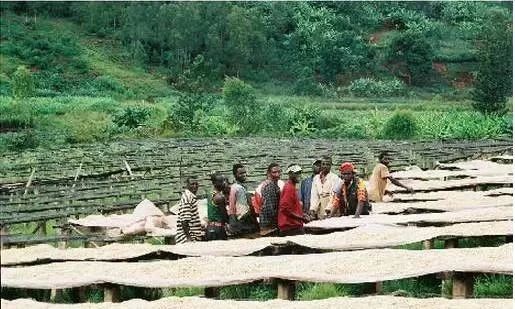
Burundi sits in southeastern Central Africa, just south of the equator. It borders Rwanda to the north, Tanzania to the east and south, and the Democratic Republic of the Congo to the west, with its southwestern edge running along Lake Tanganyika. The landscape is dominated by plateaus and mountains, mostly forming the eastern flank of the East African Rift highlands, with an average national elevation of 1,600 meters, which has earned Burundi the nickname "the Mountain Country." The capital is Bujumbura. The western lakeside and valley areas, along with the eastern regions, have a tropical savanna climate, while the central and western highlands have a tropical mountain climate. Average annual temperatures range from 20°C to 24°C, occasionally climbing as high as 33°C. March to May brings the major rainy season and October to December the minor rainy season, while the remaining months are dry.
Coffee Cultivation History
Burundi began growing coffee in 1930, and its varieties resemble those of neighboring Rwanda, consisting mostly of the Bourbon family. Coffee here grows on high mountains at elevations between 1,750 and 2,000 meters. The first Burundian Arabica trees were introduced by Belgium in the 1930s. Today, more than 800,000 Burundian families depend on coffee for their livelihood. Most farms are tiny household gardens, intercropped with other crops and cultivated entirely by hand, without mechanized equipment. The varieties are mostly Bourbon and Bourbon-derived types such as Jackson and Mibirigy, and both washed and semi-washed processing methods are used.
The Kayanza Region
Burundi's production model is closer to Ethiopia's: smallholder farmers deliver their harvested ripe cherries to centralized washing stations for unified processing. The Kayanza coffee-growing area is a cooperative formed by family-run smallholdings, made up of 539 smallholder families, 148 of which are headed by women. On average, each family plants between 10 and 200 coffee trees (a single hectare can hold at least 1,000 trees), a telling sign of how modest their annual incomes are, typical of impoverished smallholder families.
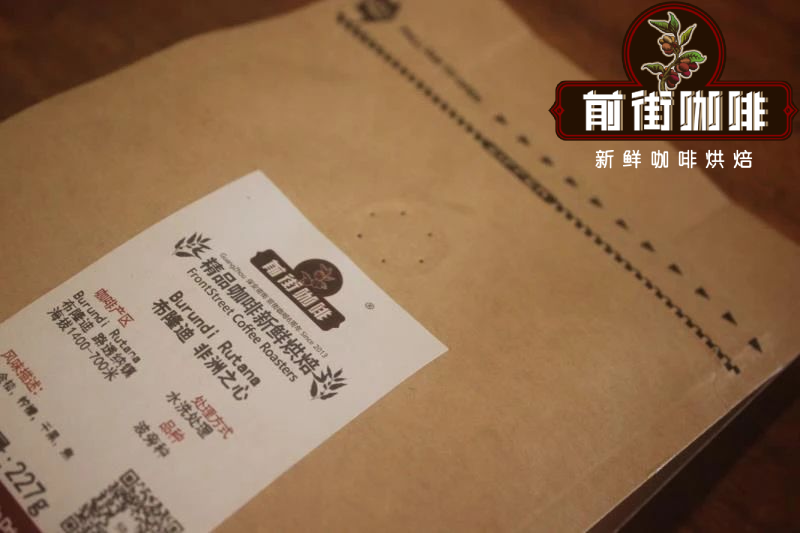
FrontStreet Coffee Burundi Heart of Africa Washed
Region: Kayanza
Variety: Bourbon
Altitude: 1,400 to 1,700 meters
Grade: AA Grade
Processing Method: Washed
FrontStreet Coffee Brewing Parameters
Coffee Amount: 15g
Ratio: 1:15
Grind Size: BG#6S
Water Temperature: 91°C
Filter: V60 Dripper
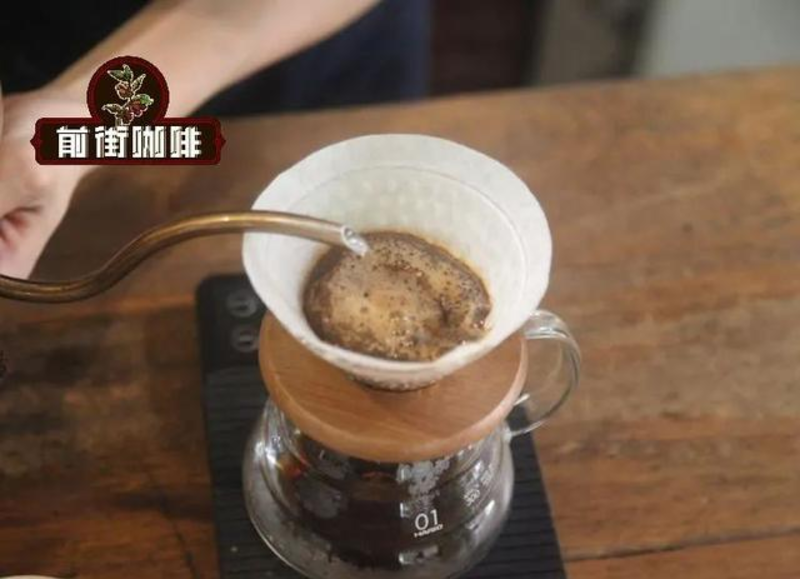
FrontStreet Coffee Brewing Method
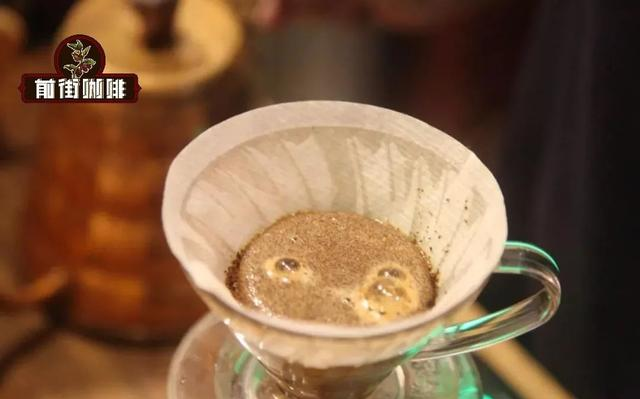
To hand-pour the Burundi Heart of Africa: dose 15g of coffee at a medium-fine grind (about the texture of granulated sugar), use a V60 dripper with 91°C water. Start by pouring 30g of water for a 30-second bloom, then pour up to 105g and pause. Wait until the water level in the coffee bed drops to about halfway, then resume pouring, slowly and evenly, until you reach 225g in total. Finally, give the dripper a gentle swirl to even out extraction. The water-to-coffee ratio is 1:15, and total extraction time is 2:04.
Flavor Characteristics
Honey, kumquat, and violet floral notes, with light acidity, a smooth mouthfeel, saturated aroma, and a rich, persistent aftertaste.
FrontStreet Coffee Recommendation
If you enjoy bright, floral-and-fruit-driven coffees like this Burundi, the FrontStreet Coffee bean lineup has plenty of kindred options. The FrontStreet Ethiopia Yirgacheffe Guodingding Cooperative is a classic washed Yirgacheffe with clear jasmine florals and bright citrus acidity, while the FrontStreet Ethiopia Huakui natural bursts with tropical fruit aromas of strawberry, passion fruit, and jackfruit, with a pronounced sweetness and barely any bitterness.
For V60 pour-over lovers, FrontStreet particularly recommends the resin Hario V60: the resin body insulates against heat loss, and in standardized mass production it is the easiest material to mold with the smallest dimensional tolerance. Its single large opening and 60-degree cone let your flow control shape the cup, bringing out layered florals and lively acidity.
If you prefer something heavier and low in acidity, the FrontStreet PWN Indonesia Golden Mandheling offers a rich, lingering body with herbal and dark chocolate notes, and the FrontStreet Brazil Queen Estate delivers a balanced cup of nut and cocoa sweetness with excellent crema for espresso.
Important Notice :
FrontStreet Coffee is a long-established specialty coffee roaster in Guangzhou China, selling freshly roasted beans from its own farm in Yunnan as well as dozens of carefully selected single-origin beans from around the world for both pour-over and espresso. The products deliver consistently excellent quality and great value, with shipping within 24 hours. Guangzhou's FrontStreet Coffee shop is recommended by many coffee lovers, and the beans are now available online at the Tmall 。
FrontStreet Coffee has moved to a new address:
FrontStreet Coffee Address: 315,Donghua East Road,GuangZhou
Tel:020 38364473
 Scan and follow the En Gafei WeChat official account. Please indicate that the reprint comes from "En Gafei".