Guatemala Coffee Industry Guatemala Coffee Beans Guatemala Coffee Recommendations
When it comes to Guatemala, we often recall its ancient and rich Mayan civilization, but for coffee enthusiasts it is usually the mellow and elegant coffee flavors that first come to mind. If you're curious about this American coffee-producing country, please join FrontStreet Coffee as we explore the story of Guatemalan coffee.
The Development of Guatemala's Coffee Industry
The development of Guatemala's coffee industry can be traced back to the 19th century, when coffee production became an important pillar of Guatemala's economy. Guatemala's coffee industry originated around the 1850s and 1860s. In the early days, coffee was cultivated alongside cochineal insects, with small plantations scattered throughout southwestern areas such as Amatitlan and Antigua Guatemala. Due to lack of knowledge and technology, coffee growth was slow during this period. Many early coffee farmers relied on loans from family members to manage their plantation finances, but later, with foreign companies' capital investment, these foreign companies gradually purchased the plantations and took over Guatemala's coffee production.
Since coffee production is a labor-intensive industry, labor shortages have been the main obstacle to Guatemala's rapid increase in coffee production. In 1887, Guatemala's coffee production exceeded 22,000,000 kilograms (48,500,000 pounds). By 1891, production had surpassed 24,000,000 kilograms (52,000,000 pounds). From 1879 to 1883, Guatemala exported 133,027,289 kilograms (293,274,971 pounds) of coffee. By 1902, the world's most important plantations were located along Guatemala's southwestern coast.
Guatemala was the top coffee-producing country in Central America for most of the 20th century and the early 21st century, until 2011, when Guatemala's leading position was replaced by Honduras. Official statistics do not account for coffee illegally exported to Honduras and Mexico.
Ideal Growing Conditions
In Guatemala, the optimal temperature range for healthy coffee growth and abundant fruit production is between 16°C and 32°C. Coffee planted at altitudes between 500-700 meters (1,600-2,300 feet) above sea level must have proper shade for young seedlings. Meanwhile, plantations at an average altitude of around 1,500 meters (4,900 feet) need wind protection equipment to defend against cold northern winds.
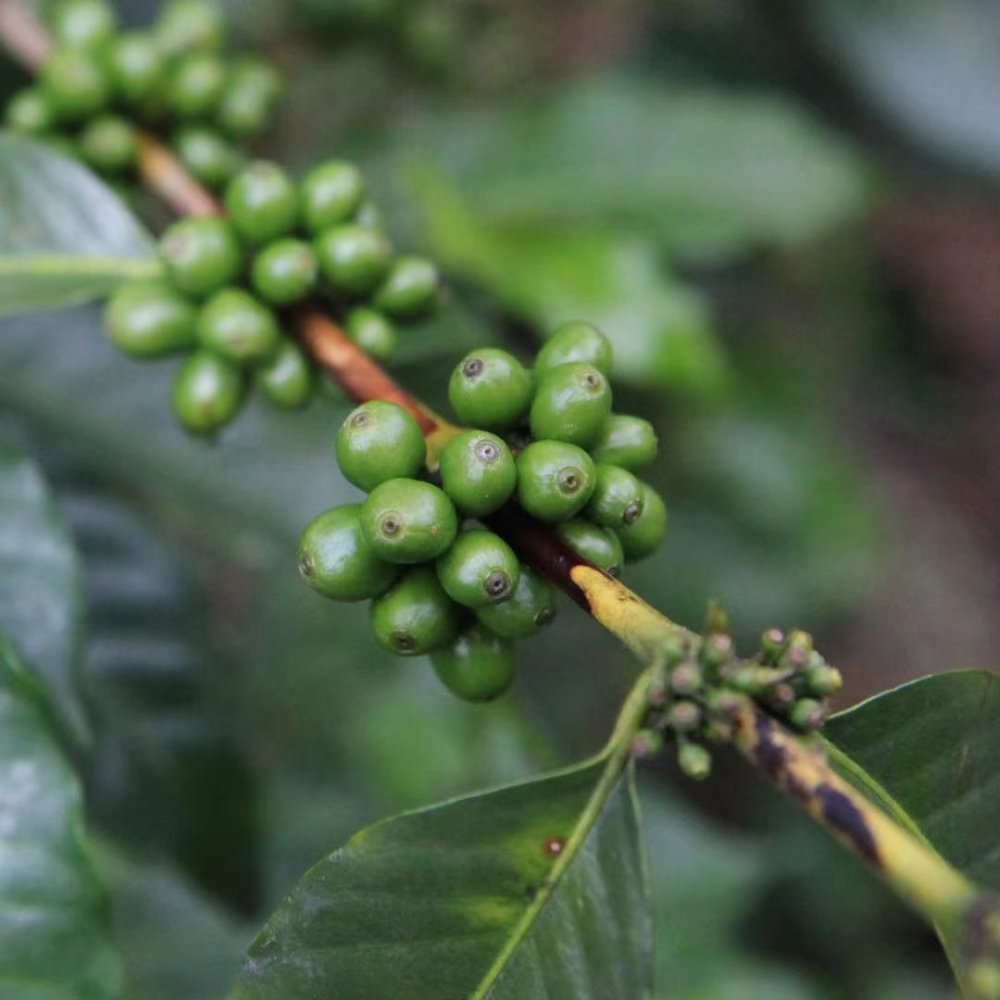
Guatemala is located in the tropics with numerous volcanoes. The northern and eastern coastal plains have a tropical rainforest climate, while the southern mountains have a subtropical climate. The year can be divided into wet and dry seasons, with May to October the rainy season and November to April of the following year the dry season. Annual rainfall in the northeast ranges from 2,000 to 3,000 millimeters, while the south receives 500 to 1,000 millimeters.
Guatemala's Coffee Association
Next, let's continue discussing Guatemala's coffee associations. The National Coffee Association of Guatemala (Asociacion Nacional del Cafe, abbreviated Anacafe), founded in 1960, represents all coffee producers in Guatemala. The association was established by pioneers of the International Coffee Organization (ICO) and continues the centralized coffee production statistics work previously conducted by the Central Coffee Office (La Oficina Central del Cafe), founded by Guatemala's central government in 1928.
The National Coffee Association of Guatemala established the Guatemalan coffee brand and defined coffees from eight different producing regions under the slogan "A Rainbow of Choices." It divided Guatemala's coffee-growing areas into eight regions: Acatenango Valley, Antigua Coffee, Traditional Atitlan, Rainforest Coban, Fraijanes Plateau, Highland Huehue, New Oriente, and Volcanic San Marcos, representing eight sub-brands.
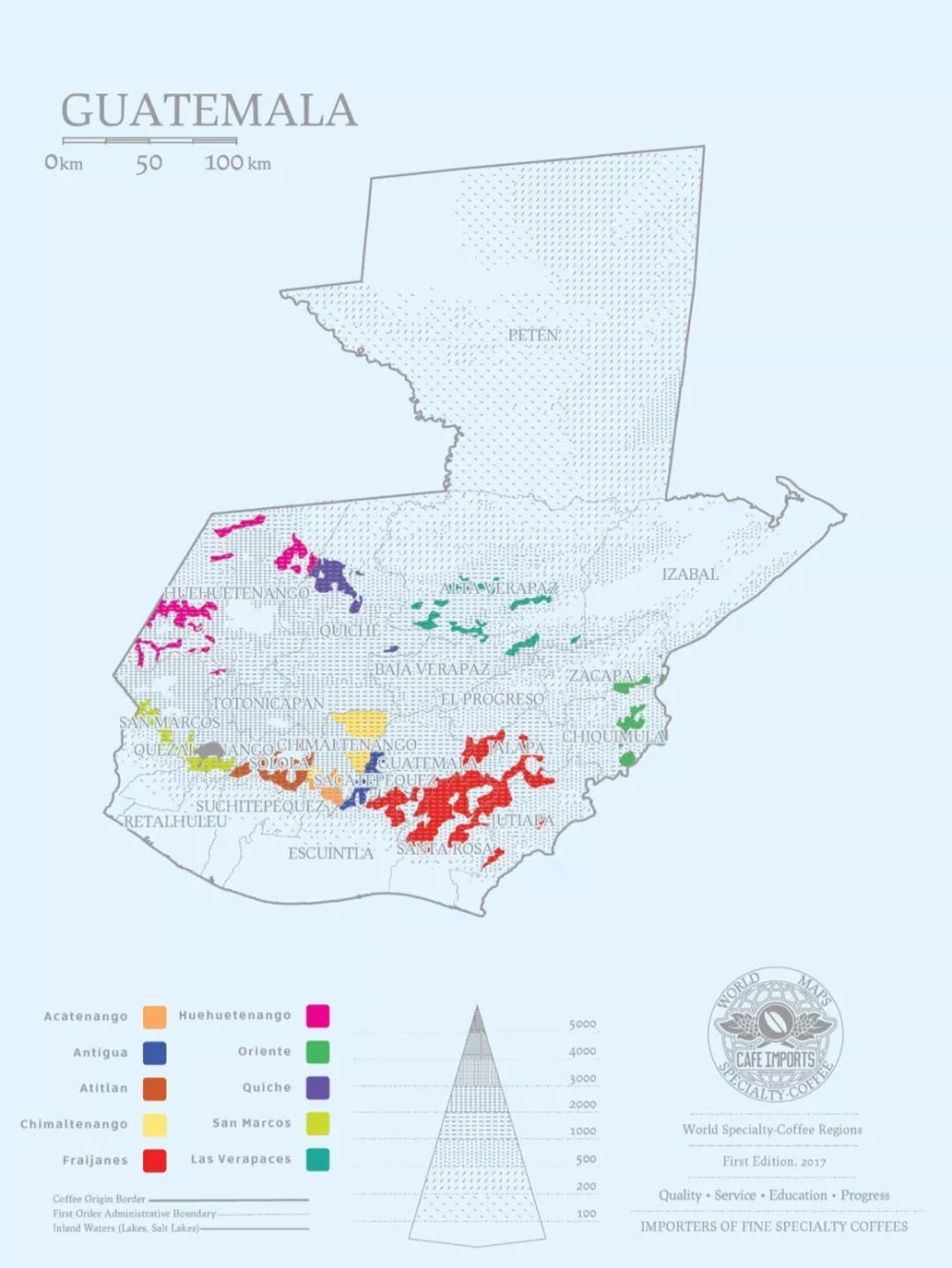
Here, FrontStreet Coffee introduces three of the most representative coffee-producing regions: Antigua, Huehuetenango, and New Oriente.
Representative Coffee Regions
Antigua
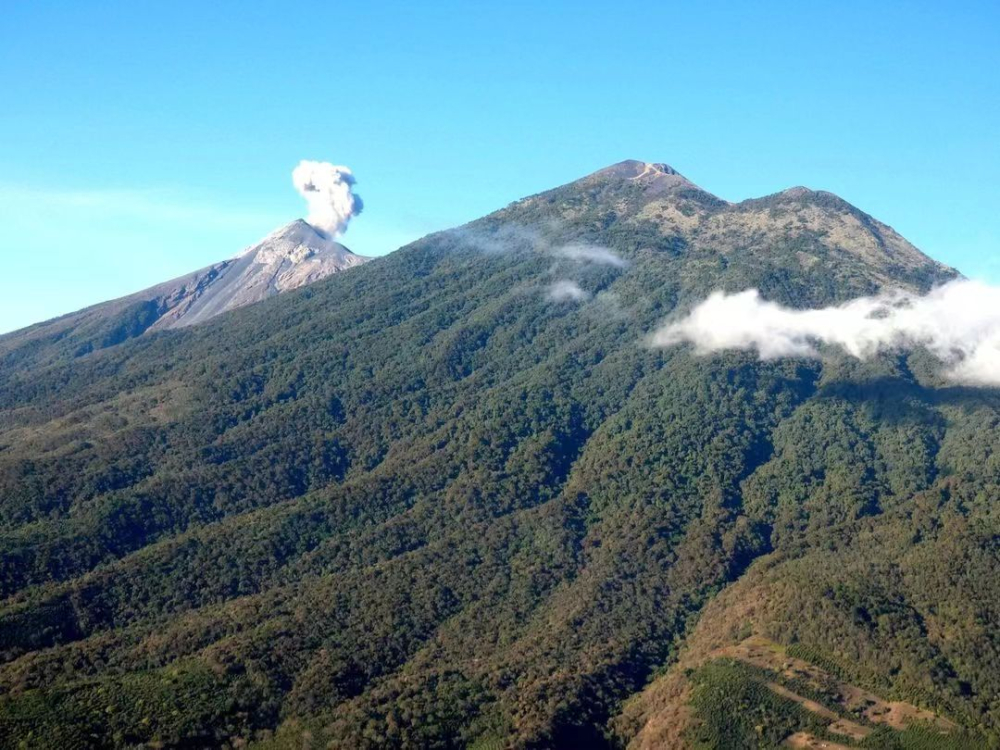
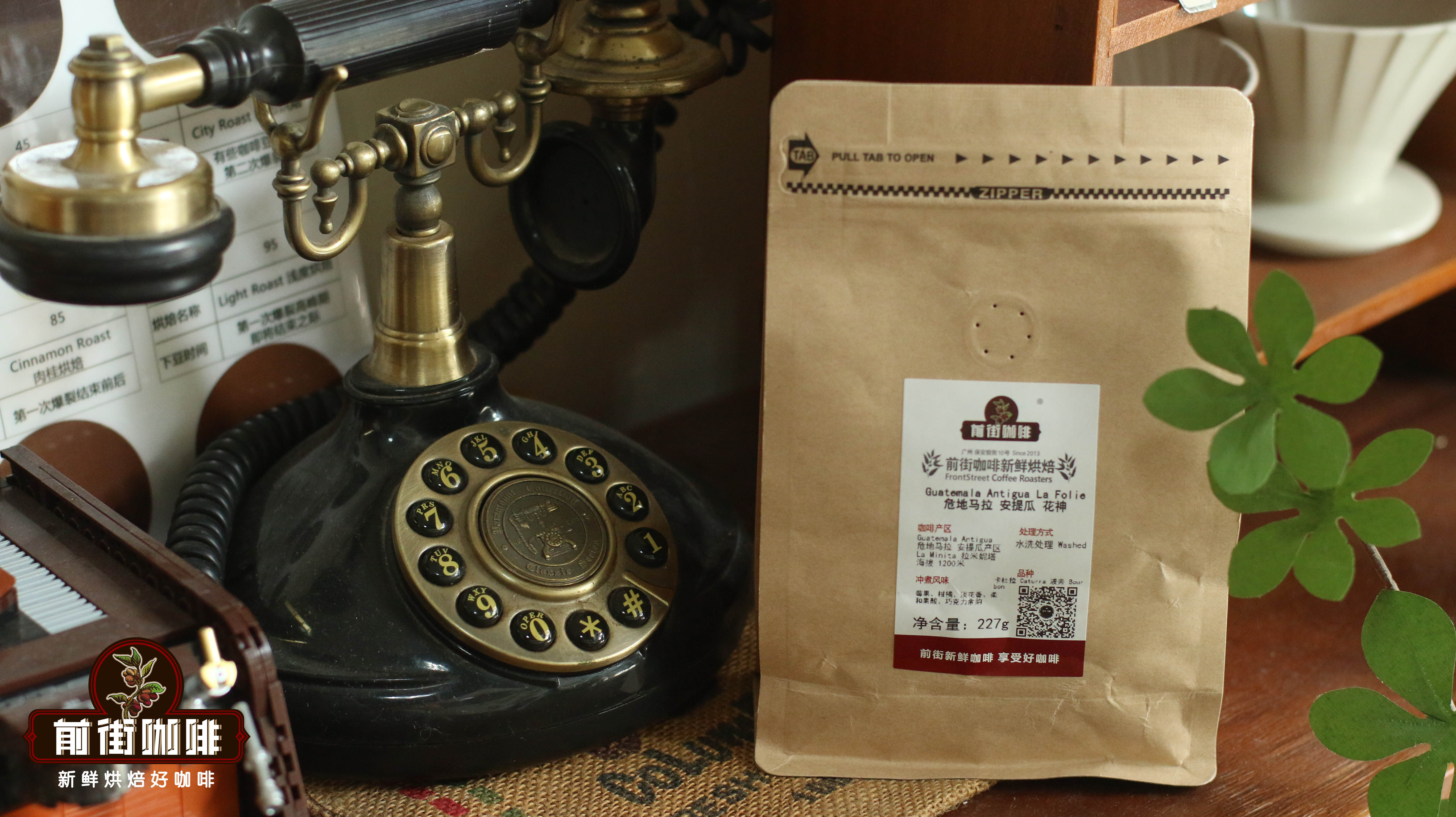
As Guatemala's most famous sub-region, Antigua has a planting altitude between 1,500-1,700 meters. Fertile and rich volcanic soil, low humidity, abundant sunshine, and cool nights create excellent growing conditions for coffee plants. Antigua is surrounded by three volcanoes: Agua, Fuego, and Acatenango. Periodically, these three volcanoes add a layer of mineral-rich volcanic ash and dense-pored volcanic pumice to this growing area. These materials not only lock in soil moisture but also compensate for the disadvantage of low rainfall in the Antigua region. The National Coffee Association of Guatemala describes coffee from this region as having an elegant, balanced taste with a rich aroma and sweet flavor. FrontStreet Coffee's menu includes a Guatemala Flora Coffee Bean, which comes from the Alaminuta estate in the Antigua region and uses washed processing.
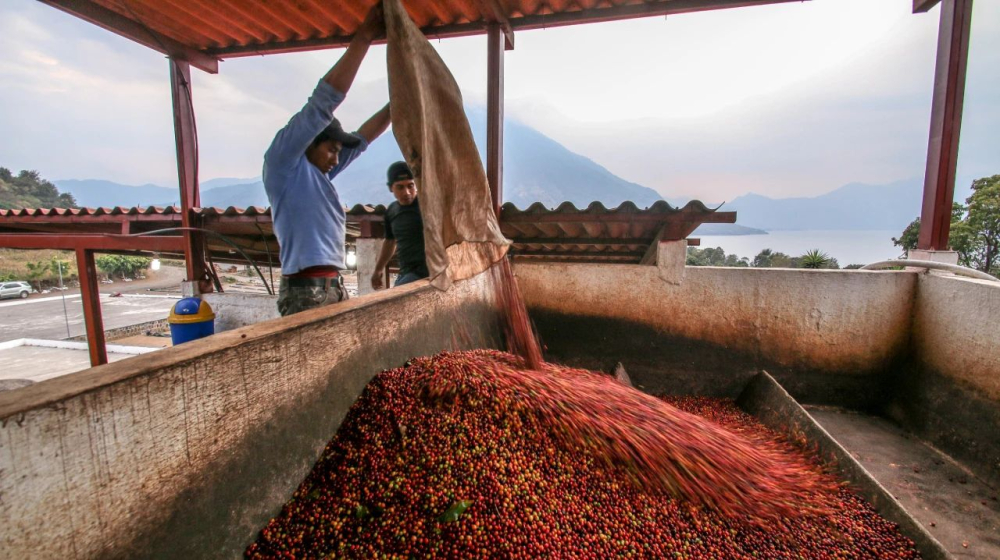
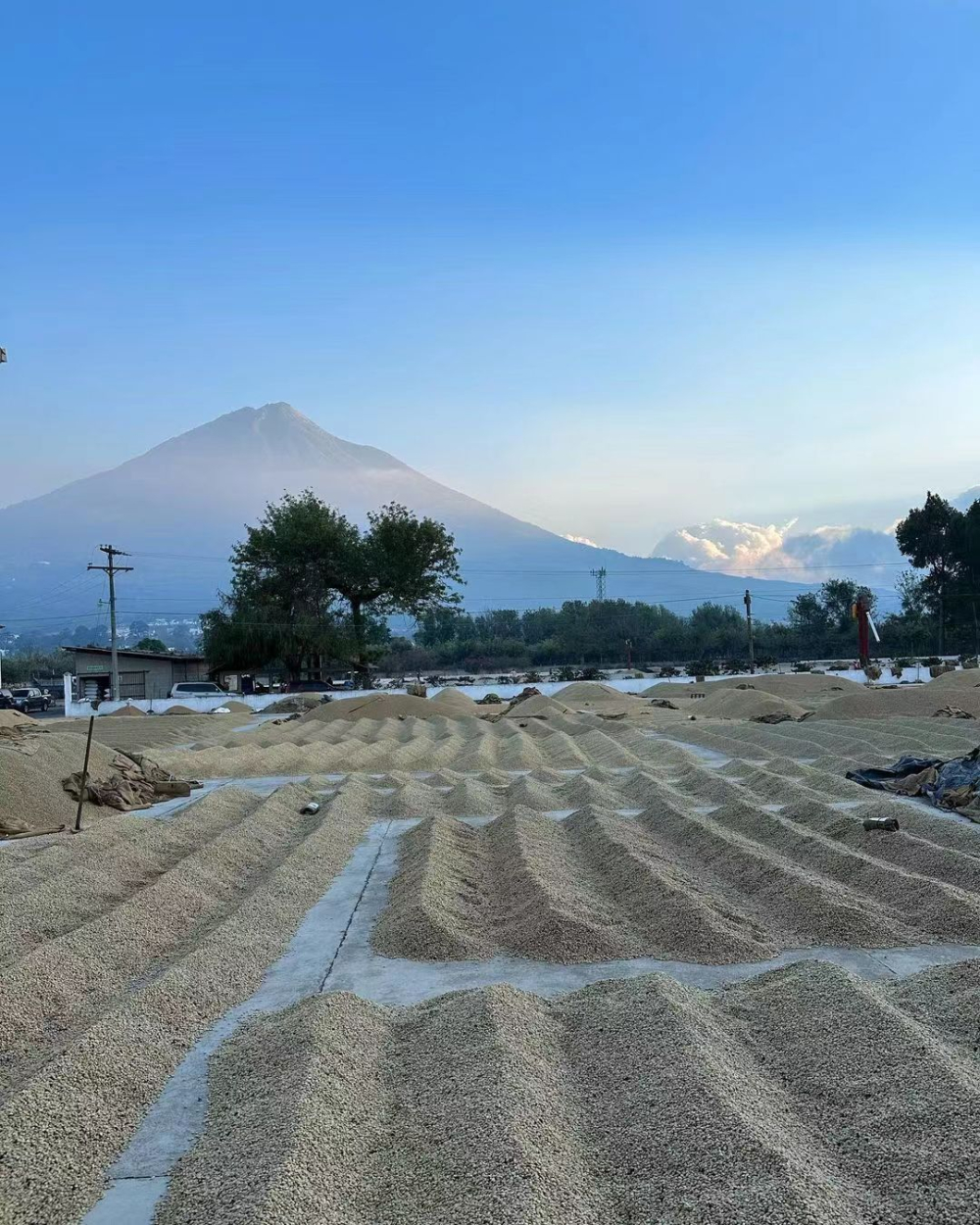
American coffee-producing countries primarily use washed processing, such as Colombia and Costa Rica, and Guatemala is no exception. After coffee cherries are picked, flotation is used to remove underdeveloped, inferior beans, followed by a pulper to remove the coffee cherry skin and pulp, then the fermentation stage. The purpose of fermentation is to use microorganisms to separate the pectin from the inner beans. Coffee beans stay in fermentation tanks for 16-36 hours, after which they need to be thoroughly cleaned with large amounts of flowing water, and finally sent to drying fields for sun-drying. The washed method not only shortens drying time and reduces the defect rate of green coffee beans but also gives coffee a cleaner and brighter acidity.
Huehuetenango (Highland Huehue)
The Highland Huehue region, also known as Huehuetenango, is the highest-altitude area in Guatemala, reaching up to 2,000 meters, and is also one of Guatemala's three non-volcanic producing regions. The Huehuetenango highlands are located in the western non-volcanic area of Guatemala, with the driest climate and the highest altitude. Because of its location at the edge of tectonic plate activity, the variable mountain basin conditions create diverse and rich coffee flavors. Meanwhile, dry hot winds from Mexico's Tehuantepec Plain blow toward this area, making the region high but not cold, so even coffee trees planted at high altitudes are protected from frost damage.
In addition, Huehue has multiple intersecting streams that provide abundant water resources for the region, which can be used for both irrigation and washing processing plants. Coffee from here is often described as having a lively, intense acidity, a rich body, and delicate wine-like notes. In his book "Coffee Studies," teacher Han Huaizong even called it the best of Guatemala.
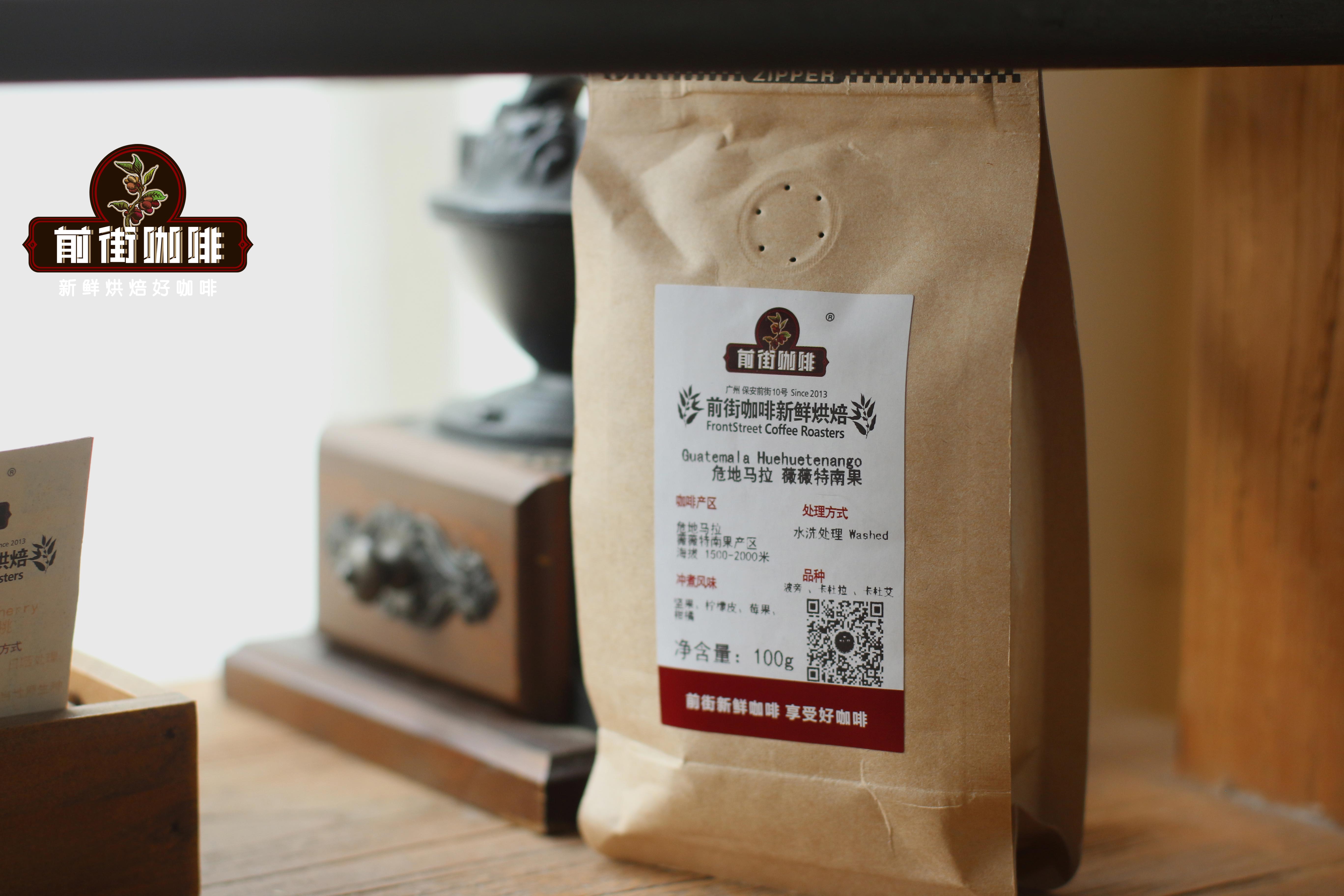
FrontStreet Coffee: Guatemala Huehuetenango Coffee Beans
Region: Huehuetenango
Altitude: 1200-1600 meters
Varieties: Caturra, Bourbon
Processing: Washed
Flavor: Berries, citrus, light floral notes, soft fruit acidity, chocolate aftertaste
New Oriente
The New Oriente region is located in eastern Guatemala, near the neighboring country of Honduras. This area is also one of the poorest and most remote regions locally, so coffee cultivation started relatively late. It wasn't until the 1970s and 1980s, when coffee demand increased, that mountain farmers gradually began to value it and started production.
This area has abundant rainfall and relatively high humidity, so coffee trees do not need additional irrigation. In the past, New Oriente also had volcanic geology, but now the volcanoes are no longer active, and the volcanic ash soil has gradually transformed into metamorphic rock. Coffee from here often carries distinct chocolate and smoky flavors. The National Coffee Association of Guatemala always describes coffee produced in New Oriente as having a balanced taste, a full body, and chocolate sweetness. Under the careful management and honey processing support of growers, a Guatemala Geisha Coffee Bean from the New Oriente region on FrontStreet Coffee's menu also shows delicate flavors reminiscent of sweet orange, bergamot, and toffee.
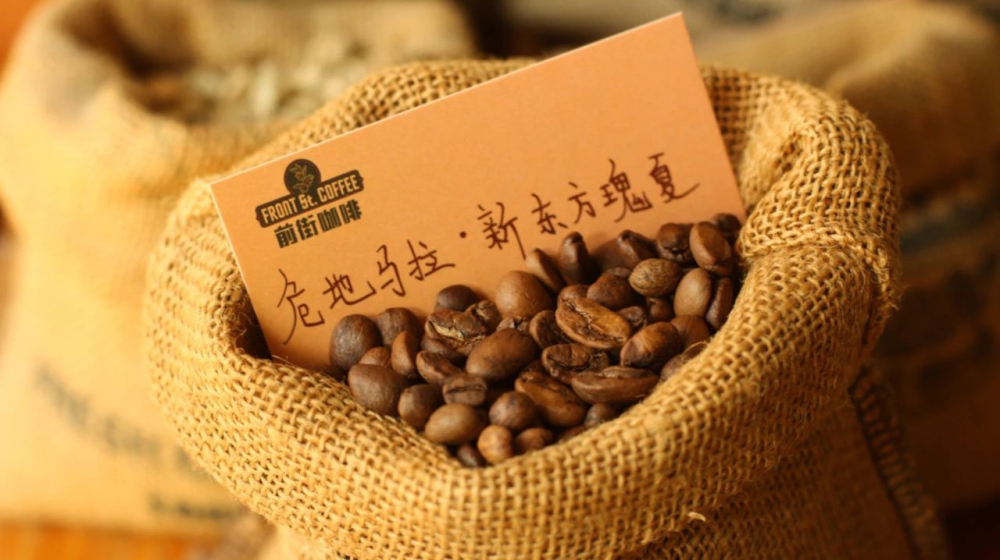
FrontStreet Coffee: Guatemala New Oriente Geisha Coffee Beans
Country: Guatemala Grade: SHB Region: New Oriente Altitude: 1500-2050 meters Processing: Honey Variety: Geisha Flavor: Sweet orange, magnolia, citrus, toffee
The Evolution of Guatemalan Coffee
In the past, when people mentioned Guatemalan coffee, there didn't seem to be many memorable characteristics. Today, Guatemala naturally possesses numerous unique microclimates, abundant local varieties, the influence of various processing methods, and improved management levels among growers. In recent years, the country's coffee flavors have become increasingly diverse.

FrontStreet Coffee Recommendation
Guatemala is one of the best places to start a specialty coffee journey, and if you're exploring this style, FrontStreet Coffee's entry-level lineup offers a friendly way in. For Ethiopia, the FrontStreet Ethiopia Flower Queen is a natural Sidamo lot with vivid berry, floral, jackfruit, melon, and honey notes, while the FrontStreet Yirgacheffe Gedingding Cooperative is a classic washed Ethiopian with jasmine, lemon acidity, and berry tones. Brazil lovers can try the FrontStreet Brazil Cerrado Red Bourbon for cream, peanut, and cocoa, or the FrontStreet Brazil Queen's Estate Yellow Bourbon for butter, sunflower seed, macadamia, and sugarcane sweetness. If you enjoy the low-acid, full-bodied style of Indonesian coffee, the FrontStreet Lintong Mandheling and the hand-sorted FrontStreet PWN Golden Mandheling are both excellent, and for something different, the FrontStreet Yunnan Smallholder and the 2013 Yunnan Typica show the nut, brown sugar, and black tea notes of China's Yunnan region.
Important Notice :
FrontStreet Coffee is a long-established specialty coffee roaster in Guangzhou China, selling freshly roasted beans from its own farm in Yunnan as well as dozens of carefully selected single-origin beans from around the world for both pour-over and espresso. The products deliver consistently excellent quality and great value, with shipping within 24 hours. Guangzhou's FrontStreet Coffee shop is recommended by many coffee lovers, and the beans are now available online at the Tmall 。
FrontStreet Coffee has moved to a new address:
FrontStreet Coffee Address: 315,Donghua East Road,GuangZhou
Tel:020 38364473
 Scan and follow the En Gafei WeChat official account. Please indicate that the reprint comes from "En Gafei".