[Review] What are the Taste Differences Between Natural and Washed Process Guji Coffee? Which One Tastes Better?
In March of this year, at the China Brewers Cup held in Shanghai, a coffee bean from Ethiopia walked onto the stage with a humble origin and took on one expensive Geisha after another, beating each of them in turn. It finally lost by only a narrow margin to the champion's Finca Deborah Geisha (last year's world-champion bean of Wu Tselin), finishing second. That bean was the natural-process Flower Queen from Hambella, Ethiopia.
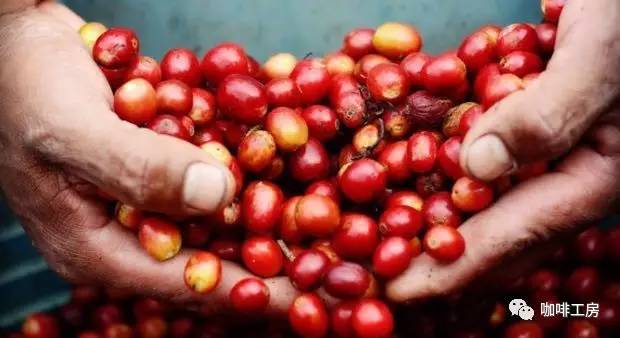
Origin Information
Continent: Africa
Country: Ethiopia
Origin: Guji Region, Hambella Wamena Area, Dimtu Village, Buku Abel Estate
Coffee Variety: Heirloom (Ethiopian native varieties)
Altitude: 2250-2350m
Buku Abel Estate Introduction
Only natural-process coffee beans from "Buku Abel" in the Hambella region are authentic Flower Queen.
Hambella sits inside GUJI, Ethiopia's largest coffee-producing region, and faces Yirgacheffe's Kochore across the mountains to the west. It is the highest-altitude sub-region in the country.
Today there are close to twenty processing stations in the Hambella region. Among all the estates and stations there, only natural-process coffee from Buku Abel Estate earns the name Flower Queen.
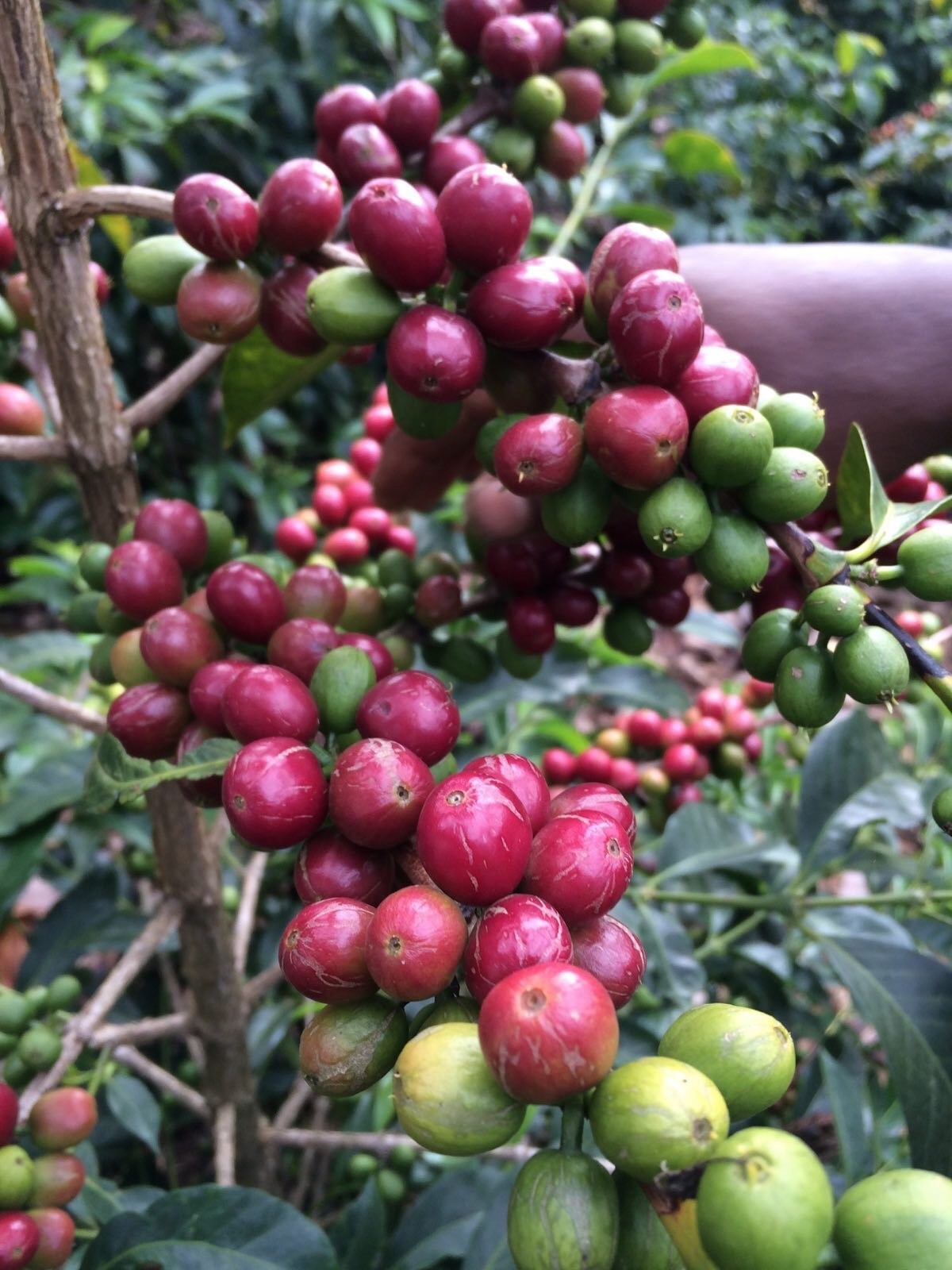
Buku Abel is a small village ringed by mountains at an altitude of 2,280 meters on the African continent. December is its coffee harvest each year. At that time the slopes are covered with bright red, ripe cherries, laid out in neat rows on African drying beds in the village. This is where Flower Queen is processed.
The coffee trees at Buku Abel Estate are planted between 2,250 and 2,350 meters, above the midpoint of the mountains. The farmers begin natural processing only once the sugar content of the harvested red cherries passes 30. During the first two days of natural processing, keeping the cherries humid is essential, so that fermentation has enough time to develop. At night the temperature here drops to around 12 degrees Celsius, which keeps the cherries from over-fermenting.
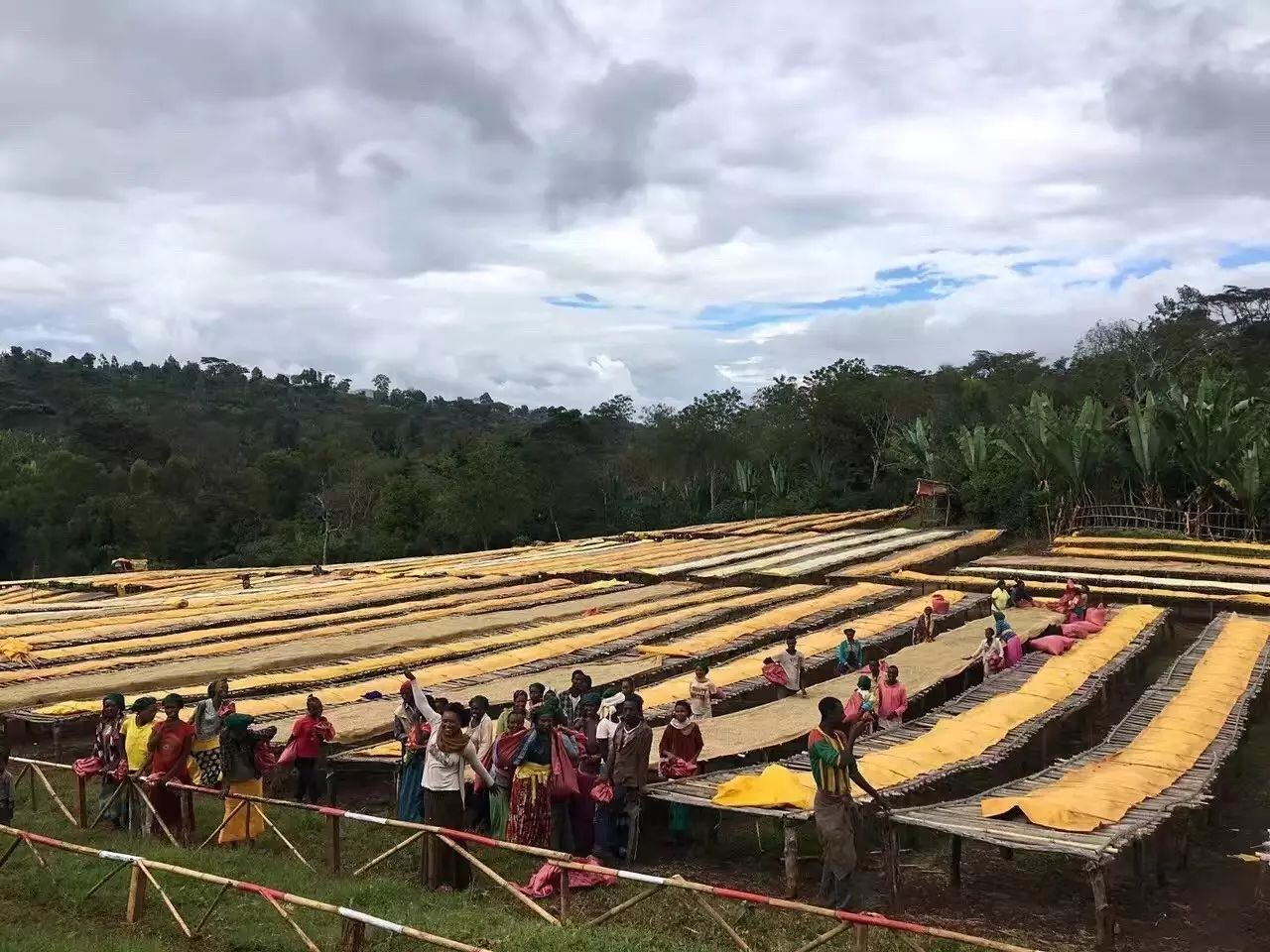
After 18 days of natural processing, the skin and pulp have fully dehydrated, so the green beans inside come out easily. The beans are then bagged and stored in warehouses at 12-22 degrees Celsius and 45-55% humidity for about 50 days of resting and further dehydration. Once the moisture content reaches around 11%, the beans are hulled and sorted for formal market sale.
Award History
2016/2017 Harvest Season: Champion, Ethiopia National Taste of Harvest Competition
2017: Second Place, Regional Africa Taste of Harvest Competition
Natural Flower Queen vs. Washed Flower Queen
Two different ways of processing green beans:
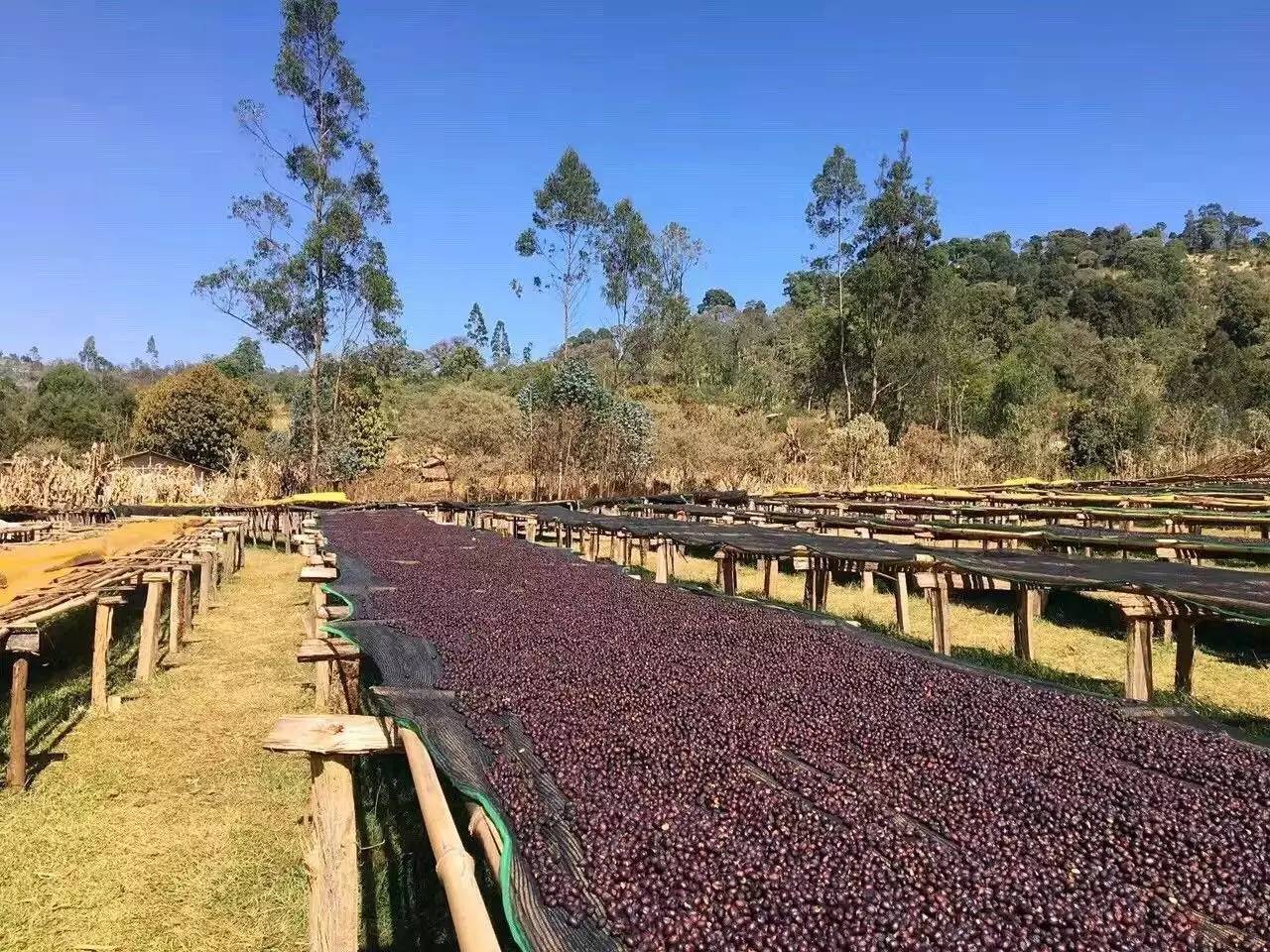
Natural Process (African Drying Beds)
Coffee cherries are spread directly on cement floors or drying racks to dry, the goal being to make the coffee dry and easy to store. Drying usually takes 2-4 weeks, depending on the weather.
Commercial coffee is normally dried on cement floors, which requires constant, timely turning of the cherries so that every side is heated evenly, speeding up drying while stopping mold from forming through prolonged contact with the ground.
Hand-selected fruit destined for specialty coffee is dried naturally on African beds. The cherries are spread on breathable, mesh-like beds to sunbathe, with the layer's thickness adjusted according to local conditions.
Washed Process
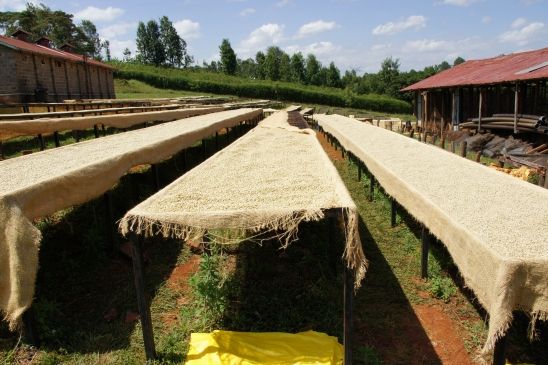
This method uses washing and fermentation to remove the fruit skin, pulp, and mucilage. Stations using the washed method need a water source, washing tanks, and a constant flow of water. During processing the fermented beans are placed in the tanks and moved back and forth, using friction between the beans and the power of the flowing water to wash them until they are smooth and clean.
After washing, the beans are still wrapped in parchment at a moisture content of 50%. They must be dried down to 12%; otherwise they keep fermenting and turn moldy and spoiled.
Because water sources are relatively scarce in Africa, many washed stations in different regions simply buy freshly harvested cherries from nearby villages or growing areas and process them together.
Coffee Bean Appearance
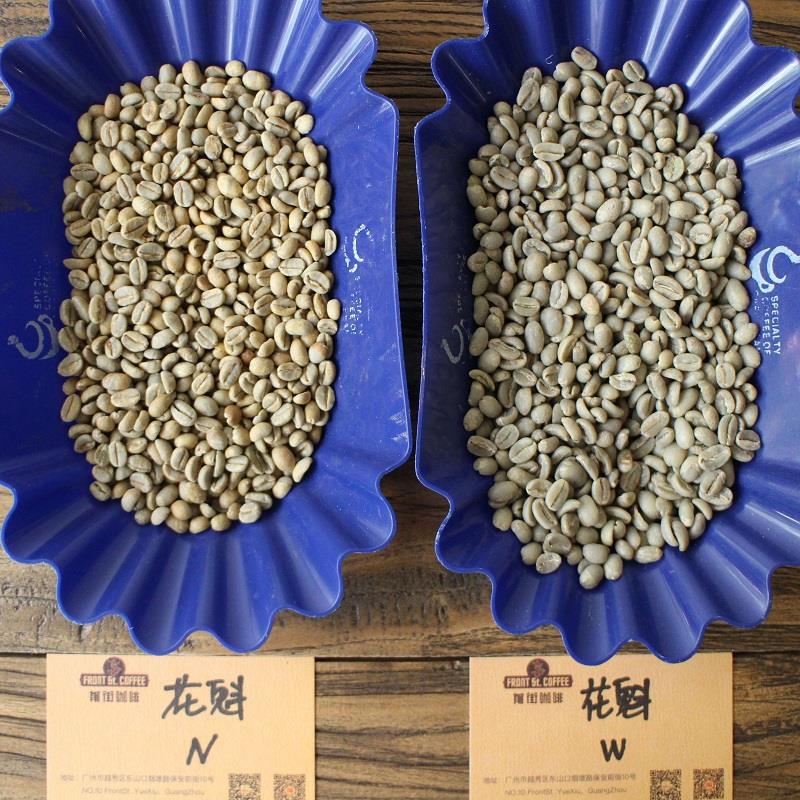
FrontStreet Coffee's Natural Flower Queen Green Beans: Smaller bean size, green with yellow undertones, and a noticeable variation in particle size.
FrontStreet Coffee's Washed Flower Queen Green Beans: Green beans with a slight gray undertone, uniform particle size.
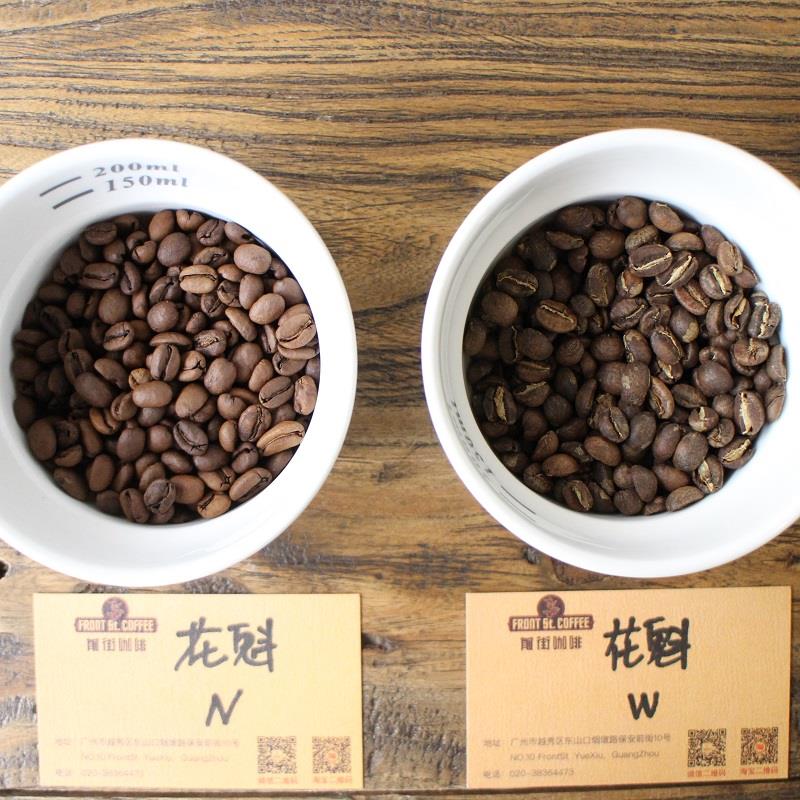
FrontStreet Coffee's Natural Flower Queen Roasted Beans: Light roast, lighter color, no silver skin.
FrontStreet Coffee's Washed Flower Queen Roasted Beans: Slightly darker roast, deeper color, with silver skin left along the center line.
Cupping Session
Cupping Preparation
Water ratio: 8.2-8.3 grams of coffee beans to 150ml of water, a water-to-coffee ratio of 1:18.18, at a water temperature of 94°C.
Cupping glasses: tempered glass or ceramic.
Cupping capacity: between 207ml and 266ml.
Rim diameter: 76-89mm, and all cups should share the same volume, size, and material.
Cupping spoons: anti-static metal (mostly stainless steel), each holding 4-5ml.
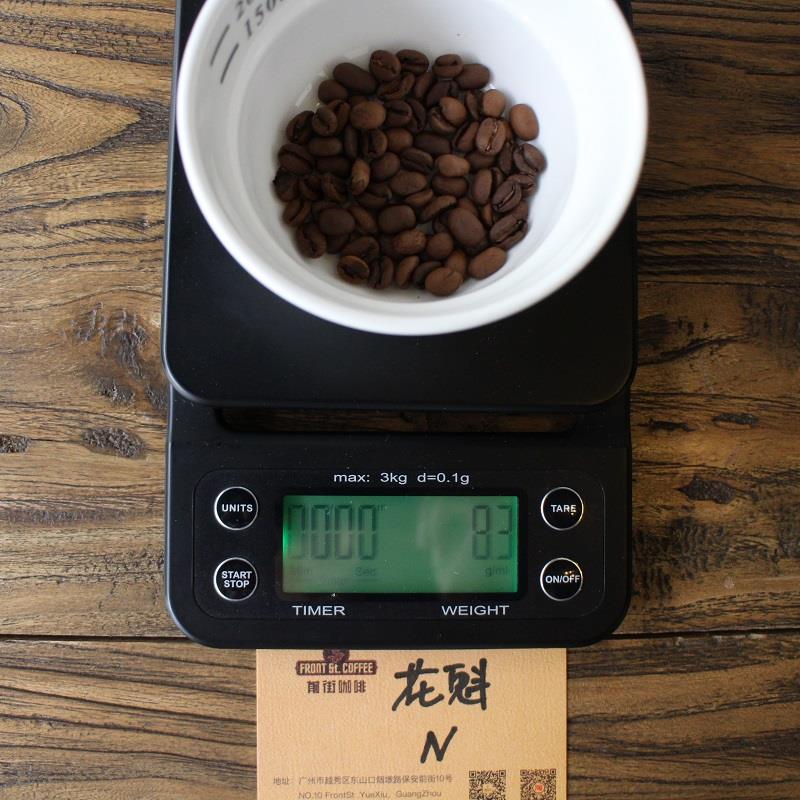
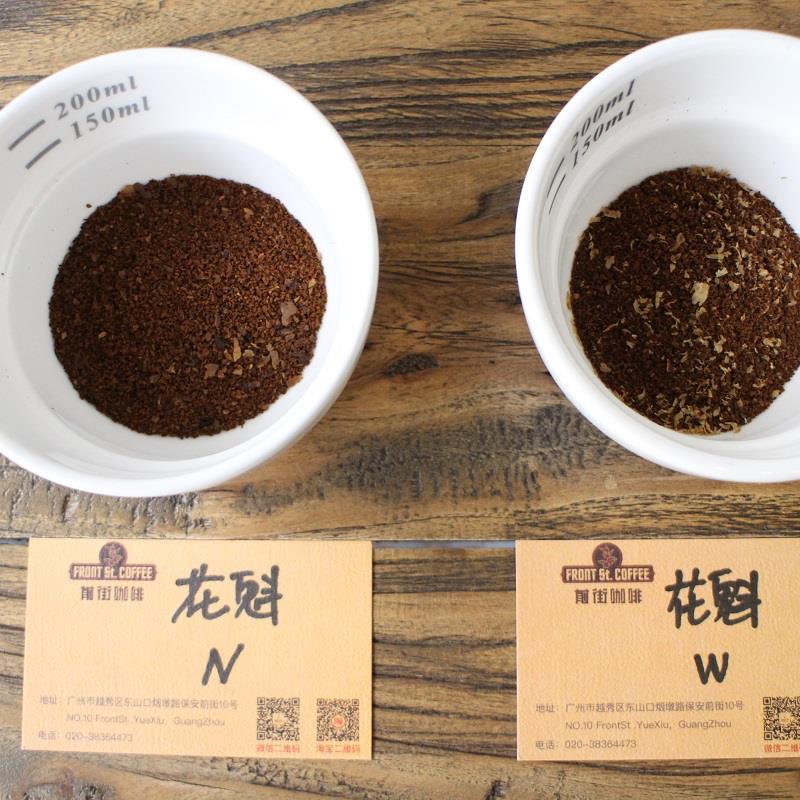
Cupping Process
1. Grind the beans to be cupped into powder (grind setting: BG: 3B).
2. Smell the dry aroma.
3. Pour hot water (94°C) into the cup until full, timing for 4 minutes.
4. At 2 minutes, smell the wet aroma.
5. At 4 minutes, break the crust.
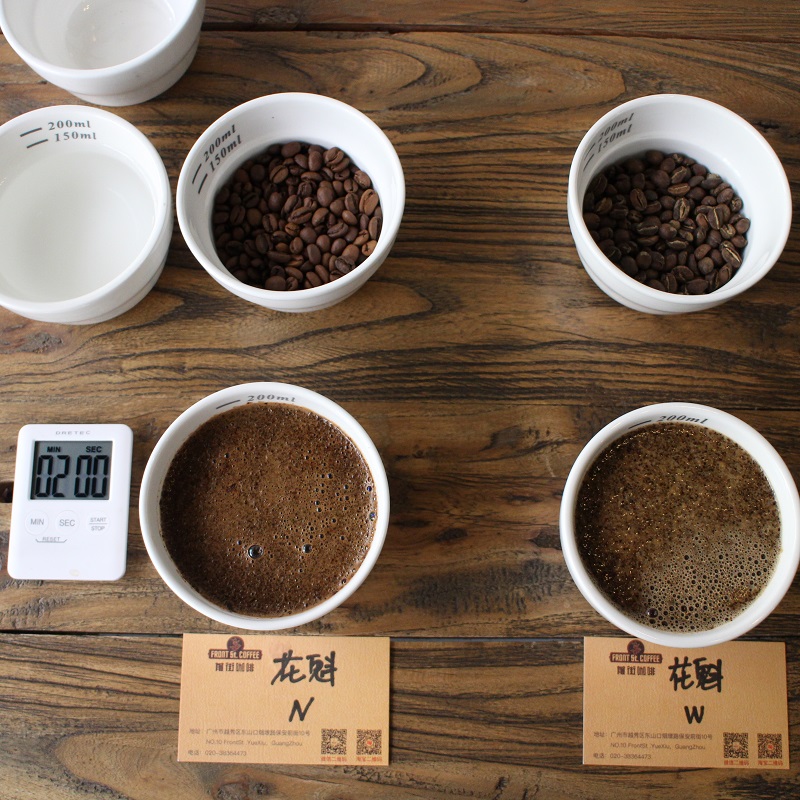
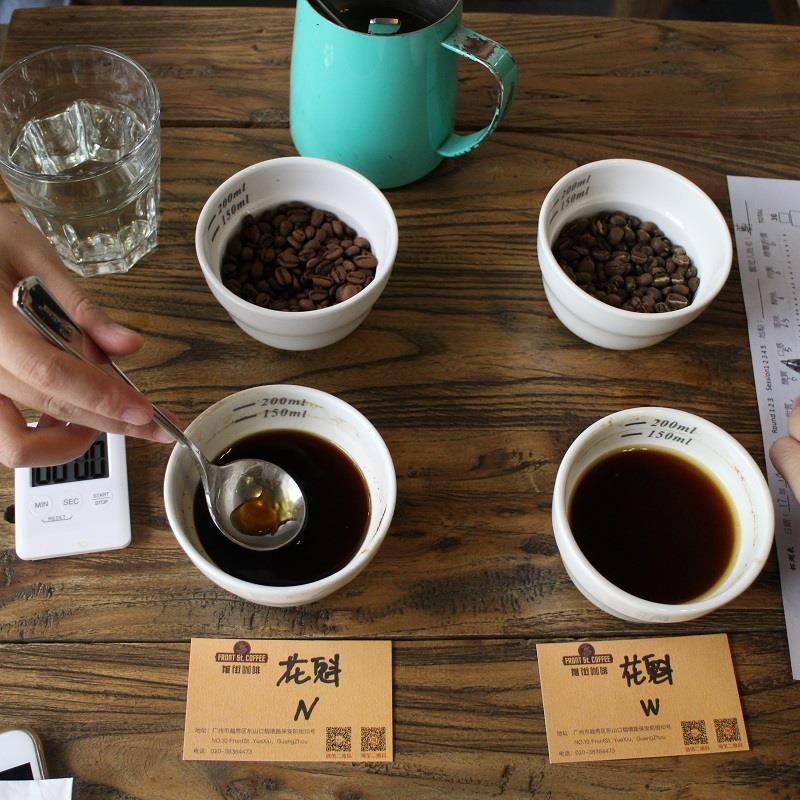
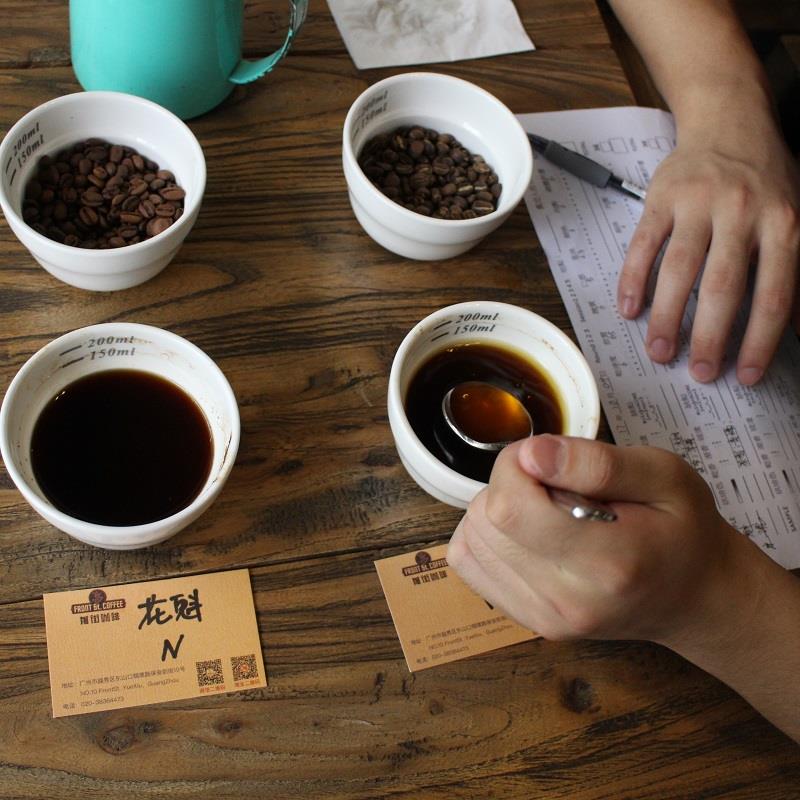
"Breaking the crust": Use the cupping spoon to push away the floating grounds on the surface so the aroma trapped underneath bursts out, confirming the coffee's aromatic performance. Stir gently with the spoon for about 3 circles, then let it rest for 2 minutes.
6. At 2 minutes, you can skim the crust.
"Skimming the crust": Use the cupping spoon to scoop up the surface foam. Rinse the spoon after every scoop so no stale flavors are left behind to affect the coffee.
7. Scoop up the coffee liquid with the cupping spoon and slurp it. Slurping disperses the liquid as a fine mist in the mouth, letting the flavor molecules come through more distinctly.
8. Spit the coffee from your mouth into the spittoon.
Cupping Results
Dry and Wet Aroma
FrontStreet Coffee's Natural Flower Queen: Passion fruit, jackfruit, strawberry.
FrontStreet Coffee's Washed Flower Queen: Tea aroma, green tangerine.
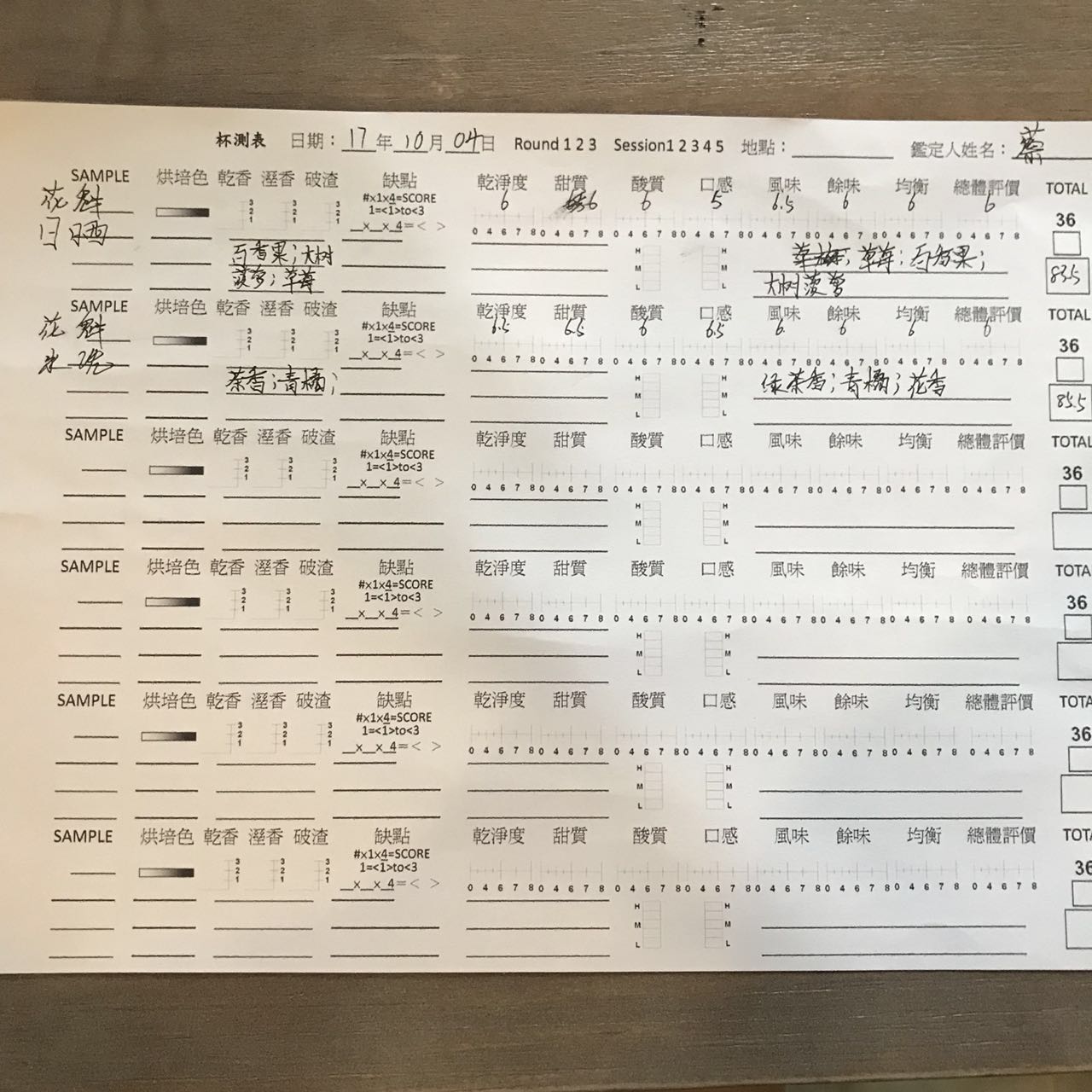
Flavor Description and Scoring
FrontStreet Coffee's Natural Flower Queen: Rose floral aroma, passion fruit, jackfruit, and a sweet-and-sour strawberry note.
- Cleanliness: 6 points
- Sweetness: 6 points
- Acidity: 6 points
- Mouthfeel: 5 points
- Flavor: 6.5 points
- Aftertaste: 6 points
- Balance: 6 points
- Overall impression: 6 points
- Total score: 83.5 points
FrontStreet Coffee's Washed Flower Queen: Green tea aroma, green tangerine, floral notes, and a black tea finish.
- Cleanliness: 6.5 points
- Sweetness: 6.5 points
- Acidity: 6 points
- Mouthfeel: 6.5 points
- Flavor: 6 points
- Aftertaste: 6 points
- Balance: 6 points
- Overall impression: 6 points
- Total score: 85.5 points
Pour-over Parameters
FrontStreet Coffee's Natural Flower Queen: Use 15g of coffee at 90°C, Fuji grinder setting 3.5, V60 dripper, water-to-coffee ratio 1:15. First pour 30g and bloom for 30s. Second pour to 104g, then stop. Third pour to 225g. Leave out the tail end of the water. Extraction time around 2:02.
FrontStreet Coffee's Washed Flower Queen: Use 15g of coffee at 92°C, Fuji grinder setting 3.5, V60 dripper, water-to-coffee ratio 1:14. First pour 30g and bloom for 30s. Second pour to 110g, then stop. Third pour to 215g. Leave out the tail end of the water. Extraction time around 2:05.
Final Conclusion
Looking at the cupping results, FrontStreet Coffee's Natural Flower Queen truly lives up to its reputation as a champion bean. Its flavor richness stands out strongly, and it also performs beautifully in balance. Many drinkers, I suspect, will fall for this coffee.
FrontStreet Coffee's Washed Flower Queen tastes markedly different from its natural counterpart. That comes down to Ethiopia's coffee varieties (heirloom) along with the harvesting and processing systems of the stations. None of it detracts from the bean's excellent quality. The explosive sweet-and-sour sensation, the distinctive mouthfeel, and the clear black tea texture could even briefly make you mistake it for a bean from Kenya.
Washed or natural is a choice that puzzles countless coffee lovers. Yet "different strokes for different folks": whether it's the explosive flavors of natural beans or the never-tiring appeal of washed beans, both are well worth trying and sharing. So in this cupping comparison of FrontStreet Coffee's Natural Flower Queen and FrontStreet Coffee's Washed Flower Queen, there are only differences in score, never a verdict of better or worse.
FrontStreet Coffee Recommendation
If this washed-versus-natural comparison has left you curious, FrontStreet's lineup lets you taste both styles from the same origin. The FrontStreet Washed Yirgacheffe is the classic everyday lot: white jasmine florals, bright citrus and lemon acidity, and a tea-like body, all at a friendly price. It has long been people's first bean on the road into specialty coffee. Yirgacheffe itself is a small town in southern Ethiopia's Sidama region, at roughly 1,700-2,100 meters, with coffee trees planted above 1,800 meters, making it one of the highest coffee-growing regions in the world.
For the natural-process side, try the FrontStreet Natural Red Cherry. Only fully ripe, sound cherries are picked, given a first round of sorting, then spread straight onto raised drying beds. During the first few days the cherries are turned every two to three hours so they don't over-ferment through uneven heat. After three to five weeks of sun-drying, the outer pulp is scraped off by machine and the beans go into storage. Because the fruit dries around the bean, the cup keeps the classic Yirgacheffe character while adding the tropical fruit of a natural: citrus-like acidity, a juicy berry mouthfeel, honeyed sweetness, and a creamy smoothness.
To brew either one, the FrontStreet approach works well: a V60 dripper, 90-91°C water, 15g of coffee, a 1:15 ratio, and a grind around EK43s setting 10 (fine-sugar consistency, with about 80% passing a No. 20 sieve). Pour 30g of water for a 30-second bloom, then pour to about 125g over roughly one minute; when the water level drops to two-thirds of the bed, add the remaining water to about 225g, finishing around 1 minute 35 seconds, with the drawdown complete at 2:00-2:10.
Important Notice :
FrontStreet Coffee is a long-established specialty coffee roaster in Guangzhou China, selling freshly roasted beans from its own farm in Yunnan as well as dozens of carefully selected single-origin beans from around the world for both pour-over and espresso. The products deliver consistently excellent quality and great value, with shipping within 24 hours. Guangzhou's FrontStreet Coffee shop is recommended by many coffee lovers, and the beans are now available online at the Tmall 。
FrontStreet Coffee has moved to a new address:
FrontStreet Coffee Address: 315,Donghua East Road,GuangZhou
Tel:020 38364473
 Scan and follow the En Gafei WeChat official account. Please indicate that the reprint comes from "En Gafei".