Is Janson Estate Janson Geisha Delicious? Is it Cost-Effective? Janson Geisha Brewing Parameters Tutorial
Janson Estate: A Celebrated Coffee Paradise in Panama
Janson Estate is a well-known Panamanian coffee farm whose reputation rivals that of Hacienda La Esmeralda, and the Geisha varieties it grows are of exceptionally high quality. Why is that? FrontStreet Coffee will briefly explain one key factor. Panama is blessed with fertile volcanic soil, formed by volcanic eruptions and containing materials such as volcanic ash, lava, and basalt. Volcanic soil is typically porous, which gives it excellent water permeability. What is more, because volcanic lava weathers easily and the ash thrown up during eruptions is very fine, these particles are readily absorbed and broken down by soil microorganisms. Compared with other rocky mountain areas, this makes nutrients far more available to the plants, producing outstanding Geisha. Of course, this is only one factor; the others are yours to discover in this article.
About Janson Estate
In 2004, Panama's Peterson family first presented the Geisha variety to the world, and the international community has been captivated by it ever since, calling it the champagne of the coffee world. In 2013, the Panama Coffee Association recognized a new contender at the Panama Coffee Awards: the Geisha from Carl Janson's Janson Estate. The estate owner, Mr. Carl Janson, originally from Switzerland, fell deeply in love with the Volcan area, a place ringed by mountains much like his homeland. After marrying his wife Margaret, he purchased the estate in 1940. To keep the environment in balance, Janson Estate runs livestock farming alongside coffee cultivation, and three generations of the family now manage it together.
Janson Geisha is relatively little known in overseas markets because the estate focuses mainly on domestic sales rather than export. With high altitude, nutrient-rich volcanic soil, abundant rainfall, and suitable temperatures, Janson Estate has gradually become the second-largest Geisha producer among Panama's farms, and 50% of its coffee trees are Geisha. The estate runs its own processing plant to handle its coffee cherries and invests heavily in roasting to raise the reference value of its cupping results. These efforts have steadily improved the quality of Janson Estate's beans, and its Geisha has taken runner-up honors in Panama's Best of Panama (BOP) competition.
Variety
The pronunciation of "Geisha" is the same as the Japanese word for geisha, hence it is also known as Geisha coffee. Because the tree grows taller than typical coffee trees, it was originally planted in a small area of the estate and used as a windbreak. The owner's son, in order to enter the annual Best of Panama competition, tested every coffee variety on the estate, which gave Geisha its chance to shine. It went on to compete around the world, winning eleven championships in total.
The Geisha variety was discovered in 1931 in the Geisha forest of Ethiopia and then sent to Kenya's Coffee Research Institute. In 1936 it was introduced to Uganda and Tanzania, and in 1953 Costa Rica imported it. Geisha attracted little attention until Don Pachi first brought it from the small town of Gesha in southwestern Ethiopia to Costa Rica. It later reached Panama by the southern route, where Hacienda La Esmeralda separated it from other varieties and won the national coffee championship. Geisha has full sweetness, an extremely clean taste, and rich aromas ranging from berries and citrus to mango, papaya, and peach. A very distinct bergamot-like aftertaste is another of its typical cupping characteristics. To this day, Geisha remains the champion among coffee varieties.
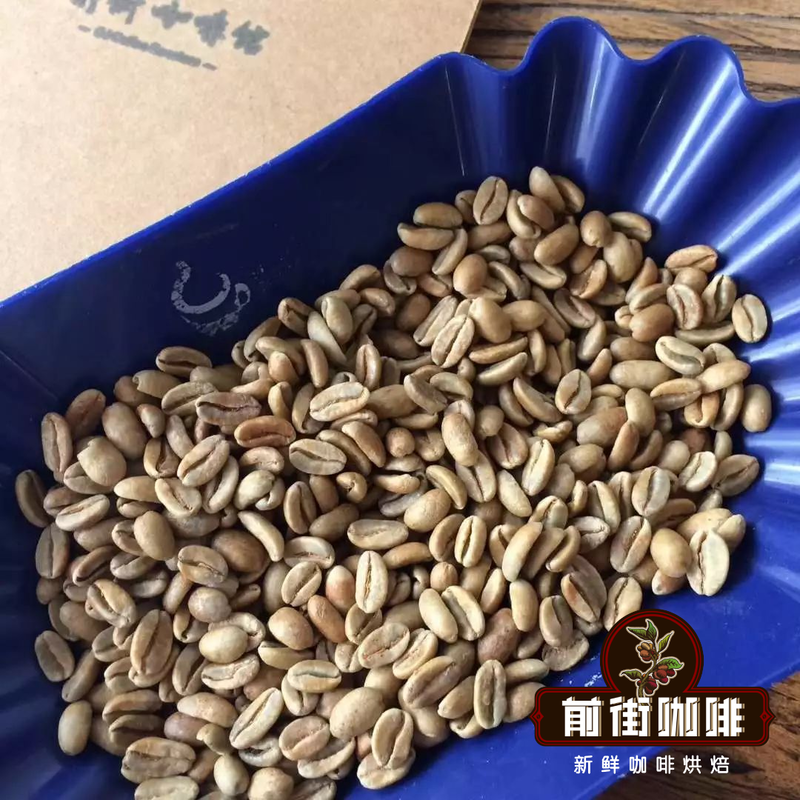
FrontStreet Coffee Green Bean Analysis
Geisha green beans have a strikingly beautiful blue-green color. They are fairly slender with pointed ends and a jade-like, warm texture. They smell of fresh grass, peach, and berries, along with a unique milky-sweet aroma reminiscent of oolong tea that most coffee beans lack. Aroma and flavor may call for imaginative association, but the faint tea essence is something we can clearly perceive.
FrontStreet Coffee Roasting Analysis - Roaster: Yangjia 600g Semi-direct Flame
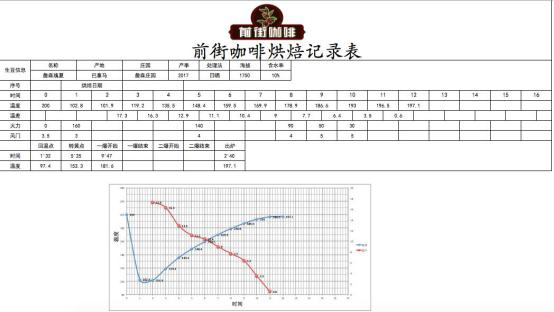
These beans are relatively large and dense, requiring significant heat absorption during roasting, and the Maillard reaction proceeds quickly. In the first batch I used a higher charge temperature of 200°C. Before the beans dehydrated and turned yellow, I applied heat continuously to ensure enough thermal energy would last to the end of the roast. Eventually I chose a charge temperature of 200°C with relatively reduced firepower, increasing the heat gradually as the roast progressed. With this approach the dehydration time was extended compared with the first batch, with a temperature rise of 6-8 degrees every thirty seconds. To highlight the characteristics and aroma of these beans, a light roast is used, which better draws out the bean's inherent qualities; too dark a roast would damage the floral aromas and fruit acidity. This should of course also be adjusted according to the bean's character and the roaster's understanding of it. During the roasting stage, a smaller initial firepower of 140 degrees and a slower rhythm are used to express this coffee's multi-layered flavors.
Heat the roaster to 200°C and set the air damper to 3.5. After 30 seconds, adjust firepower to 160 degrees and the damper to 3. At the turning point at 1'32'', when the drum temperature reaches 153.3°C, adjust firepower once more. At this point the bean surface turns yellow, the grassy aroma has completely disappeared, and dehydration is complete. Adjust firepower to 140 degrees and the damper to 4. At 9'00'', ugly wrinkles and dark spots appear on the bean surface, and the toast aroma clearly turns to coffee aroma, which can be defined as the prelude to first crack. Listen carefully for the sound of first crack. At 9'47" first crack begins; reduce firepower to 50 degrees and fully open the damper to 5 (adjust firepower very carefully, not so low that cracking stops). After first crack, develop for 2'40" and drop at 197.1°C.
FrontStreet Coffee Cupping Results
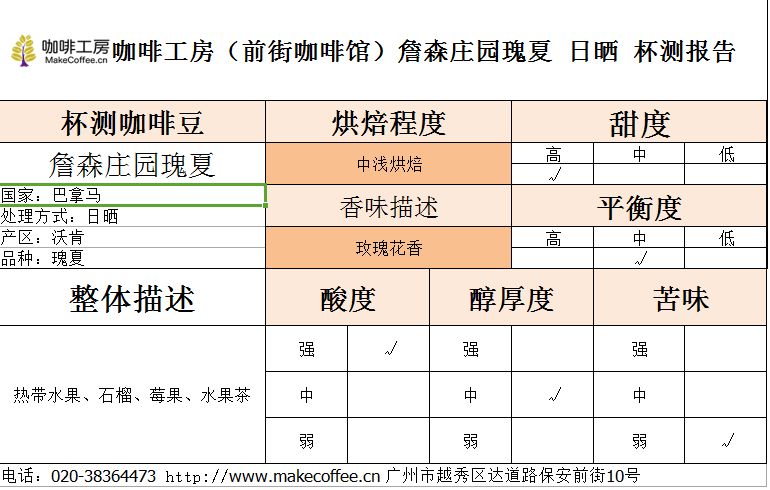
Flavor: maple syrup, lemon citrus, apple, rose, black chocolate, fruity notes, pomegranate, ripe grapes, peach, and dark berry flavors, with multi-layered sweetness and acidity.
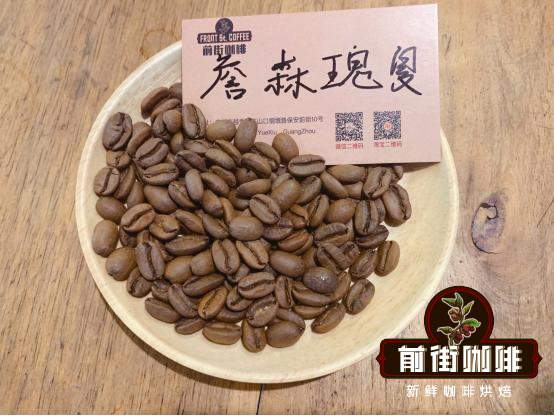
Panama Janson Estate Geisha
Estate: Janson Estate
Region: Volcan
Variety: Geisha
Processing: Natural
Altitude: 1750m
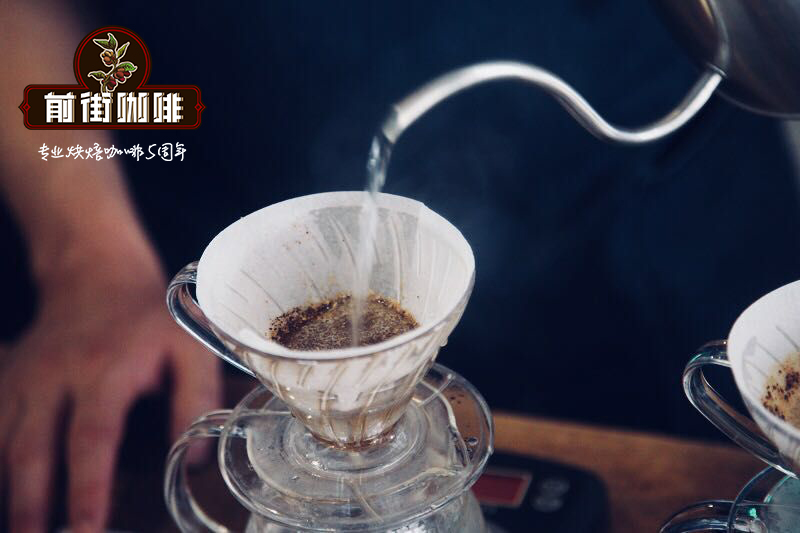
FrontStreet Coffee Recommended Brewing Method: Pour-over
Grind size: 3.5 (Japan Fuji R440). Water temperature: 91°C, V60, 15g coffee, water temperature 91 degrees, grind 3.5, water-to-coffee ratio close to 1:15.
Use 30ml of water for the bloom, with a bloom time of 30s. Pour the hot water from the gooseneck kettle in clockwise circles centered on the middle of the filter. Start timing when brewing begins, pour to 30g, then stop and wait 35 seconds for the second pour. For the second pour, as before, circle clockwise centered on the middle of the filter, avoiding the area where the coffee grounds meet the filter paper to prevent channeling. The wave filter is an immersion-style brewer, so 91-degree water can effectively bring out Geisha's flavors. Segmentation: pour to 120ml, stop, then slowly pour to 225ml, i.e., 30-120-95.
FrontStreet Coffee Flavor Description
What makes Geisha special is its very distinct and clear floral and citrus notes, extremely high clarity, soft and elegant acidity, a lasting cotton-like sweetness, and a premium black tea mouthfeel.
FrontStreet Coffee Recommendation
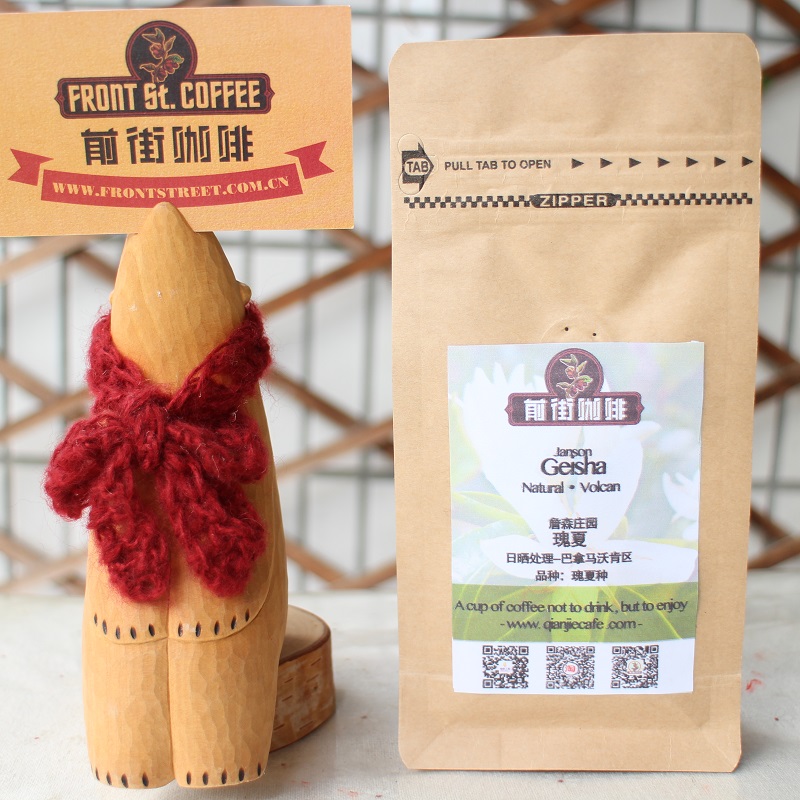
If Janson Estate has whetted your appetite for Panamanian Geisha, FrontStreet Coffee carries a lineup that follows the same blue-green bean and the same bergamot-and-peach cup. For an approachable first taste, the FrontStreet Panama Boquete Geisha is a washed, estate-level lot grown at 1,600 m, where the fertile volcanic ash of the Boquete hills comes through as jasmine, green tea, honey, and orange. For the full experience, the FrontStreet Esmeralda Special (Red Label) Geisha is a single-plot lot from Hacienda La Esmeralda, grown between 1,600 and 1,800 m and cupping above 90 points, capturing the very "champagne of coffee" character that made Janson's neighbors famous.
Brew either one the way this article suggests: a light roast, a 1:15 ratio, 91°C water, and a V60, so the florals and the cotton-like sweetness stay intact.
Important Notice :
FrontStreet Coffee is a long-established specialty coffee roaster in Guangzhou China, selling freshly roasted beans from its own farm in Yunnan as well as dozens of carefully selected single-origin beans from around the world for both pour-over and espresso. The products deliver consistently excellent quality and great value, with shipping within 24 hours. Guangzhou's FrontStreet Coffee shop is recommended by many coffee lovers, and the beans are now available online at the Tmall 。
FrontStreet Coffee has moved to a new address:
FrontStreet Coffee Address: 315,Donghua East Road,GuangZhou
Tel:020 38364473
 Scan and follow the En Gafei WeChat official account. Please indicate that the reprint comes from "En Gafei".