Panama Geisha Coffee Bean Variety Origin Story: Natural and Washed Geisha Coffee Pour-over Flavor and Taste Characteristics
FrontStreet Coffee's customer base spans every generation, and over the years we've noticed a fascinating generational split: among older coffee enthusiasts, the undisputed pinnacle of coffee is Jamaica Blue Mountain. For today's younger coffee drinkers, though, the "best and most expensive" crown has shifted from Blue Mountain to Geisha.
The Geisha Phenomenon at FrontStreet Coffee
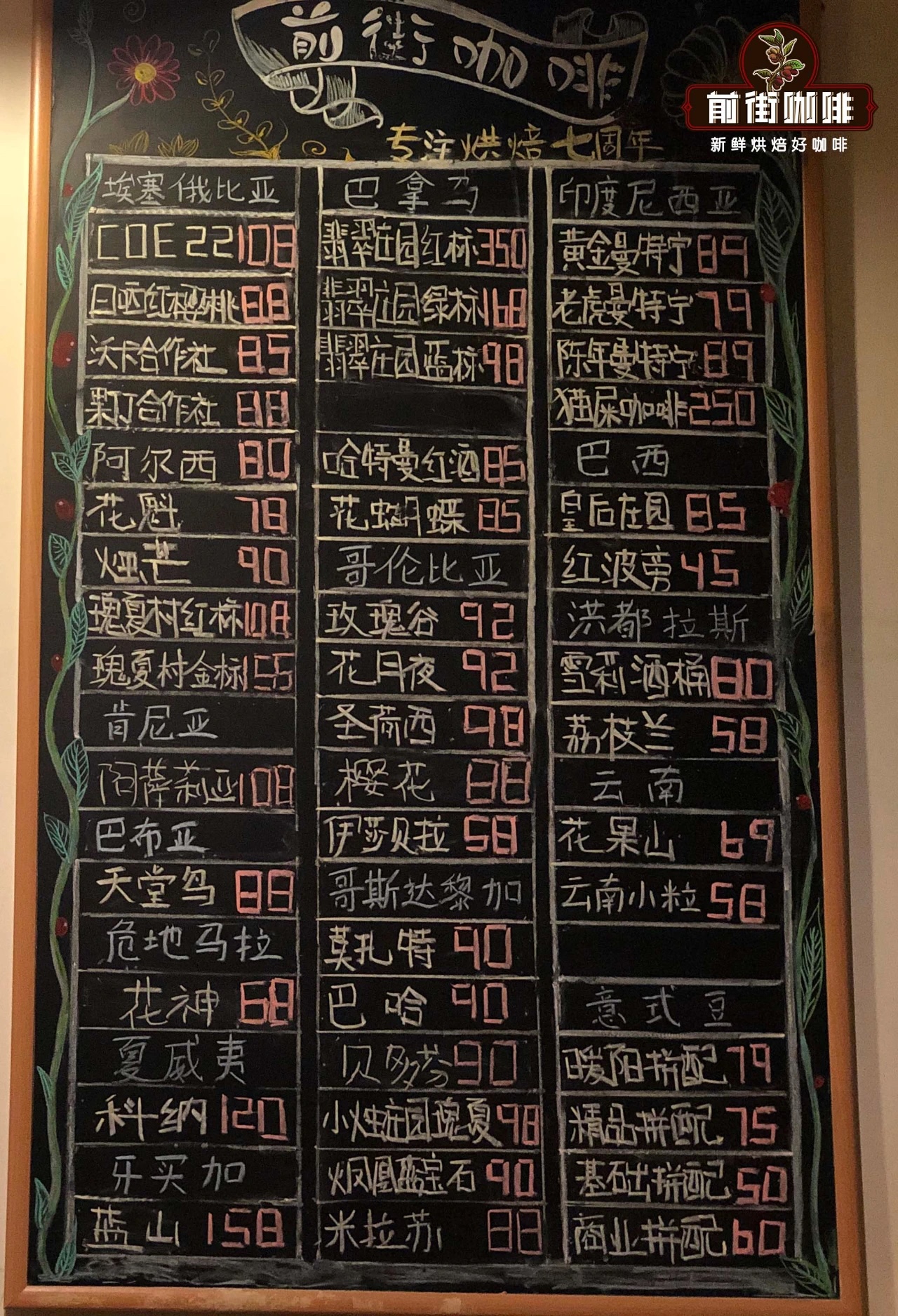
Day to day in our shop, we feel that enthusiasm firsthand. When customers learn that a pour-over of our most expensive coffee—the FrontStreet Panama Hacienda La Esmeralda Natural Red Label Geisha—costs just 75 yuan, they immediately want a cup. Those who prefer the clean profile of washed coffee can opt for the 60-yuan Green Label Geisha instead. Look closely at our bean menu, however, and you'll see that FrontStreet Coffee carries Geisha from two origins: Ethiopia and Panama—and we recently added two new lots from Colombia and Costa Rica.
The Origin Story of Geisha Coffee
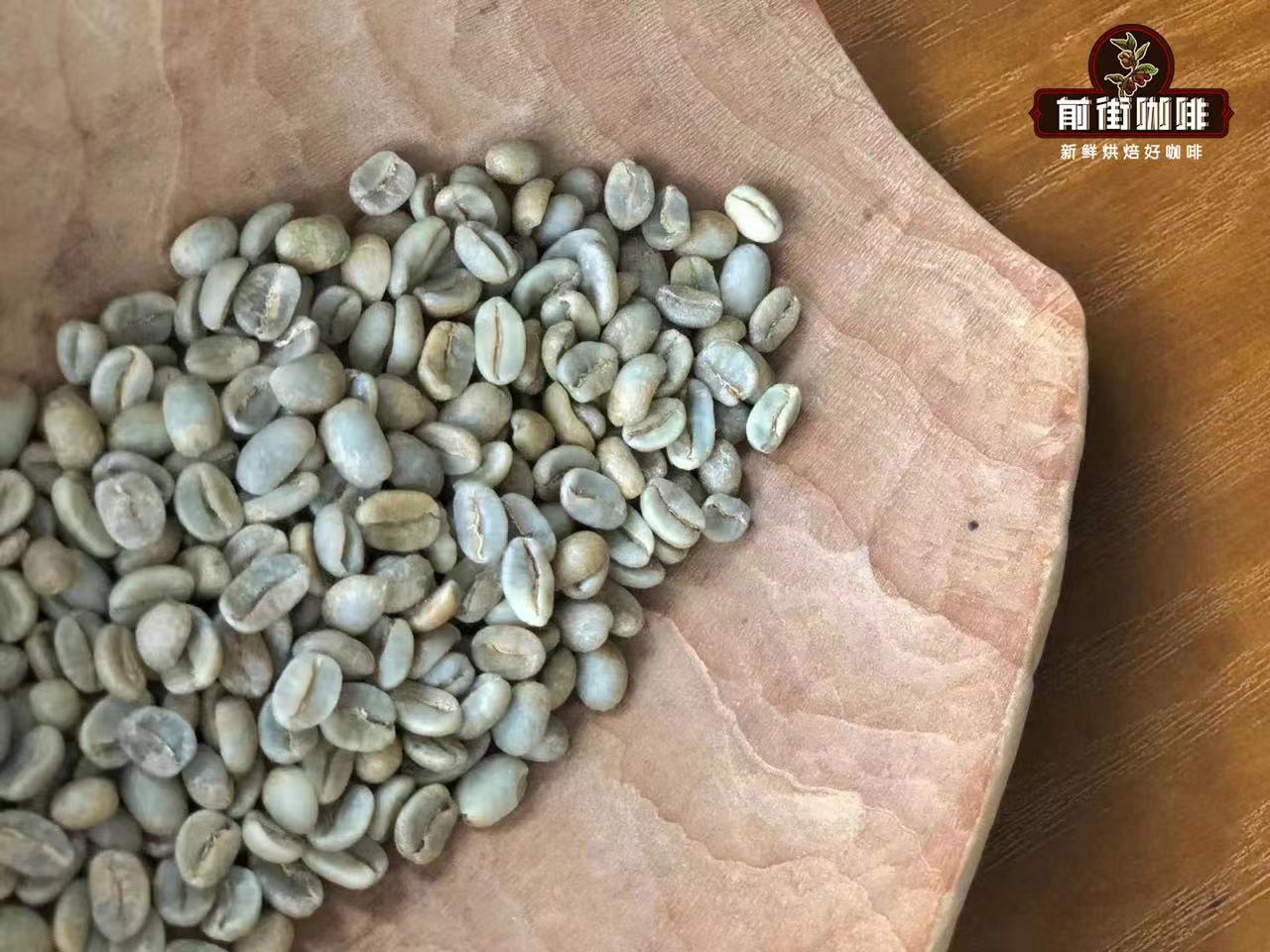
So how much do most people actually know about Geisha? The variety made its name in Panama, but authoritative testing traces its birthplace to Ethiopia. Here's the journey: the Geisha variety was discovered in 1931 in Ethiopia's Geisha forest, sent to Kenya's coffee research institute in 1932, introduced to Uganda and Tanzania in 1936, brought to Costa Rica in 1953, and finally reached Panama in 1960.
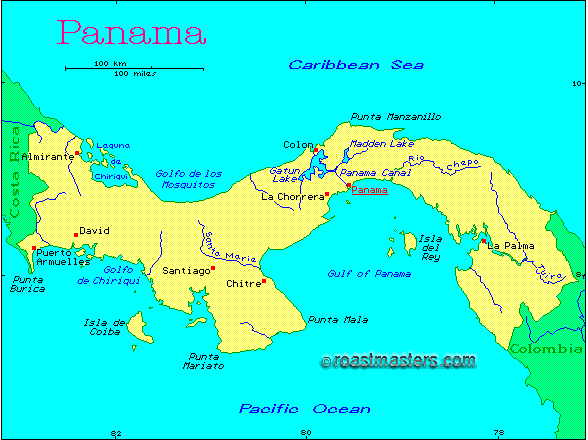
Panama's Coffee Regions
These days, "Geisha" defaults to Panamanian Geisha, so let's look at Panama's coffee regions and the world-famous Hacienda La Esmeralda. A quick geography lesson: Panama sits in Central America—Colombia to the east, the Pacific to the south, Costa Rica to the west, and the Caribbean Sea to the north, lying between 7° and 10° north latitude, squarely within the coffee belt. Panama follows the specialty coffee rule of planting above 1,200 meters; its eastern lowlands give way to the far more suitable elevations of the west. All three of Panama's main coffee regions sit in Chiriquí Province.

Those three specialty regions are Boquete, Volcán, and Renacimiento. Boquete is the most famous: average elevations of 1,400–1,900 meters, near the western border with Costa Rica, and home to celebrated estates such as Elida Estate, Hacienda La Esmeralda, and Duncan Estate. It lies close to the Barú Volcano, where fertile volcanic ash soil and diverse microclimates do the rest.
Hacienda La Esmeralda: A Historic Coffee Estate
Hacienda La Esmeralda is an estate with real history.

In 1964, retired American banker Rudolph A. Peterson moved to Panama and bought what is now Hacienda La Esmeralda. In 1973, his son, newly armed with a doctorate, came home to help run the estate. Caturra and Catuaí varieties were introduced in 1987; in 1994 the family built its own washing station; and in 1997 they purchased the nearby Jaramillo Estate—blessed with superb growing conditions—and folded it into the hacienda.
Today, Hacienda La Esmeralda farms three main plots: Cañas Verdes, Jaramillo, and El Velo. Here's what the estate's official website says about each:
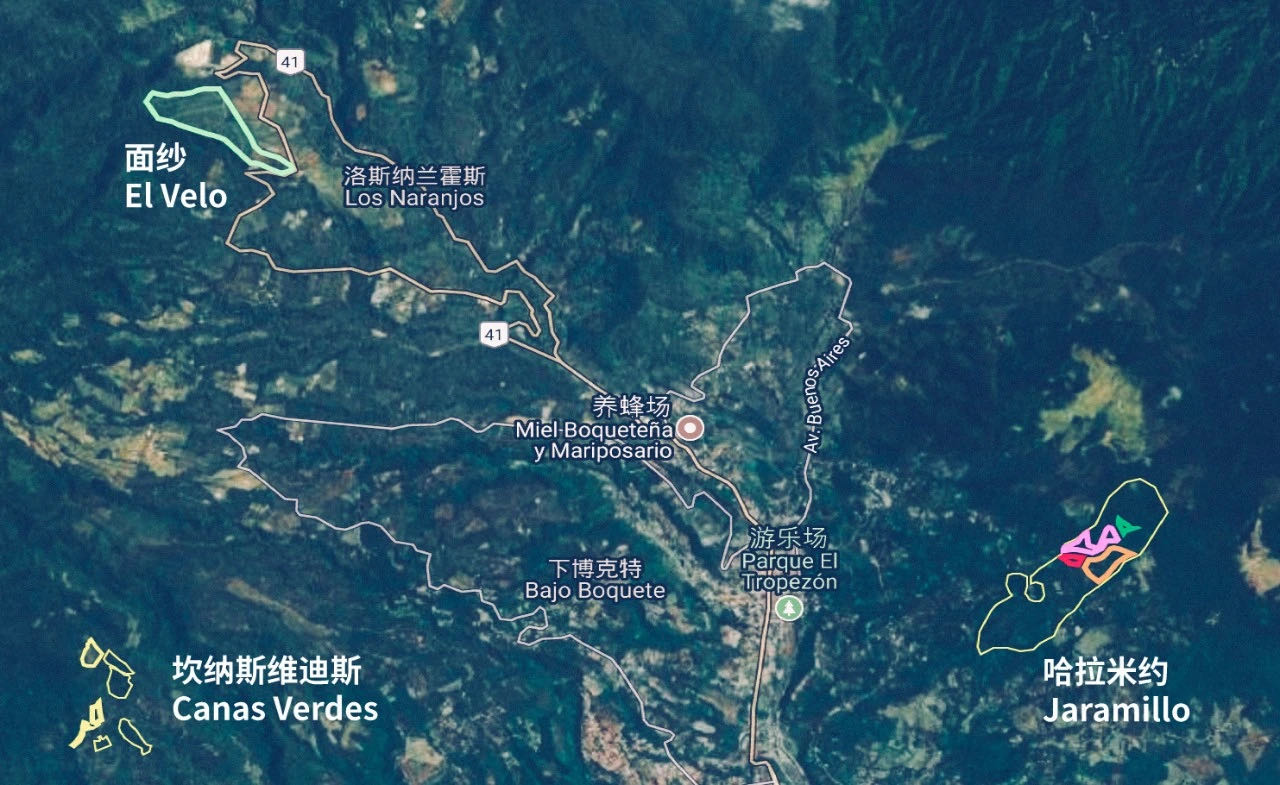
Cañas Verdes
Annual rainfall of 3,500ml, average daytime temperatures of 16–23°C, average nighttime temperatures of 10–15°C, and average elevation of 1,600–1,800m. Cañas comprises 9 sub-plots: Lino, Coronado, Fundador, León, Montaña, Trapiche, Chinta, Cabaña, and Tumaco.
Jaramillo
Annual rainfall of 4,000ml, average daytime temperatures of 19–25°C, average nighttime temperatures of 11–15°C, and average elevation of 1,600–1,700m. Jaramillo is subdivided into 5 sub-plots: Mario, Noria, Reina, Bosque, and Buenos Aires.
El Velo
El Velo is the estate's newest acquisition, with an average elevation of 1,700–1,900m. Alongside Geisha and Catuaí, it also grows small quantities of exotic varieties such as Laurina, Pacamara, Mocha, and SL28. It is divided into 7 sub-plots: Guabo, Portón, Durazno, Higuerón, Higo, Buena Vista, and Águila.

La Esmeralda's Grading System
Part of La Esmeralda's popularity, we believe, comes from its remarkably precise grading system. To match different palates, the estate divides its Geisha into Esmeralda Special, Private Reserve, and Geisha 1500, based on planting elevation, growth rate, and cupping performance (note: the Geisha 1500 grade was discontinued in 2021). Here's what each tier means.
Esmeralda Special (Red Label)
Esmeralda Special is what Chinese coffee drinkers call the "Red Label." These beans grow at 1,600–1,800 meters, cup above 90 points, and come from the Jaramillo and Cañas Verdes plots.

The estate holds its own independent auction each year; the Geisha lots selected from designated plots for that auction are the auction Red Label. Non-auction Red Labels also exist on the market—essentially Geisha from the same plots that bypass the auction. The quality is identical; only the price differs. La Esmeralda Red Label Geisha comes in natural or washed processing, with distinctive, bright floral and citrus aromatics.
FrontStreet Coffee's latest Red Label lot hails from the Mario plot of the Jaramillo farm, slow-natural processed. It offers captivating jasmine, citrus, and berry aromas over honeyed sweetness.
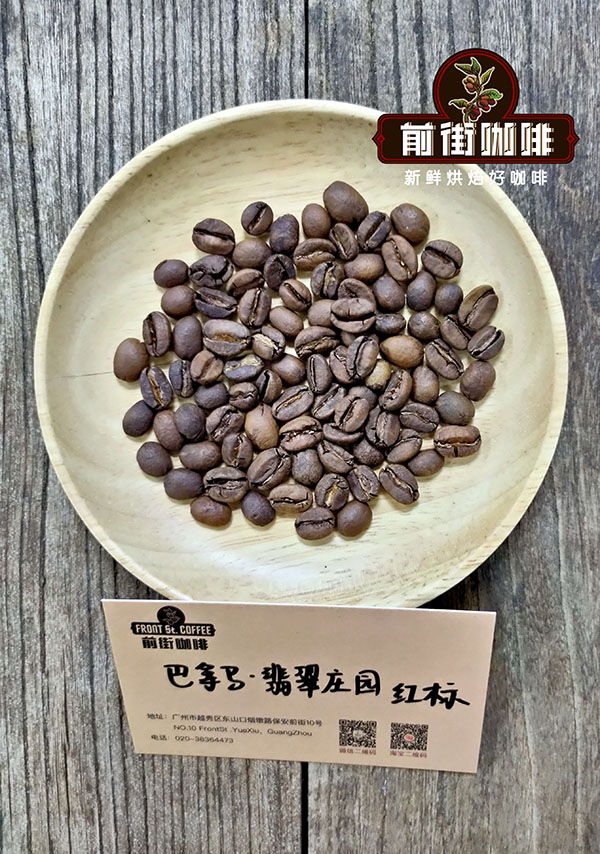
FrontStreet Coffee · Panama Hacienda La Esmeralda Red Label Geisha Coffee Beans
Region: Mario Plot, Hacienda La Esmeralda, Panama
Elevation: 1700+m
Variety: Geisha
Processing: Slow Natural
Flavor: Citrus, Jasmine, Honey, Berries
Private Reserve (Green Label)
Private Reserve—known as the "Green Label"—comprises non-competition batches of excellent Geisha that skip the auction but keep outstanding quality. Grown at 1,600–1,800 meters, they're micro-lot blends drawn from different plots including Jaramillo, Cañas Verdes, and El Velo.
Because it's a blend, no specific plot is named—but sometimes the Green Label tastes remarkably close to the Red Label. Though graded below it, the Green Label retains the classic Geisha signature, and like the Red Label it comes in both washed and natural versions.

FrontStreet Coffee · Panama Hacienda La Esmeralda Green Label Geisha Coffee Beans
Region: Boquete Region, Panama
Elevation: 1600m - 1800m
Variety: Geisha
Processing: Washed
Flavor: Jasmine, Citrus, Melon, Berries, Orange Peel
Blue Label Geisha
Finally, the most familiar tier: the Blue Label, which corresponds to Geisha 1500. The name encodes its elevation—beans grown at 1,400–1,500 meters, blended from all three plots: Jaramillo, Cañas Verdes, and El Velo. In 2020, La Esmeralda added a washed version, so the Blue Label existed in both processes. But in 2021 the estate discontinued the brand—the remaining stock is all there is, and once it's gone, it's gone. The reason for the discontinuation was never made public.

FrontStreet Coffee · Panama Hacienda La Esmeralda Blue Label Geisha Coffee Beans
Region: Boquete Region, Panama
Elevation: 1500m
Variety: Geisha
Processing: Natural
Flavor: Lemon, Oolong Tea, Sugarcane, Peach
Brewing Comparison: Washed vs Natural Green Label
Regulars know our Green Label comes in both washed and natural versions, and customers often ask our baristas how the two differ. So in this article, we brewed them side by side. First, a word on the processing itself.
Natural-processed beans dry with the whole cherry intact, skin and pulp included. That extra contact builds a more complex flavor and mouthfeel than washing: naturals carry stronger sweetness, while washed beans answer with a cleaner, brighter cup.
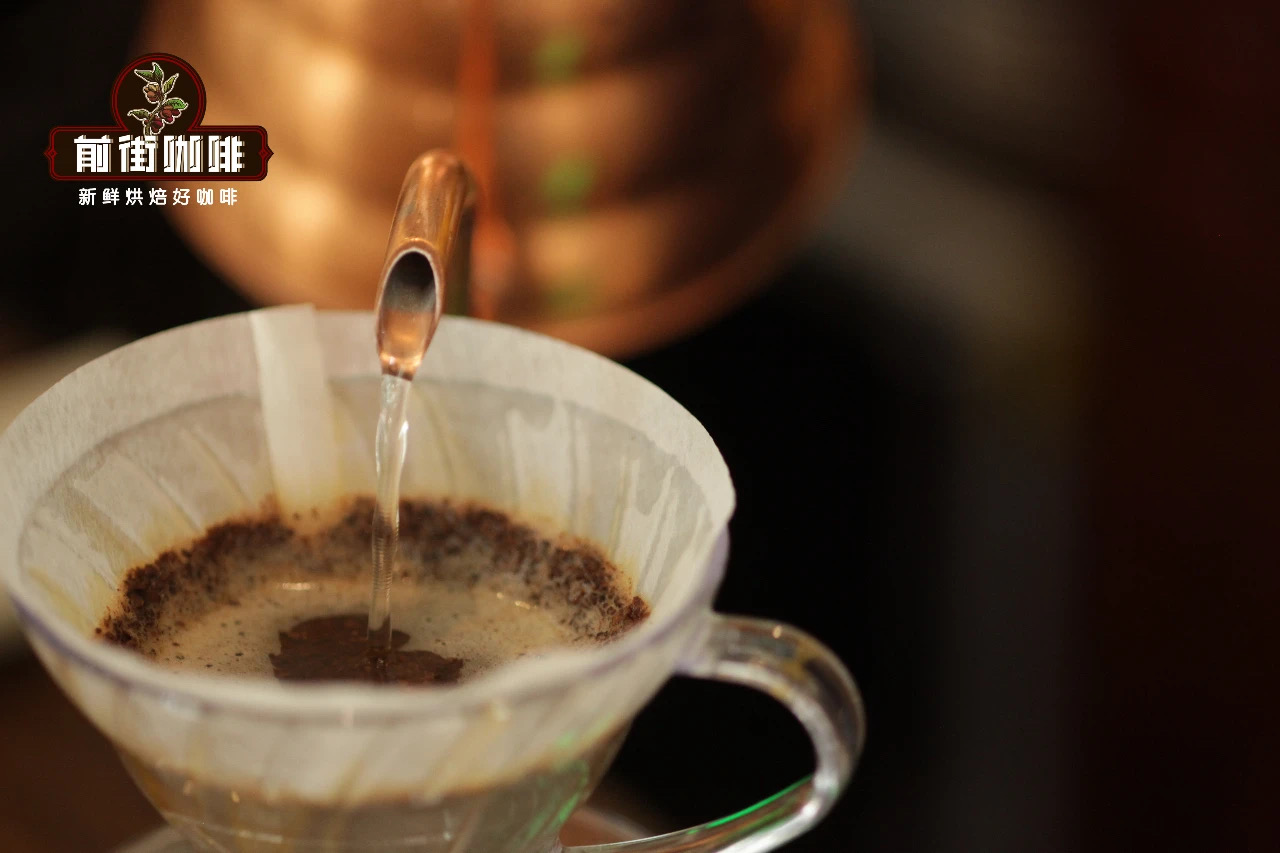
FrontStreet Coffee Pour-Over Brewing Parameters:
Dripper: V60 #01
Coffee Dose: 15g
Water Ratio: 1:16
Grind Size: EK43s #10.2
Water Temperature: 90–91°C
We brew with segmented extraction—three pours. Bloom with 30g of water for 30 seconds. Pour in small circles to 125g and pause. When the level drops to just above the coffee bed, pour again to 225g. Remove the dripper when the bed is once more about to surface (timer starts at the bloom). Extraction time: 2'00"–2'05".
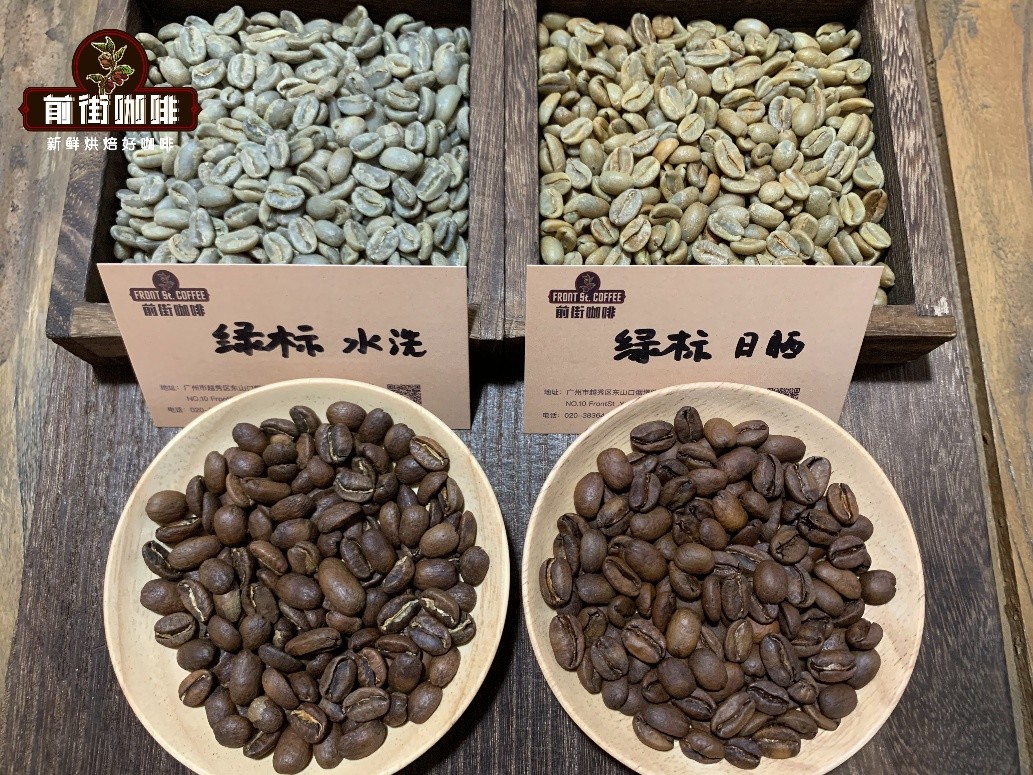
[FrontStreet Coffee Panama Hacienda La Esmeralda Washed Green Label] Floral aromatics, with soft citrus and grapefruit acidity on entry, honey sweetness through the mid-palate, then oolong tea notes and brown sugar in the finish. Clean, bright, and full-bodied.
[FrontStreet Coffee Panama Hacienda La Esmeralda Natural Green Label] Fermented aroma and fruity sweetness—melon and tropical fruit, a juice-like mouthfeel, and soaring overall sweetness.
For professional coffee knowledge exchange and more coffee bean information, please follow Coffee Workshop (WeChat official account: cafe_style)
For more specialty coffee beans, please add FrontStreet Coffee on WeChat: kaixinguoguo0925
FrontStreet Coffee Recommendation
Every Geisha tasting room we host sparks the same generational conversation: the younger crowd lines up for La Esmeralda, while their parents ask about the coffee that once defined luxury—Jamaica Blue Mountain. If that legendary cup is on your list, go for FrontStreet Coffee's Jamaica Blue Mountain No.1, the highest grade of Jamaican Blue Mountain, sourced from the historic Clifton Estate, which has been growing coffee since roughly 1750. Its farms sit at around 4,300 feet (about 1,311 meters), where cool afternoon mists, ample sunshine, and mineral-rich soil stretch the cherries' ripening and build the cup's famous finesse.
Blue Mountain's charm is the opposite of Geisha's fireworks: pure balance. No aggressive fruit acidity, no heavy roast bitterness—just cream, caramel, chocolate, nuts, honey, and a gentle fruitiness in perfect proportion, with a silky entry, rich mid-palate sweetness, and a clean, long finish. Our Blue Mountain No.1 is roasted medium-dark to spotlight that classical harmony and shipped within 5 days of roasting, so it arrives at peak flavor.
To brew it, rest the beans 4–7 days from the roast date, then use a KONO dripper to amplify the body: 15g of coffee at a grind slightly coarser than light-roast beans (about white sugar), water at 87–88°C—too hot invites roast-bitterness, too cool flattens the cup—and a 1:15 ratio. Pour in three stages: 30g of water to bloom for 30 seconds, then up to 120g in slow, small circles; finish to 225g with a slightly faster pour to keep the bed from clogging. The result: a clean, intricate, exceptionally mild cup where sweetness, acidity, and bitterness meet in perfect agreement and a persistent fruit tone closes the show. Proof that before Geisha conquered the world, another mountain—blue and misted—had already set the standard.
Important Notice :
FrontStreet Coffee is a long-established specialty coffee roaster in Guangzhou China, selling freshly roasted beans from its own farm in Yunnan as well as dozens of carefully selected single-origin beans from around the world for both pour-over and espresso. The products deliver consistently excellent quality and great value, with shipping within 24 hours. Guangzhou's FrontStreet Coffee shop is recommended by many coffee lovers, and the beans are now available online at the Tmall 。
FrontStreet Coffee has moved to a new address:
FrontStreet Coffee Address: 315,Donghua East Road,GuangZhou
Tel:020 38364473
 Scan and follow the En Gafei WeChat official account. Please indicate that the reprint comes from "En Gafei".