Flavor Characteristics, Processing Methods, and Historical Stories of Indonesian Mandheling Coffee Beans - Are Indonesian Premium Single-Origin Beans Worth Trying?
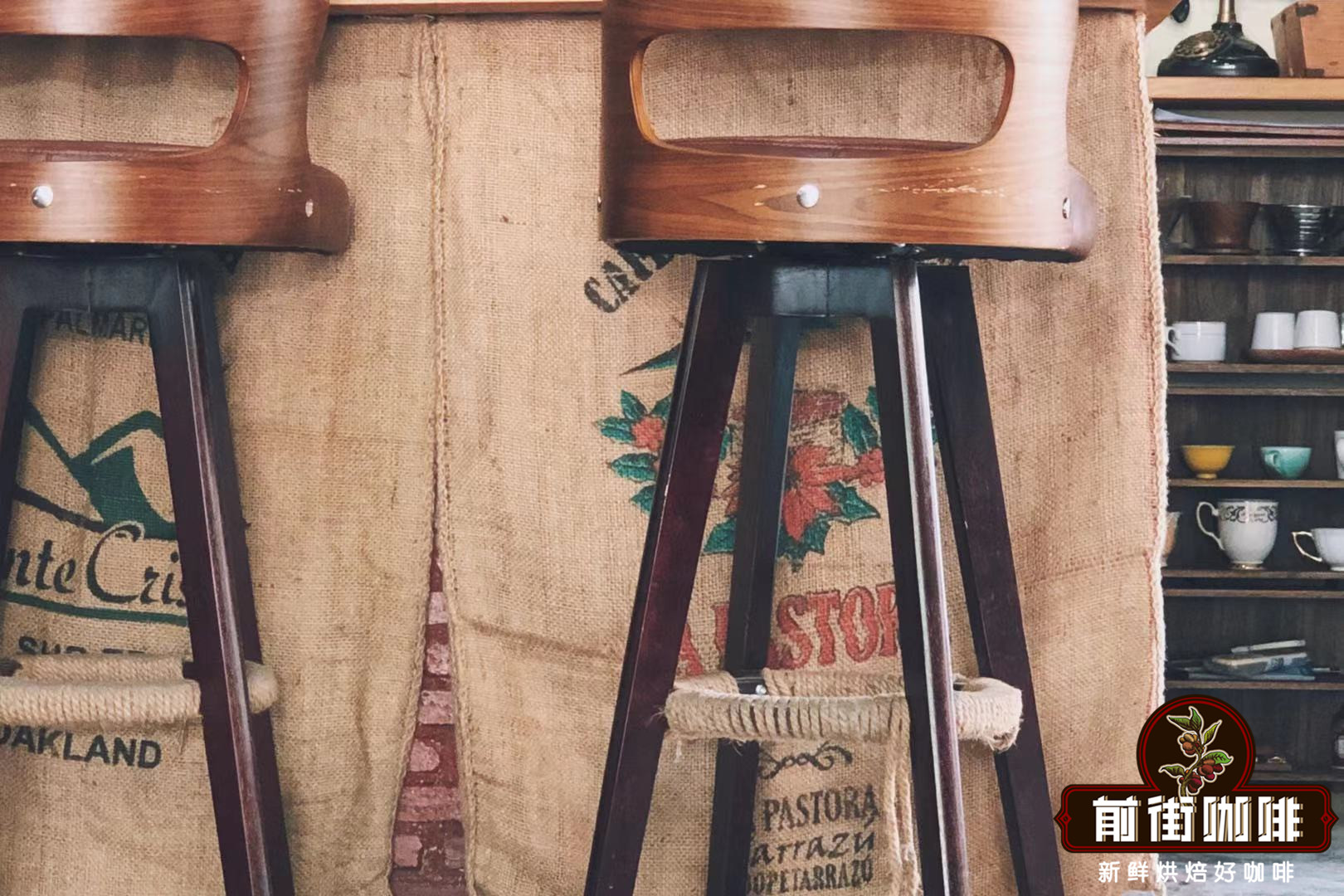
Whether in our physical store or on our Tmall flagship store, customers frequently ask FrontStreet Coffee how to choose coffee beans. FrontStreet Coffee currently displays more than 30 varieties, all sourced from coffee-producing regions around the world, each with its own character, and we regularly update the selection with beans from other regions. Mandheling is one of the best-known coffees among Chinese coffee enthusiasts. But how much do you know about the history, culture and stories behind Mandheling? Customers who visit FrontStreet Coffee come not just for a cup of coffee, and FrontStreet Coffee exists not just to serve a cup of coffee.
The Origin of the Mandheling Story
In the 17th century, the Dutch first introduced Arabica coffee seedlings to Ceylon (today's Sri Lanka) and Indonesia. In 1877, a massive catastrophe struck the Indonesian islands: coffee leaf rust destroyed nearly all the coffee trees, forcing people to abandon the Arabica varieties they had cultivated for years and to introduce Robusta trees from Africa, which offered stronger disease resistance.

Today Indonesia is a major coffee-producing country, with cultivation concentrated mainly in Java, Sumatra and Sulawesi. Robusta accounts for 90% of total production, while Sumatra Mandheling represents the rare Arabica variety. These trees are planted on hillside slopes between 750 and 1,500 meters above sea level. The mysterious, unique Sumatran variety gives Mandheling its rich aroma, full body and intense flavor, with slight hints of chocolate and syrup. Mandheling beans are relatively large with a hard texture, making them prone to defects during cultivation. After harvesting they typically undergo strict manual selection; if quality control is not rigorous enough, quality easily becomes inconsistent. Different roast levels also directly affect the taste, which makes Mandheling one of the more controversial single-origin coffees.
The name "Mandheling" is quite different from other coffees: it is not a region, a place name, a port name, or even a variety name (unlike Yirgacheffe or Sidamo, which are African region names). It is simply a phonetic misinterpretation of the Indonesian Mandheling ethnic group.
So how did this ethnic group become associated with coffee? There is a serendipitous legend: during World War II, Japan occupied Indonesia. One Japanese soldier was drinking an incredibly delicious coffee in a coffee shop and immediately asked the owner its name. Because of the language barrier, the owner thought he was being asked, "Where are you from?" and replied, "Mandheling tribe."
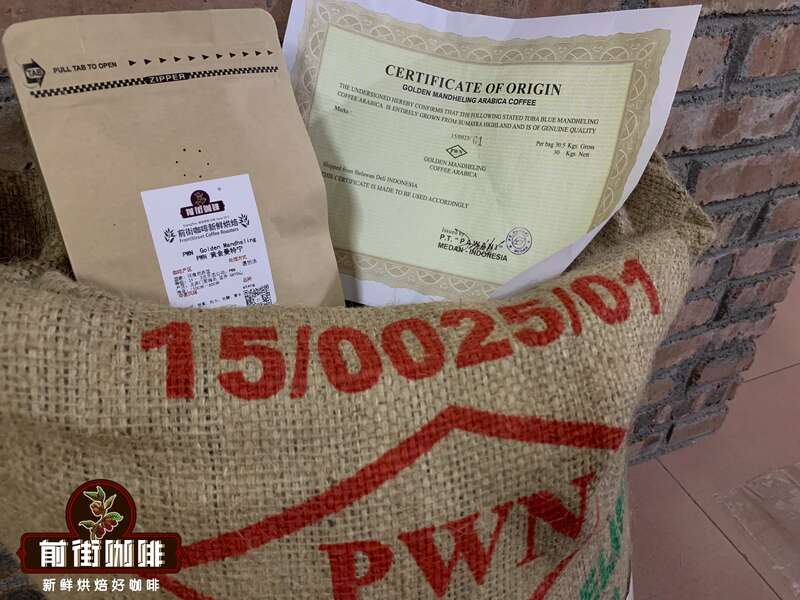
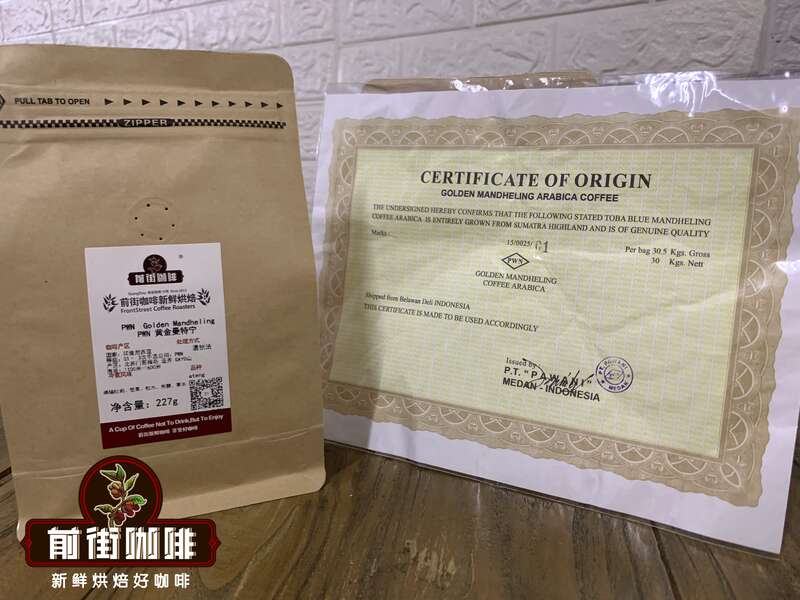
After World War II ended, the soldier remembered the "Mandheling" coffee he had drunk in Indonesia and asked an Indonesian broker to ship him fifteen tons of it to Japan. It became extremely popular in the Japanese market, and the name Mandheling has been passed down ever since. (That broker established what is now the renowned Pwani Coffee Company (PWN) in the Indonesian coffee industry - the trademark owner of Golden Mandheling.)
Mandheling Coffee Processing
Sellers often label Lintong and Mandheling coffees as dry-processed. In reality they frequently use mixed methods to separate fruit from seed, a common one being backyard-style wet processing. Farmers place freshly picked cherries into simple de-pulping machines assembled from scrap metal, wood and bicycle parts. They then put the de-pulped, sticky wet beans into plastic woven bags to ferment overnight. The next morning they manually wash away the fermented, soft fruit pulp and mucilage. The beans, still wrapped in parchment, are placed on thin boards in the yard to pre-dry before being sent to a middleman's warehouse for parchment removal and further drying. Finally, trucks carry the coffee to Medan port (the capital of Sumatra), completing the third and final drying stage.
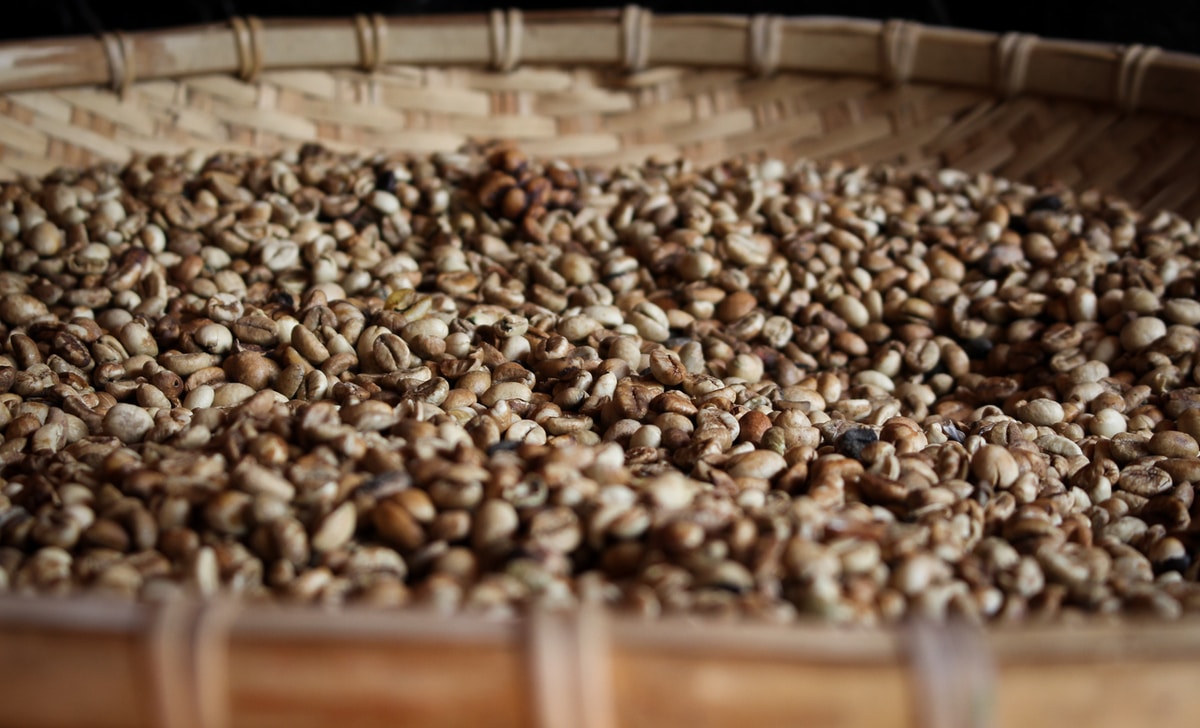
It is also reported that in other Mandheling-producing regions, after pulp removal the mucilage is allowed to dry while still attached to the beans, similar to Brazil's semi-washed method. Later, machines remove the dried mucilage and parchment. Finally the coffee undergoes the same two-stage drying: first at the middleman's warehouse, then at the exporter's warehouse in Medan port.
We describe these processing steps in such detail because it is unclear to what extent soil and atmosphere, unusual processing techniques, and three-stage drying each contribute to the character of Lintong and Mandheling. Only one thing is certain: these methods occasionally produce excellent coffee while being extremely inconsistent. Only through relentless sorting at the Medan port export warehouses can the deep texture and unique, understated richness of Lintong and Mandheling emerge from interference by other off-flavors.
Sumatra Mandheling DP Grade 1 and Aged Sumatra Mandheling
The most famous origins in Asia are the islands of the Malay Archipelago: Sumatra, Java and Kalimantan. Among them, Sumatra Mandheling from Indonesia's Sumatra island enjoys the highest reputation. It has two famous designations: Sumatra Mandheling DP Grade 1 and Aged Sumatra Mandheling. Sumatra Mandheling DP Grade 1 has a long aftertaste with a wild, mountainous fragrance - the characteristic earthy flavor found in primeval forests.
Besides the unique mellow taste of Indonesian coffee, it also has a bitter-sweet flavor, sometimes mixed with a slight musty note, and is deeply loved by those who enjoy dark roasted coffee. Aged Sumatra Mandheling is called "Aged" because it is stored in cellars for three years before export. Aged coffee is by no means stale coffee, but specially processed, slightly pale coffee. It is more concentrated, with reduced acidity but increased body and a longer aftertaste, and often carries rich spice flavors - sometimes tangy, sometimes walnut, sometimes chocolate.

In the era before Blue Mountain became world-famous, Mandheling was considered the world's finest coffee. After roasting, the beans are quite large, with raw beans appearing brown or dark green. It has a caramel-like special aroma, with a mellow, rich taste, sweet and bitter but without soft acidity, yet with bitterness. Production is relatively limited, so the price is slightly higher than ordinary beans.

Mandheling Coffee Origin
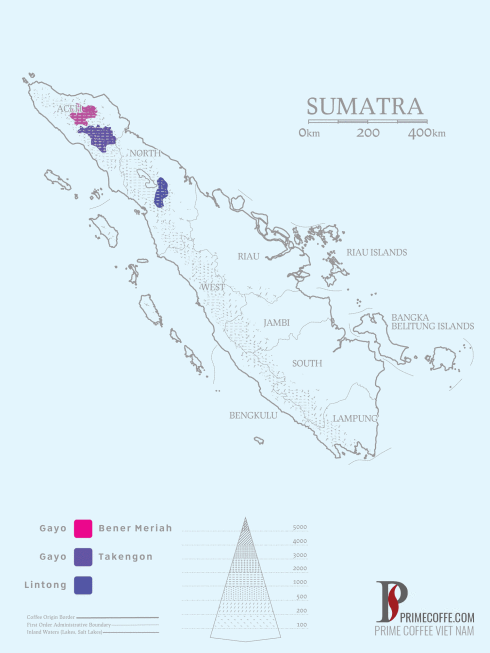
Mandheling originates from Sumatra, Indonesia, and is also known as "Sumatra Coffee." Main producing areas include Java Island, Sulawesi Island and Sumatra Island, with 90% being Robusta. Among them, "Mandheling" from Sumatra Island is the most famous. The finest specialty traditional Arabica coffees produced in northern Sumatra are marketed under the names Lintong and Mandheling. Strictly speaking, Lintong refers to coffee grown in a small area in the southwestern part of Toba Lake within the Lintong administrative region.
Smallholder plots are scattered across a high, undulating clay plateau covered with ferns. Lintong coffee is non-shade grown, without chemicals, and almost entirely owned by small private farmers. Mandheling is a broader designation that includes Lintong coffee and growing areas under similar conditions in Diari (capital Sidikalang) and northern Toba Lake.
Mandheling Coffee Characteristics
Mandheling's flavor is very rich, aromatic, bitter and full-bodied, with a hint of sweetness. Most enthusiasts drink it as a single origin, but it is also an indispensable variety for blending.
Mandheling has a heavy taste with a rich body and a vibrant, lively character, neither astringent nor acidic, allowing its body and bitterness to be fully expressed. The appearance of Mandheling beans can be considered the most unsightly, but enthusiasts say that the less attractive Sumatra beans look, the better, richer and smoother they taste. Mandheling is considered the world's most full-bodied coffee. When tasting it, you can feel a distinct smoothness on the tongue. It also has lower acidity, yet that acidity is still clearly discernible - a jumping micro-acidity mixed with the richest aroma, letting you experience the lively elements within the gentle richness. The coffee also has a faint earthy aroma, which some describe as a herbal plant fragrance.
Since Mandheling beans themselves lack acidic character, special brewing methods typically use Mandheling as a base. During long heat-retention periods or when making iced coffee, there is no unpleasant astringent or acidic taste.
What Are the Common Types of Mandheling?
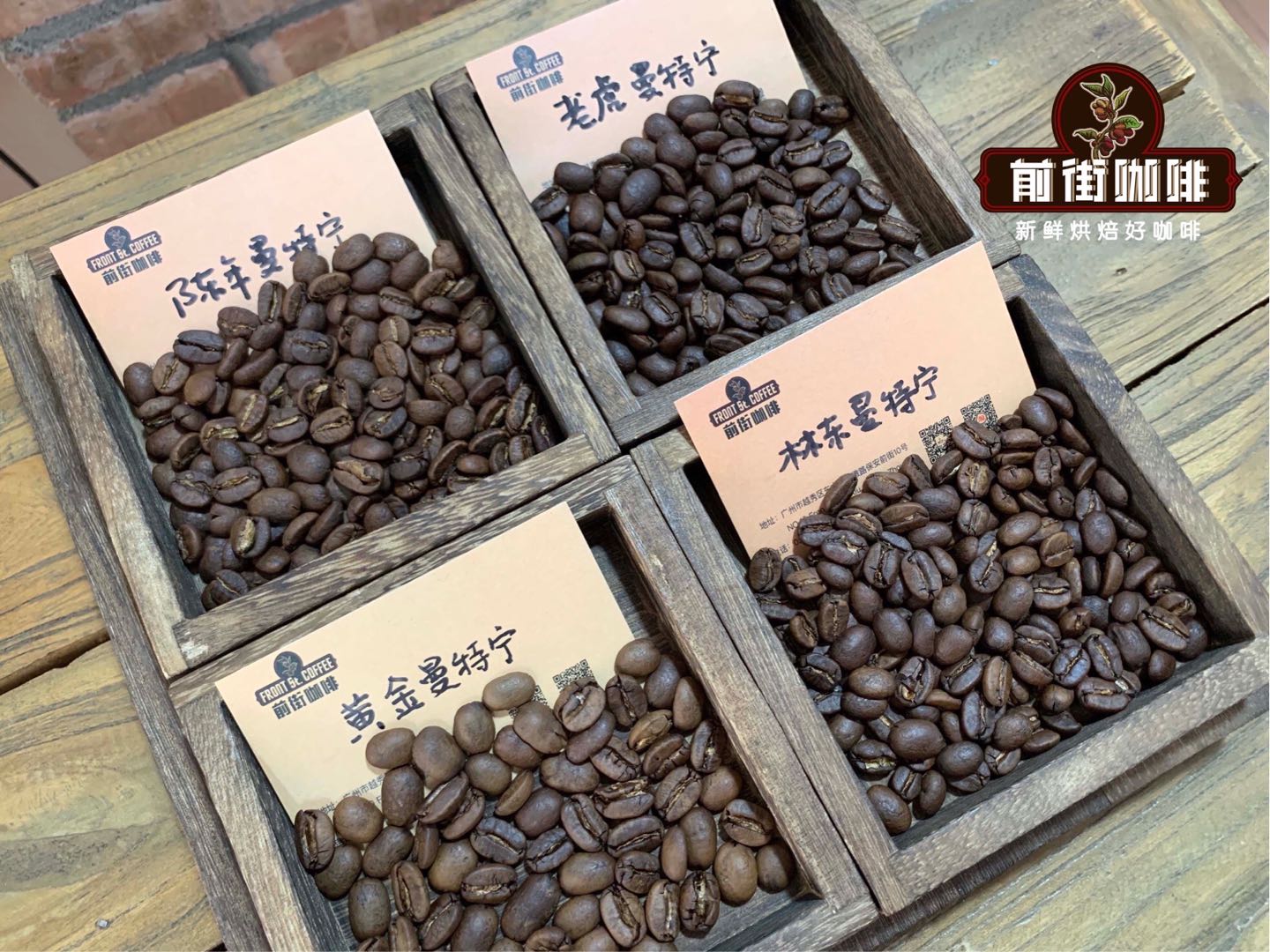
Here FrontStreet Coffee presents four types of Mandheling: Lintong Mandheling, Golden Mandheling, Tiger Mandheling and Aged Mandheling.
1. Lintong Mandheling
A specialty Mandheling from the Lintong region, with relatively large beans and a hard texture. Indonesian coffee quality is quite diverse, but what we commonly call Mandheling refers to Typica or its variant grown in the mountainous areas around Toba Lake. Coffee connoisseurs around the world have judged: Sumatra Mandheling is the world's most textured coffee. Mandheling beans are relatively large with a hard texture, and because of numerous defects they require strict selection during processing.
Mandheling is an indispensable variety for blended coffee, with rich flavor, sweet aroma, pure bitterness, full body, and hints of sweetness and slight acidity.
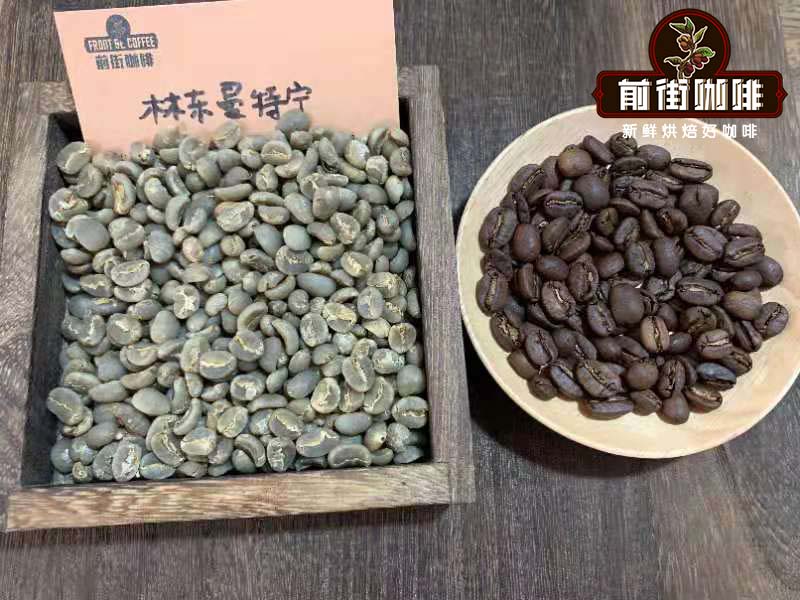
FrontStreet Coffee: Lintong Mandheling Coffee Beans
Region: Lintong Region
Altitude: 1100-1600m
Varieties: Typica, Caturra
Processing Method: Wet-Hulled
2. Golden Mandheling
Golden Mandheling has been trademarked by Indonesia's PWN company, making it exclusive to PWN. Golden Mandheling is produced in the Gayo mountains of northern Sumatra's Aceh region. The variety is Ateng, a hybrid between Arabica and Robusta widely planted in Sumatra and other Indonesian islands. It is actually a branch of Catimor, with Ateng being the local name. Golden Mandheling 18-screen beans undergo four manual selections with higher quality requirements.
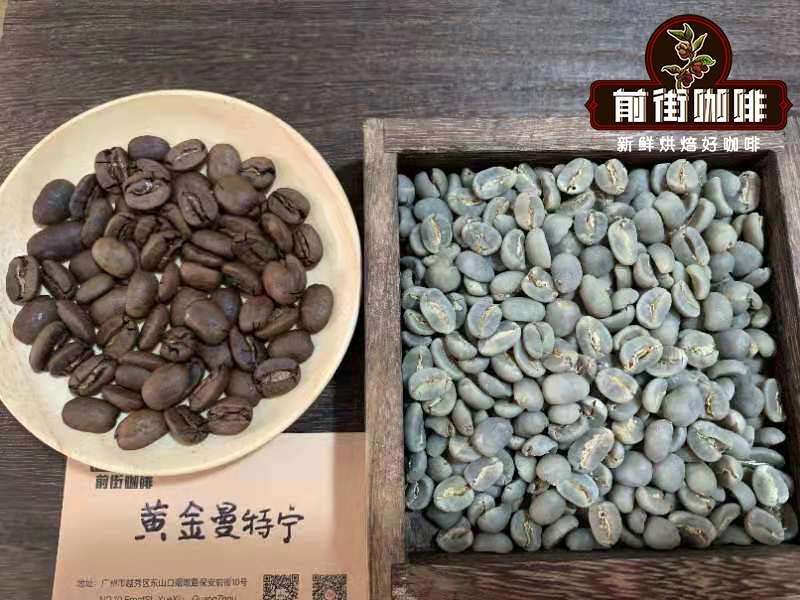
FrontStreet Coffee: PWN Golden Mandheling Coffee Beans
Region: Aceh Gayo Mountains
Altitude: 1100-1600 meters
Varieties: Ateng (Catimor family)
Processing Method: Wet-Hulled
Roasting Profile
FrontStreet Coffee considers Golden Mandheling a higher-moisture bean, with a larger deviation from natural-processed beans in moisture, so dehydration needs special attention. For high-moisture beans, you can close the damper immediately after charging, let them steam for 30 seconds, then open to level 3 until the beans turn light green or white. Open the damper to level 4, and after first crack open it to level 5 (maximum).
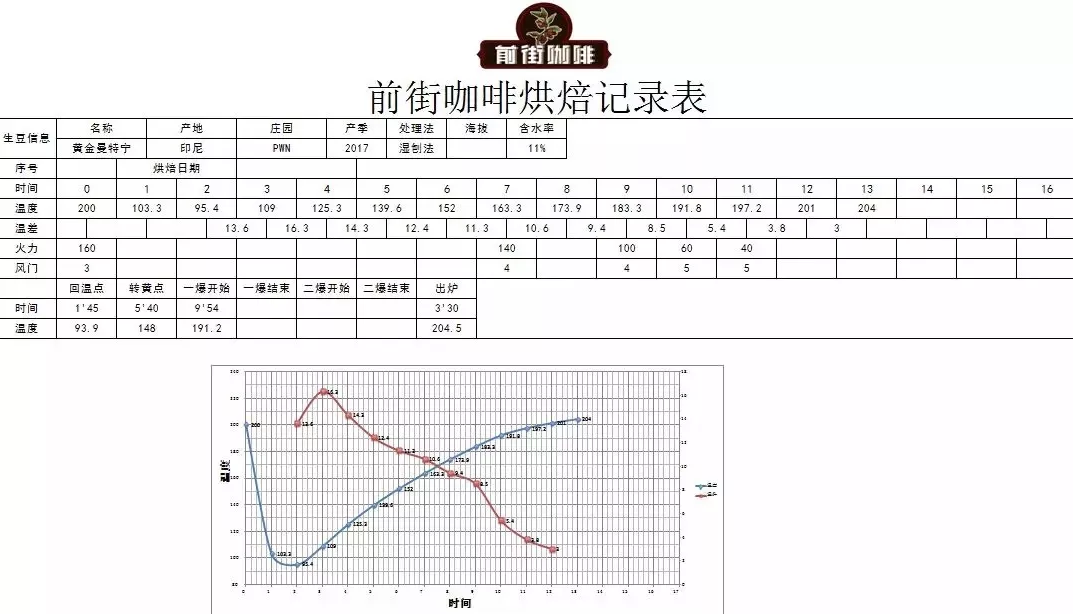
Brewing Parameters
For daily Mandheling brewing, FrontStreet Coffee recommends the KONO dripper, because it produces a rounder, fuller-bodied taste with a more direct flavor expression. The KONO dripper's only exhaust area is its quarter ribs. When the water level passes the rib area, the water level in the dripper keeps rising, increasing pressure through the weight of the water. Because the outlet is relatively small, this extends the contact time between grounds and water. As the flow drives the process, it extracts soluble substances more effectively. FrontStreet Coffee's method generally achieves the high-body effect customers expect.
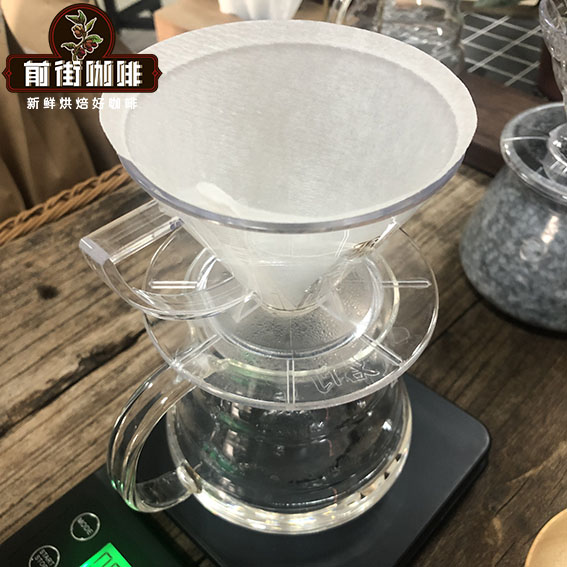
Dripper: KONO Dripper
Water Temperature: 86°C
Coffee Amount: 15 grams
Coffee-to-Water Ratio: 1:15
Grind Size: Medium-fine grind (BG#6W)
Brewing Method: Segmented Extraction
Use 30 grams of water for a 30-second bloom. Continue with a small circular pour to 125 grams, then segment. When the water level drops and is about to expose the coffee bed, keep pouring to 225 grams and stop. When the water level again drops to nearly exposing the bed, remove the dripper. (Timing starts from the bloom.) Extraction time is 2'00".

Flavor Description
Multi-layered, full-bodied and clean, with high balance, rich nut and caramel aromas, chocolate notes and a persistent aftertaste.
3. Tiger Mandheling
Only Mandheling beans above 17 screen with a defect rate below 4% can be called Tiger Mandheling. Its main varieties are Caturra and Typica. Caturra brings citrus and lemon acidity in the taste, while Typica brings a persistent sweet aftertaste, giving Tiger Mandheling a more uniform taste and higher cleanliness.
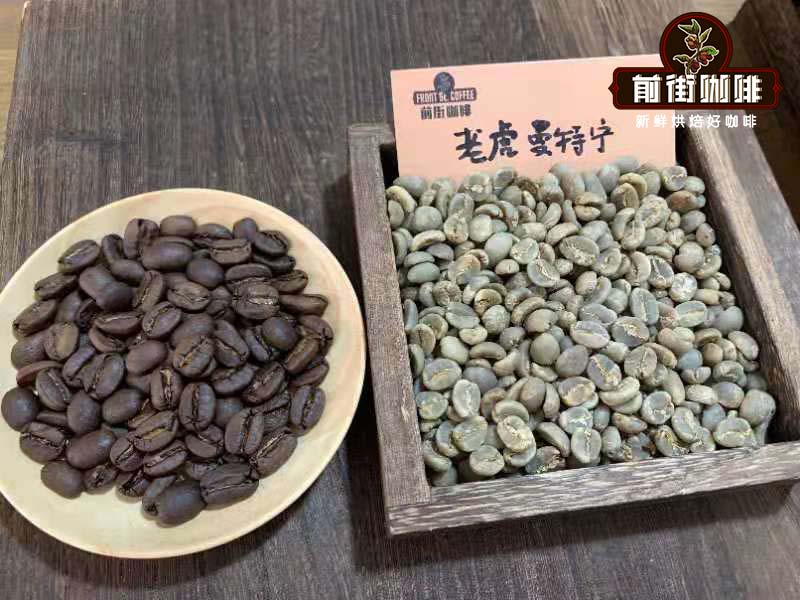
FrontStreet Coffee: Tiger Mandheling Coffee Beans
Region: Aceh
Altitude: 1500m
Varieties: Typica, Caturra, Sidikalong
Processing Method: Wet-Hulled
4. Aged Mandheling
Aged coffee beans do not mean beans that have simply sat around for a long time - that is not allowed, because aged raw beans will still spoil, turning from fresh green to white and then yellow, becoming tasteless and even growing insects. Like aged wines, raw beans must undergo proper processing and long-term storage before they can truly be called aged coffee.
What "aged" beans means:
Raw beans are allowed to age naturally through extended storage (usually 2-3 years). These changes include reduced acidity, color changes and a thicker bean texture. The storage environment must be cool and well ventilated. Because the storage is relatively dark and the time is long, aged coffee often carries complex flavors similar to mustiness, so-called burlap bag, or leather.
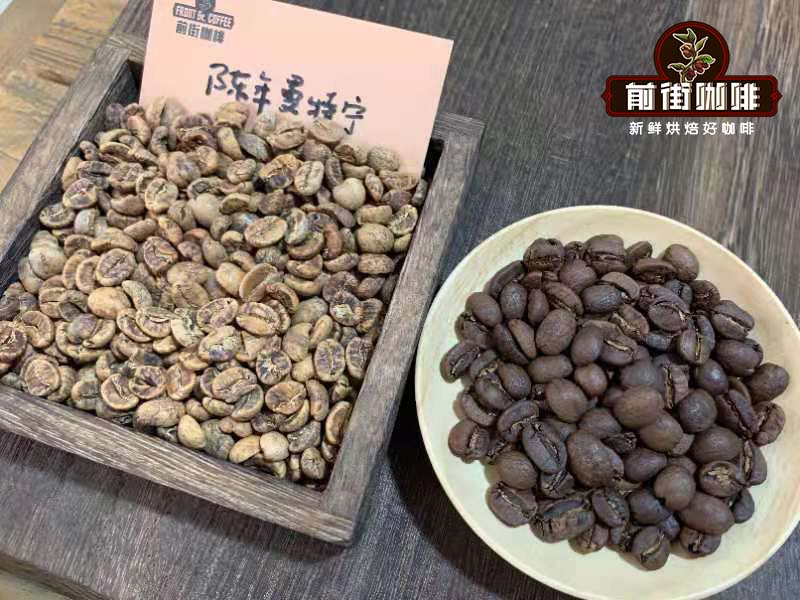
FrontStreet Coffee: Aged Mandheling Coffee Beans
Region: Sumatra
Varieties: Typica
Processing Method: Wet-Hulled
FrontStreet Coffee Recommendation
If the wet-hulled, full-bodied character described above appeals to you, FrontStreet Coffee's PWN Golden Mandheling is the top expression to try. It is produced in the Gayo mountains of Aceh by Indonesia's PWN company - the trademark owner of the name - using 18-screen beans with fewer than three defective beans per 300-gram sample, meeting the highest G1 standard and then passing three rounds of manual selection for exceptional cleanliness and sweetness. Roasted medium-dark, it is clean yet full-bodied, with rich nut and caramel aromas, chocolate notes and a long finish, and it brews beautifully in the KONO dripper at 86°C, 15g and 1:15. For a more everyday cup, FrontStreet Coffee's Lintong Mandheling from the Lintong region brings the classic dark chocolate, caramel and wild herbal spice notes of traditional Mandheling.
Important Notice :
FrontStreet Coffee is a long-established specialty coffee roaster in Guangzhou China, selling freshly roasted beans from its own farm in Yunnan as well as dozens of carefully selected single-origin beans from around the world for both pour-over and espresso. The products deliver consistently excellent quality and great value, with shipping within 24 hours. Guangzhou's FrontStreet Coffee shop is recommended by many coffee lovers, and the beans are now available online at the Tmall 。
FrontStreet Coffee has moved to a new address:
FrontStreet Coffee Address: 315,Donghua East Road,GuangZhou
Tel:020 38364473
 Scan and follow the En Gafei WeChat official account. Please indicate that the reprint comes from "En Gafei".