The History and Cultural Stories of Brazilian Coffee Beans: Flavor Characteristics of Arabica Growing Regions
FrontStreet Coffee - Brazilian Coffee Bean History, Cultural Stories, and Regional Flavor Characteristics of Brazilian Arabica Coffee
Brazil is the world's largest coffee producer. Its output is enormous, but the quality is generally average. Premium Brazilian coffee is not abundant, and most Brazilian coffee goes into comprehensive blends. Brazilian beans typically show chocolate and nutty notes, with excellent sweetness and a rich body.
In 1720, the French brought coffee from French Guiana to Brazil. Later, Brazil obtained some mature coffee beans and five coffee seedlings from Guiana and began large-scale coffee cultivation.
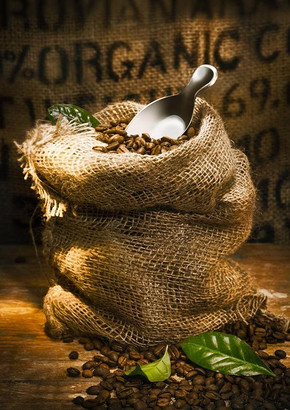
The Story of Brazilian Coffee Beans
By the 19th century in Europe, coffee was no longer an exclusive drink for the nobility but was becoming increasingly popular among ordinary people, which sent demand soaring. The geography of Brazil's Paraná, São Paulo, Minas Gerais and Espírito Santo states proved ideal for coffee cultivation.
The market called out anxiously: "Where are you, coffee that doesn't need to be too high quality but definitely can't be too expensive? We are ordinary people with limited money, and we can't afford Golden Mandheling or similar premium coffees. Affordability matters most!"
Brazilian coffee answered: "I'm here, right here."
Do you all remember when French cafés became popular?
It was in the second half of the 19th century.
And what did the French value most when drinking coffee?
The environment and the feeling of the moment, not the coffee's flavor itself. So using slightly inferior beans never dampened people's enthusiasm for visiting cafés. Think about it: if even Van Gogh, who long depended on his brother's financial support, could afford to frequent these places, how particular could the beans have been?
Austria, famous for producing musicians, was the same story. The café was an artist's stronghold, and people didn't care at all about what they ate or drank.
People went to cafés for the atmosphere. Whether they were served sunflower seeds bought at the morning market for 10 yuan/kg or Qiaqia brand seeds from the supermarket made no difference to them. They simply loved the small touches of sentiment, warmth and romance in cafés.
And so, Brazilian coffee production developed rapidly.
Brazil's coffee-growing area is vast, and its level of mechanized production is quite high. Machines are used for harvesting, which easily mixes ripe and unripe fruit together. Usually no sorting is done afterward, and sometimes coffee branches and leaves are even mixed in with the fruit. Machine drying is used too; it is very efficient but affects the flavor of the beans.
Save effort wherever possible, don't worry about things that don't need worrying. What kind of work attitude is that?
Seeing farmers not properly tending their land, workers not properly producing, and baristas not properly brewing coffee really makes a person angry.
Brazilian coffee comes in many varieties and grades. Santos represents the highest level and can be called world-class coffee. Here, Santos refers to Bourbon Santos, not flat bean Santos. The Bourbon Santos tree produces small, curved beans in its first three to four years, with a unique flavor. The coffee has a mild, smooth taste, low acidity and a moderate body, with a faint grassy aroma, a light fragrance touched with bitterness, and a smooth sweetness on the palate, making it suitable for a medium roast. Beans from later years grow larger and flatter, and are called flat bean Santos. Flat bean Santos has a mediocre taste and cannot be considered specialty coffee.
FrontStreet Coffee Recommendation
Brazilian beans rarely stand alone at the top of a cupping table, but they are the backbone of a great everyday espresso. FrontStreet's Classic Blend shows exactly what that sweet, nutty Brazilian base can do: it starts from the creamy, nutty character of Brazilian coffee, then layers in a medium-dark roasted Mandheling, which pushes butter, roasted chestnut and caramel to the front. The Mandheling also lifts the body of the whole cup and lends sandalwood, herbal and spice notes, while a small amount of Robusta rounds out the crema, so a latte, latte art or a layered Dirty all come together easily.
That is the practical gift of Brazilian coffee: it brings chocolate and nutty notes with excellent sweetness and body, giving blends a warm, approachable core. If you want to taste that foundation on its own, brew it as a straightforward milk drink and notice how the chocolate and nut flavors round out the cream. Pair it with a single-origin Mandheling, like FrontStreet's PWN Gold Mandheling, and you get the classic contrast of Brazil's mellow sweetness against Sumatra's herbal, dark-chocolate depth.
Important Notice :
FrontStreet Coffee is a long-established specialty coffee roaster in Guangzhou China, selling freshly roasted beans from its own farm in Yunnan as well as dozens of carefully selected single-origin beans from around the world for both pour-over and espresso. The products deliver consistently excellent quality and great value, with shipping within 24 hours. Guangzhou's FrontStreet Coffee shop is recommended by many coffee lovers, and the beans are now available online at the Tmall 。
FrontStreet Coffee has moved to a new address:
FrontStreet Coffee Address: 315,Donghua East Road,GuangZhou
Tel:020 38364473
 Scan and follow the En Gafei WeChat official account. Please indicate that the reprint comes from "En Gafei".