Why is Geisha Coffee Called Geisha? The Origin Story of the Geisha Coffee Variety

The Origin Story of the Coffee Variety Geisha: Why Geisha Coffee is Called Geisha
Coffee is named in many ways - by estate, country, or growing region. One of the world's most expensive coffees, Geisha, is named after its variety, meaning Geisha coffee is actually a coffee variety. Geisha beans originate from the Kaffa forest on Ethiopia's Geisha Mountain, yet they gained fame through Panama's Hacienda La Esmeralda.
Since Geisha became famous, many regions around the world have started growing it. Geisha has become the new king of specialty coffee, with particularly high quality and prices in South American countries such as Panama, Guatemala, and Colombia. Geisha beans offer floral notes, tropical fruit flavors, and intense sweetness. The experience is like sipping the fragrance of a fresh bouquet, akin to a glass of rich fruit juice.

The Geisha tree grows tall with slender leaves and is resistant to coffee leaf rust. It branches from the trunk, and its green beans are elongated. When roasted, the beans show strong, intense fruity characteristics. Because of its low yield, the variety could not be traded commercially. It is cultivated in small quantities in countries such as Panama, Jamaica, Malawi, Kenya, and Guatemala.
The Origin Story of the Coffee Variety Geisha
Geisha originated from Geisha Mountain in southwestern Ethiopia. As its cultivation spread worldwide in recent years, it became synonymous with a coffee variety. "Geisha" sounds similar to the Japanese word "geisha." Around 2006, Mr. Yuan from Calamondin Coffee first imported Panamanian Geisha into China. With its explosive floral and fruity flavors, he named the variety "Guixia" in Chinese, a name used ever since. This is why many people refer to Geisha beans as "Geisha coffee beans."

Why was "Geisha" changed to "Guixia"?
According to information researched by FrontStreet Coffee, because of the term "Geisha," many coffee merchants have used the Japanese "geisha" in their packaging and promotions. This approach is somewhat inappropriate, since there is essentially no connection between the two beyond the similar pronunciation. Changing the Chinese translation of Gesha means consumers new to Geisha coffee will no longer mistakenly believe it was named after the Japanese traditional performing art. It also avoids any future use of Orientalist imagery in marketing this coffee, while making this delicately flavored variety more poetic.
Geisha Coffee
Like many Arabica varieties, Geisha also originates from Ethiopia, the birthplace of coffee. In 1931, Geisha was first collected from the wild Kaffa forest in southern Ethiopia, in a search for new disease-resistant varieties. It was named after the nearby Geisha Mountain. Later it was transferred to research institutes in Kenya, Uganda, and Tanzania for trial planting. In 1953, the Geisha variety arrived at CATIE (Tropical Agricultural Research and Higher Education Center) in Costa Rica and was recorded as T2722. Although it was planted on several local farms, Geisha's brittle branches and low yield kept it from becoming popular among farmers, and it was not widely cultivated.

Beginning in the 1960s, CATIE distributed T2722 Geisha to Panamanian coffee farmers, and Geisha began its journey into the fertile lands of Panama. In the 1990s, the Peterson family, owners of Hacienda La Esmeralda, began focusing on coffee production and acquired a new high-altitude farm, Jaramillo. Many trees on the farm suffered from leaf rust, but Daniel Peterson noticed that the Geisha trees were not severely affected. They therefore decided to transplant the Geisha, originally mixed with other varieties, to more areas of the farm while increasing its planting altitude.
After several years of comparison and testing by Daniel and his sister Rachel, they finally identified the variety in 2003. Two weeks before the 2003 Best of Panama (BOP) competition, while selecting competition batches on their internal cupping table, they discovered that the Geisha variety possessed outstanding flavors of jasmine, citrus, peach, blueberry, bergamot, and sugarcane. Although these flavors differed from the preferences of coffee connoisseurs at the time, Daniel still chose to enter the Geisha variety in the competition, and it won first place. The astonishing Panamanian Geisha coffee of today is that same T2722 variety.

In 2005, Hacienda La Esmeralda entered Geisha in the Specialty Coffee Association of America (SCAA) competition, defeating many star contenders and earning recognition as a world-class specialty coffee. It swept the world championships in 2006 and 2007, once again capturing the attention of coffee enthusiasts worldwide. Since then, growing regions everywhere have raced to introduce Geisha, including Yunnan in China, which has also started planting this popular variety. Although Geisha can now be produced worldwide, FrontStreet Coffee believes that as the discoverer of Geisha's flavor profile, Hacienda La Esmeralda not only strictly controls its coffee quality but also uses natural processing to best present the classic "Geisha flavor."

Panamanian Geisha Coffee
Although many regions grow Geisha, each has a unique terroir, and different terroirs create distinct flavors. Geisha also displays its own profile in each region. FrontStreet Coffee believes the explosive popularity of Geisha's flavor is inseparable from the excellent environment of Boquete.
Panama has only three main coffee-growing regions: Boquete, Volcan, and Renacimiento, yet they produce some of the world's most expensive coffee. The Boquete region is one of the towns in Chiriquí Province, located on the eastern side of Barú Volcano at an altitude of approximately 1,000-2,000 meters. It faces the warm, moist monsoon winds from the Caribbean Sea, with cold Atlantic currents behind it. The mountains are high and steep, and "Barú Volcano National Park" serves as an ecological conservation area with rich biodiversity. It has seven microclimates, is shrouded in mist year-round, and receives abundant rainfall, creating excellent growing conditions.
FrontStreet Coffee's Geisha from Panama's Hacienda La Esmeralda and Elida Estate both come from the Boquete region. To let more coffee friends taste Geisha, FrontStreet Coffee has included the washed Boquete Geisha from the region as one of its daily offerings.
Geisha is very particular about its growing environment, requiring high altitude, fertile soil, and cloud cover or plant shading - it cannot be exposed to direct sunlight. The owner of Hacienda La Esmeralda has mentioned that the estate needs many shade trees to protect the delicate Geisha from the sun, and traditional pruning methods must be used during the initial planting period, otherwise the plants easily die. FrontStreet Coffee has found that Geisha planted at higher altitudes has a longer cherry maturation time and shows more complex, unique flavors. This is precisely why Geisha from Ethiopia doesn't taste as good as Panamanian Geisha, and why it became famous at Hacienda La Esmeralda.

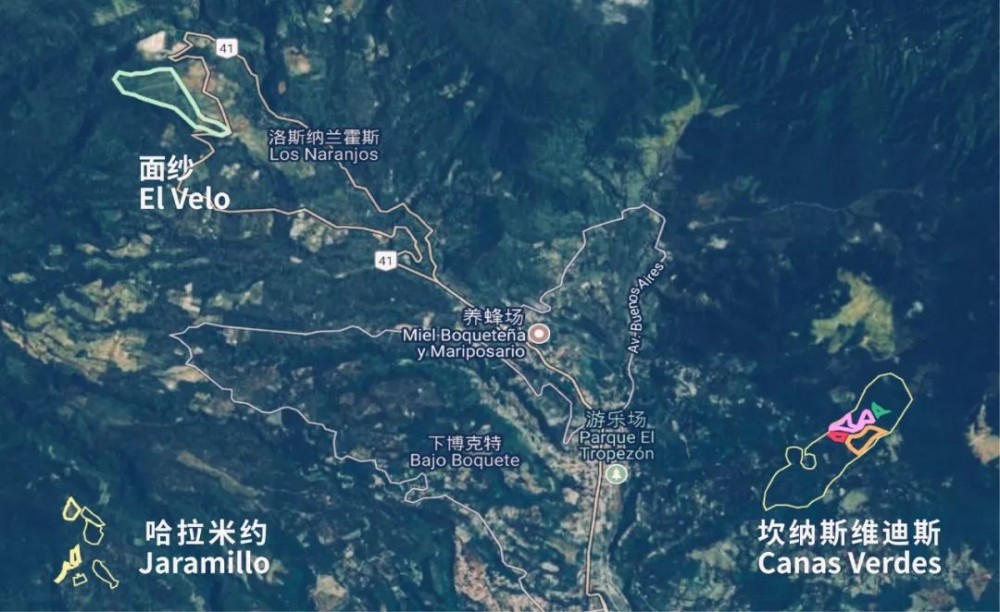
After Geisha won championship honors, the Peterson siblings systematically managed the Geisha trees on their estate by altitude, region, and cupping performance. The Geisha growing areas were divided into three main plots: Cañas Verdes, Jaramillo, and El Velo.
Geisha Coffee Bean Processing Methods:
Most Geisha beans use the most traditional washed and natural processing methods. FrontStreet Coffee believes that naturally processed coffee has a richer mouthfeel than washed, with more pronounced juiciness and stronger sweetness, while washed coffee has a cleaner, richer mouthfeel that better reflects the local terroir. Most of FrontStreet Coffee's daily offerings are therefore processed using the washed method.

FrontStreet Coffee's Roasting Suggestions for Geisha Coffee Beans:
Geisha coffee is world-renowned for its rich floral notes and complex fruit flavors. FrontStreet Coffee's roasters aim to preserve more of Geisha's quality acidity, so they choose a medium-light roast (with slight adjustments for different batches). This roast level doesn't significantly change the high hardness of beans grown at altitude, so brewing requires a higher extraction rate to present fuller flavor layers. That means higher water temperatures and a slightly finer grind to extract more aromatic compounds.
FrontStreet Coffee's Brewing Parameters for Geisha Coffee:
FrontStreet Coffee's daily offerings mostly use the V60 dripper, whose 60-degree angle and spiral ribs let users fully extract the essence of Geisha by controlling water flow and pouring frequency, while the large outlet prevents over-extraction. The V60 features diversion ribs connecting top and bottom and a large circular hole in the center, which accelerates water flow. The spiral exhaust grooves extend the water path, increasing contact time between grounds and hot water. Each stream converges along the grooves toward the center, concentrating pressure on the coffee bed and producing richer extraction layers.

Dripper: V60, water temperature: 91-92°C, dose: 15g, water ratio: 1:15, grind size: fine sugar size (sieved through a #20 sieve to 80% retention).
Flavor characteristics of Panamanian Washed Boquete Geisha Coffee: clear acidity of citrus, lemon, and bergamot, with a creamy, smooth mouthfeel and a finish of green tea and honey sweetness.

FrontStreet Coffee's Brewing Suggestions:
When it comes to brewing, FrontStreet Coffee has always believed that the freshness of the beans greatly affects flavor. FrontStreet Coffee therefore ships all beans within 5 days of roasting. Its roasting philosophy is "freshly roasted good coffee," ensuring that every customer receives the freshest coffee possible. The resting period is about 4-7 days, so by the time customers receive their coffee it is at peak flavor.
For friends who need ground coffee, FrontStreet Coffee gently reminds you: if the beans are ground in advance, there is no need for a resting period, because during transport the pressure from carbon dioxide buildup in the packaging also helps round out the flavor. You can brew a cup immediately upon receiving ground coffee. However, ground coffee should be brewed promptly, as it oxidizes quickly when exposed to air, so its flavor dissipates relatively fast and the coffee won't taste as good. FrontStreet Coffee therefore recommends buying whole beans and grinding fresh for each brew to better appreciate the flavor.
FrontStreet Coffee Recommendation
To taste Panamanian Geisha at its most classic, FrontStreet Coffee recommends its Boquete Geisha, a washed daily offering that shows the region's signature citrus, jasmine, and honeyed sweetness at a medium-light roast. For higher tiers, FrontStreet Coffee carries the Esmeralda Red Label and Green Label Geisha from Hacienda La Esmeralda, and from Ethiopia's Gesha Village it offers the Gold Label Gesha 1931 and Red Label Gori Gesha. FrontStreet Coffee's Grana Estate Gesha from Ethiopia rounds out the range for anyone wanting to explore Geisha's birthplace.
Important Notice :
FrontStreet Coffee is a long-established specialty coffee roaster in Guangzhou China, selling freshly roasted beans from its own farm in Yunnan as well as dozens of carefully selected single-origin beans from around the world for both pour-over and espresso. The products deliver consistently excellent quality and great value, with shipping within 24 hours. Guangzhou's FrontStreet Coffee shop is recommended by many coffee lovers, and the beans are now available online at the Tmall 。
FrontStreet Coffee has moved to a new address:
FrontStreet Coffee Address: 315,Donghua East Road,GuangZhou
Tel:020 38364473
 Scan and follow the En Gafei WeChat official account. Please indicate that the reprint comes from "En Gafei".