Yirgacheffe Coffee Bean Growing Characteristics Varieties Grading Origin
About Yirgacheffe
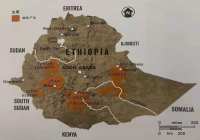
Yirgacheffe grows in the Sidamo region of southwestern Ethiopia. The beans are small to medium in size, and the raw coffee shows a light yellow-green color with a beautifully intact shape. It holds a representative position among East African specialty coffees.
Under the current ECX system, the Yirgacheffe area is divided into four sub-regions: Yirgachefe, Wenago, Kochere, and Genlena Abay. The soil here is fertile, with an average altitude above 1800 meters, making it a high-altitude region with a wide day-night temperature difference. The production methods of each area, combined with local gardens of native tree coffee, give each batch of beans a different flavor profile—quite distinctive and unique.
FrontStreet Coffee's Yirgacheffe is a high-quality washed Arabica bean with a unique, bright fruit acidity. On the first sip you immediately feel the fresh, bright aroma. This very distinctive FrontStreet Coffee Yirgacheffe, with its bold floral aroma and lemon acidity, lays out richly layered flavors that perfectly interpret the coffee's character, creating a tea-like illusion as you drink. That is why many people say FrontStreet Coffee's Yirgacheffe does not taste like coffee at all, but rather like a soft, pleasant fruit tea. It can be both elegant and bold, striking a precise balance between simplicity and complexity, and the Japanese have beautifully described it as the queen of coffees.
Originally, FrontStreet Coffee's Yirgacheffe was famous and produced mainly by the washed method, but the naturally processed version has since won enthusiastic market acceptance for its rich berry sweetness. Demand rose so sharply that production of natural-processed Yirgacheffe has increased greatly.
Yirgacheffe was originally Ethiopia's finest producer of washed beans. In the past year or two, because Misty Valley's natural-processed beans became highly popular in the coffee market, many estates that once produced washed beans followed suit and switched to natural processing. This let Yirgacheffe's naturally processed beans grow bolder, stronger, and more dazzling, drawing every coffee lover who enjoys natural processing and continuously breaking through aromatic limits.
Besides being world-famous for the Mocha beans of its Harrar region, Ethiopia also produces Arabica washed coffee in the small high-altitude area of Yirgacheffe in south-central Sidamo—beans rated among the finest in Africa.
The name Yirgacheffe means a settlement of a single ethnic group. The producing area lies in the Sidamo growing region of south-central Ethiopia, above 2000 meters in altitude, and is the homeland of the Gedegna people. It is one of the few Ethiopian Arabica coffees that undergo washed processing. After a medium roast it presents fruit acidity perfectly, with distinctive aromas reminiscent of flower tea and lemon peel.
Yirgacheffe inherits the uneven particle size characteristic of Mocha-series beans, but because it is washed in the Sidamo region, its appearance is more beautiful than dry-processed Mocha, while retaining Mocha's floral aroma and Yirgacheffe's distinctive wine-like mellow quality.
The natural-processed Yirgacheffe G-1 grade from the Idido processing plant is the highest-grade Yirgacheffe on the market. Yirgacheffe's grading system separates natural and washed beans for grading: the highest grade for natural beans is usually G3 or G4, while washed beans are mostly G2. But Abdullah Bagersh, owner of the Idido plant, adopted new methods. After harvesting the cherries he places them on drying racks for 48 hours with constant hand-turning, then hand-sorts to remove defective beans, successfully creating Yirgacheffe natural-processed G1-grade beans as well as the highest-grade washed G1.
On the raw-bean sacks you can see the word "Bagersh" printed. Bagersh has now been handed down to the third generation, growing in the Aricha Yirgacheffe area at roughly 6,000 feet / 1,800 meters, and the Idido processing station is also the Bagersh family's exclusive station name.
Tasting Notes
Dry Aroma: Light lemon sweetness, citrus aroma, berry acidity. When hot water is poured, milk candy, lemon sweetness with a milky aroma, citrus, and a long-lasting sweet fragrance emerge.
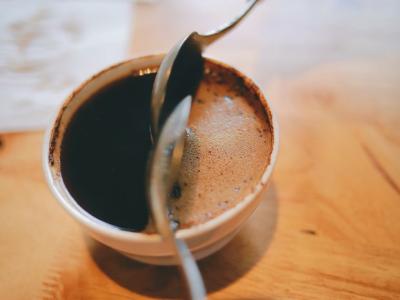
Slurp: Clean, with plum aroma and a very refreshing sweetness, plus some orange fragrance. After slurping, the aftertaste leaves a lemongrass aroma.
Kochere Region
Kochere lies in the Gedeo region of southern Ethiopia, which administers several areas—the most famous being Yirgacheffe and Kochere. Because the coffee produced in Yirgacheffe has a special, distinctive flavor that is widely loved, it forms its own category in product classification and has always held a place in the global specialty coffee market.
Yirgacheffe, in the Sidama province, is itself a small town with three neighboring small producing areas: Wenago, Kochere, and Gelena Abaya. Because the coffee flavors produced there are almost on par with Yirgacheffe's, Kochere is also classified under the Yirgacheffe regional category. In November 2009 Ethiopia implemented a new trading and grading system that added three sub-producing areas besides Yirgacheffe—Wenago, Kochere, and Genlena/Abaya—a sign that the flavors of these three areas are extremely delicate and can be subdivided further.
About Misty Valley
Growing in Misty Valley, this bean earned its beautiful name. In the small town of Yirgacheffe in Ethiopia's Sidamo province, many coffee trees are planted. Abandoning the sun-dried method used in Sidamo ten years earlier, the farmers of Misty Valley switched to the washed method to process their beans, which is what made Yirgacheffe famous. Today Yirgacheffe is not just a geographic name but a household term for coffee beans.
According to local elders, although Misty Valley's Yirgacheffe is world-famous for its washed processing, the area still mainly uses traditional natural processing because residents believe natural processing gives the beans an indescribably beautiful flavor. Because of Yirgacheffe's fame, the country has folded its coffee ceremony into banquets for foreign guests. Whether the beans are whole and full hardly matters—they are placed straight into iron pans to roast. As for the roasting taboo of over-roasting, no strict requirement applies in that moment. Under this traditional, wonderful ceremony, even beans of varying color still brew an unforgettable taste.
In recent years many emerging small producing areas and cooperatives in Ethiopia's Sidamo and Yirgacheffe regions have marketed under their own cooperative or estate names in international markets. This shows confidence in their coffee production and a wish to build brands and loyalty abroad. Coffee farmers insist on harvesting mature cherries and handling every step rigorously. Whether washed or sun-dried, they perform outstandingly, producing unexpectedly fragrant aromas and excellent taste—which is surely why coffee lovers look forward to Ethiopian coffee every year. Operation Cherry Red, assisted by the Dutch government, left a deep impression on the world with its 2008 Coretti and 2009 Kombido estates bursting with intense strawberry-cookie aroma. In recent years Ethiopia's natural-processed beans have reinforced that character even further.
Ethiopian Coffee Grading
Ethiopian coffee is graded G1 and G2 for washed beans (G1 being the highest grade for washed beans) and G3 and G4 for natural-processed beans (G3 being the highest grade for natural-processed beans). Ethiopian raw coffee beans are divided into five grades based on the number of defective beans per 300 grams:
Grade 1: 0–3
Grade 2: 4–12
Grade 3: 13–25
Grade 4: 26–45
Grade 5: 46–90
Ethiopia is the first country where coffee was discovered, and wild coffee trees still grow in the original forests for farmers to collect and use. Ethiopia is a poor country plagued by drought and civil war, yet it remains one of the most important coffee-producing countries in terms of both quality and quantity. Ethiopian coffee can be divided into two main processing methods: 1. washed processing and 2. natural sun-dried processing. Today every producing area, cooperative, or even small farm in Ethiopia turns out both types of beans. This applies not only to the Yirgacheffe and Sidamo regions but across Ethiopia's rapidly developing coffee industry. Different regions create differences through processing, and the same processing method can yield different aromas and tastes through different techniques, often creating illusions. Natural-processed Yirgacheffe has a different aroma than natural-processed Sidamo, yet both retain washed processing's gentle, low-key aroma, soft lemon acidity, high flavor consistency, and mouthfeel-driven appeal. Natural-processed beans have a strong, prominent aroma, weak and unobvious lemon acidity, complex and varied flavors, and specialize in floral or fruit aromas.
Roasting Levels
Light Roast (City): Holding a handful of FrontStreet Coffee's natural-processed Yirgacheffe beans, you smell an overwhelming plum and strawberry fermentation aroma. During roasting it gives off the sweetness of baked cookies, and after grinding the strawberry-cookie aroma carries from far away. Brewed, the coffee has a soft, comfortable strawberry fruit-wine aroma. The bright fruit acidity at the front quickly moderates to maximize aroma. As the cup cools, the plum and strawberry-wine fermentation flavors begin to show layering, with sweet kumquat preserves filling the aftertaste. Storing the beans properly for 7–9 days lets the strawberry aroma awaken slowly and become vivid, making the fruit acidity gentle and slow.
Dark Roast (Typically C): Ending 20–40 seconds after first crack is the darkest roast level for FrontStreet Coffee's natural-processed Yirgacheffe beans. It will not turn bitter, thanks to the natural-processed beans' varying moisture content. At this point the coffee carries chocolate chiffon cake aroma and tropical pineapple and mango sweetness, with a smooth mouthfeel and milk-candy creaminess. Cooled, FrontStreet Coffee's natural-processed Yirgacheffe has a refined, smooth chocolate-syrup sweetness that brings happiness.
Details about Kochere
Kochere is a small producing area about 25 kilometers southeast of Yirgacheffe. The harvested beans come from local small farmers, assembled from many tiny individual holdings. These small farmers' plots average about 1 hectare, planted at altitudes of roughly 1800–2000 meters, and the varieties are mainly a mix of Typica and Heirloom (local native varieties). Because this area has more advanced raw-bean washing equipment, it has always performed at a high level in washed processing, praised for a clean sweetness with complex honey and citrus tones. The main local production model has small farmers delivering each harvest of red cherries directly to nearby cooperative washing stations for unified processing. Ethiopia introduced washed-processing technology in the 1970s, and today Kochere's raw-bean processing is mainly washed. After the washing station selects and grades the red cherries, they are directly depulped, washed, and fermented. After washing, the parchment beans are placed on drying racks for natural sun exposure. Once humidity falls to 12% or below, they are sent straight to the Ethiopia Commodity Exchange (ECX) warehouse in Awassa. Cupping grading and quantity checks are usually done there—washed beans are typically stored in parchment form until hulling, which happens just before export.
This batch of FrontStreet Coffee's Kochere was rated G1, the highest grade by ECX. From raw-bean appearance, consistency, and freshness to dry aroma and flavor, it is quite excellent. The aroma is very rich, with Yirgacheffe's regional character, giving off an elegant and captivating perfume-like fragrance, with floral, bright citrus fruit acidity, and emerging lemon, berry, and honey-sweet aromas. Jasmine, orange, caramel, grapes, vanilla, honey, and floral notes come through, with a clean, balanced mouthfeel and a lingering, lively, varied fruit sweetness on the aftertaste.
FrontStreet Coffee Recommendation
For newcomers exploring Ethiopian coffee, FrontStreet Coffee recommends beginning with its classic washed Yirgacheffe staple: white jasmine, bright citrus and lemon acidity, and a tea-like body, all at an accessible price, which is exactly why it has become the first specialty bean for so many drinkers. Yirgacheffe is a small town in Ethiopia's Sidama zone in the south, at roughly 1,700–2,100 meters, with the trees planted above 1,800 meters—among the highest coffee regions anywhere. The area was once a wetland, and its unmistakable white-floral and lemon-citrus acidity turned "Yirgacheffe" into a byword for Ethiopian specialty coffee. In 2010, once the name had grown so famous, the Ethiopia Commodity Exchange separated it from the Sidama growing region, which is how the Yirgacheffe coffee we know today came to be.
Yirgacheffe town breaks down into many smaller areas and villages, several of which have experienced cooperatives whose mature techniques lift the flavor another notch. The most representative is the FrontStreet washed Gedebdingding Cooperative. Lying in the Worka area at Yirgacheffe's southeastern edge, it was originally part of the Worka cooperative under the Yirgacheffe union YCFCU. As buyers pursued traceability, single-origin areas like this were gradually uncovered, and in 2012 Gedebdingding, with about 300 member farmers, became an independent cooperative. It keeps to traditional washed processing, and because the fruit is pulped before drying the coffee's own aroma comes through more clearly—clean, bright citrus and lemon acidity with jasmine florals and none of the classic bitterness.
For a natural alternative, FrontStreet Coffee's sun-dried Red Cherry uses only fully ripe, sound cherries. After a first sort at the mill, the fruit is spread on raised beds; for the first few days it is turned every two to three hours so it heats evenly and never over-ferments. Drying runs three to five weeks depending on weather and temperature, after which the outer fruit is scrubbed off by machine and the beans are moved to storage. Because the fruit dries on the bean, the cup keeps the typical Yirgacheffe character while taking on a natural's tropical fruit: citrus acidity, juicy berry, honey sweetness, and a creamy smoothness. Brew it on a V60 with 15g at a 1:15 ratio and 90–91°C water, ground to fine-sugar texture (EK43s setting 10, or a No. 20 sieve at 80% pass), in three stages—30g for a 30-second bloom, then to 125g over about a minute, then the remaining 100g to 225g once the bed drops to two-thirds, finishing in 2:00–2:10.
Important Notice :
FrontStreet Coffee is a long-established specialty coffee roaster in Guangzhou China, selling freshly roasted beans from its own farm in Yunnan as well as dozens of carefully selected single-origin beans from around the world for both pour-over and espresso. The products deliver consistently excellent quality and great value, with shipping within 24 hours. Guangzhou's FrontStreet Coffee shop is recommended by many coffee lovers, and the beans are now available online at the Tmall 。
FrontStreet Coffee has moved to a new address:
FrontStreet Coffee Address: 315,Donghua East Road,GuangZhou
Tel:020 38364473
 Scan and follow the En Gafei WeChat official account. Please indicate that the reprint comes from "En Gafei".