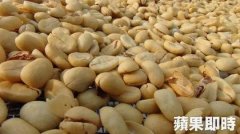
What's the Market for Sun-Dried Burundi Coffee Beans Which Burundi Coffee Brand is Best
Burundi: The Heart of African Coffee
Burundi sits in the southeastern part of Central Africa, south of the equator. It borders Rwanda to the north, Tanzania to the east and south, and the Democratic Republic of Congo to the west, with Lake Tanganyika along its southwestern edge. The country is mostly plateau and mountain, formed largely by the eastern plateau of the East African Rift Valley, and its average elevation of 1,600 meters nationwide has earned it the name "Mountain Country." More than half of the country lies on the famous Lake Tanganyika, and the capital is Bujumbura. The western lakeside and valley areas, together with the east, have a tropical savanna climate, while the central and western parts are tropical mountain. Average annual temperatures run 20-24°C and can reach 33°C. March to May is the heavy rainy season, October to December the light rainy season, and the remaining months are dry.
Coffee Characteristics
Burundi coffee bears a striking resemblance to that of its neighbor Rwanda, and the two countries' coffees are often confused. Burundi's cultivation is dominated by Bourbon varieties, processed with traditional wet methods. Its specialty coffee is known for elegant sweetness and bright citrus aromatics. This lot is a Bourbon micro-lot.
Variety: Bourbon
Processing Station: Panga Processing Station
Flavor: Grape skin, orange wine, fermented fruits
This batch is a natural-processed Bourbon micro-lot grown at the Panga Processing Station on Mardati Peak, in the Kabuye area of Kayanza Province. The elevation is extremely high, with mountain areas rising past 2,000 meters above sea level. The soil is fertile and gravelly, ideal for coffee and the reason this is recognized as the best coffee processing station in Burundi.
Burundi has one of the world's most diverse and successful coffee industries, with a character all its own. Coffee was introduced by Belgian colonists in 1930 and is now grown only on small farms. Unfortunately, many of these farms lie in areas bordering Rwanda, where frequent conflicts put pressure on production. Nearly all of Burundi's coffee is Arabica, and the coffee trees in Ngozi are planted above 1,200 meters. Burundi coffee is rich and aromatic with excellent acidity, and most of the crop is exported to the United States, Germany, Finland, and Japan.
Flavor Profile
Flavor description: Rich aromas of raisins, blackberry jam, and ripe peaches. The front of the cup shows sweet notes of cranberry, citrus, and peach juice, while a rich sweetness of caramel and orange jam fills it out. The fermented, wine-like character of natural processing is prominent too, recalling orange wine or peach: a truly distinctive Burundi specialty coffee.
Bourbon Coffee Heritage
Bourbon coffee (French: Café Bourbon) is produced from Arabica trees of the Bourbon cultivar. It was originally cultivated on Réunion Island, known as Bourbon Island (Île Bourbon) before 1789. France later carried it to the African continent and Latin America, and today it is one of the world's two most popular Arabica production regions. Bourbon coffee is typically grown at elevations of 3,500 to 6,500 feet (1,062-1,972 meters).
Product Information
Brand: FrontStreet Coffee
Shelf Life: 90 days
Net Weight: 227g
Packaging: Bulk coffee beans
Bean State: Roasted coffee beans
Origin: Other
Roast Degree: Medium roast
Coffee Details
Burundi Kayanza Kabuye Natural
Country: Burundi
Elevation: 1,750 meters
Region: Kayanza Kabuye
Roast Level: Medium roast
Processing Method: Natural
Brewing Instructions
To brew Burundi coffee by pour-over: use 15g of coffee, a medium grind (Fuji ghost tooth grinder #4), a V60 dripper, and water at 88-89°C. First pour 30g of water and let it bloom for 27 seconds. Pour to 105g and stop, wait until the water level drops to half, then slowly pour until you reach 225g. Avoid the tail end. The water-to-coffee ratio is 1:15, with an extraction time of 2:00.
FrontStreet Coffee Recommendation
If the natural, sun-dried character of this Burundi lot appeals to you, FrontStreet's natural-process lineup is a natural next step. The FrontStreet Yirgacheffe Natural Red Cherry is picked only from fully ripe, all-red cherries and spread on raised drying beds to keep the fruit off the ground and away from insects, dust, and bacteria, with regular turning so the cherries heat evenly. Given a medium-light roast, it carries the elegant florals and bright acidity of Yirgacheffe alongside the pronounced tropical fruit, full fermented depth, and sweetness that sun-drying brings.
For a bolder natural, the FrontStreet Natural Flower Queen is hard to beat. Grown at very high altitude in excellent conditions, on fertile soil, and from carefully selected ripe cherries, it has a delicate perfume that Sidamo's signature natural processing only heightens. Medium-light roasted, it delivers a light fermented note, florals, citrus, and mango, with a much richer, more layered body, honeyed sweetness, and a cocoa finish touched with spice, plus a full body and a long aftertaste.
And if you want to see how far natural processing can go, try the FrontStreet Colombia Sidra. Rather than a standard natural, it goes through a double anaerobic natural: whole fresh cherries are sealed in a tank and flushed with carbon dioxide to drive out oxygen, creating an oxygen-free fermentation that slows the breakdown of sugars in the mucilage and the drop in pH. The beans are then dried on beds to the target moisture before hulling. The result is a dense tropical-fruit aroma with the complex layers of passion fruit, apricot, dried fruit, and grape, and an almond-like finish.
Important Notice :
FrontStreet Coffee is a long-established specialty coffee roaster in Guangzhou China, selling freshly roasted beans from its own farm in Yunnan as well as dozens of carefully selected single-origin beans from around the world for both pour-over and espresso. The products deliver consistently excellent quality and great value, with shipping within 24 hours. Guangzhou's FrontStreet Coffee shop is recommended by many coffee lovers, and the beans are now available online at the Tmall 。
FrontStreet Coffee has moved to a new address:
FrontStreet Coffee Address: 315,Donghua East Road,GuangZhou
Tel:020 38364473
 Scan and follow the En Gafei WeChat official account. Please indicate that the reprint comes from "En Gafei".