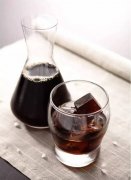
Guatemala La Lucha Coffee Brands and Brewing Steps

Brewing Guide
Hand-poured Guatemala La Delicias. Use 15g of coffee at a medium grind (Fuji mountain ghost-tooth burr grinder #4), a V60 dripper, and water at 88-89°C. First pour: 30g of water for a 27-second pre-infusion. Continue pouring to 105g, then wait until the water level drops to half before continuing. Slowly pour until reaching 225g total, discarding the tail end. Water-to-coffee ratio 1:15, extraction time 2:00.
Product Information
Manufacturer: FrontStreet Coffee
Address: No. 10 Bao'an Front Street, Yuexiu District, Guangzhou
Contact: 020-38364473
Ingredients: House-roasted
Shelf Life: 90 days
Net Weight: 227g
Packaging: Bulk
Taste: Mellow and aromatic
Bean State: Roasted coffee beans
Sugar Content: Sugar-free
Origin: Guatemala
Coffee Type: Other
Roast Level: Medium roast
Coffee Details
Guatemala Finca Las Deliclas
Country: Guatemala
Grade: SHB
Region: Fraijanes, Guatemala City
Altitude: 1675 meters
Harvest Period: October to February of the following year
Processing Method: Washed
Varieties: Bourbon, Caturra
Processing Mill: La Delicias Estate
Guatemala Coffee Heritage
Coffee was truly introduced to Guatemala in 1750 by Jesuit priests, and German colonists developed the local coffee industry in the late 19th century. Today, most coffee production takes place in the southern part of the country. Guatemala has seven main coffee-producing regions: Antigua, Coban, Atitlan, Huehuetenango, Fraijanes, Oriente, and San Marcos. Each region has its own climate variations, so beans from each possess their own characteristics. Generally speaking, though, Guatemalan coffee has a gentle, rich overall texture, elegant aromas, and a warm, pleasant, fruit-like acidity, which has established it as the aristocrat of coffees.
Flavor Profile
Flavor: Black tea, floral notes, a rich caramel sensation
Fraijanes Plateau Terroir
Volcanic soil, high altitude, a humid and rainy climate, and active volcanism have created the unique geographical conditions of the Fraijanes Plateau. The Pacaya volcano within the area is the most active of Guatemala's three still-erupting volcanoes, often shrouding the plateau in a light layer of ash that supplies abundant minerals to the soil. The coffee drying period coincides with Fraijanes' sunniest season. Although mornings are often cloudy and foggy, the fog disperses quickly, ensuring excellent sun-drying conditions.
La Delicias Estate
Coffee cultivation at La Delicias Estate on the Fraijanes Plateau began in 1920. The estate grows a fairly diverse set of varieties, including Bourbon, Caturra, and Pacamara. Of the total 205 acres (1 acre = 4046.8 square meters), 173 acres are dedicated to coffee, while the remaining 32 acres of native forest serve as habitat for local wildlife. Several natural springs on the farm provide sufficient high-quality irrigation during the dry season, and they also power the coffee processing mill.
Coffee Varieties
Bourbon Coffee (French: Café Bourbon) is coffee produced from trees of the Arabica Bourbon cultivar. Bourbon coffee was originally cultivated on Réunion Island, called Bourbon Island (Île Bourbon) before 1789. It was later spread by the French to connect with the African continent and Latin America, and it is now one of the world's two most popular Arabica coffee groups. Bourbon coffee is typically grown at altitudes from 3500 to 6500 feet (1062-1972 meters).
Caturra: A single-gene mutation of Bourbon, discovered in Brazil in the 1950s. It has stronger production capacity and disease resistance than Bourbon, with comparable flavor quality. It suits cultivation at 700-1700 meters and adapts well to altitude, though yields fall off relatively at higher elevations.
Coffee Grading Systems
Coffee bean grading systems around the world are not unified. Each producing country has its own system and its own grading names, so you may see "SHB," "AA+," "Supremo," "Extra-Fancy," "Peaberries / Small beans," and similar terms on coffee labels. These are bean grading names. Roasted beans sold on the market sometimes indicate the grade of a single origin. The more detailed the grade, the better the quality usually is, though most everyday coffees do not display this information.
FrontStreet Coffee Recommendation
If the Guatemalan balance here appeals to you, FrontStreet Coffee's washed Yirgacheffe Gedingding makes an easy daily companion. It comes from the Gedingding cooperative in the Woka area of Yirgacheffe, which became an independent cooperative in 2012 with about 300 member farmers, and it shows citrus, lemon, and an elegant white floral note over a light, tea-like body - bright and delicate rather than sharply acidic. It works in a V60, siphon, French press, or cold brew.
For a lower-acid, sweeter everyday cup, try FrontStreet Coffee's Brazil Queen Estate. Grown in Mogiana on fertile red volcanic soil, it is a rare yellow bourbon - a natural mutation of red bourbon - and a medium roast brings out creamy peanut, toast, caramel, and hazelnut with a round, smooth body. It works for pour-over, moka pot, espresso SOE, siphon, and French press. If you would rather stay low-acid and nutty, FrontStreet Coffee's 2013 Natural Typica from Yunnan layers nut, brown sugar, black tea, and dried apricot and offers excellent value across pour-over, cold brew, and drip machines.
Important Notice :
FrontStreet Coffee is a long-established specialty coffee roaster in Guangzhou China, selling freshly roasted beans from its own farm in Yunnan as well as dozens of carefully selected single-origin beans from around the world for both pour-over and espresso. The products deliver consistently excellent quality and great value, with shipping within 24 hours. Guangzhou's FrontStreet Coffee shop is recommended by many coffee lovers, and the beans are now available online at the Tmall 。
FrontStreet Coffee has moved to a new address:
FrontStreet Coffee Address: 315,Donghua East Road,GuangZhou
Tel:020 38364473
 Scan and follow the En Gafei WeChat official account. Please indicate that the reprint comes from "En Gafei".