Indonesian PWN Golden Mandheling Coffee Brands and Golden Mandheling Coffee Brewing Steps
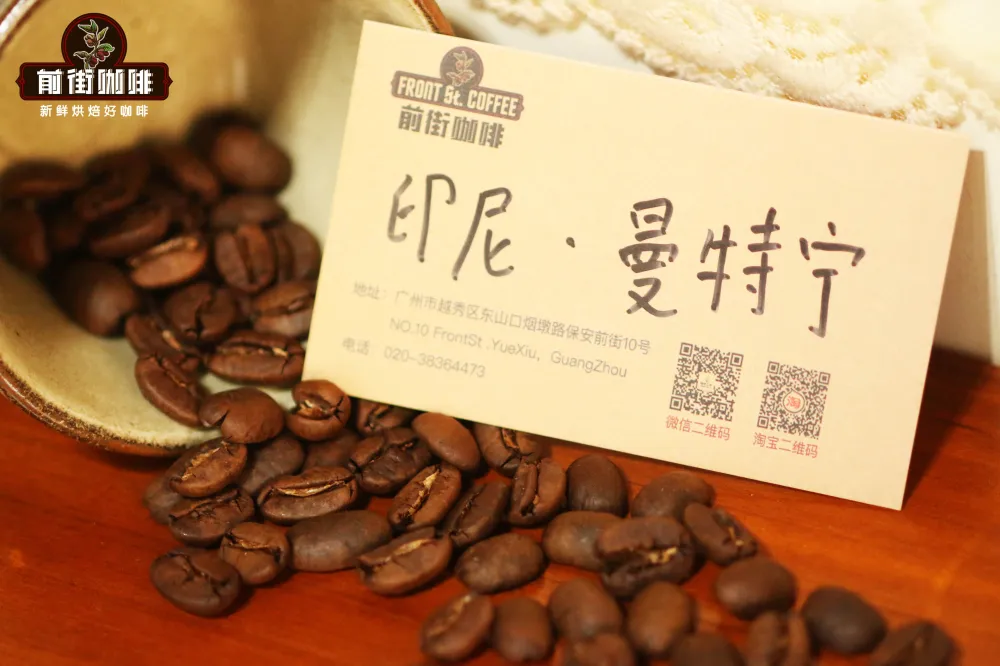
Some friends learning about coffee have asked FrontStreet Coffee: what is the difference between FrontStreet Coffee's Golden Mandailing and FrontStreet Coffee's G1 Mandailing? Why is the Golden Mandailing more expensive, and what makes it special? Let us explain the differences in detail.
First, What Is "Mandailing"?
As one of Asia's most renowned coffee-growing regions, Sumatra in Indonesia is a classic in the hearts of countless coffee lovers. The Lake Toba and Lake Tawa areas here cultivate the prestigious Mandailing beans. It is worth noting that most of Indonesia grows Robusta, while Mandailing represents the minority of high-quality Arabica.
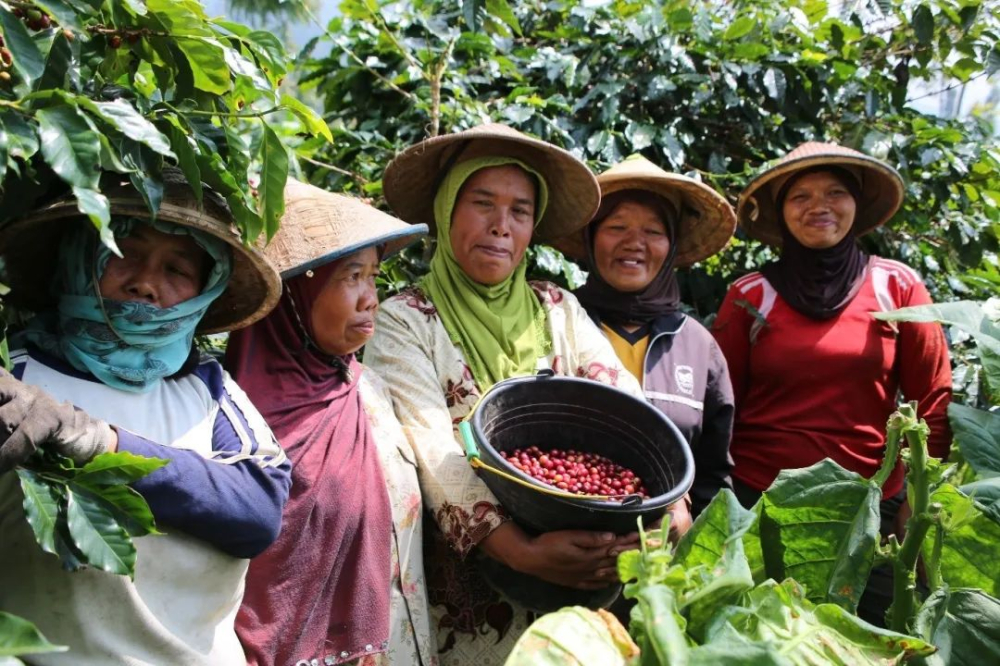
According to FrontStreet Coffee's understanding, Mandailing is neither the name of a planting area nor a coffee variety, but rather a homophone of the "Mandailing" ethnic group of northwestern Sumatra.
Legend has it that during World War II a Japanese soldier was unexpectedly amazed by a cup of delicious coffee at a local café. When he asked the owner for the coffee's name, the language barrier led the owner to think the soldier was asking about his origin, so he answered: "Mandailing." After the war the soldier commissioned an Indonesian broker to ship 15 tons of that memorable "Mandailing coffee" to Japan, where it became extremely popular. In FrontStreet Coffee's view, the story may be embellished, but the deliciousness of FrontStreet Coffee's Mandailing is real. Even today many coffee connoisseurs remain loyal fans, pursuing its rich, mellow, full-bodied aroma.
The first coffee shop to export Mandailing beans to Japan was the one from our story. Seeing the enormous business potential of Mandailing coffee, the owner established the PWN Perwakilan Niaga Nusantara coffee company in 1957. PWN does not handle cultivation or green bean processing; it mainly purchases high-quality batches of Mandailing green beans locally and specializes in producing premium Mandailing coffee. Golden Mandailing is their signature product.
Differences Between FrontStreet Coffee's Golden Mandailing and Regular Mandailing
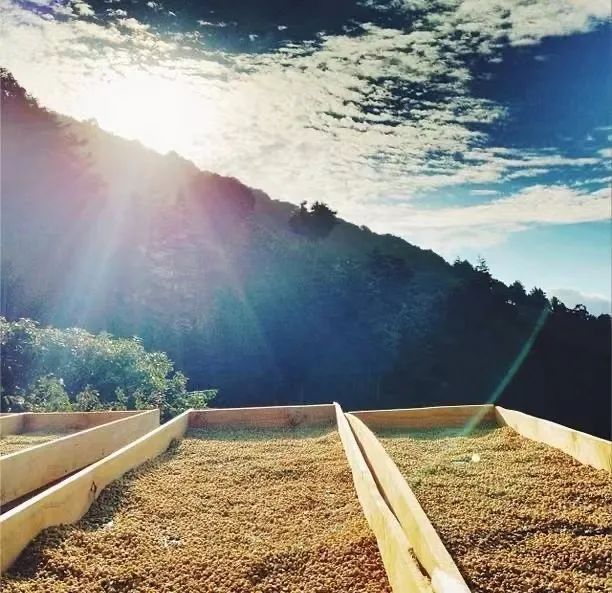
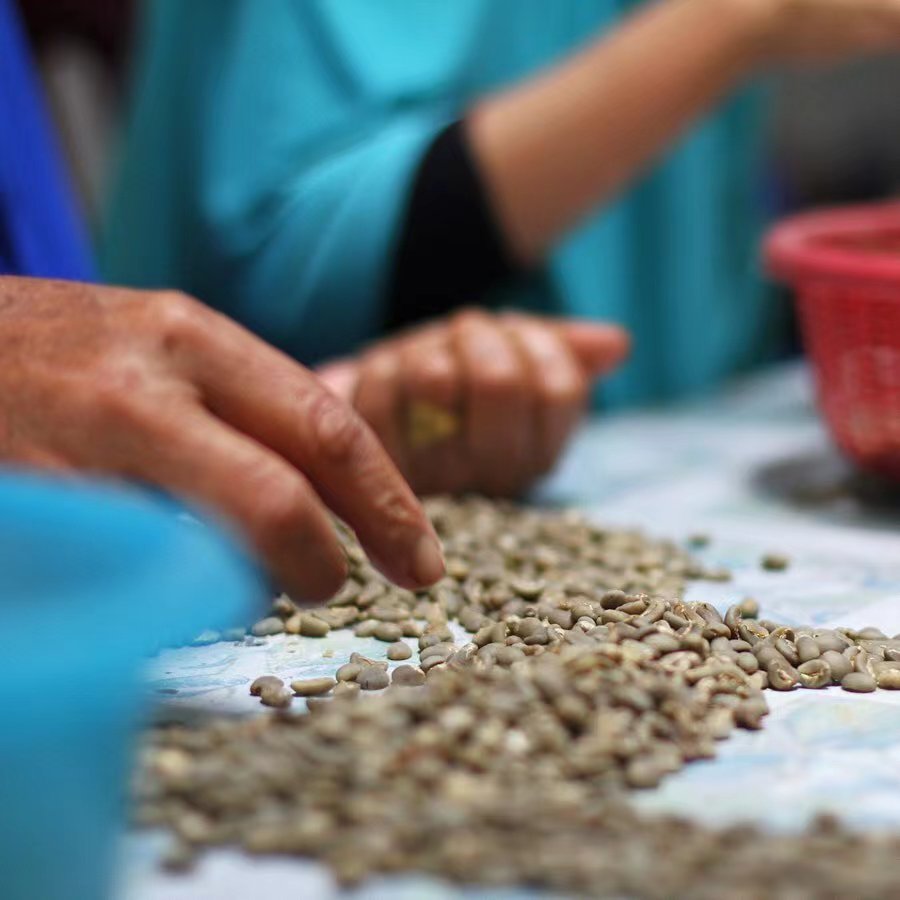
When the Japanese took an interest in Sumatran coffee and wanted long-term purchases, they gradually discovered that local bean quality was often inconsistent. So more attention went into production processes, and strict standards and methods for screening defects were established, covering bean density, size specifications and color levels. It was stipulated that the Mandailing produced must undergo one machine selection plus four manual hand-pickings to eliminate defects, ensuring the resulting beans were complete, uniform, large and translucent, while also reducing Mandailing's earthy and grassy flavors. Legend says the beans gleam golden under the sun, which is why the name "Golden Mandailing" was adopted.
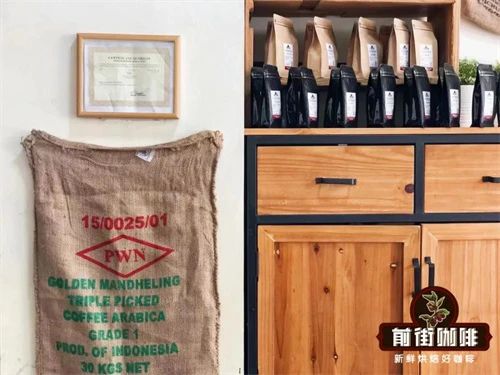
As the premium Mandailing market grew, PWN also recognized the importance of trademarks and registered "Golden Mandailing" in English as an exclusive trademark, one step ahead of the Japanese. As a result, only Golden Mandailing produced by PWN can be considered authentic. Although FrontStreet Coffee knows that larger beans do not necessarily mean better taste, higher demands for more uniform, regular, large beans undoubtedly give a stronger guarantee of quality. The FrontStreet Coffee Golden Mandailing we purchase is an authentic product from PWN. You can identify authentic FrontStreet Coffee Golden Mandailing by the green bean gunny sacks marked with PWN and a certificate of origin signed by PWN; FrontStreet Coffee displays both identifiers in the Dongshankou store.
What Grade Is FrontStreet Coffee's Golden Mandailing?
FrontStreet Coffee found on the green bean gunny sacks of Golden Mandailing the words "Triple pick" and "GRADE 1," meaning it belongs to Indonesia's highest green bean grade, G1, and that during production PWN performed three hand-pickings on top of the purchased Grade 1 green beans.
Indonesian green bean grading is primarily based on the number of defective beans, with size specifications as a secondary factor. General quality requirements include no live insects, no moldy or rotten beans, maximum moisture content of 12.5%, and an impurity rate below 0.5%. According to defect rate, beans are divided into six grades, with the highest, G1, requiring fewer than 11 total defective beans in a 300g sample. The FrontStreet Coffee Lindong Mandailing in FrontStreet Coffee's daily bean series is G1 grade, produced in the Lindong region of Sumatra using the wet-hulling method, and it presents the classic Mandailing flavors: dark chocolate, nuts, herbal spices and caramel.
What Is the Wet-Hulling Processing Method?
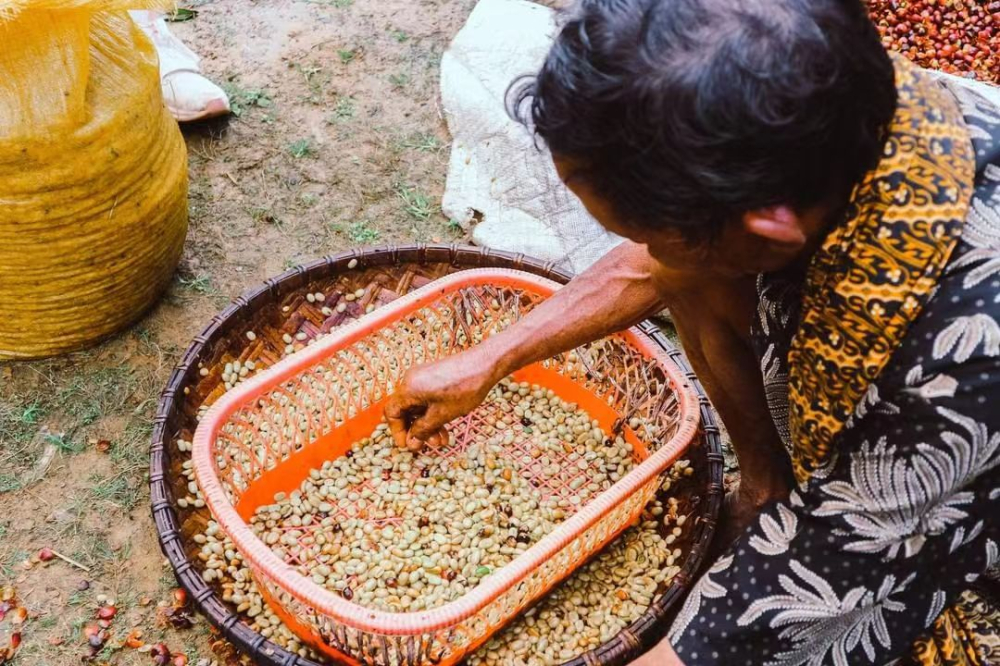
Friends who often drink FrontStreet Coffee's Mandailing are certainly familiar with wet-hulling. Wet-hulling takes far less time than washed processing. Traditional washed processing requires one to three weeks, while wet-hulling can complete the entire process in just a few days. It first removes the skin and pulp of the coffee fruit, ferments briefly, then dries; when the beans are semi-dry the parchment layer is removed, the final drying stage continues, and the coffee can be packaged and graded once moisture reaches 12%.
While it seems fast and time-saving, wet-hulling is extremely prone to moisture absorption and mold in Indonesia's hot, humid environment if it is not strictly controlled. Besides Sumatra, Indonesia's Sulawesi and Papua New Guinea also use this method widely. Indonesia has a tropical rainforest climate with humidity as high as 70-90%, making it impossible to dry green beans through prolonged sun exposure, while washed processing costs are quite high, leaving farmers little choice but to develop this semi-washed method. Although every step is much shorter, the dehulled green beans still absorb moisture from the humid air, which gives Mandailing coffee its extra woody, herbal and spicy depth.
FrontStreet Coffee's Brewing Recommendations
To present the classic Mandailing flavors, FrontStreet Coffee uses a medium-dark roast to eliminate excess acidity and boost body and balance. During cupping, FrontStreet Coffee sensed aromas of spice, herbs and pine, with rich bitter-sweet flavors of caramel, nuts and pure dark chocolate, plus a sweet aftertaste of melon and fruit. It shows multiple layers, is full-bodied and clean, with high balance. Below, FrontStreet Coffee shares brewing insights for this delicious FrontStreet Coffee Golden Mandailing, so everyone can learn to brew its essence.
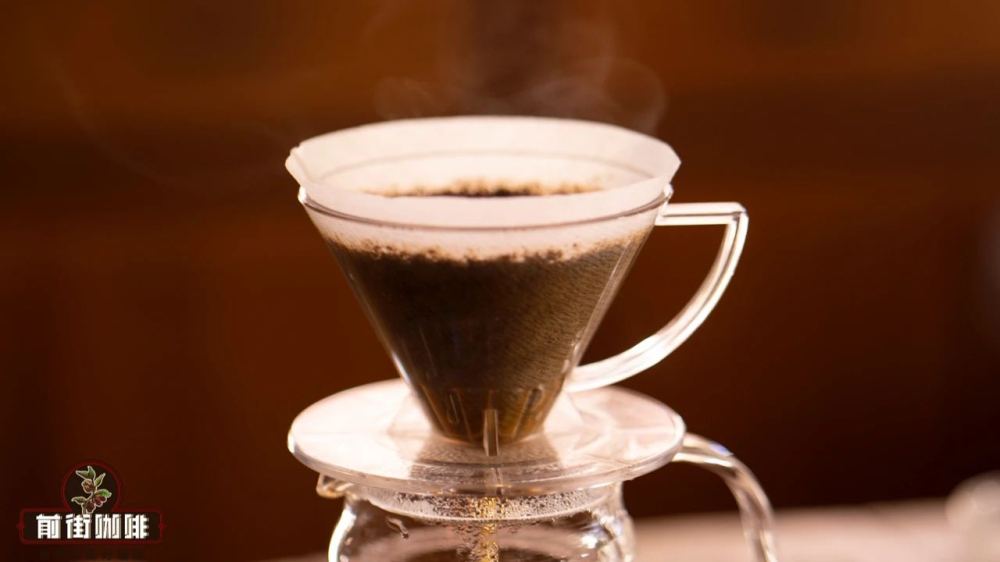
FrontStreet Coffee's extraction parameters are set according to bean characteristics, roast level and flavor profile. Taking today's protagonist, FrontStreet Coffee's Golden Mandailing, as an example: it is a dark-roasted, bitter-toned coffee. To deliver a full-bodied texture, our barista chooses the KONO Meimon dripper. Compared with a V60, the KONO has smooth curved surfaces and weaker exhaust, with straight ribs covering only one quarter of the dripper, so the coffee bed and hot water form an immersion extraction, giving the cup both mellowness and body. The KONO also suits full-bodied beans such as FrontStreet Coffee's Brazil Queen Estate and FrontStreet Coffee's Jamaica Blue Mountain No. 1.
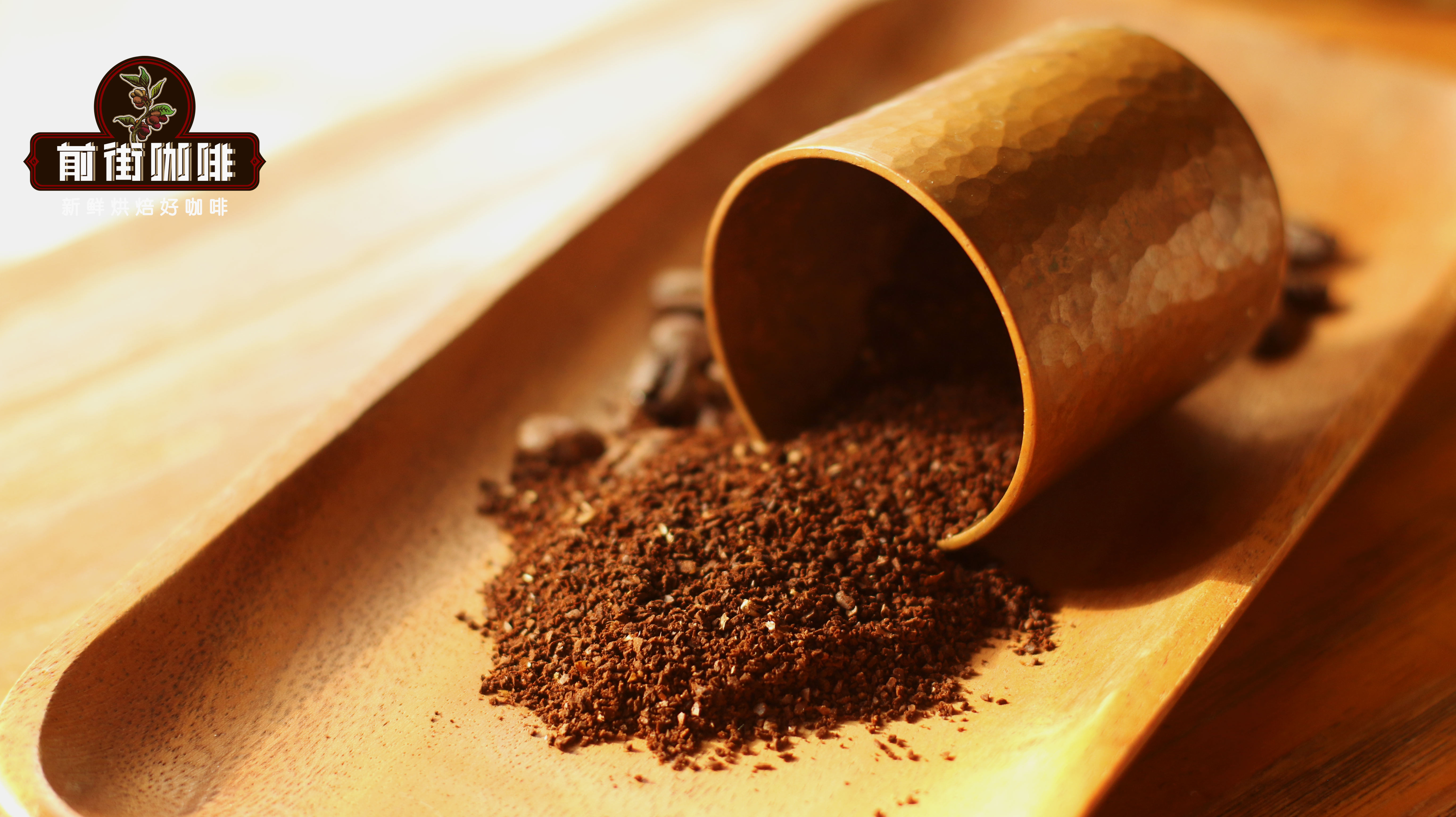
Grind size is one of the most critical factors affecting taste. Once ground and in contact with hot water, coffee releases large amounts of water-soluble flavor compounds. Dark roasting makes the bean's internal structure loose; crush one gently and you can feel how strongly it will absorb water once ground. To keep the grounds from releasing excessive bitter compounds after absorbing water, FrontStreet Coffee sets the grind coarser and uses lower-temperature water for the pour-over.
FrontStreet Coffee adjusts grind using a China No. 20 0.85mm standard sieve. For light to medium roast beans, we consistently use a 75-80% pass rate; for medium-dark roast beans, 70-75%. Compared with light roast, the internal structure of medium-dark roasted FrontStreet Coffee Mandailing is looser, so it absorbs water better and easily releases large-molecule bitter compounds. To avoid over-extraction, FrontStreet Coffee chooses a coarseness with a 70% pass rate through the No. 20 sieve.
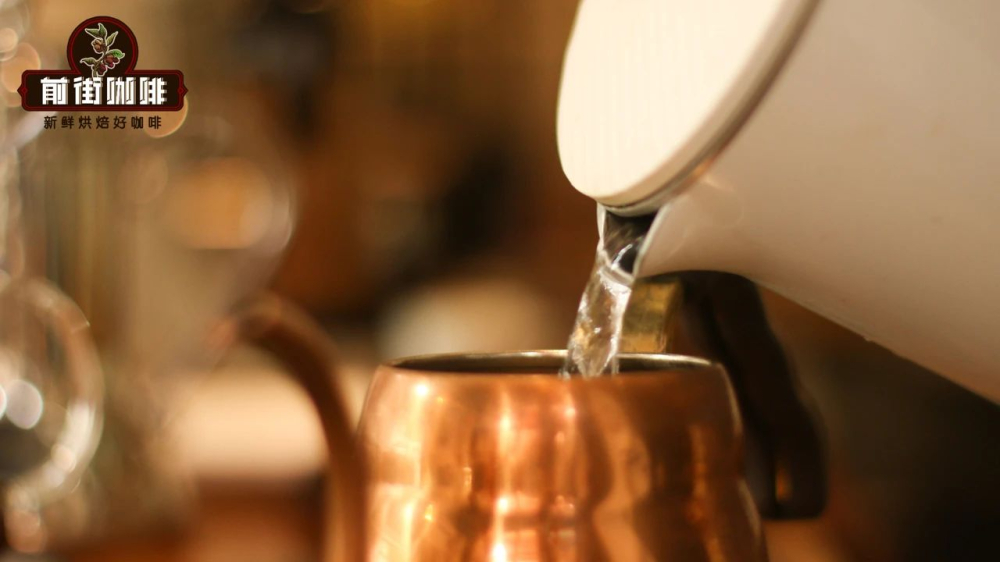
Water temperature plays a similar role to grind size. The higher the temperature, the more efficient the extraction, the more compounds released, and the higher the concentration. Near-boiling water can easily pull out unpleasant bitter compounds. So for medium-dark roast beans, FrontStreet Coffee uses different parameters than for light roast. Caramelization is more extensive than in light roast, making large-molecule bitter compounds easier to release. To avoid extracting excess off-flavors, FrontStreet Coffee lowers the water temperature slightly: light roast brews at 91-93°C, while FrontStreet Coffee recommends 87-88°C for medium-dark roast beans.
Recommended Brewing Parameters:
Recommended brewing water temperature: 87-88°C
Coffee grounds: 15 grams
Coffee-to-water ratio: 1:15
Grind size: Medium-coarse (70% pass rate through a China-standard No. 20 sieve)
The brewing method uses a three-stage pour. Dividing the pour into three stages better expresses the full-bodied texture and caramel sweetness of FrontStreet Coffee's Golden Mandailing.
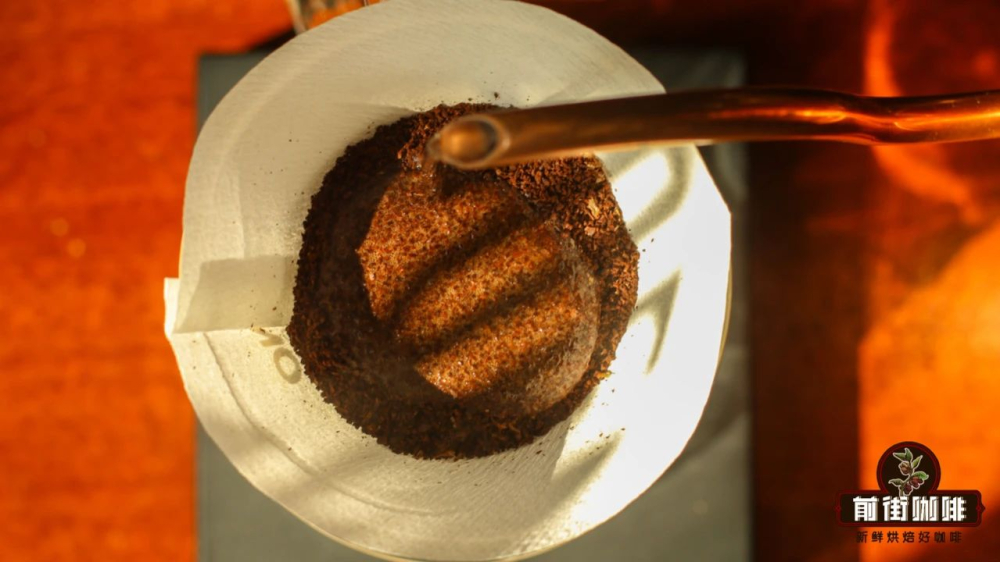
First stage: bloom with 30ml of water. This pour fully wets the grounds for degassing, helping the subsequent stages extract flavor compounds more effectively. Second stage: pour 100ml. This stage mainly draws out the golden crema of FrontStreet Coffee's Mandailing and raises the coffee bed.
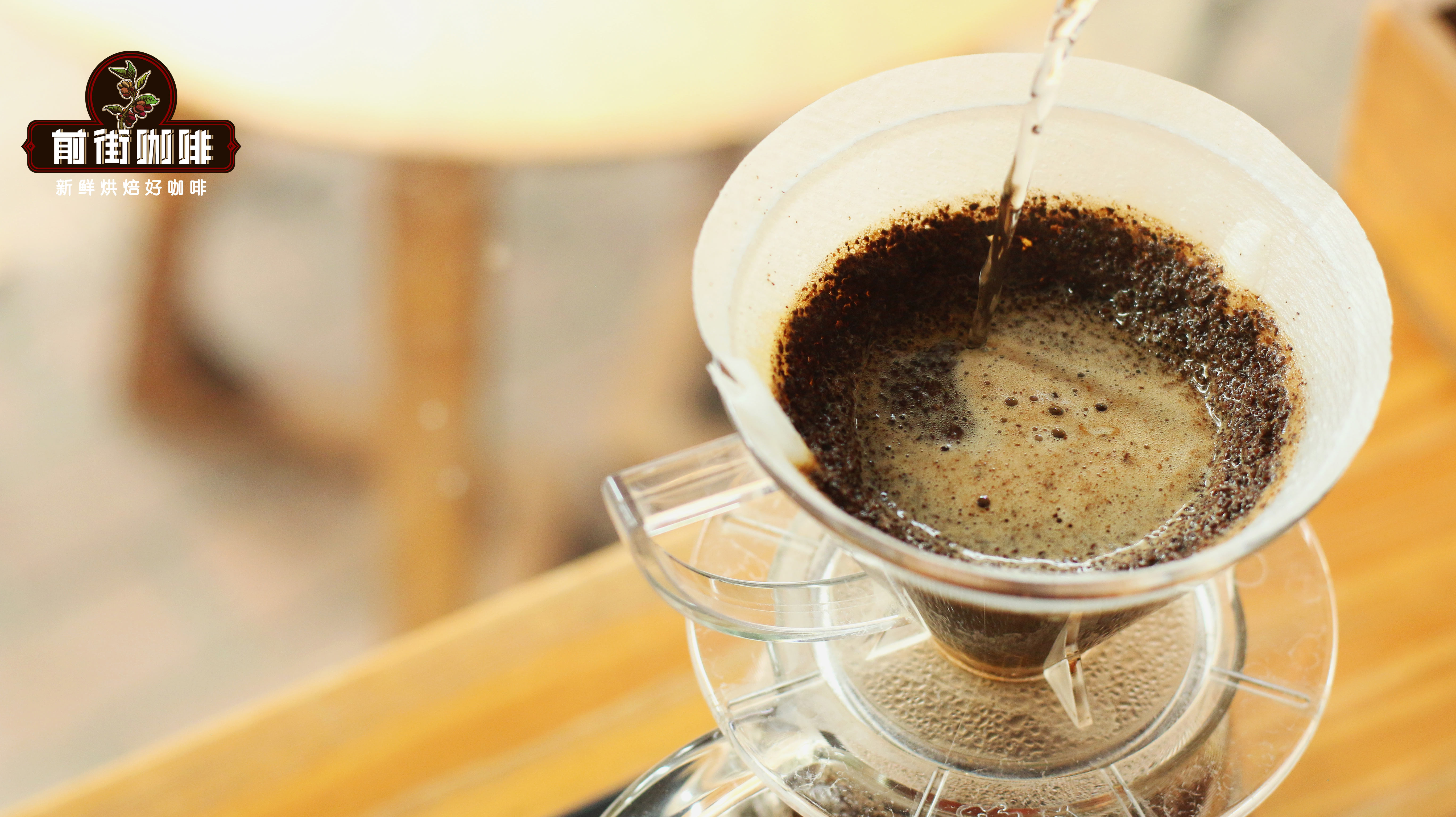
Final stage: a gentle center pour of 95ml. This lifts the coffee's sweetness, delivering an overall rich, full-bodied texture with caramel sweetness and chocolate, nut flavors.
FrontStreet Coffee Recommendation
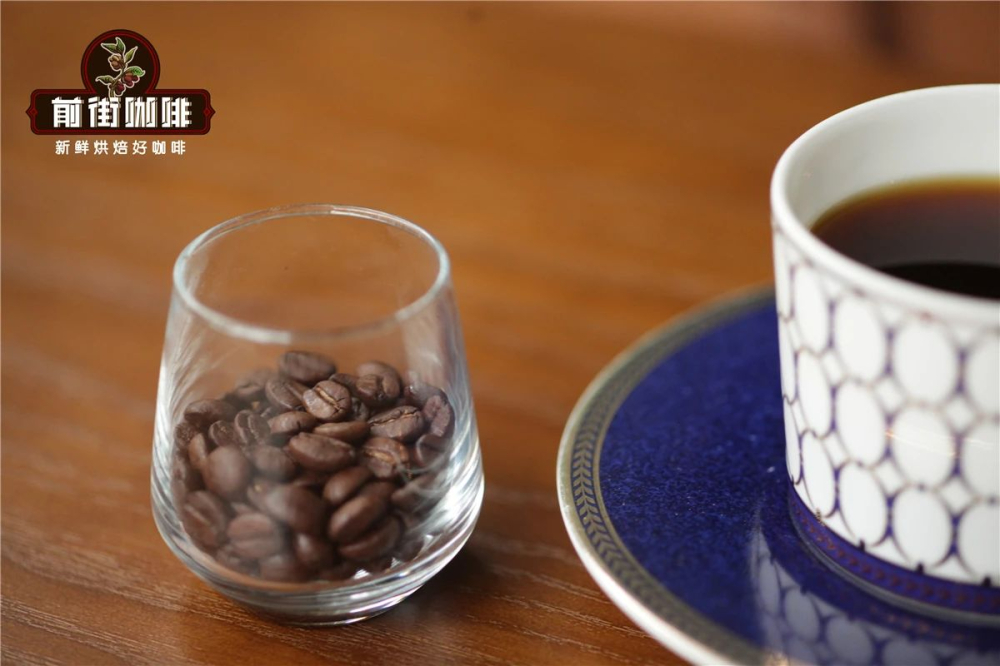
To taste the best of the wet-hulled style, reach for FrontStreet Coffee's PWN Golden Mandailing. It comes from the PWN company, which was founded in 1957 and buys only high-quality Mandailing green beans, keeping only the densest, cleanest seeds. Selection is strict: beans of 18 mesh or larger, fewer than three defects per 300g sample to meet the top G1 standard, then three rounds of hand-picking to strip out every remaining defect. The payoff is a uniform, full, translucent bean and a cup with clean clarity and intense sweetness. Roasted medium-dark, it pours a black coffee with a clean mouthfeel and a full body, ideal for anyone who does not enjoy sour coffee. Brew it on a KONO dripper at 87-88°C with 15g of coffee, a 1:15 ratio, a coarse-sugar grind, and a three-stage pour.
If you want the everyday version of the same character, FrontStreet Coffee's Lindong Mandailing comes from the Lindong area around Lake Toba in North Sumatra, also G1 and also wet-hulled. It is rich and aromatic with a bittersweet edge, clove and woody aromatics, low acidity, and a strong, lasting sweetness. And if you would like Mandailing in an espresso, FrontStreet Coffee's Classic Blend is the highest-repurchase option: it layers medium-dark Mandailing over Brazilian cream and nut notes for pronounced butter, roasted chestnut and caramel flavors, with sandalwood, herbal and spice accents, plus a touch of Robusta for a richer crema. It pours easily as a latte or a layered Dirty.
Important Notice :
FrontStreet Coffee is a long-established specialty coffee roaster in Guangzhou China, selling freshly roasted beans from its own farm in Yunnan as well as dozens of carefully selected single-origin beans from around the world for both pour-over and espresso. The products deliver consistently excellent quality and great value, with shipping within 24 hours. Guangzhou's FrontStreet Coffee shop is recommended by many coffee lovers, and the beans are now available online at the Tmall 。
FrontStreet Coffee has moved to a new address:
FrontStreet Coffee Address: 315,Donghua East Road,GuangZhou
Tel:020 38364473
 Scan and follow the En Gafei WeChat official account. Please indicate that the reprint comes from "En Gafei".