How is the West Java Coffee Bean Market? Which Brand is Best for West Java Coffee
West Java Honey Processing Aromanis
Country: Indonesia
Estate: Aromanis
Region: Mount Tangkuban Perahu
Roast Level: Light Roast
Processing Method: Honey Process
West Java Province is a first-level administrative region of Indonesia. It occupies the western part of Java Island, bordered by the Java Sea to the north and the Indian Ocean to the south, and includes offshore islands. Covering 46,300 square kilometers, the province has a tropical rainforest climate — hot and humid year-round. The northern coastal plains are the hottest, while mountain regions are much cooler, and the high humidity often makes the climate feel enervating.
From November to March of the following year comes the northwest monsoon, with rainy, cloudy weather; from April to October comes the southeast monsoon, with more sun and less rain. Jakarta's average annual rainfall is about 1,760 millimeters (69 inches), with an average daily maximum temperature of 30°C (86°F) and a minimum of 23°C (74°F). In the highland area of Tosari (elevation 1,735 meters [5,692 feet]), average temperatures range from 22-8°C (72-47°F). Because volcanic ash periodically fertilizes the land, Java's soil is extremely fertile.
"Aromanis" is a traditional Indonesian sweet snack made from flour and sugar. Here the name is borrowed for this coffee to signal its cotton-candy-like texture. The beans come from Ciwidey Garut in West Java, and no special coffee seed is used — it is the natural drying method that produces such distinctive flavors, though this style is not yet widely recognized within West Java itself.
Coffee Details
Region: Mount Tangkuban Perahu, Indonesia
Altitude: 1,400-1,600 meters
Roast Level: Light
Processing Method: Honey Process
Taste Description: Intense fruit aroma, with plum and jackfruit flavors, clean and sweet aftertaste.
Flavor Profile: Complex floral notes upon entry, tropical fruit flavors reminiscent of mango and jackfruit on the palate, rich and smooth mouthfeel, long-lasting aftertaste.
West Java Honey Processing
The Indonesian West Java Aromanis honey process scores as high as 92 points in cupping. The name Aromanis is Indonesian for "sweet mango."
At the estate, we experienced a completely different side of Indonesian coffee. Farmers used the simplest hot-water immersion method to brew coffee they had grown themselves.
Meticulous cultivation and processing let the coffee's flavor break free of the established Indonesian framework. Fruit sweetness, lemon fragrance, even floral notes were all prominently present across different varieties — truly subverting our perception of bitter, heavy Indonesian coffee.
Honey Processing Method
The honey processing method — called Honey Process or Miel Process — produces what is known as Honey Coffee. Coffee plantations in Costa Rica, Panama, and Guatemala have all adopted it. The idea is to dry green beans with their mucilage intact: after the outer pulp is removed, a layer of viscous, gelatinous substance remains on the bean. Traditional washed processing rinses it away with clean water, but where water is scarce at high altitude, this direct-drying method was born.
Honey processing is comparatively complex, time-consuming, and demanding. The first step is selecting quality fruit, then removing the pulp while keeping the parchment — the core of the method. The parchment is rich in sugars and acids, and during drying that sweetness and acidity slowly work their way into the bean. The second step is drying, which is the single most important condition for producing high-quality honey coffee.
Honey processing lets coffee keep the cleanliness of the washed method; brightness dips slightly, but sweetness and caramel flavors rise. By degree, honey-processed coffee is divided into yellow honey, red honey, and black honey. The method best preserves the original sweetness of ripe coffee fruit, presenting elegant brown sugar flavors and nutty sweetness, with berry notes underpinning a red-wine base aroma — widely considered a very refined style.
Varieties: Jember, S-795
Altitude: 1,400-1,600 meters
Flavor: Fruity aroma, plum, jackfruit flavors, sweet aftertaste
Indonesia West Java
Coffee beans are picked from the branches and separated from the fruit, then rinsed and immediately dried, turned every hour to ensure even drying — including at midnight. "It's during the night that this is very important due to high humidity," said Arif, a coffee transformer (August 5, 2014), translated from the original Indonesian.
The processing takes 25-26 days! It is little wonder that Aromanis beans cost slightly more than ordinary ones. The Coffee Farmers Cooperative sells Aromanis green beans for 130,000-150,000 rupiah per kilogram, while Transformer Coffee retails them at 80,000 rupiah per 200-gram pack.
Brewing Instructions
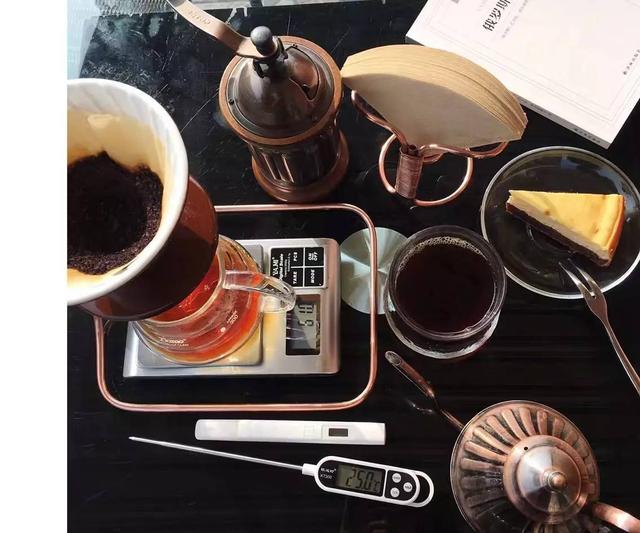
Pour-over West Java: 15g of coffee, medium grind (Fuji mountain ghost tooth grinder #4), V60 dripper, 88-89°C water. First pour 30g of water for a 27-second bloom, then pour to 105g and pause. Wait until the water level drops to half, then continue pouring slowly until 225g. Avoid the tail section. Water-to-coffee ratio 1:15, extraction time 2:00.
FrontStreet Coffee Recommendation
Indonesia's best growing regions across the archipelago are Java, Sumatra, and Sulawesi — three islands behind three signature coffees. FrontStreet Mandheling, from Sumatra, is moderately acidic with an intensely heavy aroma; Java coffee is an arabica; and Sulawesi coffee has full, plump beans with a rich fragrance, though about 90% of its output is robusta.
When Indonesian coffee comes up, start with FrontStreet Mandheling. Mandheling refers to arabica from Sumatra, processed mainly with the local wet-hulled method: because the parchment is stripped while the beans are still half-dry, half-wet, the green beans dry fully exposed to the air, giving the coffee its characteristic herbal and spice notes. FrontStreet's Mandheling comes from the Lake Toba area of the Lintong region and takes a medium-dark roast to show its classic profile — low-acid and full-bodied, with caramel, dark chocolate, and toast, and a long, sweet finish. Bold-coffee drinkers, this one is for you.
For top-shelf Indonesian coffee, the pick is FrontStreet PWN Golden Mandheling. PWN is a trading company that buys premium local Mandheling lots and sells only specialty-grade beans, with "Golden Mandheling" as its flagship. Defect screening covers density, size, shape, and color, with machine sorting plus hand sorting to ensure whole, even, large, translucent beans — and fewer earthy, grassy notes. Legend says the name comes from the golden gleam the beans show in sunlight. Freshly roasted, it reveals sandalwood, herbal, spice, roasted hazelnut, caramel, and dark chocolate flavors — clean, mellow, and layered.
Important Notice :
FrontStreet Coffee is a long-established specialty coffee roaster in Guangzhou China, selling freshly roasted beans from its own farm in Yunnan as well as dozens of carefully selected single-origin beans from around the world for both pour-over and espresso. The products deliver consistently excellent quality and great value, with shipping within 24 hours. Guangzhou's FrontStreet Coffee shop is recommended by many coffee lovers, and the beans are now available online at the Tmall 。
FrontStreet Coffee has moved to a new address:
FrontStreet Coffee Address: 315,Donghua East Road,GuangZhou
Tel:020 38364473
 Scan and follow the En Gafei WeChat official account. Please indicate that the reprint comes from "En Gafei".