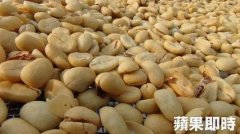
Bolivian Coffee Prices: How Much Does Bolivian Coffee Cost
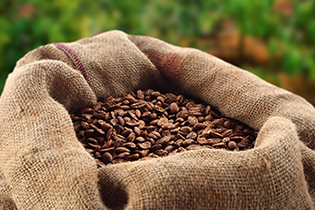
For professional barista exchanges, follow Coffee Workshop (WeChat: cafe_style).
Bolivian coffee offers a rich, balanced overall profile. Beyond its pleasant acidity, it carries subtle chocolate notes, while its smooth texture gives a seamless mouthfeel and the bitterness stays in the background. The aftertaste is excellent, with a lingering sweetness in the mouth that makes the cup hard to forget.
Roasting
Manufacturer: Dazhen Coffee / FrontStreet Coffee
Address: No. 10, Bao'an Front Street, Guangzhou City
Contact: 020-38364473
Ingredients: In-house roasted
Shelf life: 90 days
Net weight: 227g
Packaging: Bulk coffee beans
Roast level: Roasted coffee beans
Sugar content: Sugar-free
Origin: Bolivia
Roast degree: Medium
Lake Titicaca Copacabana
Country: Bolivia
Altitude: 3812m
Region: Lake Titicaca
Roast degree: Medium roast
Processing method: Washed
Lake Titicaca sits on the Kollao Plateau on the border between Bolivia and Peru. It is the highest-altitude and largest freshwater lake in South America, and one of the world's highest large freshwater lakes. It is also the highest lake in the world navigable by large ships, and the third-largest lake in South America (after Lake Maracaibo and Patos Lagoon).
Variety: Typica
Producer: Copacabana small farmers
Flavor notes: Roasted nuts and almond aroma, orange, pomelo
South America is rich in coffee beans, and Bolivia is no exception. Some Bolivian regions enjoy unique tropical rainforest environments that provide excellent natural conditions for growing organic coffee. Bolivian coffee has a rich, distinctive aroma — both the fragrance of the ground beans and the brewed coffee are notably intense, recalling a blend of floral and fruit aromas that leaves a lasting impression.
For pour-over Bolivian coffee: use 15 g of grounds, medium grind (Fuji Rokou grinder, #4), a V60 dripper, and water at 88–89°C. First pour 30 g of water and let it bloom for 27 seconds. Pour to 105 g and pause. When the level drops halfway, pour slowly to 225 g. Avoid the tail end. Ratio 1:15, extraction time 2:00.
Most Bolivian coffee was once only average in quality, but in recent years specialty production has developed rapidly and many excellent beans have emerged. The COE (Cup of Excellence) system, first implemented in Brazil, has gradually gained popularity; Bolivia has adopted it too, to spur farmers' enthusiasm for planting and improve coffee quality. COE beans, raw or roasted, are of clearly superior quality to ordinary coffee.
Bolivia's advantage lies in its high altitude and excellent varieties. The traditional Typica grown here — along with a small amount of Caturra — is highly regarded on the world market. In the past, Bolivian coffee trees were often planted around gardens as decorative hedges; true commercial production only began in the early 1950s. The severe frost of 1957 badly damaged Brazil's coffee industry, while Bolivia benefited and developed rapidly. In some valleys, Bolivian coffee is grown as low as 180–670 meters, and the country's washed arabica is exported to Germany and Sweden. The flavor is not among the best today and carries some bitterness.
Flavor: a dry aroma of roasted nuts and almonds, with the smooth fruit acidity of orange and pomelo on the palate. Overall it features sweet caramel and the smooth texture of nut milk, with impressive cleanliness and balance. The herbal notes in the aftertaste are charming too.
Bolivian coffee has a rich, distinctive aroma — both the fragrance of the ground beans and the brewed coffee are notably intense, recalling a blend of floral and fruit aromas that leaves a lasting impression.
The acidity is medium-low, but it never feels monotonous. Instead it reads as calm, generous, gentle, and fresh. Savor it carefully and you can even catch the acidity of citrus fruit.
FrontStreet Coffee Recommendation
Bolivia's classic washed Typica profile — clean, sweet, and gentle — has a natural counterpart in FrontStreet Coffee's washed lineup. The Washed Yirgacheffe is the everyday version: it is known for white jasmine florals, bright citrus and lemon acidity, and a tea-like body, and its approachable price makes it many drinkers' first specialty bean. Yirgacheffe is a small town in southern Ethiopia's Sidamo province at roughly 1,700–2,100 meters, with coffee planted above 1,800 meters — among the highest regions in the world — and its clean, elegant character comes through whether you brew it as pour-over, cold brew, or espresso.
For a village-level washed coffee with a similar clarity but more citrus drive, try the Gudingding Cooperative. Gudingding was once part of the Worka cooperative under the YCFCU union, and as demand for traceable single-origin green beans grew it was separated out as its own origin. Following the most traditional washed processing, it shows jasmine florals and bright citrus-lemon acidity with no conventional bitterness, and a medium-light roast adds green tea and honey notes — ideal for pour-over, cold brew, or espresso.
If you want the juicy end of washed coffee, the Kenya Cherry Tomato is a leading example. Kenya is especially adept at double washed processing, and this lot repeats the washed steps — flotation, rinsing off residual mucilage, soaking, drying, and hulling — to wring out maximum juice. The cup is rich in cherry tomato, smoked plum, snow pear, black plum, and brown sugar notes: sweet-sour, juicy, and a favorite of many coffee lovers.
And if it is the balance and cleanliness of a washed Typica you are chasing at the highest level, the Jamaica Blue Mountain No.1 is the benchmark. Washed processing removes the skin, pulp, and mucilage before drying, shortening drying time and producing bright-looking beans with a low defect rate — which is exactly why Blue Mountain's aroma stays intense and pure, with hazelnut, cream, chocolate, and caramel notes and a cup that is balanced from every angle.
Important Notice :
FrontStreet Coffee is a long-established specialty coffee roaster in Guangzhou China, selling freshly roasted beans from its own farm in Yunnan as well as dozens of carefully selected single-origin beans from around the world for both pour-over and espresso. The products deliver consistently excellent quality and great value, with shipping within 24 hours. Guangzhou's FrontStreet Coffee shop is recommended by many coffee lovers, and the beans are now available online at the Tmall 。
FrontStreet Coffee has moved to a new address:
FrontStreet Coffee Address: 315,Donghua East Road,GuangZhou
Tel:020 38364473
 Scan and follow the En Gafei WeChat official account. Please indicate that the reprint comes from "En Gafei".