Flavor Characteristics, Origin, and Brewing Parameters for Ethiopian Washed Sidamo G1 Honey Microlot Coffee Beans
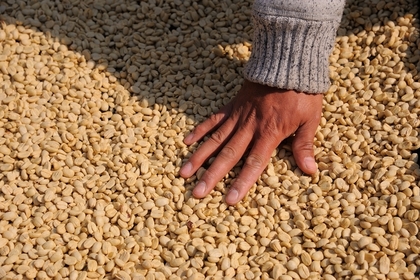
Ethiopian Coffee Bean Grading System
Ethiopian coffee beans use a defect-bean-ratio grading method, with Indonesian beans mainly divided into 6 grades, G1 to G6. Ethiopia also uses this method, where the highest grades for washed beans are G1 and G2, while the highest grades for natural-processed beans are G1 and G3.
Washed Process: Grade-1; Grade-2 (G1 > G2)
Natural Process: Grade-1 and Grade-3 to Grade-5 (G1 > G3 > G4 > G5)
Pour-over Brewing Parameters
Whisper of hand brewing. 15g coffee grounds, medium-fine grind (Fuji ghost-tooth burr grinder setting 3.5), V60 dripper, water temperature 91-93°C. First pour 30g water, bloom for 27 seconds, pour to 105g then pause, wait until the coffee bed water level drops to half before continuing, slowly pour until reaching 225g total, discard the tail end. Water-to-coffee ratio 1:15, extraction time 2:00.
Coffee Origin Information
Region: Oromia, Ethiopia
Variety: Ethiopian heirloom
Altitude: 2000m
Processing: Washed
Shelf Life: 90 days
Net Weight: 227g
Packaging: Bulk coffee beans
Roast Level: Raw coffee beans to roasted beans
Sugar Content: Sugar-free
Origin: Ethiopia
Roast Degree: Light roast
Ethiopian Coffee Cultivation
Ethiopia holds a wide range of coffee-growing methods, from vast wild coffee forests and semi-developed land to traditionally managed small plots and modern plantations. Roughly 50% of coffee is grown above 1,500 meters. Based on these four methods, Ethiopia can be divided into nine major coffee-producing regions, including five specialty coffee zones (Sidamo, Yirgacheffe, Harar, Limu, and Lekempti) and four general commercial-bean regions (Djimmah, Illubabor, Tepi, and Bebeka). Each region uses either natural or washed processing, and the method affects the flavor profile. Today natural processing accounts for about 80% and washed processing for about 20%.
Processing Method
This micro-lot coffee goes through the following process: the cherries are first hand-sorted for a 100% Red Cherry selection, then an Agared machine removes the skin and pulp. The beans with mucilage are fermented in tanks for 36 hours, followed by 4 hours of soaking. They are then dried on 30 x 1.8 meter drying beds before hulling. After manual sorting to reach G1 grade, they are packed in GrainPro bags inside an outer jute bag.
Oromia Region
The Oromia region is one of the world's coffee origins. The indigenous Oromo people here were among the first in the world to use coffee as food, dating back to the 5th century AD. Oromia lies roughly between 3-15°N latitude and 33-40°E longitude. The region is world-famous for its primitive plant species and biodiversity. This is where coffee was born. For the local Oromo people, coffee is not only a beverage but also food, an important part of trade, their "stimulant," and an important tool for maintaining peace.
Flavor Profile
Distinct wild ginger and bergamot notes with hints of blackcurrant. The finish has the sweetness of raisins, and the overall flavor profile is reminiscent of Earl Grey tea.
FrontStreet Coffee Recommendation
To taste that clean, floral, bergamot-and-Earl-Grey side of Ethiopia, FrontStreet Coffee's washed Yirgacheffe is the classic starting point. It brings clear jasmine florals and bright citrus acidity over a light, tea-like body, like a crisp lemon tea, and its price makes it easy to drink often.
For something closer to the wild, forest-grown side of Ethiopia, FrontStreet Coffee's Kafa Forest coffee is grown between 1400 and 2100 meters in a shaded, original red-soil rainforest, given a medium-light roast. Ground, it shows clear white florals; in the cup it delivers bright lemon acidity with sweet orange and bergamot, a light melon-and-nut sweetness on the finish, and a green-tea-like body.
For a fruitier counterpart from the same Sidamo world, try FrontStreet Coffee's Hamesha (Hamasho) natural. Its coffee is built mainly on the JARC 74-series disease-resistant varieties, with the 74158 lot showing especially small beans and striking floral and fruity aromas: inviting scents of perfume lemon, strawberry, and star fruit, then clear strawberry, star fruit, and green grape sweetness, with a light floral note rising behind.
Important Notice :
FrontStreet Coffee is a long-established specialty coffee roaster in Guangzhou China, selling freshly roasted beans from its own farm in Yunnan as well as dozens of carefully selected single-origin beans from around the world for both pour-over and espresso. The products deliver consistently excellent quality and great value, with shipping within 24 hours. Guangzhou's FrontStreet Coffee shop is recommended by many coffee lovers, and the beans are now available online at the Tmall 。
FrontStreet Coffee has moved to a new address:
FrontStreet Coffee Address: 315,Donghua East Road,GuangZhou
Tel:020 38364473
 Scan and follow the En Gafei WeChat official account. Please indicate that the reprint comes from "En Gafei".