Colombia Santa Rita Washed Specialty Coffee Beans: Differences, Distinctions, and Award Recognition
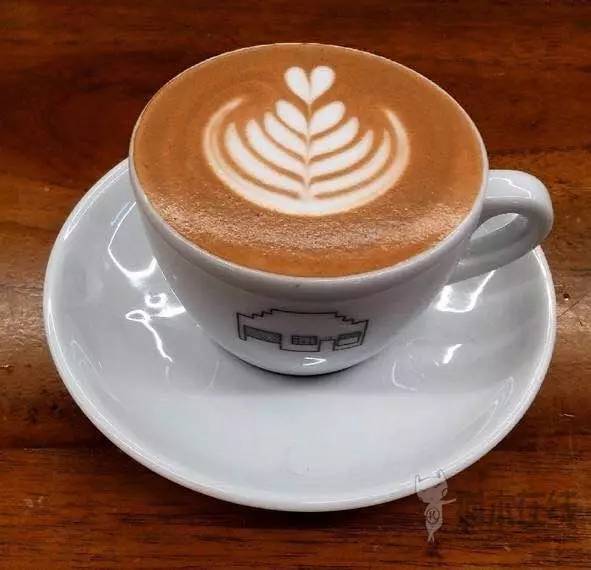
Colombia Santa Rita Special Reserve
Country: Colombia
Region: Antioquia Department
Altitude: 1600-2100 meters
Processing Method: Washed
Hacienda Santa Rita lies in Colombia's Antioquia Department, in a micro-production zone in the shadow of the Andes. This premium coffee is a collaboration among nine neighboring farms, which still process their coffee the traditional way: cherries are hand-picked, washed in the classic manner, and the beans are laid out on racks to sun-dry. The Andean surroundings bless the region with fertile volcanic soil and exceptionally favorable water resources.
Varieties: Catuai, Caturra
Estate: Santa Rita
The History of Colombian Coffee
Coffee cultivation in Colombia reaches back to the Spanish colonial era of the 16th century, though exactly how it arrived is a matter of competing accounts:
First Account: Coffee is said to have arrived by sea routes from Haiti in the Caribbean, via El Salvador in Central America.
Second Account: In 1808, a priest first brought coffee beans to Colombia from the French Antilles by way of Venezuela. One version of this story holds that Colombia's first batch of coffee seeds entered through the Santander Department from Venezuela.
Third Account: The earliest record of coffee growing in Colombia appears in "The Illustrated Orinoco" by the Spanish missionary Jose Gumilla, who described his experiences missionizing along both banks of the Meta River in 1730 and noted local coffee plantations. By 1787, other missionaries had spread coffee to other parts of the country.
Flavor Profile: Sugarcane, clean, medium body
Colombia: The Land of Coffee
Located in northwestern South America, Colombia is a beautiful country with a long history. Indigenous peoples flourished on this land for centuries; it became a Spanish colony in 1531 and won independence in 1819. In 1886 it adopted its current name in honor of Christopher Columbus, the discoverer of the American continent.
Colombia is blessed with beautiful mountains, pleasant scenery, and a spring-like climate year-round. The country's natural riches—coffee, flowers, gold, and emeralds—are celebrated as the "Four Treasures." Today Colombia is the world's second-largest coffee producer after Brazil, the largest exporter of Arabica coffee, and the largest exporter of washed coffee. Colombian coffee is often described as silky-smooth, and among all coffees it is prized for its balance: a soft, rounded mouthfeel that makes it enjoyable at any time of day. No other coffee has earned quite the same praise—Colombians call it "green gold."
Coffee Varieties
Caturra
Caturra is a natural variant of the Arabica Bourbon variety, discovered in Brazil in 1937. The plant is shorter and more compact than Bourbon. It inherits Bourbon's relatively weak disease resistance but yields more. Although it was discovered in Brazil, Caturra never suited Brazilian conditions well and was never planted there on a large scale. Instead, it became a star across Central and South America, with countries such as Colombia, Costa Rica, and Nicaragua cultivating it extensively.
But most people care less about botany than about flavor. The higher the altitude where Caturra is grown, the better the quality—though the yield falls accordingly. Light-roasted, Caturra shows prominent acid aromatics and overall brightness. With careful processing its sweetness performs beautifully, though its body is thinner than Bourbon's and the cleanliness of the cup is slightly less refined.
Caturra usually produces red cherries, but yellow Caturra exists in a few extremely rare spots—Hawaii, for example, cultivates very small quantities of it.
Catuai
Catuai is an artificial hybrid of Caturra and Mundo Novo, prized for its good resistance to natural disasters—wind and rain in particular.
Catuai plants are relatively short, and the cherries attach so firmly that they resist easy picking. Both red and yellow forms exist, and to date no clear flavor advantage has been found for the yellow over the red. In fact, some cuppers have observed that while yellow-fruited coffee can show good acidity, its flavor cleanliness tends to fall short of the red-fruited lots.
Catuai was developed in Brazil and is now widely grown throughout Central America.
Brewing Recommendations
Pour-over for Colombia Santa Rita: 15g of coffee, medium grind (setting 4 on the small Fuji ghost burr grinder), V60 dripper, water temperature 88-89°C. Pour 30g of water first and bloom for 27 seconds. Pour to 105g and stop. Once the water level in the bed drops to halfway, continue pouring slowly up to 225g. Avoid the tail section. Water-to-coffee ratio: 1:15, extraction time 2:00.
FrontStreet Coffee Recommendation
Colombian coffee wears many hats: it anchors espresso blends, shines as a pour-over single origin, and comes in every style from fruit-forward acidity to full, rich body to fragrant aromatics—something for every palate.
Colombia's most famous specialty region is Huila, in the southern part of the country's central mountain range: rolling hill country above 1500 meters, where Colombia's most important rivers converge, bringing rich water resources and humidity. To get a feel for Colombian coffee, FrontStreet Coffee recommends the washed Huila: a medium-dark roast that foregrounds dark chocolate and nutty sweetness, with moderate crema and a full body. It works as pour-over or French press, and it pulls beautifully through a moka pot or espresso machine for americanos and lattes alike.
If you already own a home espresso machine or a moka pot, baristas often point newcomers toward the FrontStreet Coffee premium espresso blend, built for café-style brewing: it combines the cream-and-nut character of Brazilian coffee with the dark, bittersweet chocolate of Colombian beans, extracting with a fine, golden crema. It is wonderfully forgiving for beginners, stands up to milk in a rich, silky latte, and serves equally well as the base for americanos, cappuccinos, and mochas.
Important Notice :
FrontStreet Coffee is a long-established specialty coffee roaster in Guangzhou China, selling freshly roasted beans from its own farm in Yunnan as well as dozens of carefully selected single-origin beans from around the world for both pour-over and espresso. The products deliver consistently excellent quality and great value, with shipping within 24 hours. Guangzhou's FrontStreet Coffee shop is recommended by many coffee lovers, and the beans are now available online at the Tmall 。
FrontStreet Coffee has moved to a new address:
FrontStreet Coffee Address: 315,Donghua East Road,GuangZhou
Tel:020 38364473
 Scan and follow the En Gafei WeChat official account. Please indicate that the reprint comes from "En Gafei".