What is the name of the Brazil COE award-winning coffee? How many seconds should you bloom medium-roast pour-over coffee for the best taste?
Introduction to Fazenda Rainha (Queen Farm)

For more premium coffee knowledge, follow our official WeChat account: FrontStreet Coffee.
Fazenda Rainha, or Queen Farm, lies in the Alta Mogiana region of São Paulo state, north of São Paulo city and close to Brazil's other great specialty coffee region, Minas Gerais.
Alta Mogiana: São Paulo's Premium Coffee Region
In Alta Mogiana, coffee is grown at elevations between 1,100 and 2,000 meters, among shrubs, grasslands and other vegetation. The area is home to many farming families; some run traditional large-scale farms while others work small, modern operations. This blend of modern technology and mountain coffee-growing culture produces the highest-quality green beans.
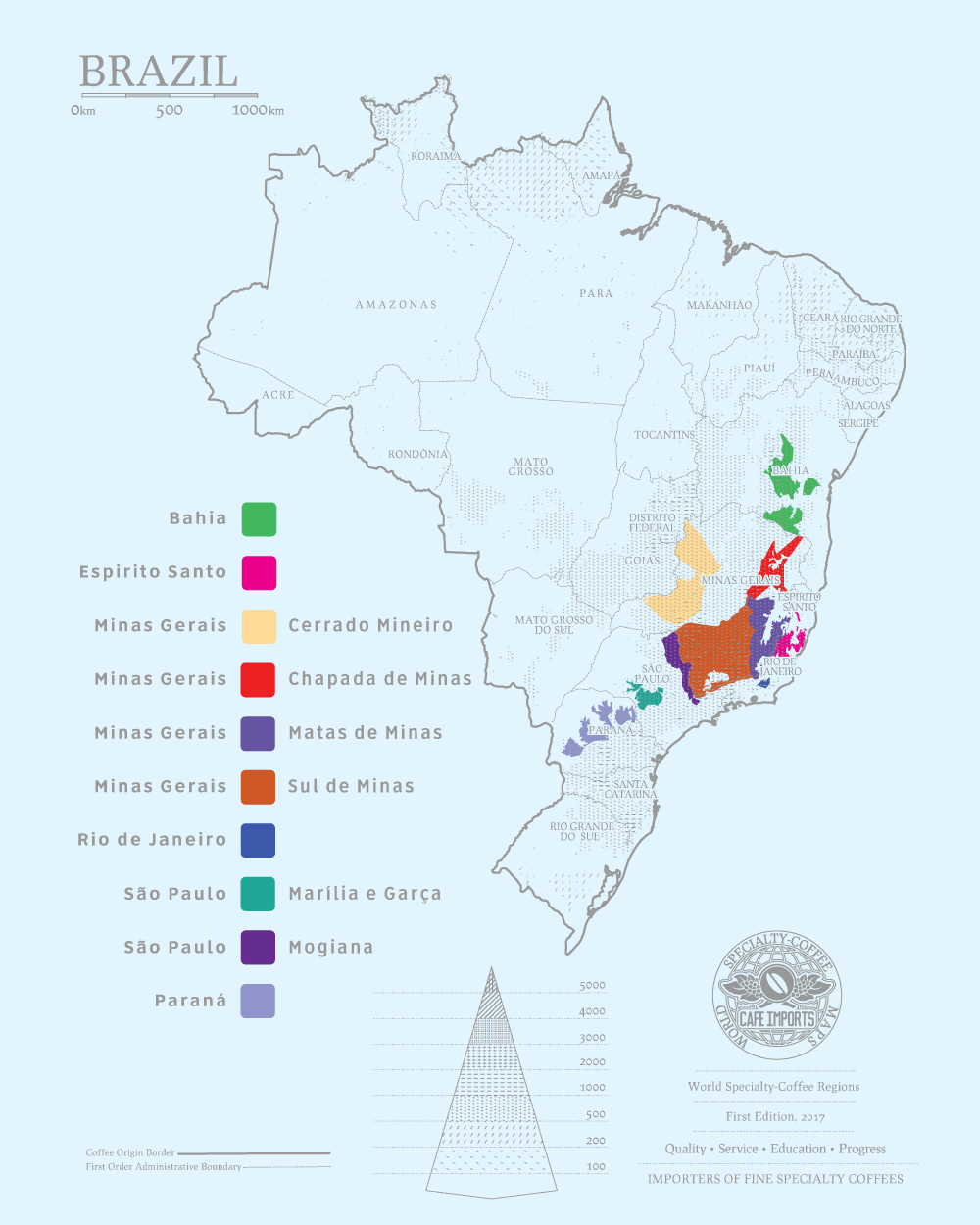
The region's average annual temperature is only 19°C, which slows the development of the coffee cherries slightly but results in denser beans. Yields are lower, yet the aroma and flavor are unmatched by typical Brazilian high-altitude beans. The farm grows mainly Bourbon varieties, including some trees more than 110 years old.
Brazil's Queen Farm Introduction
Brazil's Queen Farm coffee is located in the Alta Mogiana region at elevations between 1,400 and 1,950 meters, spread across 280 hectares, 200 of which are planted with Yellow Bourbon. The unusual geography and pleasant climate make this an exceptional site for specialty coffee.
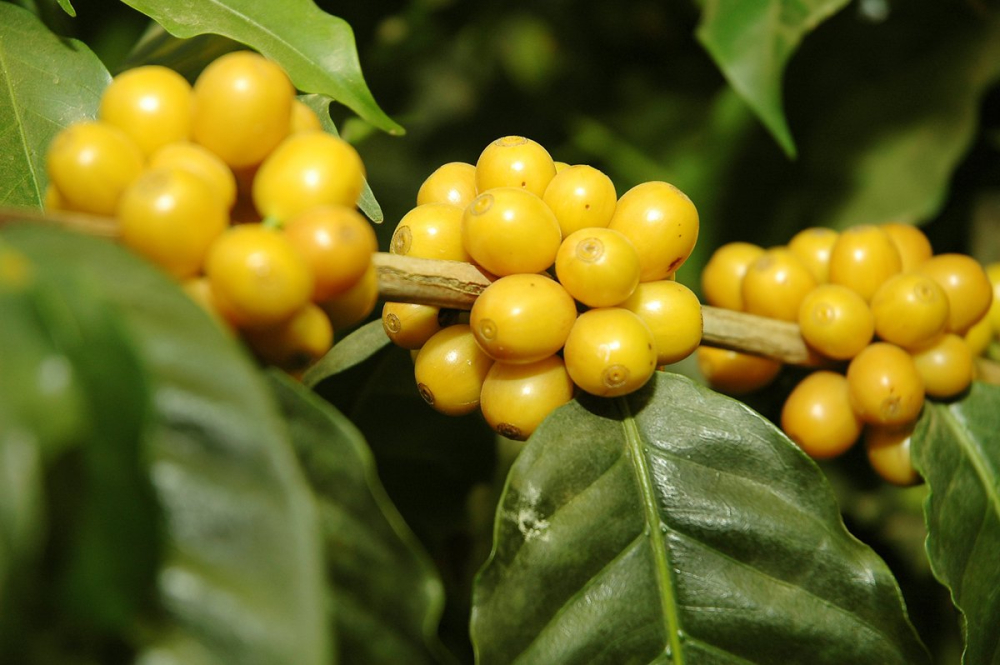
Yellow Bourbon is a distinctive Bourbon variety native to São Paulo state. It takes its name from the fact that the cherries do not turn red when ripe but instead show an orange-yellow color. Grown at high altitude, Yellow Bourbon displays exceptional flavor characteristics. Its beans offer balanced, smooth acidity with a weak, clean bitterness, creating an overall bright and refreshing profile.
Yellow Bourbon beans are inherently sweet and clean. Using natural, or semi-natural, processing reduces acidity while integrating beautifully with the sweetness, producing tropical fruit aromas.

FrontStreet Coffee currently offers Brazilian semi-natural processed Yellow Bourbon beans from this farm. To showcase the rich nutty notes and full-bodied mouthfeel characteristic of Brazilian coffee, FrontStreet Coffee's roasters analyzed the beans in detail and decided to roast the Queen Farm coffee to a medium-dark level.

Through cupping by FrontStreet Coffee's baristas, this coffee shows distinct nutty flavors, balanced and smooth acidity, and a weak, clean bitterness, with rich chocolate aroma and nutty flavors, creating a bright, refreshing mouthfeel with a smooth and delicate texture.
Social Responsibility and Recognition
At Queen Farm, all workers live on the farm itself, so there is no temporary employment; the estate provides proper support through health plans and unlimited hospital care. Recently, workers built the second unit of the Pedro Roza IT school and a small chapel designed by Oscar Niemeyer. Fazenda Rainha's environmental policy is built on harmonizing production with environmental protection. This is a BSCA-certified property with a UTZ-certified social and environmental management system, and it has been a finalist in the Cup of Excellence competition for many years.
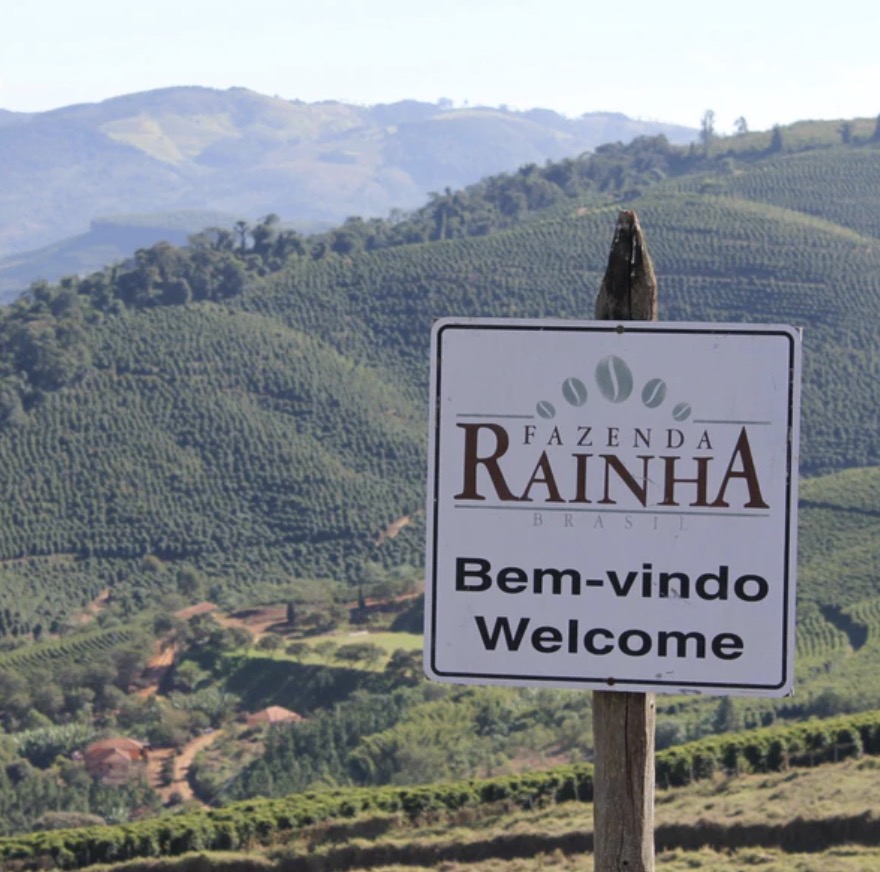
The farm is highly regarded in Brazil and is owned by the Carvalho Dias family, which runs four major farms. Since the first Brazil COE competition in 1999, these farms have won awards every year, accumulating more than 12 awards over 7 years.
In 2004 they even swept the top places, taking 1st, 9th and 11th. Among Brazil's countless farms, many have hoped to be finalists and win awards over the years, but that is difficult to achieve. This family's four farms, by contrast, have won multiple awards in succession. Queen Farm itself has an impressive record: 2nd place in 2000, 3rd place in 2001 and 29th place in 2005. To date, Queen Farm has won awards three times.

Brazil's Queen Farm Semi-Natural Processing Method
Before 1990, Brazil relied almost exclusively on rough natural processing, which often gave Brazilian beans a woody or earthy flavor: the cherries spent two to three weeks in the sun, and rain would re-wet them, leading to musty notes.
To address this weakness, in 1990 Brazil used its relatively dry climate to develop the semi-natural (pulped natural) method and shorten processing time. The two approaches are similar, differing in whether water assists the process. The semi-natural method greatly reduces quality-control difficulties, successfully cutting defects while improving appearance uniformity and enhancing sweetness.
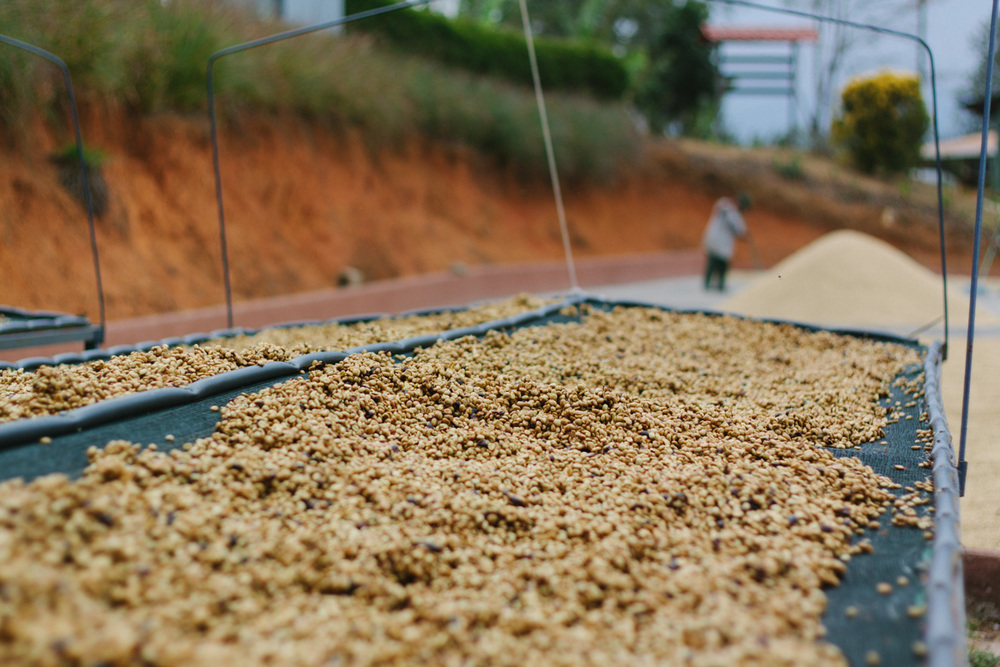
Semi-natural processing happens in two stages: first, sun-drying to bring moisture content down to 20-25%, then transferring to drying machines to bring it down to 10-14%, which completes the drying.
After harvesting at Queen Farm, the cherries are pulped and spread on patios to dry. The coffee dries slowly in the sun until humidity reaches 11%. Once dry, it is stored in wooden granaries, which helps give the beans from this farm their more stable quality.
How to Brew Queen Farm Coffee Beans for the Best Flavor
To achieve a balanced body in Queen Farm coffee, FrontStreet Coffee uses a KONO dripper with a medium-coarse grind (coarse sugar size, 70% pass rate on a China No. 20 standard sieve) and water at 88-89°C.
The method is as follows: first pour 30g of water to bloom, with a bloom time of 30 seconds. Next, pour to about 125g and wait for the coffee liquid to drop. When it has dropped halfway, pour the final segment to 225g. End the extraction after all the coffee has dripped through. Total extraction time is typically around 2 minutes and 10 seconds.
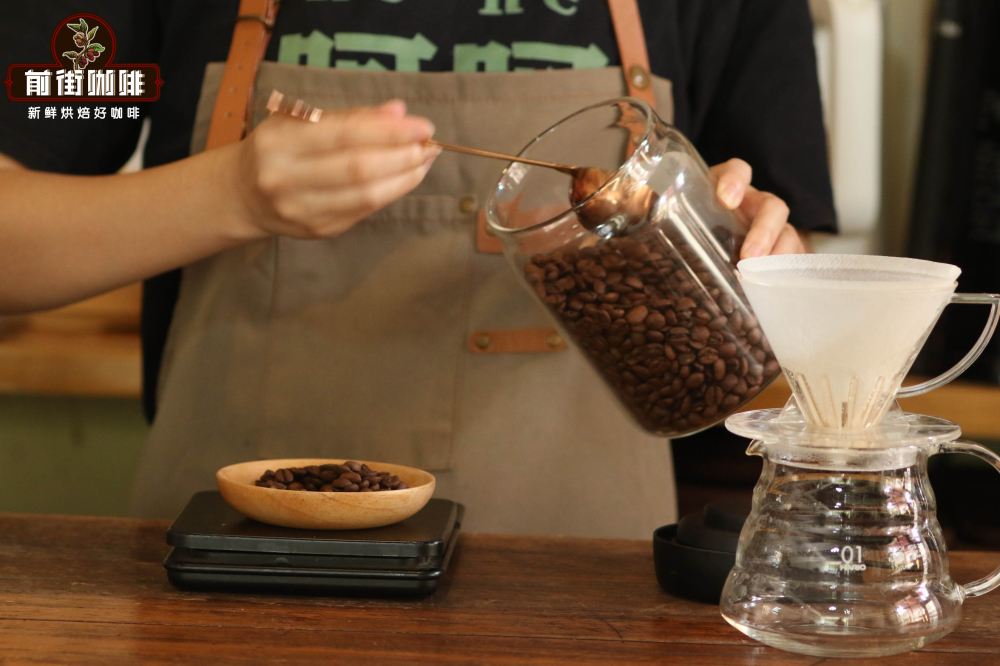
FrontStreet Coffee - Brazil Queen Farm Brewing Flavor Profile
Fresh sugarcane-juice sweetness, black tea, soft and pleasant fruit sweetness, distinct nutty flavors, balanced and smooth acidity, a weak and clean bitterness, with rich chocolate aroma and nutty flavors, creating a bright, refreshing mouthfeel with a smooth, delicate texture.
FrontStreet Coffee Recommendation
The coffee in this article is FrontStreet Coffee's Brazil Queen Estate Yellow Bourbon. The estate sits in Mogiana, close to South Minas, where fertile red volcanic soil lets the cherries take in ample nutrients and develop a full aroma; one part of the area holds to traditional farming methods while another has adopted modern, standardized management, and the quality has improved markedly as a result. The variety is the rare Yellow Bourbon, a mutation of Red Bourbon with a cleaner fruit character, and it works beautifully as a pour-over, in a moka pot or in a home espresso machine, where you can taste sugarcane-like sweetness alongside fruit and chocolate notes.
Because this is a medium-dark roast, use a medium-coarse grind and water at 88-89°C, and finish the pour before the last bitter drops run through; that is what keeps the cup balanced instead of heavy.
Important Notice :
FrontStreet Coffee is a long-established specialty coffee roaster in Guangzhou China, selling freshly roasted beans from its own farm in Yunnan as well as dozens of carefully selected single-origin beans from around the world for both pour-over and espresso. The products deliver consistently excellent quality and great value, with shipping within 24 hours. Guangzhou's FrontStreet Coffee shop is recommended by many coffee lovers, and the beans are now available online at the Tmall 。
FrontStreet Coffee has moved to a new address:
FrontStreet Coffee Address: 315,Donghua East Road,GuangZhou
Tel:020 38364473
 Scan and follow the En Gafei WeChat official account. Please indicate that the reprint comes from "En Gafei".