The Story of Panama Duncan Estate: Premium Natural Caturra Coffee Beans from Boquete

In the coffee world, Panama holds a pivotal position for producing exceptional Geisha, and as a result, many local estates have become famous along with their coffee — such as the Kotowa family of estates that FrontStreet Coffee introduces today.
The coffee history of Kotowa Estate is remarkably long, with the story of its first-generation owner dating back to the late 19th century.

A Canadian, Alexander Duncan MacIntyre was born in 1873 and began his career in the fruit trade with his brother Joseph Albert McIntyre. Later, both brothers entered politics in succession, with Alexander even becoming the youngest mayor of Port Alberni.

In 1916, his brother Joseph purchased a farm named Finca Carolin in Boquete, Panama. Although he only spent a brief period there, he returned to Canada full of praise for this land. Meanwhile, Alexander had read several articles about Boquete in newspapers and was captivated by this land full of primitive charm, setting off into the unknown with curiosity and longing.
In 1925, Alexander decided to move from North America and settle in Boquete, Panama, where he married a local woman named Angela Rosas. Like other immigrants, he chose to cultivate and farm this land. After renaming the farm La Carolina, Alexander built a small coffee processing plant — thus beginning the coffee story of the Kotowa family and opening a new chapter for four generations to thrive here.

The Ideal Terroir of Kotowa Estate
Kotowa sits at the foot of Baru Volcano in western Panama, where lush vegetation, unique microclimates, and fertile volcanic soil create perfect conditions. Moisture from the Atlantic converges on slopes reaching 2500 meters, condensing into rainfall. During the dry season, longer sunshine hours provide abundant water and sunlight for the coffee trees, allowing them to fully absorb nutrients.

Today, Kotowa Estate has passed to the third generation and is jointly managed by Mr. Ricardo Koyner and his daughter Victoria.
The Legacy of Ricardo Koyner
Notably, besides being an estate owner, Mr. Ricardo holds another identity: he is one of the founders of the Specialty Coffee Association of Panama (SCAP) and served as its first president. Beginning in the 1990s, many Panamanian coffee farmers recognized the challenges facing the industry and sought development opportunities. They turned to the Specialty Coffee Association of America (SCAA) for help, and after several years of effort, seven coffee farmer representatives began promoting the establishment of a Panama-specific coffee organization in 1996 to help raise the overall competitiveness of the country's coffee.

After taking over the estate, Mr. Ricardo recognized the importance of branding and formally named his farms Cafe Kotowa Farms. In addition to preserving the green bean processing plant left by his grandfather, he purchased equipment such as coffee roasters and opened brand coffee shops locally, with the goal of selling "Kotowa" branded products directly to broader markets in Europe and America.
Compared with other estates, the equipment in Kotowa's processing plant is water-powered. The entire machine is driven by wooden gears of different sizes, with hand-stitched animal hides serving as transmission links. In an era of resource scarcity, this was considered highly advanced equipment. Even more precious, it remains fully intact today and is displayed within the estate, letting visitors experience the authentic history of Panama's coffee industry.

The Seven Farms of Kotowa
Today, Kotowa has seven farms under its banner, five of which are well known to coffee enthusiasts: Finca Kotowa DUNCAN (Duncan Estate), Finca Kotowa Don K (Don K Estate), Finca RIO CRISTAL (Crystal River Estate), Finca Kotowa TRADICIONAL (Traditional Kotowa Estate), and Finca Kotowa LAS BRUJAS (Witches Estate). The other two newer farms, Mango and Redondo, have not yet released coffee to the market.
According to FrontStreet Coffee's research, the word "Kotowa" comes from the local Ngäbe indigenous language, meaning "high mountain." Kotowa's logo is modeled on the main workforce behind Panama's coffee harvest — the local indigenous group called Gnobe Bugle, whom locals also refer to as the "Guaymíes."

The Stories Behind the Estate Names
To commemorate the first-generation farm owner, Duncan Estate is named after Mr. Ricardo's grandfather Alexander. Don K Estate honors his father Richard Koyner, with "Don" meaning "Mister" in Spanish. Witches Estate takes its name from the stream in front of it, whose flowing water often makes sounds resembling the "howling" of witches from the primitive forest. Crystal River Estate, as the name suggests, was given its melodious name because when the river rolls under the sunlight, it shows a dazzling, crystal-like brilliance.
Thanks to the estates' repeated excellent performances in competitions, the "Kotowa" brand has long been a household name locally. When Kotowa coffee is mentioned, FrontStreet Coffee believes many friends — like us — first think of Duncan Estate, which appears frequently in various competitions, and Witches Estate, which has continuously won awards in recent years.

Duncan Estate Natural Caturra
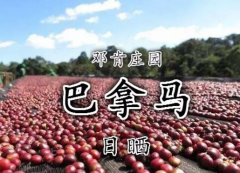
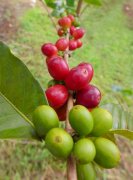
FrontStreet Coffee has acquired the natural processed Caturra from Duncan Estate. Regular readers of FrontStreet Coffee know that cherry ripeness at harvest has an enormous impact on final quality. To present the fullest coffee aroma, Kotowa Estate requires workers to gently pick the cherries only when they turn wine-red, and to process them quickly after harvest to avoid excessive pulp fermentation that could produce unpleasant flavors.

Coffee Information
FrontStreet Coffee: Duncan Estate Caturra Coffee Beans
Country: Panama
Region: Boquete, Duncan Estate
Variety: Caturra
Altitude: 1650-1750 meters
Processing: Natural
Flavor Notes: Floral, red grape, dried fruit, prune, fermented sensation

Roasting and Cupping Notes
To highlight its fragrant floral and fruit characteristics while emphasizing caramelized sweetness, we chose a medium-light roast and cupped promptly.

This Duncan Estate Natural Caturra presents subtle pink floral notes and rich fruit aroma in its dry fragrance, first reminding us of cranberries, dried fruits, and grapes. After breaking the crust and skim-ming the grounds, the coffee reveals mature Kyoho grape and prune flavors on entry, along with honey-like sweetness. As the cup cools slightly, hawthorn-like acidity gradually emerges, accompanied by brown sugar undertones, adding another layer of complexity.
FrontStreet Coffee Recommendation
For anyone enchanted by the Kotowa story, FrontStreet Coffee's Panama selection offers several ways to keep exploring. The Duncan Estate Natural Caturra featured above is a wine-red-cherry natural from 1650-1750 meters, medium-light roasted to show pink florals, Kyoho grape, prune, and brown sugar sweetness — proof that Boquete excellence extends well beyond Geisha. For the variety that made Panama famous, the FrontStreet Boquete Geisha is the perfect entry point, delivering the classic orange-blossom honeyed aroma, oolong tea texture, and layered fruit acidity at an accessible price. For the pinnacle, the FrontStreet Esmeralda Red Label Geisha grows at 1600-1800 meters, cups above 90 points, and comes from a single named plot, while the Esmeralda Green Label (Private Collection) blends high-altitude lots for a more affordable take on the same signature profile. Brew them with 15g of coffee at 1:16, 91°C water, a coarse grind (78% pass-through on a #20 sieve), and three-stage pouring to keep those delicate Panamanian florals intact.
Important Notice :
FrontStreet Coffee is a long-established specialty coffee roaster in Guangzhou China, selling freshly roasted beans from its own farm in Yunnan as well as dozens of carefully selected single-origin beans from around the world for both pour-over and espresso. The products deliver consistently excellent quality and great value, with shipping within 24 hours. Guangzhou's FrontStreet Coffee shop is recommended by many coffee lovers, and the beans are now available online at the Tmall 。
FrontStreet Coffee has moved to a new address:
FrontStreet Coffee Address: 315,Donghua East Road,GuangZhou
Tel:020 38364473
 Scan and follow the En Gafei WeChat official account. Please indicate that the reprint comes from "En Gafei".