The Story and Allusion of Nicaragua Jin Molina Estate Honey-Processed Red Bourbon

Madriz has not yet been heavily explored by tourists, but it holds a variety of interesting attractions: unusual geological formations, rock paintings, ancient colonial sites and fine handicrafts made from many different materials. The capital of Madriz is the small city of Somoto, which has an active old parish church at its center - a church that still preserves artifacts and architectural elements from the colonial era, dating back to 1661.
Pour-over Nicaragua Honey Process
Use 15 g of coffee ground at a medium setting (Fuji serrated burr grinder, setting #4) in a V60 dripper, with water at 88-89°C. Begin with a 30 g pour and let it bloom for 27 seconds, then pour to 105 g and pause. When the water level in the coffee bed drops halfway, continue pouring slowly until you reach 225 g, avoiding the tail end. The water-to-coffee ratio is 1:15, with a 2:00 extraction.
Nicaragua Honey Process Red Bourbon
Country: Nicaragua
Region: La Sabana, Madriz
Altitude: 1,400-1,450 m
Harvest period: December to March
Processing method: Honey process
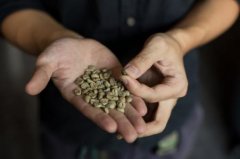
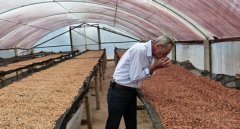
Miel means "honey" in Spanish, and the honey process (Miel process) takes coffee fruit and turns it into green beans in a way that makes the final cup as memorable as sweet honey. Originally called "Pulp Natural," the honey process means sun-drying the beans with the mucilage still intact. After the outer pulp is removed from the coffee fruit, the beans carry a layer of sticky, gelatinous substance. Unlike the washed method, which rinses that layer away with clean water, honey processing is harder to dry in the sun. It therefore demands strict control and constant turning throughout, so that undesirable fermentation flavors never develop.
Jaime Molina Honey Process
Country: Nicaragua
Region: La Sabana, Madriz
Estate: Jaime Molina
Estate owner: Montecristo
Processing plant: Jaime Jose Molina Fiallos
Altitude: 1,400-1,450 m
Harvest period: December to March
Processing method: Honey process
Variety: Red Bourbon
Flavor notes: Chocolate, red fruits, juicy sensation
Nicaragua is divided mainly into four regions: Segovias, Matagalpa/Jinotega, Boaco and the Pacific Coast. Cultivation climbs highest in Segovias, at around 1,500-2,000 meters, where the top grade SHG (Strictly High Grown) coffee is produced.
Widespread volcanic ash and shade-grown cultivation yield high-quality Nicaraguan coffee with a mild, smooth flavor and subtle acidity. Nicaraguan beans are also considered among the larger coffee beans. MADRIZ lies in the mountainous north of the country, bordering Nueva Segovia, Jinotega and Esteli. Peaceful and elegant, the region is home to the famous Somoto Canyon. Its people are mainly from various indigenous groups and from the mixed Spanish-indigenous heritage of the colonial period, mostly Chorotegas. The region produces coffee, supports arts and crafts trades and offers traditional, delicious food. Madriz has a cool climate, and its small towns may look simple but stand out for their beautiful tiled roofs and white buildings. The area also holds many coffee plantations, with mountains covered in lush pine and oak forests.
Flavor Description: Chocolate, red fruits, a juicy sensation and a balanced medium body.
Manufacturer: FrontStreet Coffee
Ingredients: Roasted in-house
Shelf life: 30 days
Net weight: 227 g
Packaging: Bulk
Taste profile: Neutral
Bean state: Roasted
Sugar content: Sugar-free
Origin: Nicaragua
Coffee type: Other
FrontStreet Coffee Recommendation
Honey-processed coffee lives or dies on its sweetness and juice, and the same is true of the coffees many people brew in a V60. The Hario company behind the V60 was founded in Tokyo in 1921 and initially made heat-resistant glassware for research institutions; in 2004 it redesigned the early V60 into the shape we know today, naming it for its 60-degree cone and V profile, and it reached the market a year later. The cone and single large hole force the water toward the center before it drips through, lengthening contact with the coffee and letting aroma and flavor extract fully - which is exactly what a sweet, fruit-forward honey process needs.
For a fruit-forward coffee that rewards that kind of brewing, FrontStreet Ethiopia Huakui is one of the most successful specialty releases of recent years. Its tropical fruit aromas stand out immediately, with strawberry, passionfruit, jackfruit and even lychee, plus obvious sweetness and very little bitterness. It drinks smooth and full of juice, and for anyone who dislikes the bitterness of traditional coffee it can completely reset their expectations.
For a cleaner, more floral counterpoint, FrontStreet Yirgacheffe Gerdin is an Ethiopian heirloom washed at Gerdin village. It brings citrus, berry and floral notes with a green tea finish, the acidity soft and bright rather than sharp - a very easy first step for anyone new to hand-poured coffee. Both are versatile enough for V60 pour-over, cold brew and espresso alike.
Important Notice :
FrontStreet Coffee is a long-established specialty coffee roaster in Guangzhou China, selling freshly roasted beans from its own farm in Yunnan as well as dozens of carefully selected single-origin beans from around the world for both pour-over and espresso. The products deliver consistently excellent quality and great value, with shipping within 24 hours. Guangzhou's FrontStreet Coffee shop is recommended by many coffee lovers, and the beans are now available online at the Tmall 。
FrontStreet Coffee has moved to a new address:
FrontStreet Coffee Address: 315,Donghua East Road,GuangZhou
Tel:020 38364473
 Scan and follow the En Gafei WeChat official account. Please indicate that the reprint comes from "En Gafei".