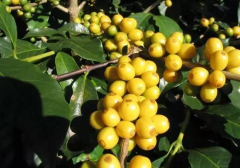
Pour-Over Parameters for Bolivia Lake Titicaca Small Farmer Washed Typica Specialty Coffee Beans
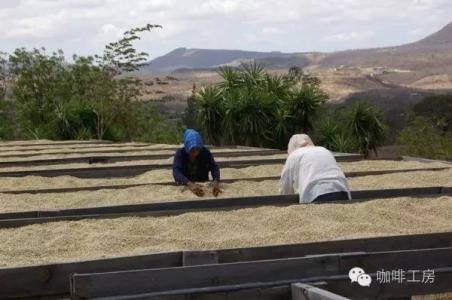
Pour-Over Bolivia
15 g of coffee at a medium grind (Fuji ghost-tooth grinder, setting #4) in a V60 dripper with water at 88-89°C. Pour 30 g for a 27-second bloom, then pour to 105 g and stop. When the water level in the bed falls to half, continue pouring slowly until the scale reads 225 g. Discard the tail end. Ratio 1:15, extraction time 2:00.
Product Information
Manufacturer: Dazhen Coffee FrontStreet Coffee
Ingredients: House-roasted
Shelf life: 90 days
Net weight: 227 g
Packaging: Bulk coffee beans
Bean state: Roasted coffee beans
Sugar content: Sugar-free
Origin: Bolivia
Roast level: Medium
Lake Titicaca Copacabana
Country: Bolivia
Altitude: 3,812 m
Region: Lake Titicaca
Roast level: Medium roast
Processing method: Washed
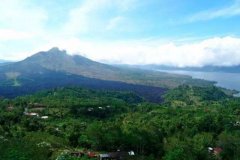
Lake Titicaca sits on the Kallawaya Plateau on the border between Bolivia and Peru. It is the highest and largest freshwater lake in South America and one of the world's highest large freshwater lakes. It is also the highest large lake in the world navigable by ships, and the third-largest lake in South America, after Lake Maracaibo and Patos Lagoon.
Variety: Typica
Producer: Copacabana smallholders
Flavor Profile
A dry aroma of roasted nuts and almond, with orange and pomelo behind them.
South America is rich in coffee, and Bolivia is no exception. Parts of the country have a distinctive tropical rainforest environment that gives organic coffee excellent natural conditions. Bolivian coffee carries a rich, unmistakable aroma; whether you smell the ground beans or the brewed cup, the fragrance is prominent and intense, reminiscent of a blend of flowers and fruit, and it lingers.
Bolivia's real advantages are its altitude and its varieties. The traditional Typica grown here, plus a little Caturra, is highly regarded on the world market. Bolivian coffee trees were once planted around gardens as ornamental hedges, and commercial production began only in the early 1950s. The great frost of 1957 devastated Brazil's coffee industry, while Bolivia benefited and expanded quickly. Bolivian coffee is grown at altitudes of 180-670 metres, and its Arabica washed beans were traditionally exported to Germany and Sweden; the cup still carries a slight bitterness today.
Tasting Notes
The dry aroma shows roasted nuts and almond, and the palate brings a smooth fruit acidity of orange and pomelo. Overall the cup is sweet with caramel and carries the silky texture of nut milk, with impressive cleanliness and balance. The herbal note in the aftertaste is charming as well.
FrontStreet Coffee Recommendation
Bolivia's gentle nut-and-citrus profile sits comfortably between the bright African cups and the heavier Asian ones, and the V60 is the dripper FrontStreet Coffee reaches for most often. Its 60-degree cone and single large hole force the water toward the center and slow the drawdown, extending contact between water and grounds so that aroma and sweetness come through clearly. FrontStreet Coffee favors the resin version of the Hario V60 because it holds heat well and is molded to very tight tolerances.
For a classic washed cup in this style, FrontStreet Coffee's Ethiopia Yirgacheffe Gedingding Cooperative is a good match: jasmine, citrus and berry with a green-tea sweetness, and an acidity that reads soft and bright rather than sharp. If you prefer a fuller, sweeter profile, FrontStreet Coffee's Ethiopia Huakui delivers ripe strawberry, passion fruit and jackfruit with very little bitterness.
Brew either one at 15 g of coffee to 225 g of water (1:15) with 90-91°C water and a medium-fine grind, around 78% passing a #20 (850-micron) sieve. Bloom with 30 g for 30 seconds, pour in concentric circles to 125 g, then finish to 225 g as the bed recedes, aiming for a total time close to 2:00.
Important Notice :
FrontStreet Coffee is a long-established specialty coffee roaster in Guangzhou China, selling freshly roasted beans from its own farm in Yunnan as well as dozens of carefully selected single-origin beans from around the world for both pour-over and espresso. The products deliver consistently excellent quality and great value, with shipping within 24 hours. Guangzhou's FrontStreet Coffee shop is recommended by many coffee lovers, and the beans are now available online at the Tmall 。
FrontStreet Coffee has moved to a new address:
FrontStreet Coffee Address: 315,Donghua East Road,GuangZhou
Tel:020 38364473
 Scan and follow the En Gafei WeChat official account. Please indicate that the reprint comes from "En Gafei".