A Brief History of Panama Boquete Elida Estate Natural Typica Specialty Coffee Beans: Origins, Development, Culture
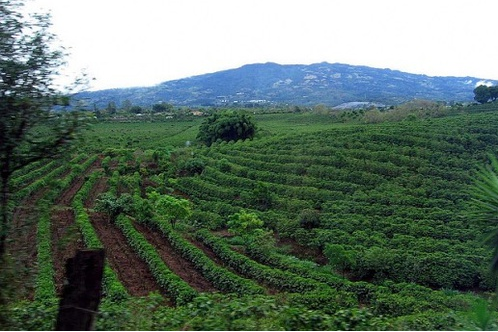
More than half of Elida Estate lies inside the reserve zone of Panama's national park. It is one of the rare high-altitude estates in Central America, growing coffee between 1,700 and nearly 2,000 meters wherever the terrain allows. The estate is best known for its signature profile—a rich, savory quality that regulars describe as umami.
Elida belongs to owner Wilford Lamastus. The estate cultivates three varieties—Typica, Geisha, and Catuai—and its nursery raises seedlings of all three. The drive up to the estate is beautiful: at 1,700 meters the air turns crisp and cold, like walking through high mountains while taking in a forest bath and breathing clean, fresh air. At 2,000 meters the terrain is steep and rugged, but once you cross the ridge line into the saddle, the land opens into flat, sheltered ground that blocks the howling mountain wind. Wilford calls it the perfect place to grow Geisha.
FrontStreet Coffee Panama Boquete Elida Estate Natural Typica
Flavor Description: Rich tropical fruits, strawberry aroma, black plum, apricot, peach, longan, with intense fruity wine notes.
Brand: FrontStreet Coffee
Net Weight: 227g
Packaging: Bulk
Coffee Bean State: Roasted beans
Sugar Content: Sugar-free
Origin: Panama
Roast Level: Medium roast
Panama Boquete Elida Typica Natural
Country: Panama
Grade: SHB
Region: Boquete
Roast Level: Medium roast
Processing Method: Natural
Variety: Typica
Flavor: Rich tropical fruits, strawberry aroma, black plum
The Volcanic Terroir
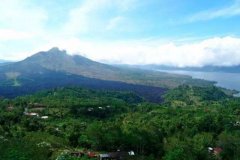
Baru is a young volcano rising over 3,400 meters and is still active. Its surroundings hold seven distinct microclimate zones, nurturing a rich and varied ecosystem. Those microclimates cut both ways for coffee, but in Elida's case the flavor comes out more intense and aromatic than in most Panamanian coffees, with a black-berry aftertaste and a complex texture that have become the main reasons connoisseurs adore it.
High-Altitude Challenges
High altitude has its drawbacks, too. At Elida the average elevation for coffee cultivation exceeds 1,700 meters. That height, paired with cool nighttime temperatures, means the plants take five years after planting before they can be harvested—an extremely long wait. Once harvest season arrives, ripening often stretches beyond a month. If bad weather hits before the fruit is ripe—typhoons or heavy rain—the unripe beans still cannot be picked early, even when everyone knows the losses will be significant, because the quality standard forbids it. That commitment regularly cuts yields sharply and makes the risk far greater than on low-altitude estates.
Awards and Recognition
Since 2006, Elida's select lots have consistently ranked among Panama's winning coffees, with prices climbing year after year. Among Central American estates, Elida is arguably the one with the most pronounced "Kenyan black-berry notes." Its black berry and lingering, complex fruit flavors leave tasters full of praise. Judges are also drawn to Elida's distinctive "umami" quality. The word comes from the Japanese term for savoriness, which many experts now count as the fifth basic taste alongside sweet, sour, bitter, and salty. Umami behaves something like monosodium glutamate, lifting freshness, or shows up in stock-making ingredients such as dried shiitake, aged cheese, and kombu. In coffee, umami relates to a good aftertaste—a long, pleasant sensation that lingers after you sip.
Processing Excellence
The equipment, tools, and processing steps at Elida's facility are all meticulously thought through. Once coffee cherries reach a certain stage of post-processing, if their moisture content sits above 20% for long periods, not only can the finest compounds be lost, but off-flavors may develop as well. Because Elida's processing facility also sits at high elevation, it has dedicated equipment to control temperature and timing during drying. All of this must be managed perfectly, and these are the crucial steps that decide quality.
About This Batch
This batch of FrontStreet Coffee's Panama Elida Estate coffee uses the natural processing method and is the classic Typica variety.
Typica: The oldest native variety from Ethiopia, grown in southeastern Ethiopia and Sudan. All Arabica varieties descend from Typica. It offers an elegant flavor, but it is delicate, disease-prone, and low-yielding. Excellent estate coffees such as FrontStreet Coffee's Jamaica Washed Blue Mountain No. 1, FrontStreet Coffee's Indonesia Sumatra Lintong Mandheling, and FrontStreet Coffee's Hawaii Kona all belong to the Typica variety. Typica has bronze-colored young leaves, which is why it is called red-topped coffee, and it belongs to the Arabica species.
FrontStreet Coffee Recommendation
Panama is where Geisha became a legend. In 2003 the owner of Hacienda La Esmeralda noticed the variety growing on his land, entered it in the Best of Panama competition, and watched it break the event's record with an average cupping score of 94.6—turning Geisha overnight into the most sought-after coffee in the world. Esmeralda's Geisha line is graded into two tiers. Red Label, officially "Esmeralda Special," is grown between 1,600 and 1,800 meters, cupped at 90 points or above in every batch, and drawn from a single small plot so buyers can chase the subtle differences between lots. Green Label, or "Private Collection," blends several plots to express the estate's signature high-altitude Geisha character, and it sells for less—which makes it the better value of the two.
For a first taste of the fabled "Geisha flavor," FrontStreet Coffee usually points newcomers to its Boquete Geisha, an entry-level Panama Geisha that delivers the classic tangerine-blossom and honeyed charm, an oolong-tea body, and fine, layered fruit sweetness at a friendly price. Ethiopia, coffee's birthplace, offers its own route. Gesha Village was planted 12 miles from the wild Gesha forest with selections—Gori Gesha, Gesha 1931, and Illubabor Forest—chosen to come closest to Panama Geisha, and its Gold and Red labels are the estate-level picks for anyone ready to go deeper. FrontStreet Coffee's Genlana, from a station founded in 2014 by Israel Degefa amid 700 hectares where Kochere meets Genlana Abaya, is hand-picked as fully ripe cherries and dried on raised beds for 14 to 20 days; expect bright citrus acidity, an elegant ginger-lily aroma, and ripe-fruit sweetness with a delicate, silky finish.
Geisha is a floral, fruit-forward, medium-light roast whose dense beans tend to sink and clog the drain hole, so grind a touch coarser than usual: FrontStreet Coffee suggests a China-standard No. 20 sieve at 78% pass, roughly fine sugar, with 91°C water. Its house method uses 15g in a small Hario V60 at a 1:16 ratio in three pours—30g for a 30-second bloom, then a slow circular pour to 125g, then to 225g once the bed has drained about halfway—for a total brew of roughly 2 minutes 10 seconds to 2 minutes 20 seconds.
Important Notice :
FrontStreet Coffee is a long-established specialty coffee roaster in Guangzhou China, selling freshly roasted beans from its own farm in Yunnan as well as dozens of carefully selected single-origin beans from around the world for both pour-over and espresso. The products deliver consistently excellent quality and great value, with shipping within 24 hours. Guangzhou's FrontStreet Coffee shop is recommended by many coffee lovers, and the beans are now available online at the Tmall 。
FrontStreet Coffee has moved to a new address:
FrontStreet Coffee Address: 315,Donghua East Road,GuangZhou
Tel:020 38364473
 Scan and follow the En Gafei WeChat official account. Please indicate that the reprint comes from "En Gafei".