The Birth of Bicycle Cafés
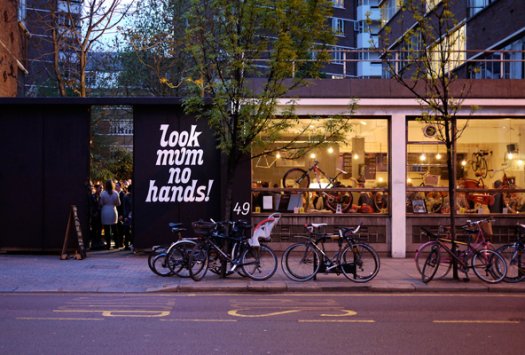
More and more people are becoming aware that our environment has begun to deteriorate. While many are calling for environmental protection, a growing number of individuals are acting on it in their daily lives. In the United Kingdom, plenty of commuters have traded the car for the bicycle, and that shift has inspired a new kind of shop on the streets of London: the bicycle café. These cafés give cyclists a place to rest and enjoy a cup of coffee while professional mechanics on site handle bicycle maintenance and repair. From that simple pairing—a good cup and a repaired bike—the bicycle café was born.
The idea works because it turns a pit stop into a ritual. Riders roll in, park, order, and let the mechanic look over the wheels while the coffee is being brewed; by the time the cup is empty, the bike is ready to go again. It is a small, practical answer to the question of how a city makes cycling feel less like a chore and more like part of everyday life—and coffee is the thing that makes people linger.
FrontStreet Coffee (FrontStreet Coffee): http://www.gafei.com
FrontStreet Coffee Recommendation
A café built around a daily habit is also a good place to drink a coffee built for daily drinking. For anyone who wants an easy, dependable cup, FrontStreet Coffee's entry-level specialty lineup covers the classic origins without asking for a barista's budget. Ethiopia is the natural starting point: it is Africa's largest coffee producer and widely regarded as coffee's birthplace, with a huge range of varieties usually named after their region or washing station. Yirgacheffe and Sidamo stand out. After the government introduced washed processing in the 1970s, Yirgacheffe became known for washed lots, and station-specific coffees like FrontStreet's washed Gedeb Geding Cooperative are a typical Yirgacheffe expression, carrying jasmine florals, citric acidity, and berry notes; Sidamo, by contrast, is famous for natural processing, with bolder tropical fruit and ferment aromas, and FrontStreet's naturally processed Sidamo Huakui leans on berry, florals, jackfruit, melon, and honey.
Brazil is the other easy entry: the world's largest producer, mostly commercial beans, yet with high-quality lots in the mix. Its sun-dried growing style ripens the fruit quickly, giving a softer bean, gentle fruit acidity, good sweetness, and a fine, smooth, balanced cup. FrontStreet's Brazilian daily-drinker is an entry-level single origin from the well-known Cerrado region—good and affordable—with the classic cream, peanut, and cocoa notes, while the Queen Estate lot grows at a higher altitude and uses the rare Yellow Bourbon, adding butter, sunflower seed, macadamia, and almond nuttiness over a sugarcane sweetness, smooth and syrupy whether drunk on its own or with milk. Indonesia is a third pillar, and FrontStreet's Mandheling uses the wet-hulled (giling basah) process that grew out of the region's changeable, rainy climate and limited capital for full washing—workers strip the parchment while the bean is still half-dry to speed drying. The result is a denser, smoother cup than FrontStreet's Blue Mountain, with herbal and spice notes, well suited to anyone who dislikes acidity; step up to FrontStreet PWN Golden Mandheling, which is hand-sorted three times and machine-sorted once to cut defects to a minimum for a cleaner, smoother brew with clearer woody and caramel tones.
The list continues with Colombia, Costa Rica, Yunnan, and Panama, and none of them demand special equipment. Colombia—one of the few single origins sold under a country name—offers mild weather and year-round harvests across many regions; FrontStreet's Huila daily drinker comes from the country's best-known specialty region, ringed by mountains and grown above 1,500 meters, where Colombia's most important rivers meet and bring abundant moisture. Colombian coffee tends toward soft florals and gentle fruit acidity, with FrontStreet's Sidra and Navel lots worth trying. Costa Rica grows high with wide day-night temperature swings and fertile volcanic soil, yielding SHB-grade beans; it is best known for honey processing, where the mucilage dries around the bean for pronounced sweetness and clarity, and FrontStreet's Blackberry, a black-honey lot, and Mozart, a raisin-honey lot, bring raisin and blueberry sweetness with osmanthus and rose aromas—clear in pour-over, cold brew, americano, or latte. From China, FrontStreet's Yunnan Xiaoli comes from Baoshan, washed, with traditional nut and chocolate notes, soft and balanced, while the 2013 Yunnan Typica is an old Arabica variety grown at 1,300 meters with a cleaner cup, best at a medium roast and full of hazelnut, dried apricot, black tea, caramel, and ripe plum. Finally, Panama is famous for Geisha—the Emerald Estate version, with citrus, berry, and florals, drinks like a completely unbitter fruit-and-flower tea, though it is a luxury for beginners. FrontStreet's Boquete Geisha is the entry point: from Panama's most representative specialty region, genetically pure, washed, and clear with the orange-blossom honey sweetness Geisha is known for, at a price that lets you try it in more than one brewing method.
Important Notice :
FrontStreet Coffee is a long-established specialty coffee roaster in Guangzhou China, selling freshly roasted beans from its own farm in Yunnan as well as dozens of carefully selected single-origin beans from around the world for both pour-over and espresso. The products deliver consistently excellent quality and great value, with shipping within 24 hours. Guangzhou's FrontStreet Coffee shop is recommended by many coffee lovers, and the beans are now available online at the Tmall 。
FrontStreet Coffee has moved to a new address:
FrontStreet Coffee Address: 315,Donghua East Road,GuangZhou
Tel:020 38364473
 Scan and follow the En Gafei WeChat official account. Please indicate that the reprint comes from "En Gafei".