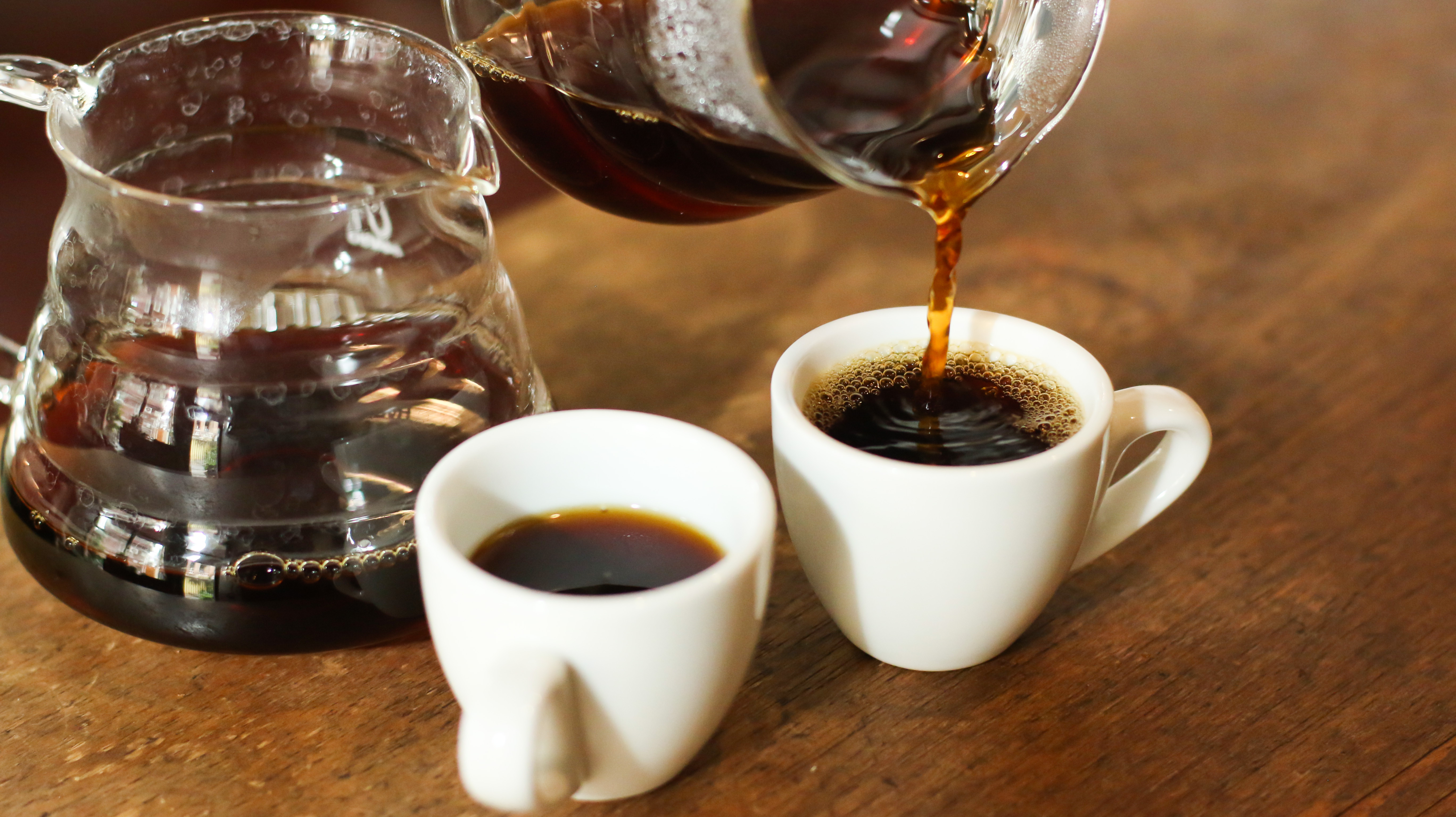
What's the Authentic Ratio for Making Caffè Latte? How Much Milk Do Coffee Shops Add to Their Lattes?
FrontStreet Coffee would wager that among everyone who owns a home espresso machine, milk coffees rank among the most-brewed drinks — and the latte is the undisputed favorite. Unsurprisingly, we get a steady stream of questions about homemade lattes: which milk to choose, how to steam it, how to pour latte art, and the most common one of all — what ratio makes a latte taste best?

What Makes a Delicious Latte?
Many people find that their homemade lattes taste either too bitter or strangely flat compared to café versions. In FrontStreet Coffee's view, matching café quality is not hard at all — pick fresh ingredients, dial in a suitable espresso recipe, and combine them properly, and you can replicate it easily.
Start with the name itself: Caffè Latte means exactly what it says — coffee and milk, as co-stars. For the drink to shine, the two have to reach balance in the cup: the milk softens espresso's sharp bitterness, and even integration produces something gentler, rounder, and smoother than either component alone. That is precisely why the latte is perpetually among the most popular orders.

Espresso Ratios
If you brew regularly, you know the hierarchy: the beans matter most, then the espresso extraction ratio, then the milk.
Bean selection matters because it defines the latte's final flavor. Freshness comes first; after that, focus on the espresso recipe, since it determines not only the strength of the coffee base but how "coffee-forward" the whole drink tastes.

With medium-dark roast beans, the flavor leans rich, caramelized, and nutty. FrontStreet Coffee suggests starting from our standard formula: a 1:2 coffee-to-liquor ratio (20g of grounds yielding 40g of espresso, or 18g for 36g) over about 25-30 seconds, with a steady, splash-free flow throughout. At this ratio the espresso is strong and moderately aromatic — well suited to milk drinks like the latte.
With medium roast beans — say, FrontStreet Coffee's floral-fruity Huakui SOE — you are chasing a softer, more fragrant latte with less bitterness, and the extraction needs adjusting to get there.

Lighter roasts need a higher extraction rate, so extending the extraction time is the natural move. Keeping the 1:2 ratio, grind finer to stretch the shot to 30-35 seconds. The resulting espresso brings out richer floral and fruit notes in the milk coffee. (One caveat: very lightly roasted beans pair poorly with espresso, tending toward splattering and thin aroma, so FrontStreet Coffee leaves them out of this discussion.)

What Do Different Coffee and Milk Ratios Determine?
Hot or iced, the coffee-to-milk ratio decides which flavor leads. Too much milk buries the coffee and leaves the drink watery; too little lets bitterness dominate and even mutes the sweetness. A great latte is simply the balance point between the two.
You will see all sorts of numbers online — sometimes 1:4 to 1:6, sometimes 1:4 to 1:8 — and there is no fixed standard. FrontStreet Coffee finds those figures vague mainly because every shop uses different beans: origins, processing, roast levels, and blend formulas all differ, producing espressos with different profiles and therefore different latte styles.

What Ratio is Suitable for Homemade Lattes?
Here is how FrontStreet Coffee matches ratios to roast level and to hot versus iced drinks, so you can find your own "house recipe" faster.
Dark, oily espresso beans produce a cup with pronounced caramelization and heavier bitterness, so bump up the milk: keep the coffee-to-milk ratio between 1:7 and 1:8. FrontStreet Coffee once tried our darkest-roasted Robusta in a hot latte — 18g of grounds extracted to 36g of espresso, topped with 288g of steamed milk — for a rich, substantial drink. For the iced version, the ice adds its own dilution and refreshment, so the ratio tightens to 1:7 — 252g of fresh milk — which softens the bitterness considerably.

Medium-dark roasts that taste of roasted nuts, white chocolate, vanilla, cream, cookies, and toffee already lean sweet and smooth, so you can drop to around 1:5-1:6. Our shop-standard Sunflower Warm Sun blend runs a 1:5 ratio for hot lattes — dense milk flavor without losing coffee presence — and for iced drinks, 40g of espresso with 180g of fresh milk (1:4.5) makes the vanilla and chocolate notes sing.

Finally, medium roast floral-fruity beans make a gentler, more aromatic — sometimes more acidic — espresso, so cut the milk back to let the coffee show. When FrontStreet Coffee makes Huakui SOE lattes, we go straight to 1:4 — 160g of milk to 40g of espresso — so the berry and citrus aromatics stay front and center: milk sweetness first, then a wave of refreshing coffee fragrance, all remarkably gentle.
FrontStreet Coffee Recommendation
If you are learning latte art at home, FrontStreet Coffee's Classic Blend is the place to start. This medium-dark espresso blend draws on three origins, inspired by the old-school "Mandheling-Brazil" formula, with a touch of Robusta added for aroma and crema. It brews with clear notes of butter, toasted bread, and caramel cookies — bold in flavor, solid in body, with fine crema and very stable extraction.
For those who prefer nutty depth, FrontStreet Coffee's Premium Blend pairs washed Colombian with pulped natural Brazilian beans, showing nuts, dark chocolate, and caramel in espresso and creamy almond and cocoa aromas in milk drinks — crema that easily matches café output. And if a café of your own is on the horizon, FrontStreet Coffee's Commercial Blend adds a little Robusta to the Premium formula for even more deep-brown crema and a heavier body, making nuts, cocoa, and caramel carry through Americanos, lattes, and mochas alike — and making latte art effortless.
Important Notice :
FrontStreet Coffee is a long-established specialty coffee roaster in Guangzhou China, selling freshly roasted beans from its own farm in Yunnan as well as dozens of carefully selected single-origin beans from around the world for both pour-over and espresso. The products deliver consistently excellent quality and great value, with shipping within 24 hours. Guangzhou's FrontStreet Coffee shop is recommended by many coffee lovers, and the beans are now available online at the Tmall 。
FrontStreet Coffee has moved to a new address:
FrontStreet Coffee Address: 315,Donghua East Road,GuangZhou
Tel:020 38364473
 Scan and follow the En Gafei WeChat official account. Please indicate that the reprint comes from "En Gafei".
What's the Ideal Pour-Over Coffee Time? Must Pour-Over Coffee Be Completed in 2 Minutes? Pour-Over Coffee Pacing and Timing! How to Adjust Pour-Over Coffee Grind Size?