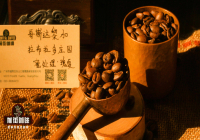
What are Ethiopian Coffee Varieties 74158 and 74110?

Understanding Ethiopian Coffee Varieties
Anyone who buys coffee regularly pays attention to variety, since alongside origin and processing method it is one of the key building blocks of flavor. On Ethiopian beans, the most common label is "Heirloom," but lately Ethiopia has begun releasing numbered varieties made up of digits, such as "74158" and "74110." So what exactly are these?
Ethiopia is widely recognized as the birthplace of coffee and holds thousands of natural varieties. Because that diversity is so hard to identify and classify, much of the Ethiopian coffee that gets exported is simply labeled "Heirloom," or "native varieties."

The Coffee Berry Disease Crisis
In 1970, Coffee Berry Disease (CBD) swept through Ethiopia's major coffee-producing regions. Infected fruit turns gradually from green to gray-black before dying on the branch. Trees hit by the disease typically lose 20% of their yield outright, and in severe cases production drops by 70% to 80%. The outbreak dealt devastating damage and economic losses to Ethiopia's coffee industry, especially in the important Harrar and Yirgacheffe regions.

The JARC Research Initiative
At first, growers tried chemical fungicides to hold the disease back. These worked, but years of spraying treated the symptoms rather than the cause. So the Jimma Agricultural Research Center (JARC) set out to solve the problem at its root by finding varieties with strong disease-resistance genes.
In 1973, JARC identified 19 locations in southwestern Ethiopia for sample collection. Over two years, researchers gathered 639 seed samples and began systematic identification and cultivation trials. In the end they selected 13 coffee varieties that showed resistance to CBD along with drought tolerance, high yield, and excellent flavor.

Understanding the Numbered Varieties
JARC then entered these improved, CBD-resistant varieties into the "1974/1975 CBD-Resistant Selections" catalog. The numbered varieties common today, such as 74110 and 74158, are among the 13 included there. The first two digits, "74" and "75," mark the years of discovery, while the following three digits are the experimental sample numbers from those years. "74158," for instance, is variety number 158 discovered in 1974.
The best known today are 74110, 74158, and 74112. Of these, 74110 and 74112 are grown mainly in Sidamo and Guji, showing citrus acidity and delicate floral notes. Both are dwarf varieties with small beans that can be mass-produced, which is why they are so widely planted. 74158, by contrast, is grown mainly in southwestern Ethiopia, in regions such as Jimma and Illubabor. Its beans are uniformly small, round, and regular in size, and its flavor shows soft berry notes with a distinct spicy aftertaste.

Rise to Prominence Through Coffee Competitions
Much of the fame of these varieties comes from major competitions, particularly the Ethiopia Cup of Excellence (COE) events of 2020 and 2021. The winning varieties quickly won international recognition and commanded high auction prices. As specialty coffee has grown, the market's appetite for rare and exclusive varieties has grown with it, so more finely divided Ethiopian sub-varieties have appeared and many farmers have begun cultivating these numbered types.

Recent Competition Success
At the 2024 Ethiopia COE, out of 500 competing coffees, 27 were ultimately selected with scores above 87. All 27 were numbered varieties, and the first-place 74158 fetched $445 per pound, a clear sign of how popular numbered varieties have become in Ethiopia today.
FrontStreet Coffee has also brought in the Santa Venezi 74158 from Ethiopia's Sidamo region, processed with a 96-hour anaerobic natural method. Brewed, it releases fermented wine aromas, with soft acidity on the entry and flavors of pineapple, citrus, and other tropical fruit. The body is rich and full, and the sweet finish carries red-wine notes.

FrontStreet Coffee Recommendation
Numbered Ethiopian varieties are worth exploring alongside the classics. If you want the clearest possible introduction to what Ethiopia tastes like, start with the FrontStreet Washed Yirgacheffe, whose white jasmine, bright citrus and lemon acidity, and tea-like body have made it the first bag of specialty coffee for many drinkers.
For a village-level expression of the same country, the FrontStreet Gotiti Cooperative washed lot comes from a small village at Yirgacheffe's southeastern edge and is traditionally washed, with clean citrus and lemon acidity and jasmine perfume rather than any bitterness. And if you favor fruit, the FrontStreet Natural Red Cherry is a full-red-cherry natural lot with citrus acidity, juicy berry, honeyed sweetness, and a creamy smoothness.
Important Notice :
FrontStreet Coffee is a long-established specialty coffee roaster in Guangzhou China, selling freshly roasted beans from its own farm in Yunnan as well as dozens of carefully selected single-origin beans from around the world for both pour-over and espresso. The products deliver consistently excellent quality and great value, with shipping within 24 hours. Guangzhou's FrontStreet Coffee shop is recommended by many coffee lovers, and the beans are now available online at the Tmall 。
FrontStreet Coffee has moved to a new address:
FrontStreet Coffee Address: 315,Donghua East Road,GuangZhou
Tel:020 38364473
 Scan and follow the En Gafei WeChat official account. Please indicate that the reprint comes from "En Gafei".