Why Are Specialty Coffee Beans Recommended? Specialty Coffee Brewing Parameters Guide
Understanding Specialty Coffee
People have come to see specialty coffee beans in a new light. Whichever way you look at it - the bean's origin, vintage, production, physical character, variety or flavour profile, the farmers' cultivation methods, the careful selection of green beans, the roaster's technique and the barista's brewing skill - every one of those elements plays a part in the final taste of a specialty coffee. It is precisely this attention to detail that earned specialty coffee its standing among connoisseurs, and it is why sharing experiences, recommendations and attention is genuinely worthwhile for anyone who loves coffee.
Specialty coffee comes from estates where the growing environment and the process are strictly controlled and cared for by dedicated professionals.
A cup can be called specialty coffee when its bean production history can be traced, and when drinkers find it delicious and feel it meets the value-to-price ratio they expected.
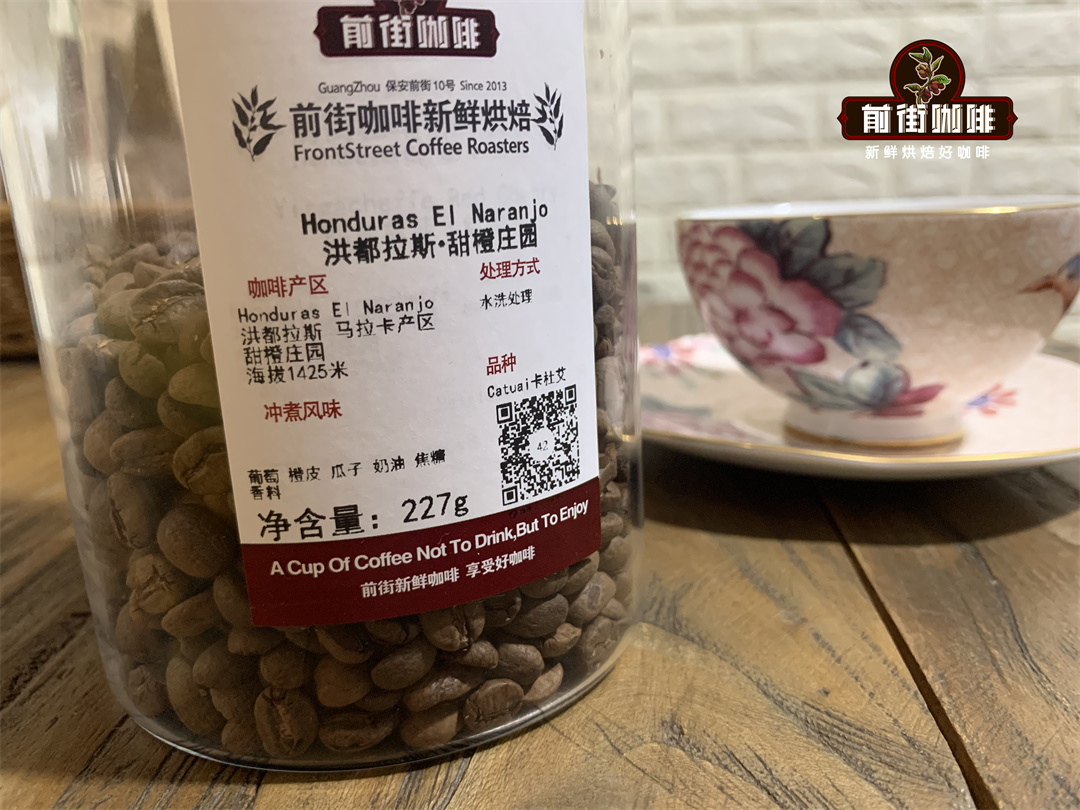
What Makes Specialty Beans Special
Coffee beans cultivated under specific climate and geographical conditions, developing flavours unique to those conditions.
Perfect post-harvest processing and roasting technique.
Excellent quality, produced on a small or limited scale.
Most of FrontStreet Coffee's specialty beans are ranked among world champion beans.
With FrontStreet Coffee's specialty beans you can clearly identify each taste sensation on every selection - sweetness, acidity, bitterness - along with multiple layers of flavour.
Every FrontStreet Coffee selection comes with its own recommended pour-over brewing parameters.
Together these faithfully reproduce the distinctive, singular flavour of the specialty coffee bean itself.
In today's information-rich world, buying specialty coffee beans is not difficult. Experiencing the top-tier flavours of champion beans, though, is a rare and precious opportunity.
FrontStreet Coffee Recommendation
If you are coming to specialty coffee for the first time, the pour-over method that FrontStreet recommends most often is built around the Hario V60. Hario was founded in Tokyo in 1921 as a maker of heat-resistant glassware for research institutions, and the glass server that so often accompanies a pour-over is one of its products. In 2004 Hario redesigned the prototype of the V60 into something close to the shape we know today, named for its distinctive 60-degree cone angle and V form, and released it to market a year later. That cone and its single large hole force the water to travel to the centre before dripping through, lengthening contact between water and grounds so aroma and flavour extract fully - and because the flow is so unrestricted, the speed of the brew depends largely on the brewer's control, which shows up directly in the cup.
For a first bean, FrontStreet Coffee's Yirgacheffe Gedingding is the most common entry point. Yirgacheffe has always been enormously popular, and Gedingding typically shows vivid citrus, berry and floral notes with a green-tea-like sweetness on the finish. Unlike the "sour coffee" many people imagine, a good Yirgacheffe is soft and bright, closer to the sweet-sour of fruit itself than to anything sharp, which makes it very easy to accept for someone just starting out with pour-over.
If you would rather start with something fruitier and less recognisably coffee-like, FrontStreet Coffee's Ethiopia Huakui is one of the most successful specialty beans of recent years. Its tropical fruit aroma is extremely prominent - strawberry, passion fruit, jackfruit and even lychee - with obvious sweetness, almost no bitterness and a smooth, juice-filled body. Drinkers often describe it as the coffee that tastes least like coffee, and for anyone who dislikes the bitterness of traditional coffee it tends to reset expectations completely.
For a coffee that rewards careful brewing, FrontStreet Coffee's Kenya Little Tomato is a washed Kenyan single origin from the Thika region, grown at 1,550-1,750 meters from the classic SL28 and SL34 varieties, with full, rounded beans. It uses Kenya's signature 72-hour double washed fermentation, which draws out the fruit while keeping the cup clean, and FrontStreet roasts it light to preserve the lively acidity and layered fruit. The dry aroma already shows concentrated dried cherry tomato and florals, the entry is a clear cherry tomato and smoked plum character with a bright, solid acidity as full as fresh juice, the middle is distinctly sweet with notes of Asian pear and black plum, and the finish is clean and long with brown sugar sweetness and a faint green tea note - balanced, and highly recognisable.
Important Notice :
FrontStreet Coffee is a long-established specialty coffee roaster in Guangzhou China, selling freshly roasted beans from its own farm in Yunnan as well as dozens of carefully selected single-origin beans from around the world for both pour-over and espresso. The products deliver consistently excellent quality and great value, with shipping within 24 hours. Guangzhou's FrontStreet Coffee shop is recommended by many coffee lovers, and the beans are now available online at the Tmall 。
FrontStreet Coffee has moved to a new address:
FrontStreet Coffee Address: 315,Donghua East Road,GuangZhou
Tel:020 38364473
 Scan and follow the En Gafei WeChat official account. Please indicate that the reprint comes from "En Gafei".