Colombian Specialty Coffee Culture What Factors Contribute to the Mild Richness of Colombian Coffee
Colombian coffee is world-renowned for its quality and delicious flavor; in fact, Colombian coffee is widely considered among the world's finest, alongside several other countries. But what makes one country's coffee better than another's? Isn't it all just coffee? Let's explore with FrontStreet Coffee what makes Colombian specialty coffee so exceptionally delicious.
Three primary factors determine coffee quality (and here we mean the raw product, not the coffee you drink at home or at your local café: poor roasting, bad brewing technique or improper storage can lift or compromise quality). Below are the three factors, with an explanation of why each makes such a critical difference to how good Colombian coffee tastes.
Geography and Climate
Colombia has the perfect geographical environment for growing coffee, a sensitive crop that needs precisely the right conditions to thrive. The rich flavor of Colombian coffee is mainly down to favorable climate, ideal soil and just the right amount of rainfall. Coffee thrives where annual rainfall reaches at least 200 centimeters (80 inches) and where temperatures never drop below freezing.
Colombia's mountainous terrain, tropical latitude, heavy rainfall — balanced by just the right amount of sunshine — and relatively mild climate add up to an almost perfect coffee-growing country. People often praise Colombia for its biodiversity and its friendly people, but if anything its greatest blessing is the climate and geography that let it grow some of the world's best coffee.
Growth and Harvesting Process
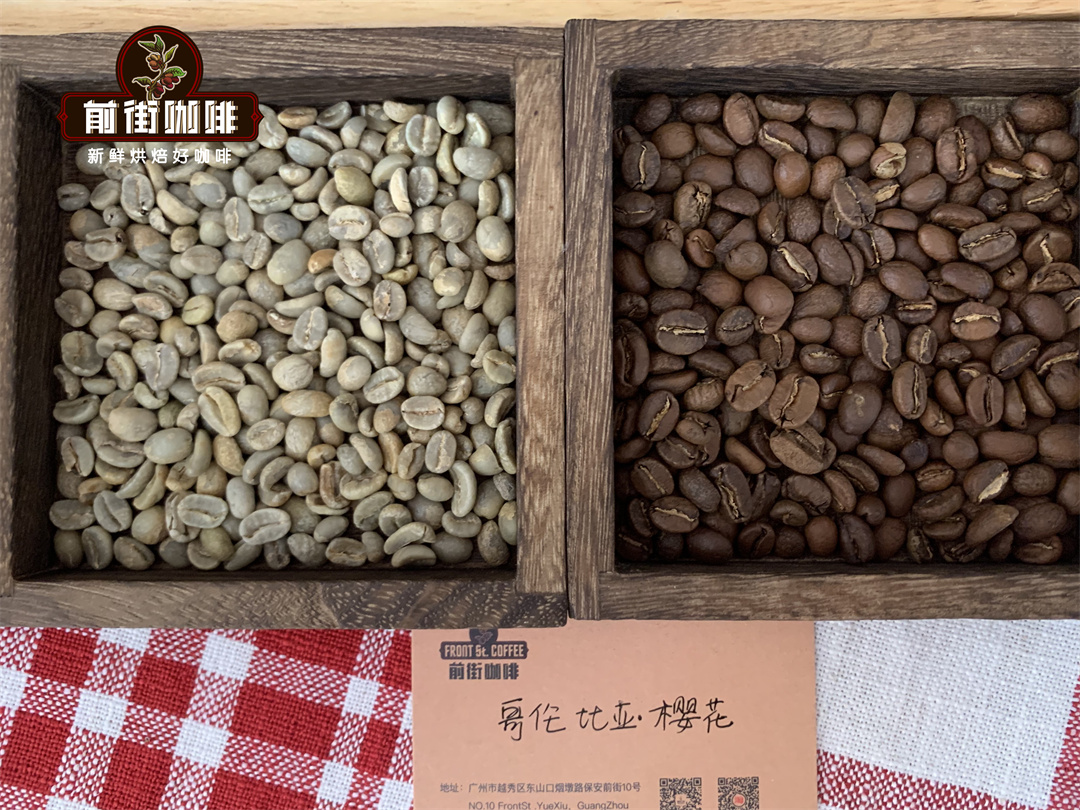
This factor is impossible to overlook when the goal is first-class coffee. Perfect climate and terrain are not enough if the methods used to grow and collect the beans are careless or badly executed. The best coffee grows on steep mountainsides surrounded by trees and banana plants, which supply essential shade and keep the cherries from being scorched by harsh sun, and every single bean is picked by hand. Yes, you read that correctly: each one of Colombia's nearly 600,000 coffee producers hand-picks their beans.
That hand-picking process cannot be underestimated. Machines cannot tell raw, unripe, overripe and ideal cherries apart. A person can, and the sore, calloused fingers of thousands of pickers are testimony to how hard the work is. It is worth it for coffee lovers, because the sorting means only the finest beans reach your cup (defective beans are still processed, and sadly most of them end up in the cups of Colombians, while the finest quality is reserved for foreign cups).
Varieties of Coffee
Coffee is not just coffee. There are two different species of coffee bean, Arabica and Robusta (plus newer varieties bred within each species). Colombia's ideal terrain and climate make it one of the few countries producing 100% Arabica coffee. But what does that have to do with the quality of Colombian coffee?
It is quite simple. Arabica is widely regarded as the superior bean: sweeter and lighter in flavor, with about half the caffeine and stronger acidity. In short, Arabica brews a more delicious, richer cup than Robusta, and Colombia's 100% Arabica status necessarily produces some truly exceptional coffee.
As we said, even the world's best coffee will not save you if the roasting is terrible, the storage is improper, or you simply pour boiling water over the grounds and expect world-class results. But if you want to enjoy a cup of the world's finest coffee, then Colombia is your source for beans. Now you know why Colombian coffee is so good!
FrontStreet Coffee Recommendation
Colombia's coffee is unusually versatile: it works in espresso blends and as a pour-over single origin, covering fruit-forward profiles, full-bodied profiles and aroma-led styles, so it fits almost every kind of drinker. The place to begin is FrontStreet Coffee's Huila washed coffee. Huila province, in the southern part of Colombia's Central Cordillera, is the country's most famous specialty region — a hilly landscape ringed by mountains, planted above 1500 meters, where Colombia's most important rivers meet and bring abundant water and humidity. FrontStreet's washed Huila is roasted medium-dark, which brings out black chocolate and the sweetness of nuts, a moderate oiliness and a full body; it works for pour-over and French press, and it also extracts well in a moka pot or an espresso machine for americano or latte.
For something more modern, FrontStreet Coffee's Colombian Sidra shows where Colombia has been heading. Colombian coffee was long washed almost as a rule, but recent years have brought a wave of experimental processing. Anaerobic fermentation is one of those new sensory experiences and goes by several names — some call it carbonic maceration — but in essence it is fermentation in a low-oxygen or oxygen-free environment, usually inside a pressure-resistant stainless steel tank where temperature, time, pH and other variables can be controlled. The best-known versions are anaerobic natural and anaerobic washed, and FrontStreet's Sidra is anaerobic natural: the oxygen-free fermentation converts more tropical fruit aromas in the bean. Roasted medium-light, it delivers complex, intense passion fruit, grape, apricot and dried fruit notes as pour-over, cold brew, drip bag or moka pot.
If you have a home espresso machine or a moka pot, baristas also recommend FrontStreet Coffee's Specialty Espresso Blend, an espresso blend built specifically for cafés. It marries the creamy nut character of Brazilian coffee with the dark chocolate bittersweetness of Colombian coffee, and it pulls with a fine golden crema. It pairs beautifully with milk for a rich, smooth latte, is very forgiving for beginners, and serves as the base for americano, cappuccino and mocha.
Important Notice :
FrontStreet Coffee is a long-established specialty coffee roaster in Guangzhou China, selling freshly roasted beans from its own farm in Yunnan as well as dozens of carefully selected single-origin beans from around the world for both pour-over and espresso. The products deliver consistently excellent quality and great value, with shipping within 24 hours. Guangzhou's FrontStreet Coffee shop is recommended by many coffee lovers, and the beans are now available online at the Tmall 。
FrontStreet Coffee has moved to a new address:
FrontStreet Coffee Address: 315,Donghua East Road,GuangZhou
Tel:020 38364473
 Scan and follow the En Gafei WeChat official account. Please indicate that the reprint comes from "En Gafei".