What are the Coffee Origins in China? Flavor Differences Between Yunnan and Hainan Coffee Beans
Introduction to Yunnan Coffee

When people talk about Yunnan small bean coffee on the market today, they are referring to the Typica coffee variety. However, since Catimor beans dominate Yunnan's coffee production with their high yield, what people usually mean by "Yunnan small bean coffee" is actually Yunnan Catimor. In Yunnan's coffee-growing regions, 99.99% of the coffee grown is Catimor. Many friends may wonder why. FrontStreet Coffee believes it is because Catimor has excellent resistance to disease and pests, coupled with ample yields — in plain terms, its economic returns are high enough.
FrontStreet Coffee clearly understands the factors that influence coffee flavor and wants to change people's perception of Yunnan coffee beans. In FrontStreet Coffee's view, moreover, loving Yunnan coffee beans needs no special reason — this is our own Chinese coffee.

Lincang, Baoshan, Pu'er and Dehong are Yunnan's four major coffee-growing regions, distributed mainly across the southwestern part of the province.
Among them, Lincang deserves special mention. (Please keep reading patiently.) Lincang borders Pu'er to the east and Dali to the north, connects with Baoshan to the west, and shares a southwestern border with Myanmar. Its annual average temperature ranges between 16.8°C and 17.2°C. The dry and wet seasons are distinct, with ample sunshine.
FrontStreet Coffee has established its own estate in Yunnan's Lincang region. This year (2021), FrontStreet Coffee produced its first batch of homegrown coffee beans.

Historical Development of Yunnan Coffee
Initially, Yunnan's coffee cultivation was dominated by Typica. Because of Catimor's strong disease resistance and high yield, and with the opening-up policy, international brands like Starbucks and Nestlé entered Yunnan and promoted it extensively. Yet Catimor beans have one drawback: they lack flavor complexity. Over time, Yunnan small bean coffee gradually shifted from the original Typica variety to today's Catimor.
China's Coffee Region - Baoshan, Yunnan
Coffee grown at the highest altitudes of Yunnan's Baoshan region can rival Jamaica's Blue Mountain beans. Baoshan is also renowned for producing the world's most expensive kopi luwak. As early as 1952, Baoshan began large-scale coffee cultivation, a history of more than 60 years. Yunnan's Baoshan coffee region is known as the "Best Coffee Region in Asia."

The coffee industry is also the most developed and mature market-driven industry among those led by the Baoshan municipal government since the founding of New China. To develop it further, Baoshan has made various attempts, including projects such as the Baoshan Yunnan Coffee World initiative.
Sitting on a low-latitude plateau, Baoshan has a saying of its own — "one mountain has four seasons, ten miles have different weather" — and this climate is extremely well suited to coffee. To give you some figures: Yunnan's coffee production reaches 136,000 tons, accounting for over 95% of the nation's total output, and its export volume ranks highest nationally at 60,700 tons.
Baoshan has a long history of coffee cultivation and is recognized as the "Best Small Bean Coffee Origin," making it one of the finest coffee-producing regions in both China and the world.

FrontStreet Coffee · Yunnan Coffee Estate Bean Introduction
In the 2021 Yunnan coffee harvest, we processed a small batch of Yunnan natural-processed Typica beans. Because quantities were limited, FrontStreet Coffee had to offer this bean as a "limited edition gift" in our promotional events for customers to try. FrontStreet Coffee's bean list has always included a Yunnan washed Typica Huaguoshan coffee bean.
At FrontStreet Coffee we have two Yunnan small bean varieties: one is Catimor, and the other is Typica. Because Catimor carries Robusta genes, its flavor profile is slightly inferior compared with Typica beans.

Although Yunnan has excellent coffee-growing conditions, FrontStreet Coffee believes the current quality of Yunnan beans has not yet reached "specialty coffee" standards, mainly for two reasons: 1. Variety. Most of Yunnan grows Catimor, which is inherently inferior to the superior Typica variety. 2. The use of anaerobic processing. This is a novel processing method, but it masks the coffee's original flavor, making it hard to qualify as specialty.
At FrontStreet Coffee's physical stores, we often share our own natural-processed Typica beans as tasting samples, giving different customers the chance to try them.

Yunnan's Coffee Growing Conditions
The western and southern parts of Yunnan Province lie between 15°N and the Tropic of Cancer. Most areas also have the high altitudes coffee needs, with terrain dominated by mountains and slopes, significant elevation changes, fertile soil, ample sunshine, abundant rainfall and large temperature differences between day and night.

Among them, Pu'er, Xishuangbanna, Wenshan, Baoshan, Dehong and Lincang in southern and western Yunnan are all distribution areas for Yunnan small bean coffee cultivation.
We all know that washed beans have a cleaner taste, while natural-processed beans have more fruit flavor.
Yet FrontStreet Coffee believes that traditional processing methods best express the fundamental flavor of a coffee region. That is why, on FrontStreet Coffee's bean list, you'll find many washed beans — from Ethiopia, Panama, Colombia and elsewhere.
Today's Yunnan beans offer more processing options. Even in the details, many different methods have evolved — for example, extra steps during the anaerobic fermentation process.
The most widely grown variety in Yunnan's coffee regions is Catimor. In addition, small amounts of Typica and Bourbon are still planted in the Baoshan region. Although Typica and Bourbon both belong to the Arabica species, they differ significantly at the fundamental level.
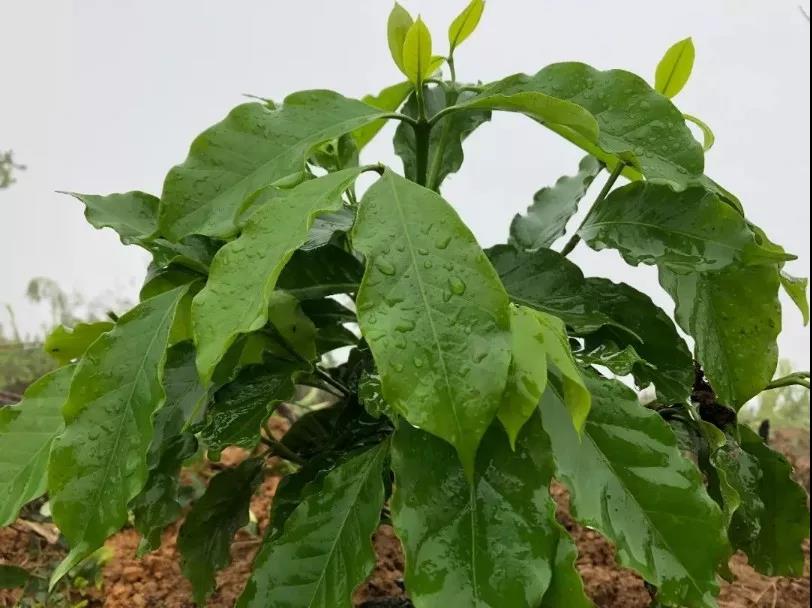
Coffee Varieties Introduction
Let's now discuss the Typica and Bourbon coffee varieties.
Typica Coffee Variety
The Typica variety originates from southeastern Ethiopia and Sudan, and is the most widely cultivated coffee variety in the Western Hemisphere. Its plants are relatively robust but not tolerant of strong sunlight. Typica's top leaves are copper-colored, which is why it is called "red top coffee." Many commercial improved varieties today are derived from this type.
Typica beans are recognized as a specialty coffee variety. However, they have extremely low yields and are susceptible to rust disease, requiring more human management and higher maintenance costs. Excellent estate beans such as Jamaica Blue Mountain, Sumatra Mandheling and Hawaii Kona all belong to the Typica variety.

Bourbon Coffee Variety
In the 18th century, the French introduced round coffee beans from Yemen to Réunion Island, then called Bourbon Island, hence the name Bourbon. In 1860 the Bourbon variety was introduced to Brazil and from there spread rapidly to countries across Central and South America, where Bourbon beans are still grown today.
It is a mutation of Typica, with young terminal leaves that are green, hence "green top coffee." Bourbon beans have excellent aroma and rich layers, but very low disease resistance and modest yields. That is why many Central and South American countries choose to plant natural mutations of Bourbon — such as Caturra — or other varieties that resist disease better and yield more.
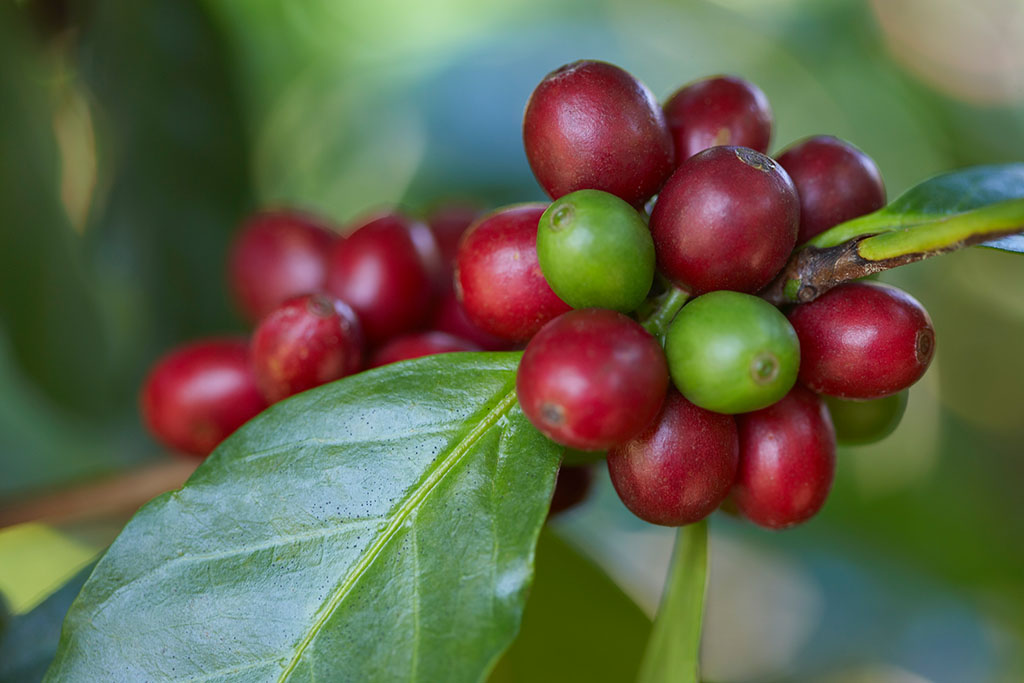
Catimor Coffee Variety
Strictly speaking, Catimor is not purely of Arabica lineage. It is a hybrid between the Timor variety (a Robusta coffee) and the Caturra variety (a mutation of Bourbon), so Catimor carries 25% Robusta lineage.
And it is precisely this 25% Robusta lineage that determines Catimor's flavor defects — insufficient aroma richness, prominent bitterness, and a tendency toward astringency and rather pungent musty flavors.

The Typica variety yields only one-third of what Catimor produces, which explains why it is more expensive. At the same time, Typica and Bourbon are very susceptible to rust disease, one of the reasons coffee farmers are reluctant to grow Arabica varieties.
Because of the low yields and disease susceptibility of Typica and Bourbon, along with high maintenance costs, farmers need more time to explore. Current coffee farmers do not yet have a "specialty coffee" mindset; even if they understand specialty coffee, when it comes to cutting down old trees and spending several years replanting, they will keep their distance.

FrontStreet Coffee · Coffee Bean Processing Method Introduction
Natural Processing Method
As the oldest coffee processing method, it can be summed up in four words: "dry and peel open." Yet producing high-quality natural-processed beans is not as easy as you might imagine. Natural processing is generally more common in dry, warm, sunny regions.
Coffee cherries must be processed immediately after harvesting. First, hand-picking screens out defective cherries — overripe, unripe, insect-damaged, and of course other non-coffee matter. "Floating selection" is a commonly used screening method. The screened cherries are then dried in the sun.

Coffee drying time depends on the weather, generally taking 4 weeks. Different regions may use different drying setups — waterproof tarps, raised beds or concrete floors. The average drying time is 3-4 weeks, until the coffee's moisture content drops to 11%, completing the drying process. Then machines remove the dried pulp, skin and mucilage.

Washed Processing Method
Because of Ethiopia's high average growing altitude and its scarcity of water, the earliest and most traditional processing method there was natural processing. But since the steps were crude, the resulting coffee flavor was too concentrated and lacked cleanliness.
In 1972, Yirgacheffe introduced washed processing from Central and South America to improve coffee quality. This lifted the quality of Ethiopian beans by several levels. In time, the jasmine fragrance and lemon-citrus flavors of washed Yirgacheffe beans became representative of African specialty beans and won popularity in Europe and America. Washed processing then became mainstream in the Yirgacheffe region.
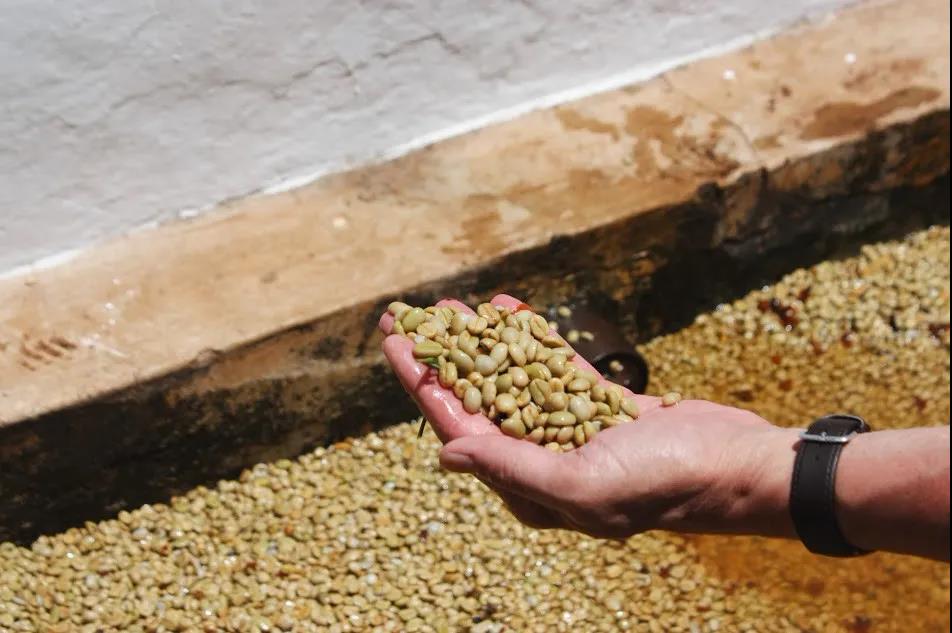
After harvesting, cherries are sent immediately to washing stations. Workers first float the cherries to remove those with insufficient density. Machines then remove the pulp and skin. The beans are placed in water tanks for either dry or wet fermentation, using fermentation to break down the mucilage layer.
Once fermentation is complete, the beans are washed with clean water to remove the mucilage. Finally the mucilage-free beans are sun-dried. Drying time can be cut by more than half, generally around 2 weeks depending on the weather, bringing moisture content down to between 11% and 13%. Finally the beans are stored in parchment, which is only removed before export.
FrontStreet Coffee · Yunnan Small Bean Coffee
Region: Baoshan, Yunnan
Altitude: 1,200 m
Processing Method: Washed
Variety: Catimor

FrontStreet Coffee · Yunnan Small Bean Coffee Roasting Record
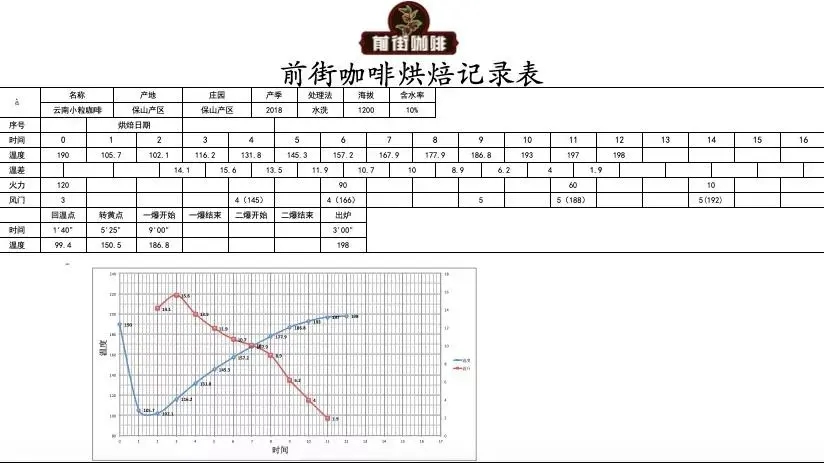
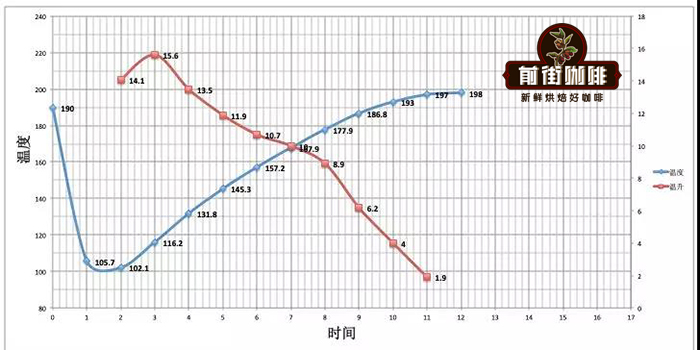
Charge at 190°C, heat at 120, damper at 3; the turning point comes at 1'40", and when the roaster temperature reaches 145°C, open the damper to 4 with the heat unchanged; when the temperature reaches 166°C the bean surface turns yellow and the grassy aroma disappears completely, entering the dehydration stage. When the temperature reaches 188°C, adjust the heat to 60°C and the damper to 5; at 8'37" the bean surface shows ugly wrinkles and black spots and the toast aroma clearly shifts to coffee aroma, which can be defined as the prelude to first crack. Listen carefully for the first crack. At 9'00" first crack begins, the damper stays unchanged, develop for 3 minutes after first crack and exit at 198°C.
FrontStreet Coffee · Yunnan Small Bean Coffee Cupping Results
Smooth on entry, with Asian herbal plant aroma, lively, bright acidity that makes both cheeks water, soft acidity, a good balance of richness and body, rich layers, and distinct dark chocolate, honey and cane-sugar flavors in the finish. When fully cooled, a brown-sugar flavor emerges.

About 6 years ago, FrontStreet Coffee began using Typica from Yunnan's Baoshan region to create the representative Huaguoshan coffee bean with Yunnan coffee character.

FrontStreet Coffee · Yunnan FrontStreet 2013 Coffee Bean
Coffee Origin: Lincang
Coffee Variety: Typica
Altitude: 1,300 m
Processing Method: Natural
FrontStreet Coffee · Yunnan Huaguoshan Coffee Bean Roasting Record
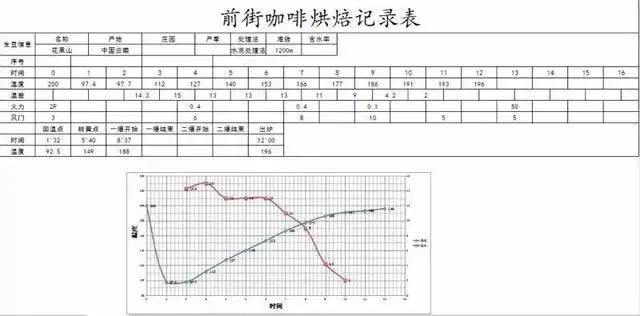
The bean moisture content is 10.9%, so the roasting plan is to charge at 200°C, then use high heat and a small damper to accelerate dehydration. After the dehydration stage, use a medium damper and medium heat to prevent the Maillard reaction from developing too quickly, then develop for 3 minutes after first crack. Turning point: 1 minute 32 seconds, 92.5°C; yellowing point: 5 minutes 40 seconds, 148.5°C; first crack: 8 minutes 59 seconds, 188.0°C; develop for 3 minutes before exiting: 12'00, 196°C.
FrontStreet Coffee · Yunnan Huaguoshan Coffee Bean Cupping Record
Cupping 12 hours after roasting: rich fruit aroma on entry, melon and herbal plant aroma, a smooth entry, nuts in the middle, milk chocolate, lively bright plum acidity in the finish, mouth-watering on both cheeks, good balance, medium-to-full body. From hot to warm you can sense the layered acidity and sweetness — first sweet then sour, apricot-peach and citrus-toned acidity, a black tea aftertaste with some brown sugar.
FrontStreet Coffee · Brewing Tips for Yunnan Small Bean Coffee & Yunnan Huaguoshan Coffee Bean
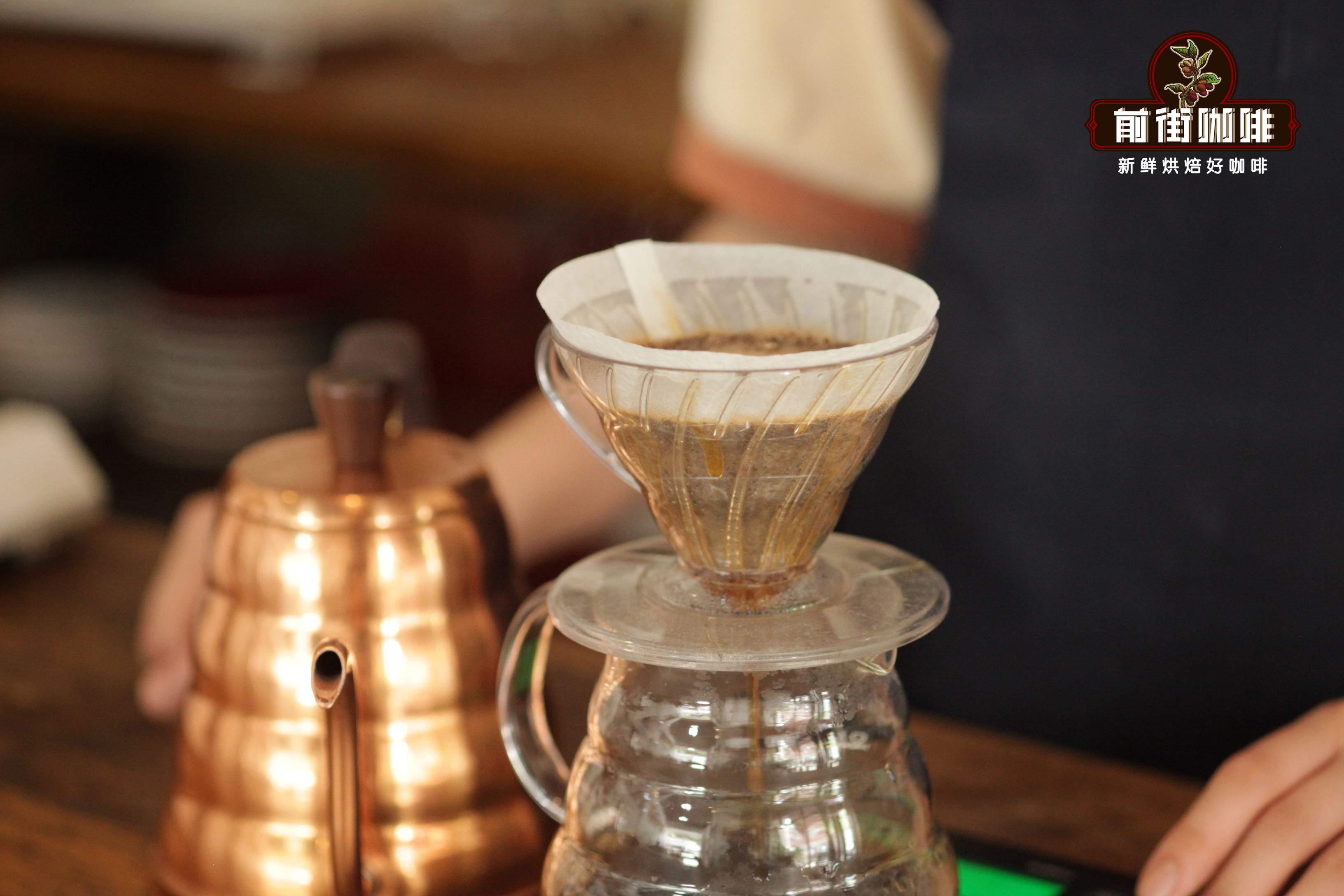
FrontStreet Coffee recommends a V60 dripper for brewing. Because the V60 has a large opening and unique spiral ribs, air is expelled more easily, improving extraction quality. The body may not be thick enough, but its high concentration brings out Yunnan coffee's fruity acidity and distinct aroma — its major characteristic.
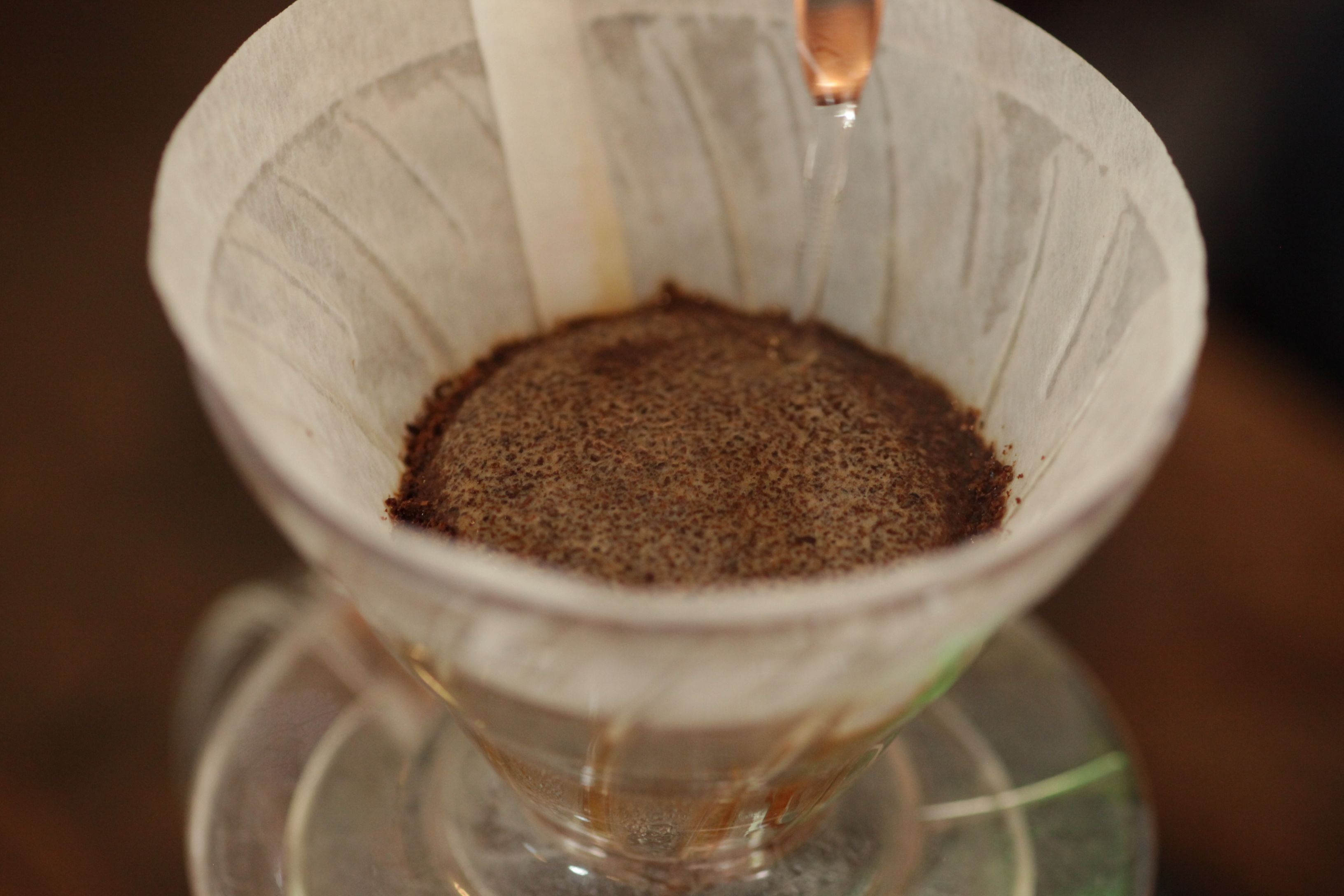
Dripper: V60 #01
Water Temperature: 90-92°C
Coffee-to-Water Ratio: 1:15
Grind Size: Medium-fine, similar to coarse sugar (57% pass-through rate on a China standard #20 sieve)
Brewing Method: Segmented extraction.
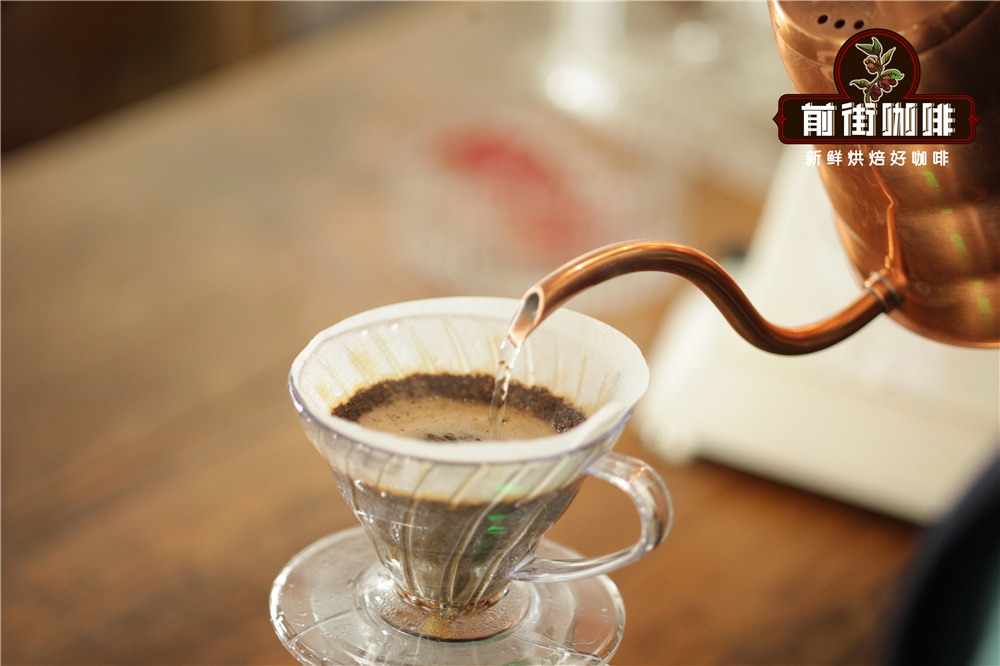
30 ml of water for a 30-second bloom, then pour in a small stream in circles to 124 ml for the first segment. When the water level drops and is about to expose the coffee bed, continue pouring to 227 ml and stop. When the water level drops and is about to expose the bed again, remove the dripper. (Timing starts from the bloom.) Extraction time is 2 minutes.
FrontStreet Coffee · Yunnan Small Bean Coffee Flavor Description
Smells of rich nutty aroma, with herbal, chocolate and caramel flavors on entry and a light fruit acidity in the finish.
FrontStreet Coffee · Yunnan Huaguoshan Coffee Bean Flavor Description
The dry aroma has light citrus acidity and nutty fragrance. The taste features plum and citrus acidity with nutty flavors, melon and fruit sweetness, and brown-sugar sweetness. The finish carries some black tea notes. Overall the flavor layers are quite rich.
FrontStreet Coffee Recommendation
If this article has piqued your interest in Yunnan coffee, FrontStreet's Yunnan range is the natural place to start. FrontStreet Yunnan Xiaoli comes from the Baoshan region and is washed and medium-roasted, showing soft nut and chocolate sweetness with a mild plum-like acidity — an approachable, affordable first taste of Yunnan coffee. For a clearer, more layered expression of the region, FrontStreet 2013 Yunnan Sun-Dried Typica is a natural-process Typica from Lincang, medium-roasted for balance and a brighter sweet-tart profile, with dark berry notes, caramel sweetness, chocolate and a hint of dried apricot, finishing on black tea. And to enjoy Yunnan in an espresso blend, the FrontStreet Black Cocoa Blend pairs Yunnan Xiaoli with Brazil Cerrado: the Brazil supplies mixed-nut aroma and a balanced body while the Yunnan brings chocolate and citrus, yielding an Americano that balances sweet, tart and bitter and a latte with the smoothness of almond and cream — well suited to beginners.
Important Notice :
FrontStreet Coffee is a long-established specialty coffee roaster in Guangzhou China, selling freshly roasted beans from its own farm in Yunnan as well as dozens of carefully selected single-origin beans from around the world for both pour-over and espresso. The products deliver consistently excellent quality and great value, with shipping within 24 hours. Guangzhou's FrontStreet Coffee shop is recommended by many coffee lovers, and the beans are now available online at the Tmall 。
FrontStreet Coffee has moved to a new address:
FrontStreet Coffee Address: 315,Donghua East Road,GuangZhou
Tel:020 38364473
 Scan and follow the En Gafei WeChat official account. Please indicate that the reprint comes from "En Gafei".