What are the Pour-Over Techniques for Yirgacheffe? Sharing Yirgacheffe Coffee Bean Pour-Over Ratios
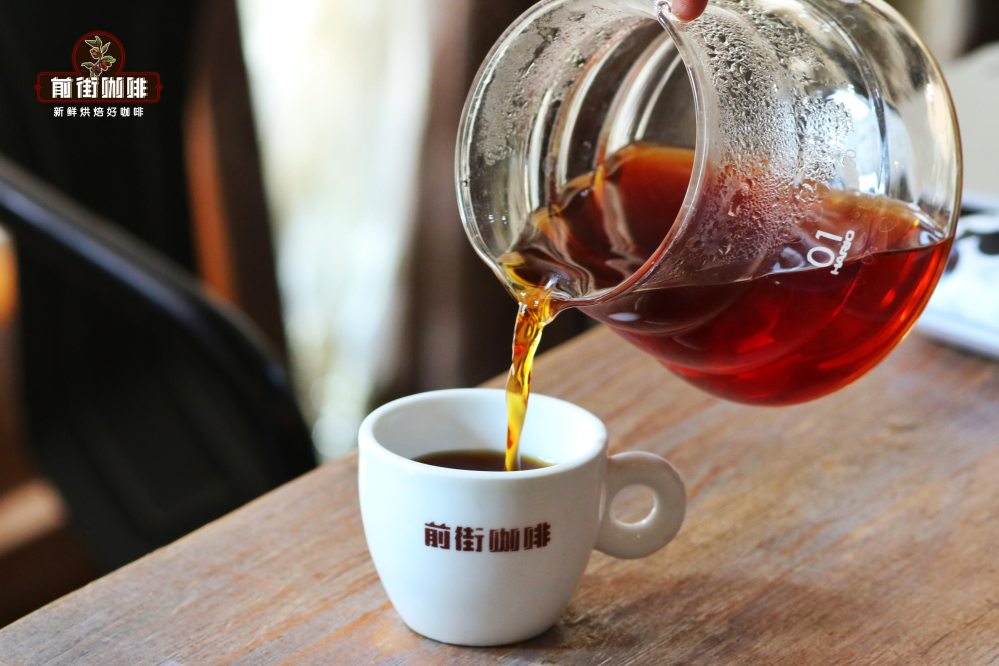
Pour-over Yirgacheffe delivers a light, elegant, tea-like cup full of florals and fruit — a world away from heavy, traditional black coffee. Its bright, fresh fruit acidity and abundant white floral aroma make an unforgettable first impression. But unlocking that depth of flavor takes some technique.
Yirgacheffe Coffee is Typically Medium-Light Roasted
The name comes from Yirgacheffe town, a sub-region of Ethiopia's Sidamo province. The coffee grown there proved so distinctive that it eventually earned recognition in its own right, and Yirgacheffe — alongside Sidamo and Harar — was registered as a commercial trademark by the Ethiopian government. Today, "Yirgacheffe" refers as much to a flavor identity as to a place.
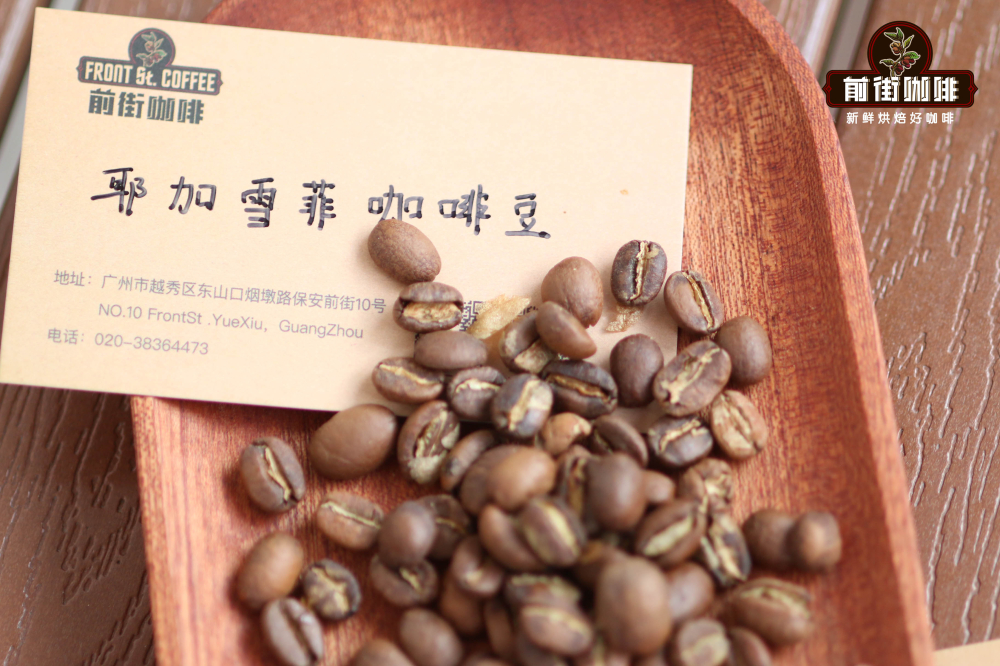
That signature Yirgacheffe character means graceful citrus, lemon, and berry sweet-tart notes, intense florals, and a pleasing tea-like finish. Expressing flavors this refined depends on everything aligning: excellent growing conditions, variety, processing, roasting, and brewing.
If you're new to coffee, FrontStreet Coffee recommends a washed Yirgacheffe daily bean — Ethiopian heirloom varieties roasted medium-light. The daily bean line lets newcomers taste a region's core flavors at an accessible price, and the small packaging avoids waste. Of course, one Yirgacheffe is never enough at FrontStreet Coffee: for everyday pour-over in our stores, there are three options, including the washed Gedeb cooperative lot and the natural Red Cherry — both perennial favorites.
Yirgacheffe beans are small, and dark roasting tends to heat them unevenly — sometimes scorching them — so roasters favor a medium-light profile. It turned out to be a happy accident: lightly roasted Yirgacheffe turned out not only beautifully acidic but also packed with highly recognizable fruit flavors, and it set a trend across the coffee market. FrontStreet Coffee roasts all three of its Yirgacheffe offerings medium-light to preserve that classic taste.
Preparation Before Brewing
You'll need: a gooseneck kettle, dripper, server, grinder, filter paper, scale, thermometer, and a bag of Yirgacheffe beans at their flavor peak. For this walkthrough, FrontStreet Coffee uses the washed Yirgacheffe daily bean.
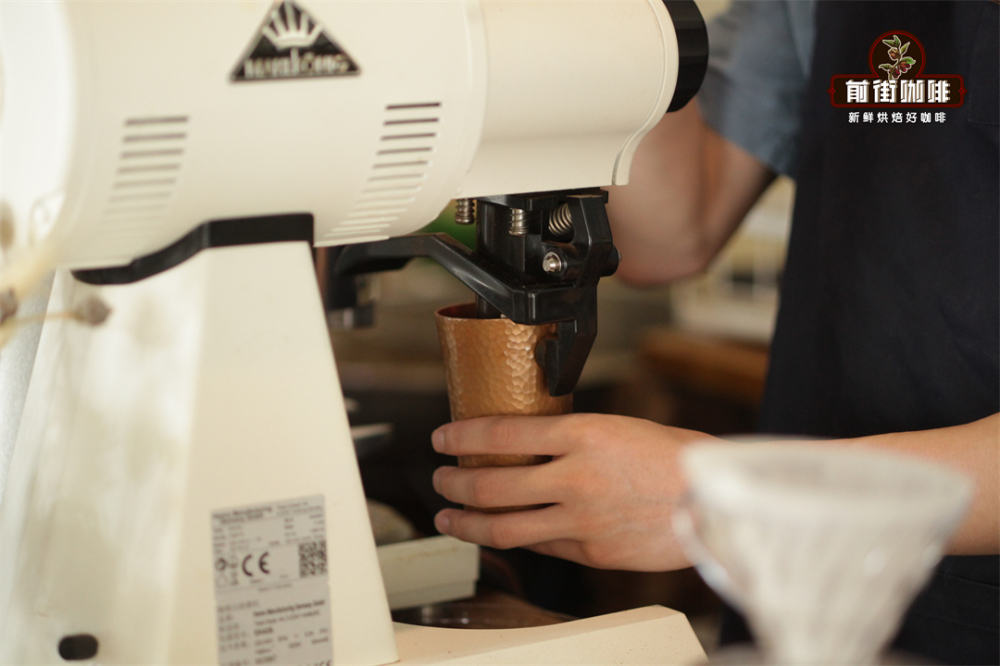
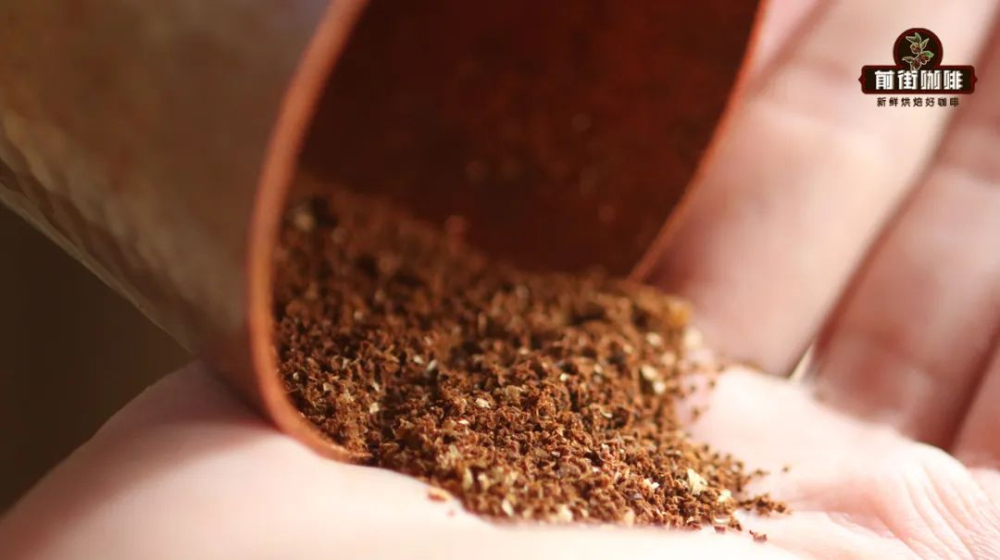
The grinder matters enormously — grind size and consistency directly shape the final cup. Too coarse and the brew under-extracts into something thin and bland; too fine and it over-extracts into bitterness. To calibrate grind size, FrontStreet Coffee uses the No. 20 (0.85mm) standard sieve: 75-80% pass-through for medium-light roasts, 70-75% for medium-dark. Yirgacheffe is a medium-light, high-grown coffee, and we want to draw out as much aromatic complexity as possible, so we target an 80% pass rate — on the shop's EK43s, that's a setting of 10.
Water temperature works much the same way as grind size: hotter water extracts more efficiently and at higher concentration, but water near boiling will pull out unpleasant bitter compounds. Medium-dark roasts, having undergone more caramelization and carrying more bitter high-molecular-weight compounds, need a lower temperature to stay clean — FrontStreet Coffee recommends 87-90°C for them. Light roasts, by contrast, need more heat to open up their aromatics, so we brew them at 91-93°C.

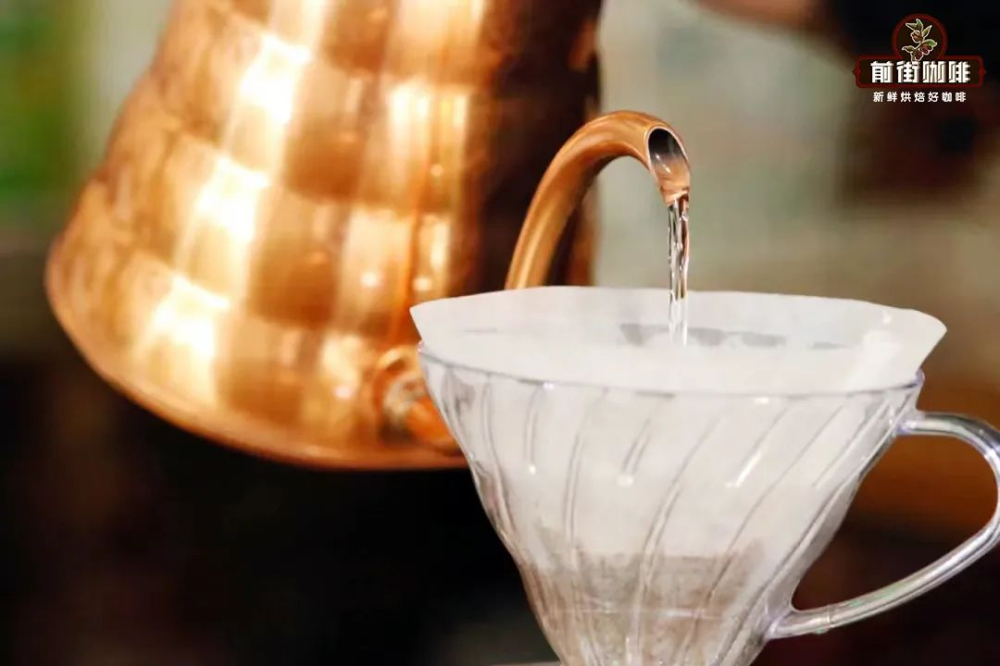
FrontStreet Coffee's shops brew daily with Hario V60 and KONO drippers — the V60 for lighter roasts, the KONO for darker ones. For Yirgacheffe, our barista uses a resin V60. Its ribs run from top to bottom around a large central outlet, which speeds up flow, while the spiral ridges lengthen the water's path and increase contact time between grounds and water. Every stream converges toward the center of the bed, concentrating extraction pressure on the coffee and yielding a cup with more layers.
Pour-Over Technique
FrontStreet Coffee's flavor descriptions assume freshly roasted beans. Beans stored beyond two months lose much of their aroma, and brewing can't bring it back. That's why we only ship beans roasted within 5 days, so they reach you at the fullest part of their flavor window.
Based on long experience, FrontStreet Coffee suggests newcomers start with a three-pour method. Splitting the extraction helps dissolve flavor compounds more fully and adds body and layers, while avoiding the over-extraction that comes from a long soak. For 15 grams of coffee at a 1:15 ratio — 225ml total water — the pours are 30ml, 95ml, and 100ml, with the scale reading 30g, 125g, and 225g at each stage.
First, seat the filter paper in the dripper and rinse it with hot water so it fits snugly. Add the 15 grams of ground coffee, level the bed, and zero the scale.
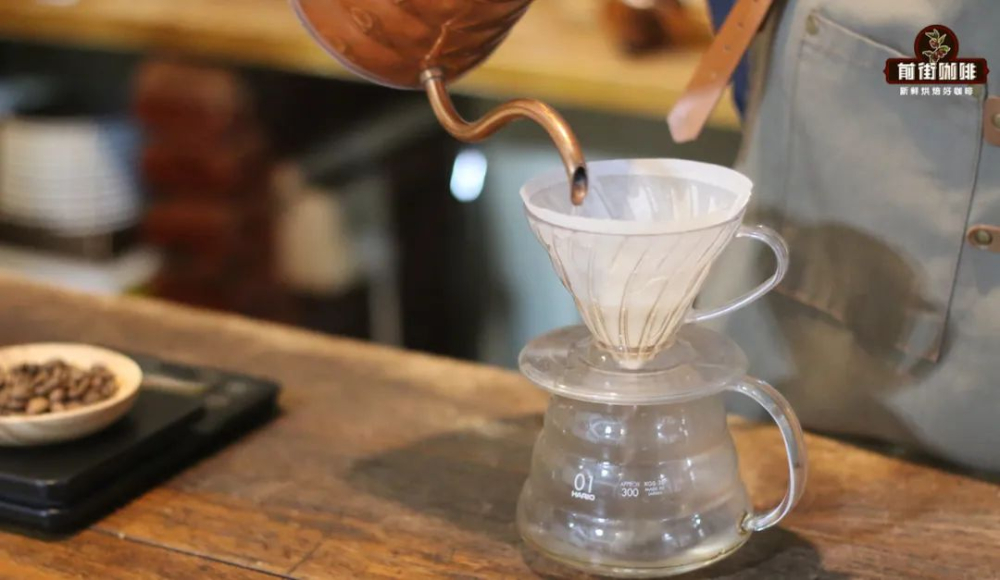
Pour 30g of water to bloom for 30 seconds, starting the timer as you pour. Use a thin stream, spiraling outward from the center so the whole bed gets wet.
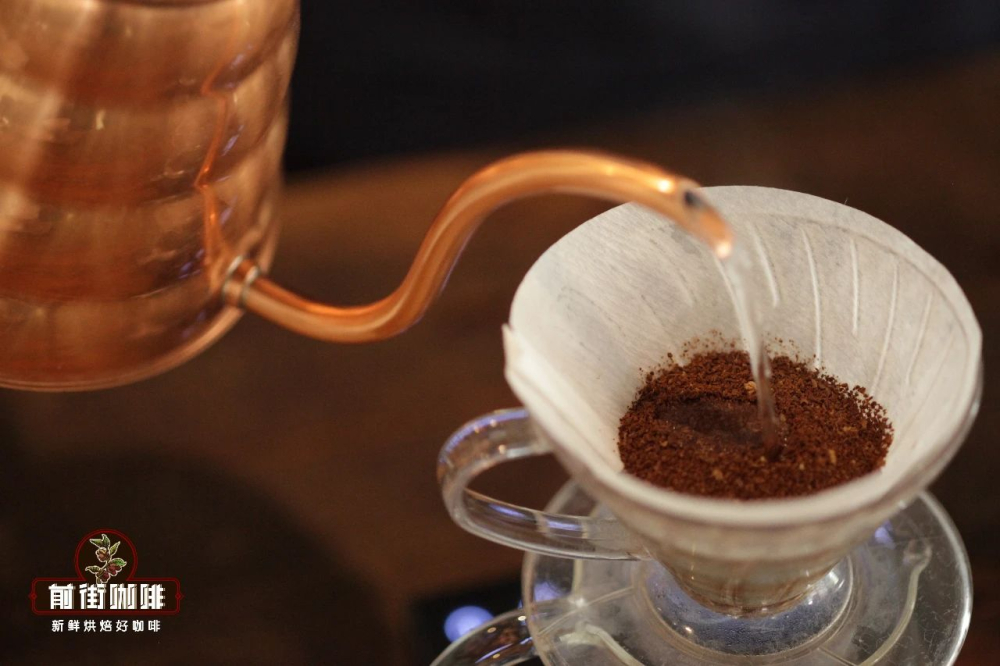
At 30 seconds, start the second pour of 95g with a slightly heavier, steady stream to lift the entire coffee bed. Pour vertically and evenly; the scale should read 125g, finishing around the 55-second mark.
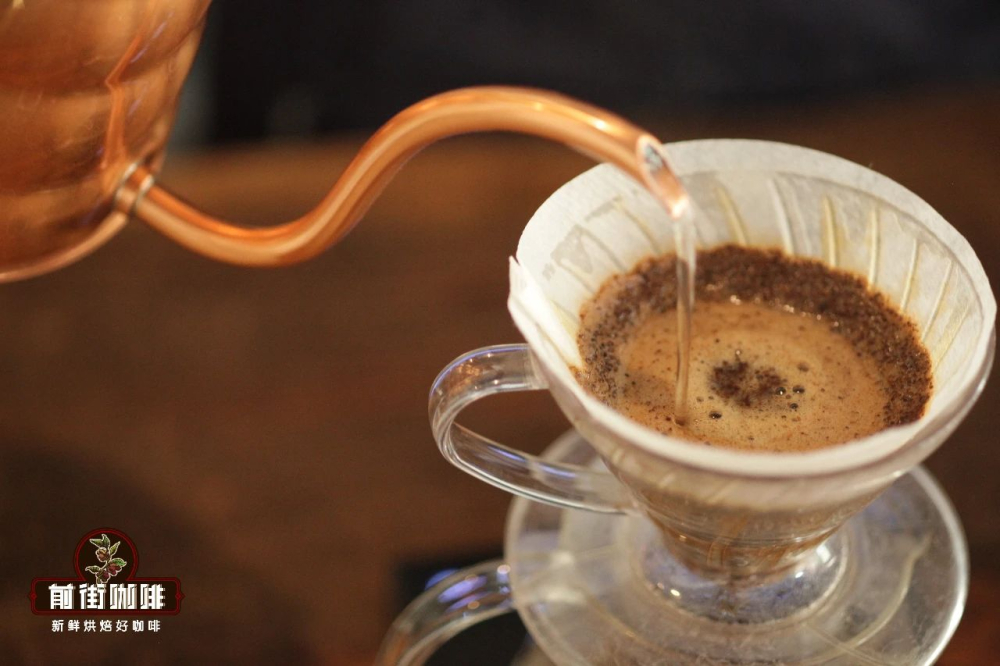
Once the liquid level drops to about half the bed, make the third pour of 100g in small, tight circles with a thin stream. Keep the circles small — wide swings disturb the bed and cause uneven, insufficient extraction. Total water: 225g, with the drawdown finishing at roughly 2 minutes. Remove the dripper, give the server a gentle swirl to homogenize the brew, and taste.
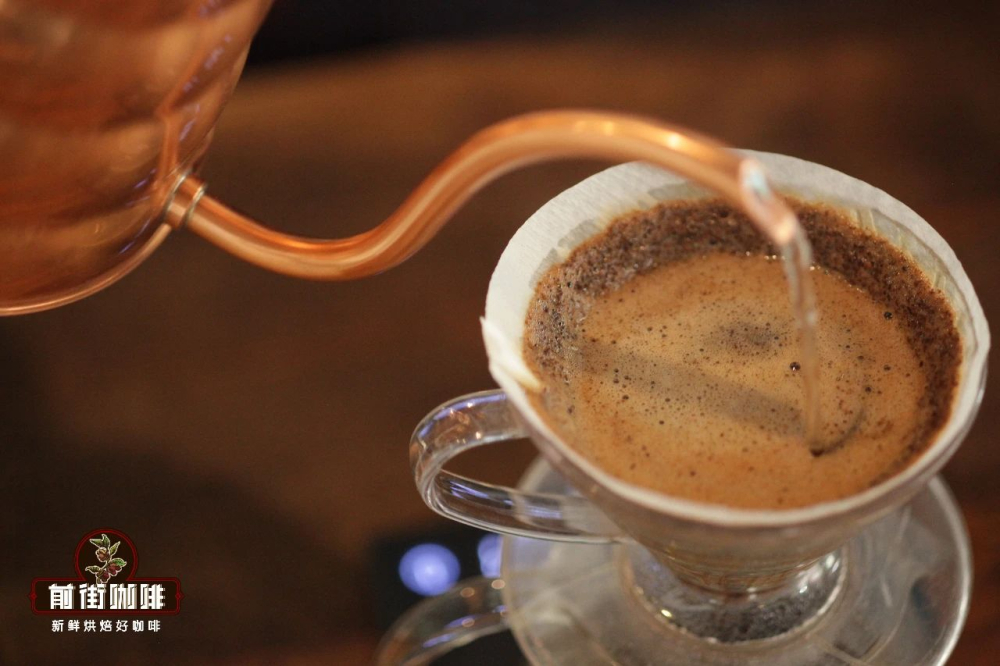
These stage volumes aren't set in stone. Adjust them as your experience grows and as you learn each coffee. Think of brewing as an experiment: to truly master pour-over, you have to understand what each parameter actually does — only then can you design your own method and build a brewing framework that works for you.
FrontStreet Coffee Recommendation
Yirgacheffe is a small town in southern Ethiopia, at roughly 1700-2100 meters with coffee planted above 1800 meters — some of the highest coffee terrain on earth. In 2010, demand grew so strong that the Ethiopian Commodity Exchange formally separated Yirgacheffe from the broader Sidamo region, cementing the name's fame. The classic FrontStreet Washed Yirgacheffe captures that identity perfectly: white jasmine, bright citrus and lemon acidity, and a clean tea-like finish at a friendly price — the ideal first Ethiopian for newcomers.
For a fruitier take, try the FrontStreet Natural Red Cherry, made only from fully ripe cherries. After an initial sort at the mill, the whole fruit is dried on raised beds and turned every 2-3 hours during the first days to prevent uneven heating and over-fermentation, then sun-dried for three to five weeks before the dried flesh is stripped away. Because the beans dry inside the fruit, the cup keeps classic Yirgacheffe character while adding tropical fruit: citrus-like acidity, berry-juice juiciness, honeyed sweetness, and creamy smoothness. For brewing, the shop recommends a V60 at 90-91°C with 15g of coffee at 1:15, medium-fine grind (20th-sieve pass rate around 80%) — the same three-pour method described above.
Important Notice :
FrontStreet Coffee is a long-established specialty coffee roaster in Guangzhou China, selling freshly roasted beans from its own farm in Yunnan as well as dozens of carefully selected single-origin beans from around the world for both pour-over and espresso. The products deliver consistently excellent quality and great value, with shipping within 24 hours. Guangzhou's FrontStreet Coffee shop is recommended by many coffee lovers, and the beans are now available online at the Tmall 。
FrontStreet Coffee has moved to a new address:
FrontStreet Coffee Address: 315,Donghua East Road,GuangZhou
Tel:020 38364473
 Scan and follow the En Gafei WeChat official account. Please indicate that the reprint comes from "En Gafei".