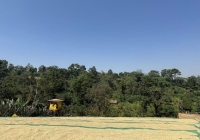
Characteristics of Yunnan Arabica Coffee Beans - Flavor Profile of Yunnan Pour-Over Coffee

Yunnan small bean, also known as "Arabica coffee" (Coffea arabica L.), was grown in Baoshan City, Yunnan, in the 1950s mainly as Typica, Bourbon and S288. Of these, Typica is the oldest, prized for a pure and elegant flavor, but it yields poorly and resists disease weakly, leaving it vulnerable to blight. Yunnan therefore introduced Catimor, which can be planted densely and stands up well to disease, and it has become the most widely grown coffee variety in the region today. So when people speak of "Yunnan small beans," they are usually referring to Yunnan's Catimor.
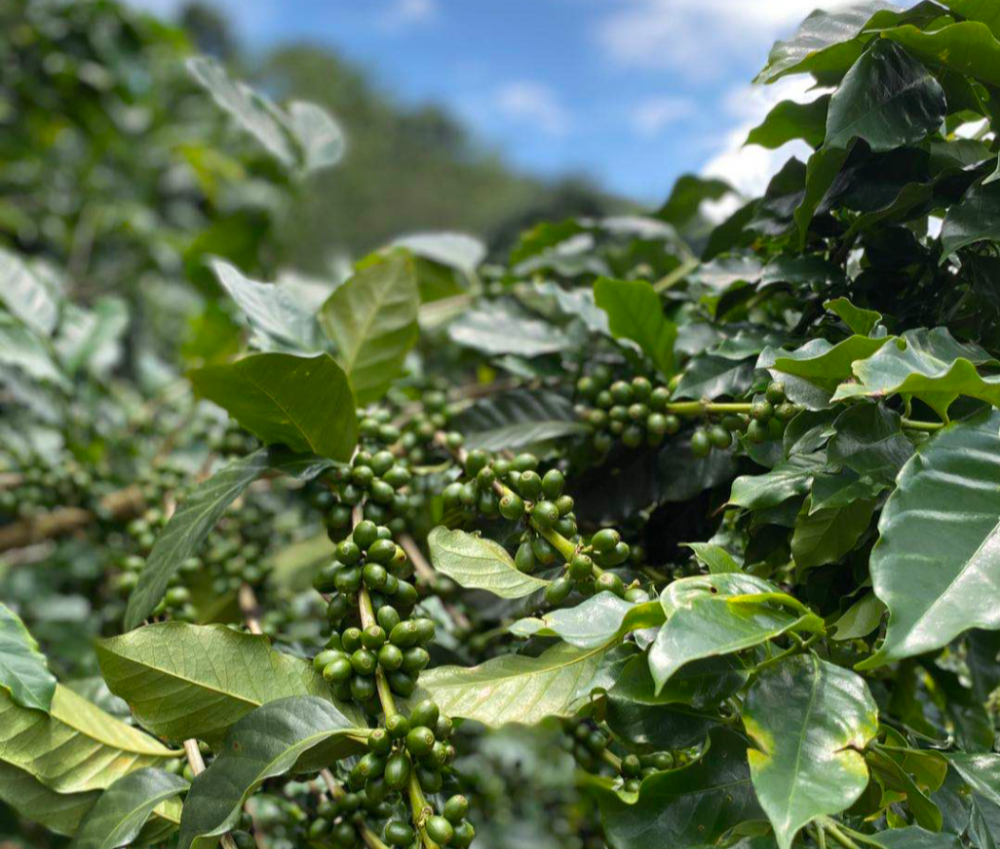
In 1959, Portuguese scientists developed a small coffee plant that resisted disease and pests, coped well at low altitude and still cropped heavily. This is how Catimor came to be cultivated as a "commercial bean." It has real commercial value, yet its cupping quality is often questioned, meaning it carries flavor defects. As a result Catimor has largely been overlooked, and some producers are even unwilling to label their coffee as Catimor. So what lies behind those shortcomings?
Catimor is a hybrid descendant of Caturra and Timor. Caturra is a natural mutation of the much-admired Bourbon and is a regular guest at specialty coffee competitions; among FrontStreet Coffee's house-roasted beans, dozens are made with Caturra. Timor is a natural cross between Robusta and Arabica, discovered in the early 1900s on the island of Timor in Southeast Asia. Robusta has a famously unappealing flavor, heavy on bitterness and intensity, but it resists disease superbly, tolerates cold and heat, and crops heavily. Catimor inherits some of those traits: higher survival and fruit-bearing rates and a short maturation period, which naturally makes it a favorite of farmers and producers.
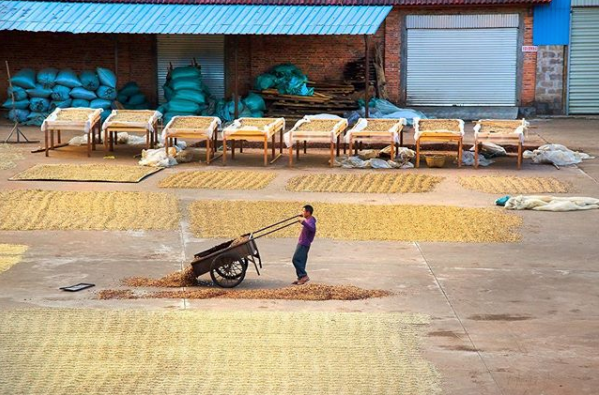
The Evolution of Yunnan Coffee Quality
In the past, Yunnan's coffee farmers had not accumulated much mature experience in cultivation. They planted Catimor at low altitude and used rough processing methods, so quality was mediocre and most of the crop was bought up for commercial instant coffee. With the spread of specialty coffee culture in China, many coffee professionals and researchers began investing in the cultivation stage in Yunnan, continually improving quality through pest and disease control, shade trees, soil and water conservation, planting altitude, and the way cherry is harvested and processed. Today, Yunnan Catimor produced with professional techniques can also show good aroma and cleanliness.
FrontStreet Coffee's Yunnan Selection
When FrontStreet Coffee launched its Yunnan daily bean, it cupped and compared a range of lots before choosing a washed Catimor from the Baoshan producing region as the representative of its Yunnan coffee, released in 100-gram small packages so that everyone can taste "the flavor of Yunnan." FrontStreet Coffee found the cup relatively balanced, with a hint of nut, some plum fruit aroma and a brown sugar-like sweetness, making it altogether quite mild.

Most Yunnan coffee farmers work under harsh conditions and do not own expensive processing equipment, so the overwhelming majority of Yunnan beans rely on straightforward methods: washed or natural sun-dried. FrontStreet Coffee chose a washed Yunnan small bean because washing gives better cleanliness and lets the basic profile of the producing region come through, and it is a method FrontStreet Coffee particularly favors besides. Yunnan also has abundant water, yet the harvest season easily runs into rain, which makes sun-dried processing on a large scale difficult to manage.
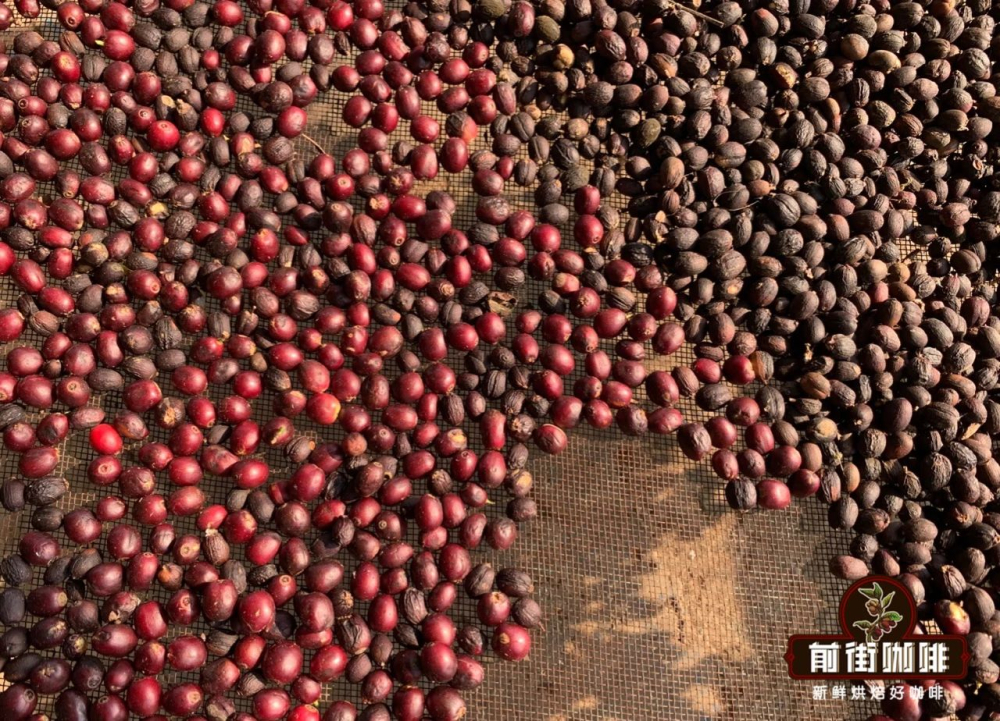
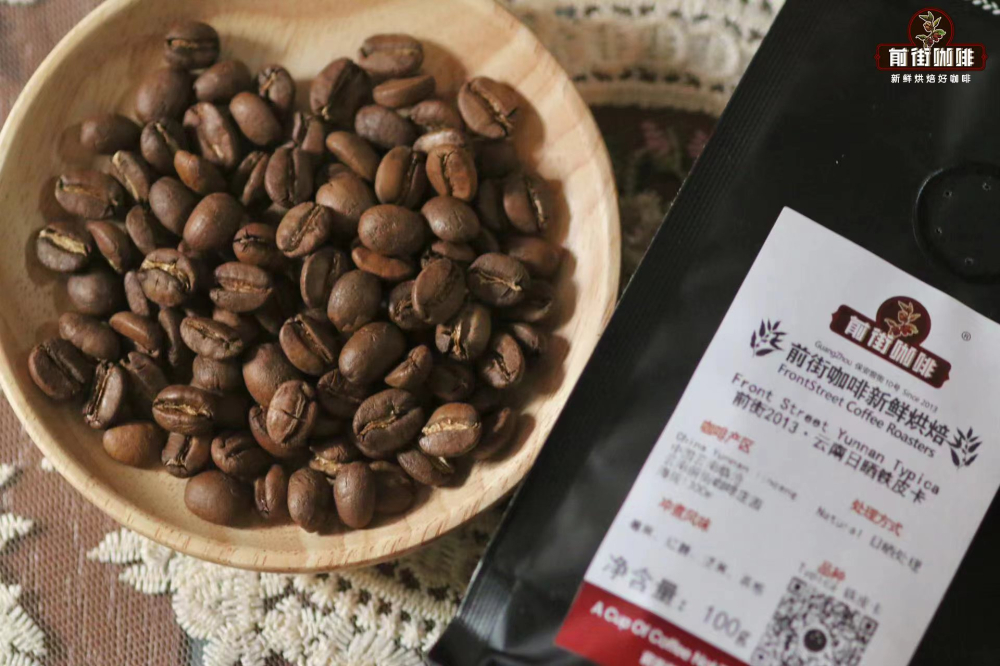
If you prefer natural sun-dried Yunnan coffee, FrontStreet Coffee also offers a Yunnan small bean from the Lincang producing region: FrontStreet Coffee 2013, an elegant-flavored Typica given a natural sun-dried process. Lincang is influenced by the warm, humid air currents of the Indian Ocean and the southwest monsoon, so the seasons are not sharply drawn but the dry and rainy periods are distinct. Rainfall is abundant, sunshine hours are long, frost periods are short, and some areas are frost-free year-round, with a pronounced three-dimensional climate that suits Arabica cultivation very well. FrontStreet Coffee specifically chose the most original Typica. Typica's flavor is rich and varied, showing all kinds of fruit acidity and a delicate texture; it is a recognized high-quality variety, and the renowned FrontStreet Coffee Blue Mountain coffee and FrontStreet Coffee Hawaii Kona coffee both belong to it.
When November arrives, the cherries on FrontStreet Coffee's trees ripen in turn. Workers pick the red cherries one by one and spread the fresh fruit evenly under the sun to dry naturally, turning it irregularly to ensure even dehydration and to avoid off-flavors from over-fermentation. Once the beans have dehydrated to a purplish-red color and reached the target moisture content, they are sent for hulling and roasting.
FrontStreet Coffee's natural sun-dried Typica shows a fuller fermented flavor and prominent sweetness, with aromas of caramel, berries and black tea.
Brewing Recommendations
Some friends buy roasted FrontStreet Coffee Yunnan small bean and then are not sure how to extract it. First, FrontStreet Coffee believes that freshness matters enormously. Roasted beans have an optimal tasting window, and once they pass their aroma peak the flavors become difficult to draw out. The beans FrontStreet Coffee ships are all freshly roasted within 5 days, precisely so that everyone can enjoy that window at its fullest.
FrontStreet Coffee's Pour-over Parameters:
Dripper: Hario V60
Dose: 15g
Water Temperature: 90°C
Grind Size: 75% pass-through rate on a #20 sieve
Water-to-Coffee Ratio: 1:15
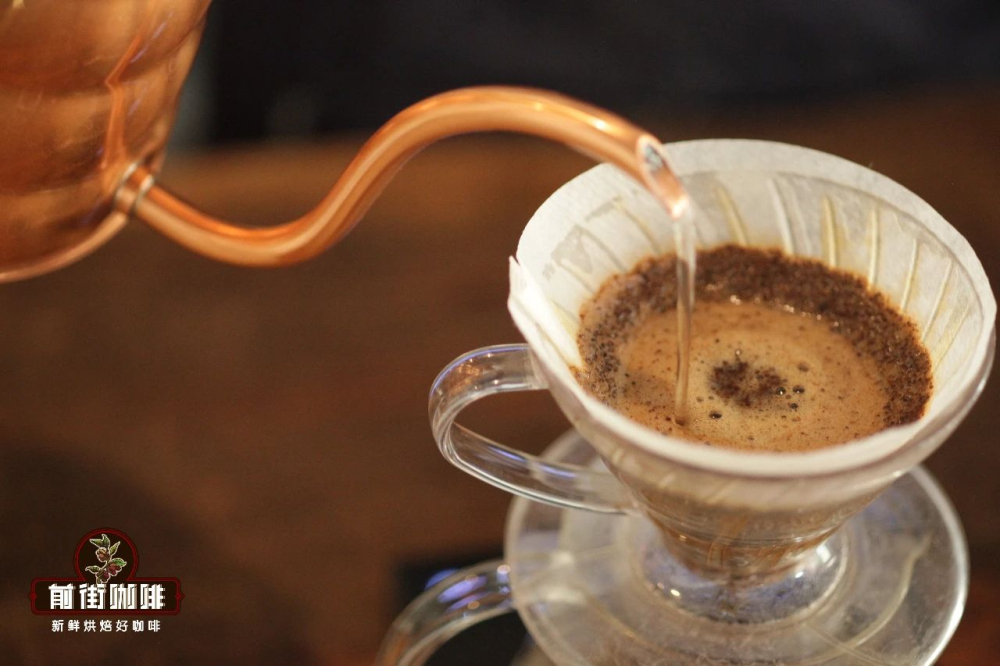
Three-stage pouring: Use twice the weight of the coffee grounds in water to wet the bed and let it form a dome for a 30-second bloom. Then, with a small stream, pour in circles from the inside outward until you reach 125g, completing the first stage. When the bed has dropped to half the height of the dripper, continue with the same fine stream for the third stage to 225g. When all the liquid has filtered through, remove the dripper. Total time is about 2 minutes.
Flavor Profiles
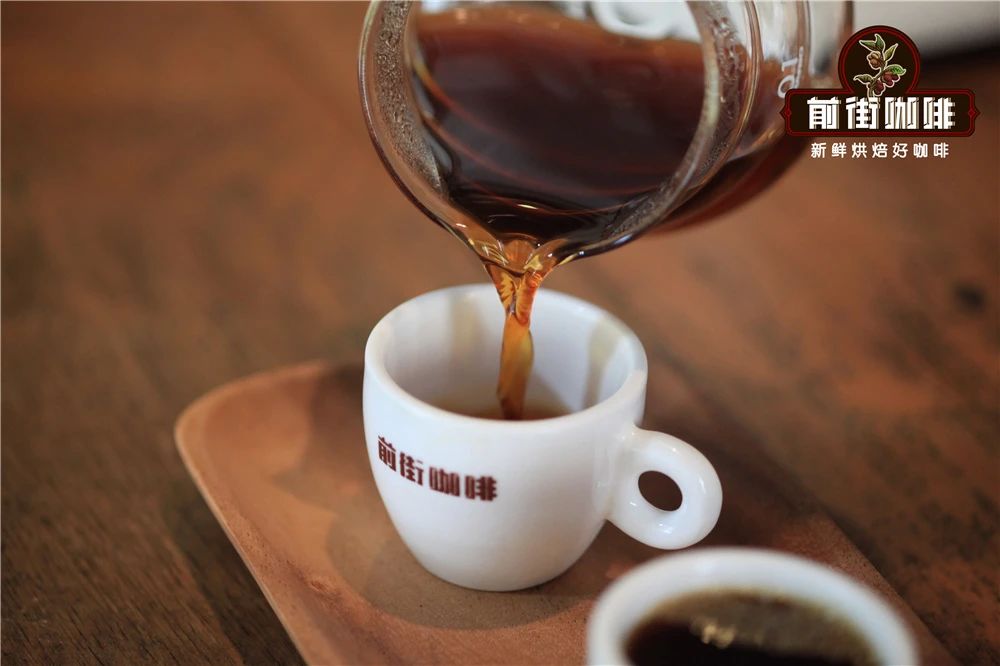
FrontStreet Coffee Yunnan Small Bean Daily Bean Coffee Flavor: A rich nutty aroma, then herbal, chocolate and caramel notes on entry, with a light fruit acidity in the aftertaste. Overall the cup is balanced, with good cleanliness.
FrontStreet Coffee 2013 Natural Sun-dried Typica Coffee Flavor: The dry grounds present aromas of caramel, nuts and citrus. At high temperature the cup shows chocolate, a fermented impression and berries. As it cools, plum acidity emerges, with a sweet black tea and sugarcane aftertaste. Medium-high body, clear texture, rich and varied layers.
For professional coffee knowledge exchange and more coffee bean information, please follow Coffee Workshop (WeChat public account: cafe_style)
For more specialty coffee beans, please add the private WeChat FrontStreet Coffee (FrontStreet Coffee), WeChat ID: qjcoffeex
FrontStreet Coffee Recommendation: Yunnan Arabica to Brew at Home
If this profile has you curious, FrontStreet Yunnan Small Bean is the natural starting point: a washed Arabica from the Baoshan region, medium roasted, with gentle nut and chocolate sweetness and a light plum acidity that survives every stage of a pour-over. Because washing removes the mucilage before drying, the cup stays clean and the character of the region reads clearly. For a fruitier, fuller expression, FrontStreet 2013 Natural Typica, a Typica from the Lincang estate dried in the cherry and medium roasted, shows dark berry, caramel and chocolate with a hint of dried apricot, finishing on black tea and cream. Espresso drinkers can try the FrontStreet Dark Cocoa Blend, which sets Yunnan small bean against Brazil Cerrado for nuts, chocolate and brown sugar.
Important Notice :
FrontStreet Coffee is a long-established specialty coffee roaster in Guangzhou China, selling freshly roasted beans from its own farm in Yunnan as well as dozens of carefully selected single-origin beans from around the world for both pour-over and espresso. The products deliver consistently excellent quality and great value, with shipping within 24 hours. Guangzhou's FrontStreet Coffee shop is recommended by many coffee lovers, and the beans are now available online at the Tmall 。
FrontStreet Coffee has moved to a new address:
FrontStreet Coffee Address: 315,Donghua East Road,GuangZhou
Tel:020 38364473
 Scan and follow the En Gafei WeChat official account. Please indicate that the reprint comes from "En Gafei".